


The Work-While-Traveling Setup: What to Carry When the Trip Is Half Work, Half Everything Else

A hush trip or a bleisure week fails in the same place: you packed as a tourist, then tried to work from the leftovers. Or you packed as if you were moving offices, then spent three days hauling a full desk through museums and dinners.
The trip is half work and half everything else. That split needs a small, repeatable work kit that can leave the hotel in one grab, plus a main bag that stays in the room. It is not the same problem as long-term digital nomad carry, and it is not a conference week with sessions all day. You look like a traveler. You still have to function like someone with a laptop, a call, and a deadline.
This setup keeps work hours and tourist hours in one day bag so you stop unpacking the whole suitcase every morning.
Name the trip before you pack
Write three lines on a note in your phone:
- Which blocks are real work (calls, writing, a client sit-down)?
- Which blocks are movement (walking, transit, meals, sightseeing)?
- Where will you actually sit (hotel desk, lobby, cafe, park bench)?
If work is two focused mornings and one lobby meeting, you do not need a second suitcase of cables. If work is every afternoon from a rented desk, treat those afternoons like a short version of coffee shop work and pack the same lean kit you would take across town at home.
Do not mix this with a true office-plus-gym day. That load lives in gym to office without switching bags. Here the second half of the day is a city, not a locker room.
Build a work kit that can leave the room
The work kit is the only pile that must be able to stand up and walk out. Everything else stays in the main bag.
Put these in the day bag the night you arrive, then leave them there:
- Laptop, if the work actually requires it
- One short charging cable or one multiport adapter
- Phone, wallet, keys or room card
- Earbuds
- Thin notebook if you take handwritten notes
- One light layer if the weather is real
Leave the full cable pouch, spare brick, hardcover, and "maybe I will edit photos" extras in the room. Weight discipline still follows how heavy your everyday bag should be. A travel day already includes walking. Dead weight shows up faster than it does on a commute.
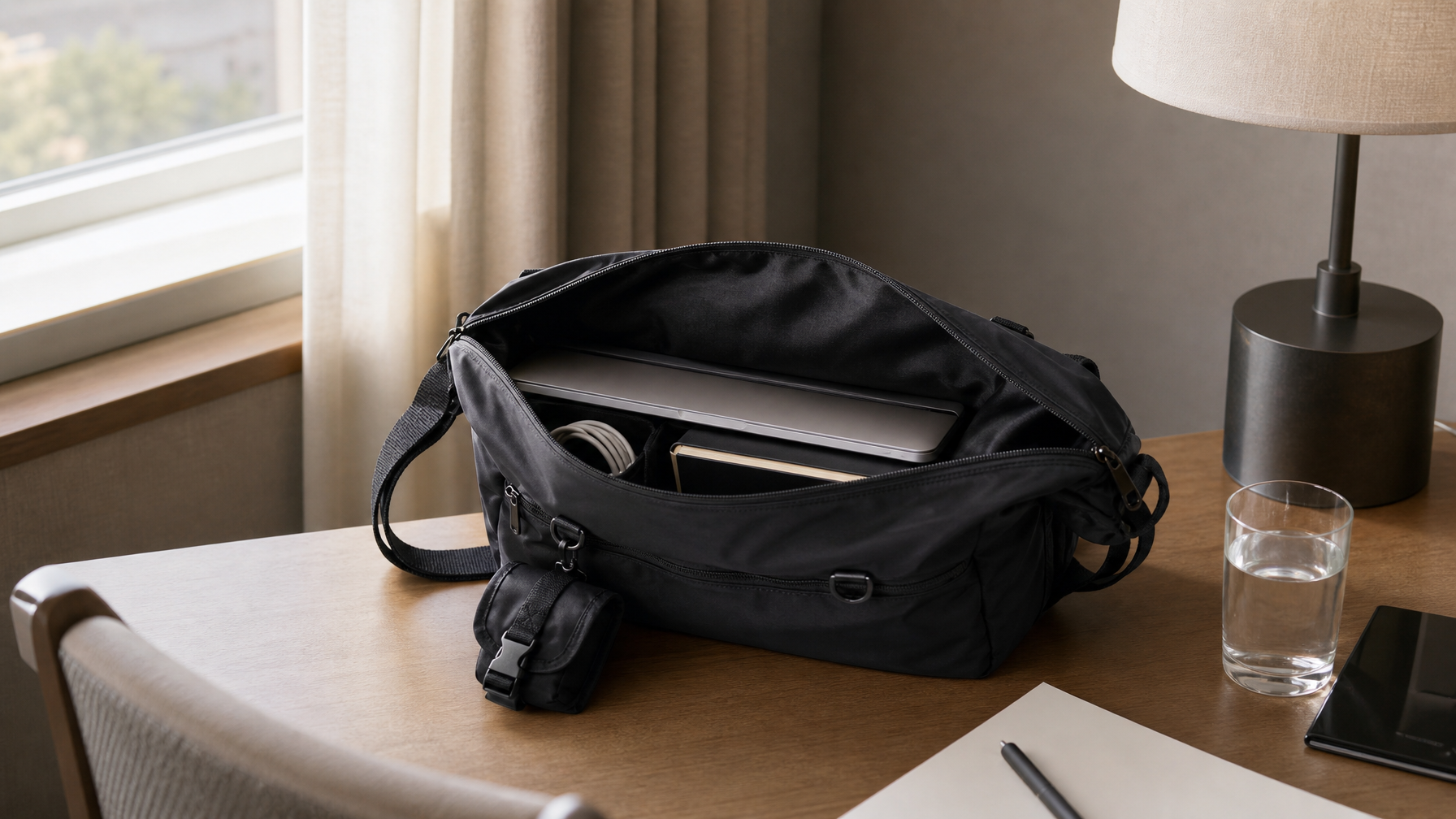
If the laptop is optional for most of the trip, keep it in the room on walking days. Do not wedge it into a sling that was never meant to hold it. That rule is the same one used in two bags for hybrid work: laptop days get the laptop bag.
Choose a day bag that does not announce an office
On a hush trip you will sit in a lobby, a cafe, and a park with the same bag. A hard briefcase reads as work even when you are off. A tiny fashion bag dumps the kit when you need the laptop.
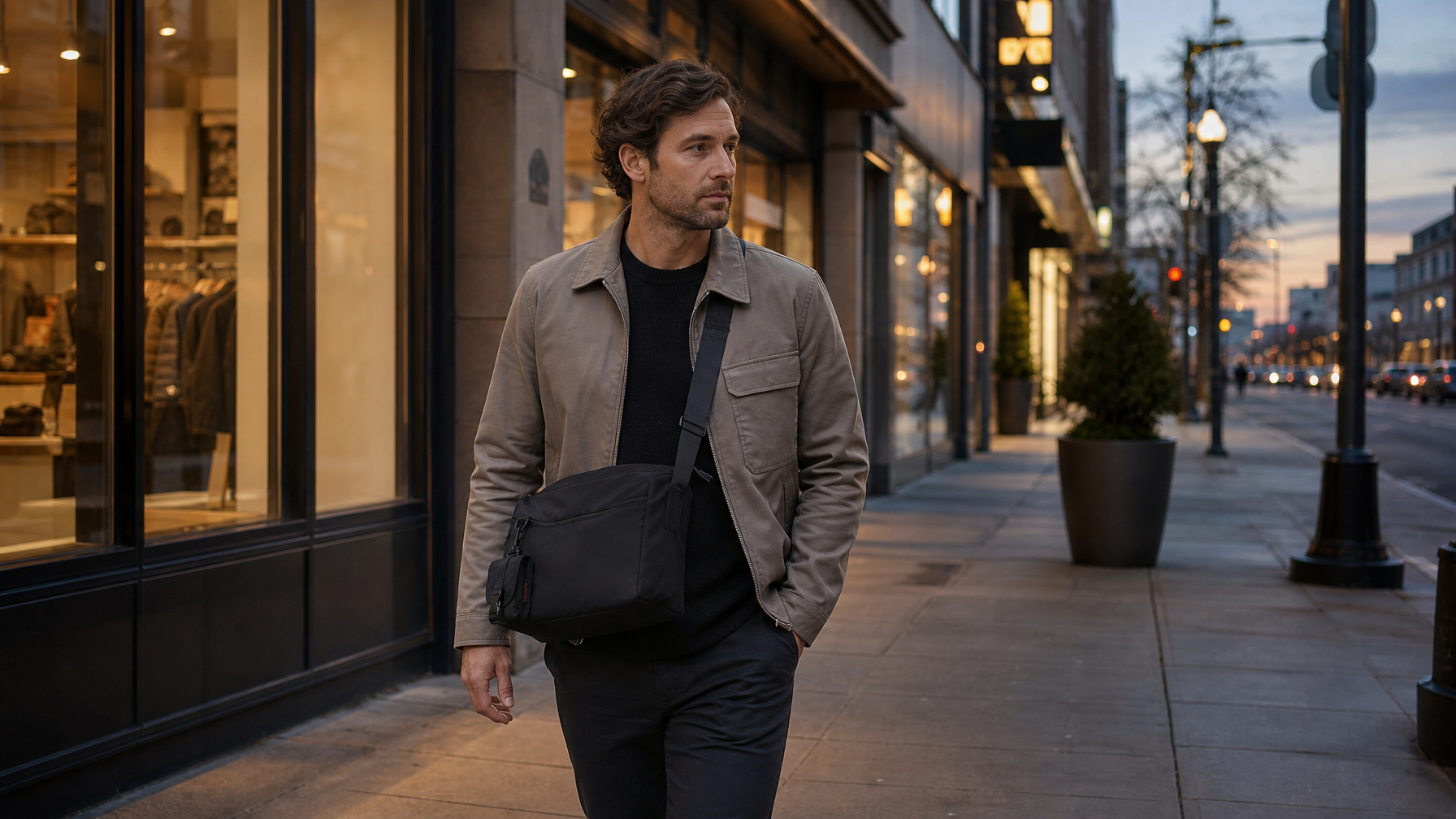
A commuter messenger such as Field & Ash's Haven Messenger fits that middle. The main compartment holds a laptop up to 14 inches. There is no dedicated padded sleeve; the machine sits in the open main cavity. The front pocket fits your phone, wallet, and card together, which is the kit you need at a cafe counter or a taxi. Access the front pocket while Haven stays at your side. A separate back pocket fits a phone and wallet together when you want those items against the body in a crowded street. The detachable pouch holds one small essential, such as AirPods.
Haven is water-resistant, not waterproof. Treat rain as a reason to keep the zipper closed and move indoors, not as a reason to set the bag in a puddle.
When the work block is a lobby meeting or a hotel-desk call and you want a slimmer profile, the Metro Laptop Brief is the quieter option. It is built as a slim laptop bag with a padded device sleeve (11-inch or 14-inch variants), a front zip pocket, and a wider shoulder pad. Use Metro when the day is mostly sit-down work and short walks between the room and the lobby. Use Haven when the same bag has to walk the city after the call.

Keep the main bag in the room
The main bag is clothing, extras, and anything you will not need between breakfast and dinner. If you already use a carry-on system, keep it. This article is not a packing-cube debate. It is a rule: the day bag never inherits the suitcase.
A simple split:
- Main bag: clothes, extras, backup charger, any bulk you refuse to carry twice
- Day bag: work kit plus the day's layer and water you will actually finish
If the trip is longer and you want a dedicated travel pack in the room, the Transit Pack can hold the week. Do not wear it to the cafe unless that cafe day is also a transit day. Walking a full travel pack through a neighborhood because your laptop is buried in it is how bleisure weeks get heavy.
For airport movement itself, use the airport carry setup and personal item fit. Those pieces cover security and under-seat space. This piece starts after you have a room.
Work blocks in public without rebuilding the desk
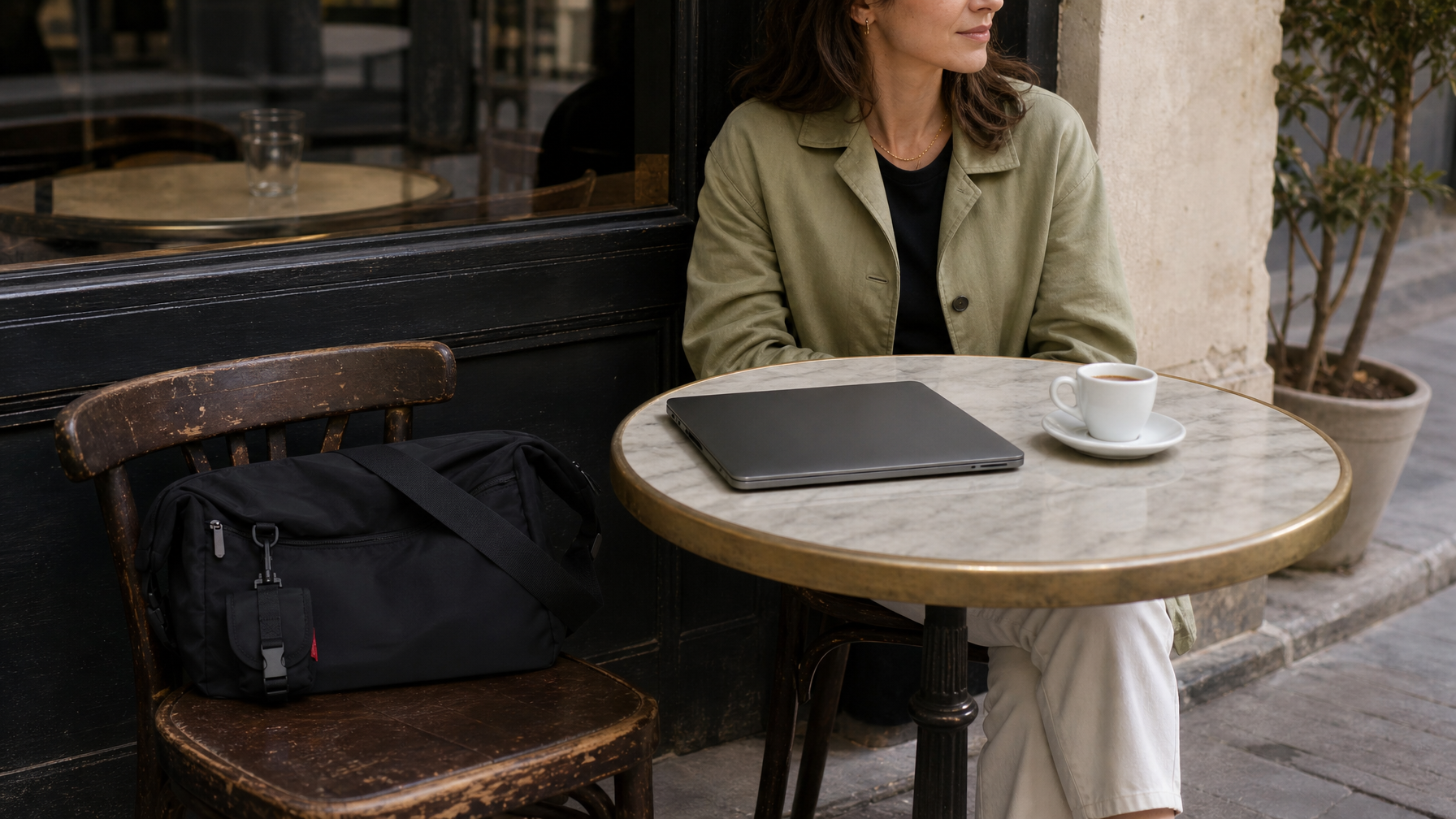
Hotel wifi fails. Lobbies get loud. Cafes fill up. The kit has to open in a small rectangle and close in under a minute.
A practical sequence:
- Sit. Put the bag on the chair or at your feet, not on the floor in a walkway.
- Laptop and notebook out. Cable only if the battery will not last the block.
- Phone on the table face down unless you need it as a hotspot.
- When the block ends, the same three items go back in the same pockets.
Do not create a new layout in every city. The point of a capsule carry is that the hands already know the pockets.
If you need more structure for focus on the road, pair this with how to work from a coffee shop without losing the morning and productivity rituals for people who work from everywhere. Those articles cover time. This one covers what leaves the room.
Security without theater
Unfamiliar cities make people overpack locks and underuse simple habits.
- Wear the bag closed in crowds. Use the back pocket for phone and wallet when you want those items against your body.
- Do not leave the open bag on a second chair while you stand in a pastry line.
- Hotel safes are for passports and spare cards, not for the laptop you need in an hour.
- On transit, keep the bag in front or on your lap. A low crossbody is easier to feel than a backpack you cannot see.
This is ordinary street sense, not a product feature list. For a deeper look at what anti-theft language actually means, read anti-theft bags for commuters.
A day that actually works
A sample day that matches how these trips usually run:
- Morning: work block at the hotel desk or balcony. Kit already in the day bag from the night before.
- Late morning: close the laptop, add the layer, walk.
- Midday: cafe or lobby for a second short block if the schedule needs it.
- Afternoon: city time with the same bag. Laptop can stay in the room if the remaining work is phone-only.
- Evening: dinner. If you still have the laptop, you packed too much for the night.
Reset the bag when you get back to the room, the same way you would on the night-before bag prep. Charge the laptop on the desk. Put the short cable back in the bag. Tomorrow starts already packed.
What to skip
Skip a second day bag "for evenings." You will leave one in the room and resent the other.
Skip packing a full office (mouse, extra brick, HDMI, spare notebook) unless a specific meeting needs it. One adapter covers most hotel desks.
Skip treating the trip like a one-bag expedition. You have a room. Use it. The day bag should be light enough that you forget it is work gear until you sit down.
A short close
Half-work travel gets easier when the work kit is boring and complete. One day bag, one power path, pockets that stay assigned. The city half of the day then uses the same bag instead of a second personality.
If you want the format overview for mixed office weeks at home, start with the best bags for hybrid work. If the trip is actually a conference, use the conference bag instead. This piece is for the week that is neither fully office nor fully off.