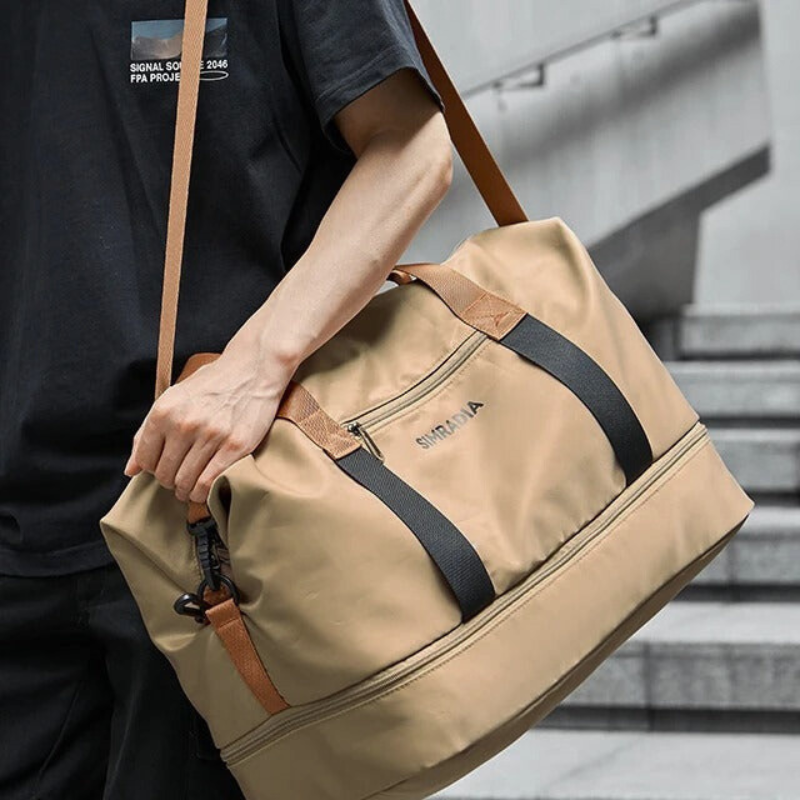



The Best Personal Item Bag for Flying: What Actually Fits Under the Seat

The personal item is the bag that is supposed to stay with you: under the seat in front of you, not in the overhead bin, and not checked at the gate. It is also where most packing plans go wrong.
Airline websites list size limits. Seat maps do not show how much free space sits under a bulkhead, a middle seat with a life-vest box, or a slim regional jet. Fare rules can change what counts as free. Connecting itineraries can put you on two carriers with two different sizers. None of that is solved by a single universal-fit claim.
This guide is about the decision that actually matters before you fly: how to choose and pack a personal item so it has a realistic chance of fitting under the seat on the flights you take, while staying useful from curb to cabin. It does not invent universal dimensions. It does not promise that one bag, one measurement, or one setup works on every airline, aircraft, or seat.
If you are building the full airport system (security staging, carry-on vs personal-item jobs), pair this with how to move through airports faster. For the overhead bag and clothing volume, see how to pack carry-on only.
Personal item vs carry-on: two different jobs
Most U.S. and many international carriers that allow two free cabin bags treat them as different roles:
Carry-on (often overhead). Clothing, shoes, toiletry kit bulk, secondary tech, anything you can afford to put above you for the flight.
Personal item (under the seat, when space allows). Identity, phone, wallet, boarding credentials, medication, a small tech kit, headphones, and whatever you need without standing up mid-flight.
Mixing the jobs is what creates gate-check risk. A "personal item" stuffed like a weekend bag fails the sizer, fails the under-seat gap, or both. A clean split keeps the personal item small enough to argue for under-seat placement and useful enough that you are not digging through the overhead every hour.
Some fares and some airlines only allow a personal item in the cabin. On those tickets the personal item is your cabin bag. The same principles apply: smaller, denser, and organized for security and the seat, not for a full wardrobe.
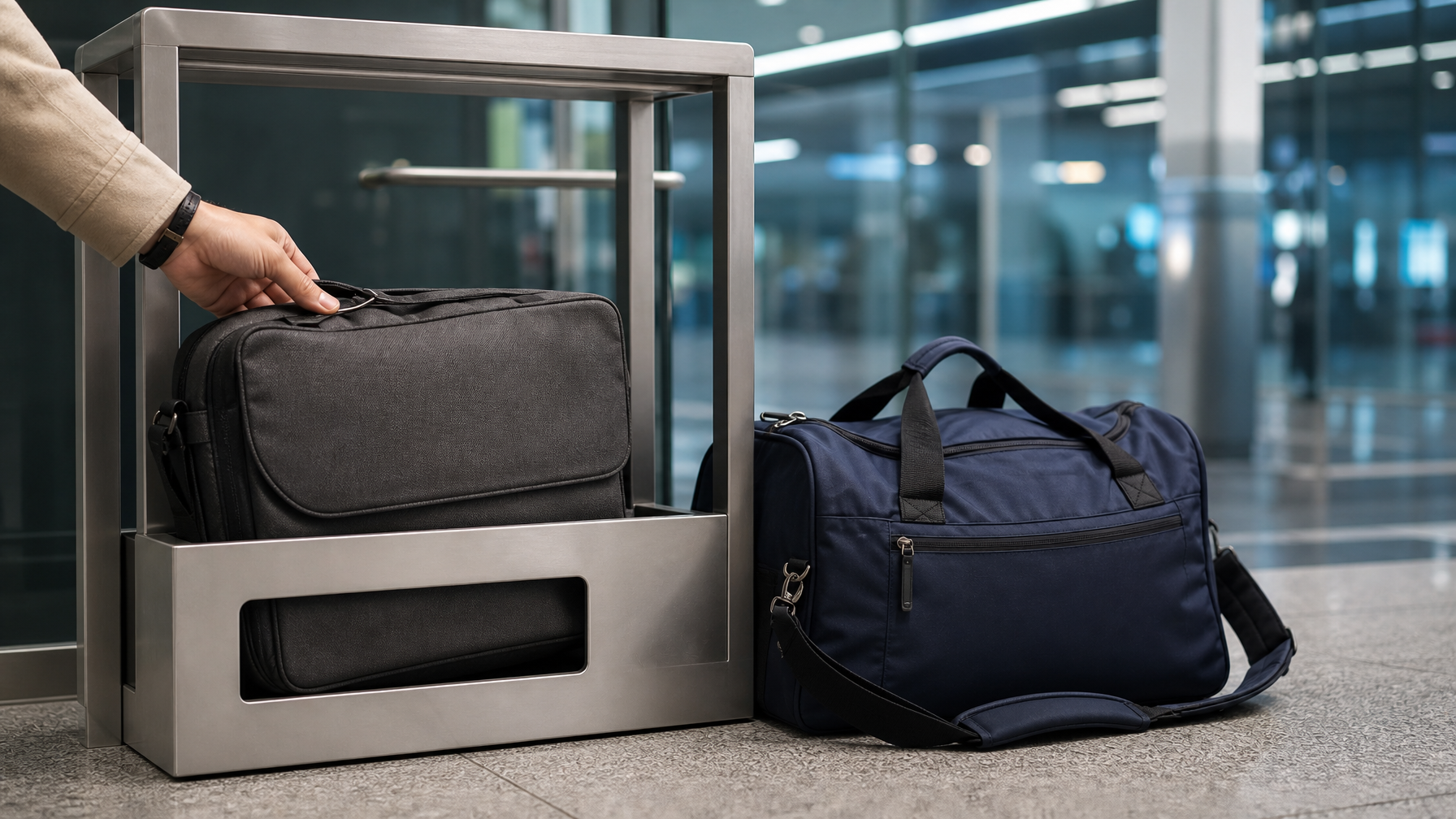
Why a single under-seat promise is the wrong target
Three different constraints show up on the same trip:
- Published personal-item size limit (length × width × height or linear inches/cm). This is the rule the gate agent and sizer box enforce when they care about volume.
- Physical under-seat volume on that aircraft and seat. A limit on paper can still lose to a fixed IFE box, a life vest container, a seat with less depth, or a bulkhead with no under-seat storage at all.
- Fare and route policy. Basic economy, ultralow-cost carriers, and codeshares can change what is free, what is measured, and whether a second bag is allowed at all.
Because those three move independently, no honest guide can certify one bag for every airline, every aircraft, or every seat. What you can do is build a conservative personal-item kit: small enough to clear common sizers, soft enough to compress into awkward under-seat gaps when needed, and packed so the bag's longest edges are intentional.
Always check the operating carrier's current baggage page for your ticket, including the marketing carrier if the flight is codeshared. Limits change. This article will not hard-code airline inches that may be stale by the time you board.
How to evaluate a personal item bag (without fake universal numbers)
Use this checklist against your ticket, not against a global myth.
1. Start from the strictest leg on the itinerary
If you connect from a major carrier to a budget carrier, or reverse, plan the personal item for the stricter published limit and the smaller aircraft type when you know it. One bag that is fine on the long-haul and oversized on the short hop is the bag that gets tagged at the second gate.
2. Prefer soft structure over rigid boxes
Hard-shell mini rollers and overstuffed structured totes fight under-seat geometry. A soft-sided messenger, sling, or waist pack can often settle into an irregular gap when a rigid cube cannot. Soft does not mean shapeless: you still want enough structure that a laptop or tablet does not fold.
3. Watch depth as much as height
Many bags fail under the seat because they are too deep front-to-back once packed, not because the empty shell looked small online. Pack dense and flat. Keep water bottles, shoe pairs, and puffy layers out of the personal item unless you have already confirmed space.
4. Design for the sizer and for your hands
If the bag only fits the sizer when empty, it is not a personal item. Pack it as you will fly, then test against a cardboard mock of the published limit if you want a home check. At the airport, be ready to compress straps, stand the bag on the correct face, and remove jackets hooked on the exterior.
5. Keep high-frequency items out of the main dump zone
Phone, wallet, ID, and boarding credentials should not require a full unpack at security or at the seat. Exterior or front-access pockets matter more than another interior void.
What belongs in the personal item
Treat this as a ceiling, not a shopping list.
Usually belongs
- Passport or government ID, and boarding credentials
- Phone, wallet or slim card holder
- Medication and anything you cannot check
- Compact liquids bag when your route requires it at screening
- Laptop or tablet only if the bag and the under-seat plan can take it (see product notes below)
- One short charging cable and a small power bank if you use one
- Headphones or earbuds
- Glasses, simple hygiene minis you will use in the air
- A thin layer only if you will wear it in the cabin
Usually belongs in the carry-on instead
- Clothing cubes and spare shoes
- Full toiletry kits
- Extra chargers and brick adapters for the hotel
- Souvenir capacity
- Bulk that has not earned a place yet
If the personal item is heavy before you buy coffee in the terminal, the split failed.
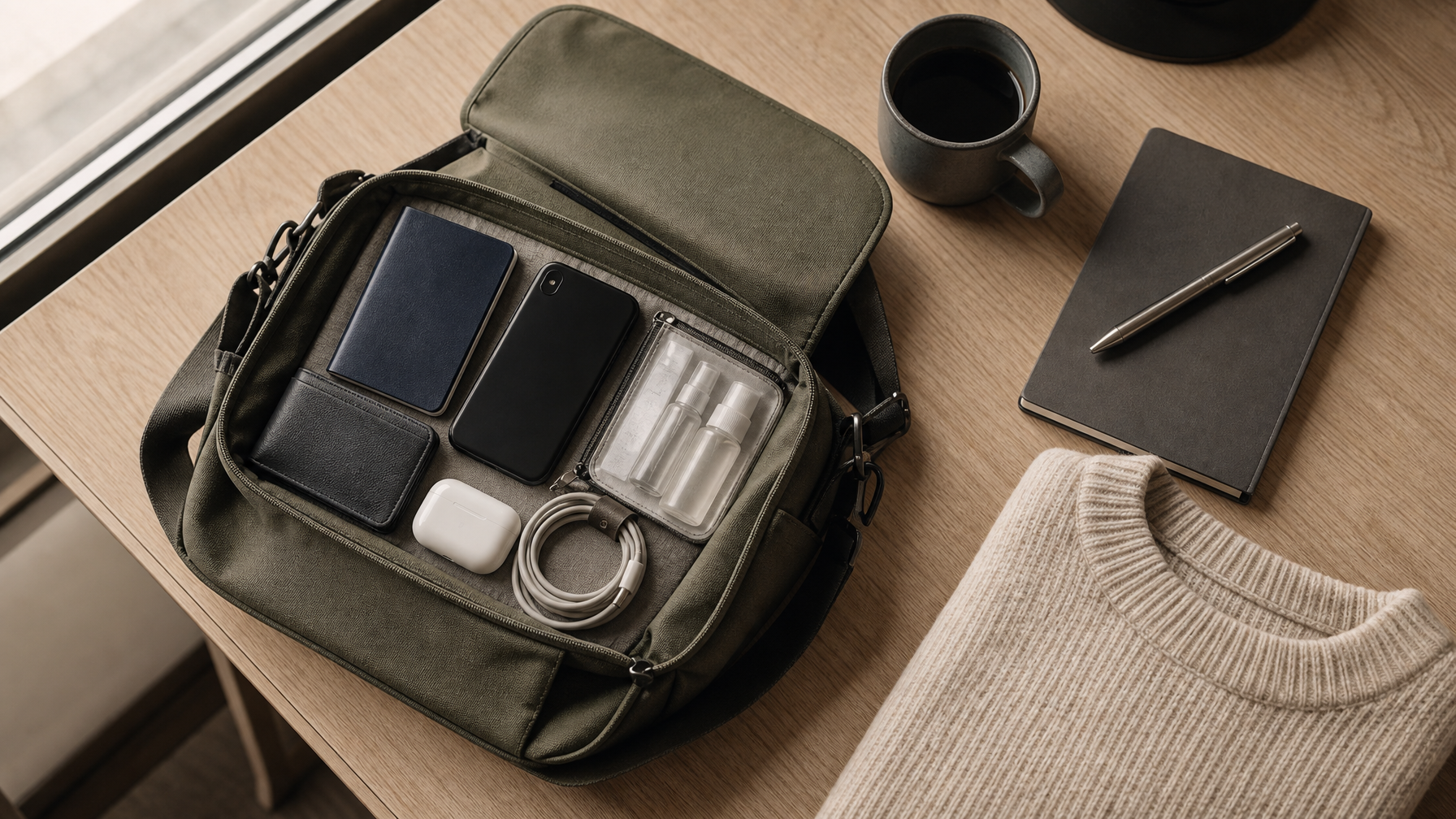
Product options that match the personal-item job
Field & Ash products below are active catalog options. Specs are manufacturer/store dimensions for empty bags. Packed size will be larger. None of these is certified for every airline or every seat. Match the bag to your ticket's published limit and to how much you truly need at your feet.
Haven Messenger
Role: Structured everyday messenger that can serve as a personal item when your airline limit and seat space allow a bag in this size class.
Verified specs (store): about 12.9 × 7 × 11.8 in (33 × 18 × 30 cm); 1.21 lb; 600D Oxford exterior; $89. The main compartment accommodates a laptop up to 14 inches (there is no dedicated padded laptop sleeve). Front pocket fits phone, wallet, and card together; a separate back pocket fits a phone and wallet together.
When it fits the job: You want one personal item that still works as a daily bag after landing, with room for a compact laptop kit and clear exterior access for security. Compare the empty dimensions to your carrier's current personal-item limit, then pack flat. On very tight ultralow-cost limits or seats with almost no under-seat depth, step down to a smaller sling or waist pack.
When to choose something else: Your ticket only allows a much smaller free personal item, or you are not carrying a laptop and want minimum volume.
Commuter Sling
Role: Minimal hands-free personal item for light cabin kits.
Verified specs (store): about 11 × 6 × 3 in (28 × 15 × 8 cm); 0.66 lb; up to about a 9.7 inch tablet class device, not a full laptop bag; $89.
When it fits the job: Short hops, strict volume pressure, or a documents-plus-tablet split with layers in the overhead. Easy to wear through the terminal and to slide under a seat when depth is limited.
When to choose something else: You need a 13-14 inch laptop in the personal item. Use a larger messenger or put the laptop in a carry-on that still meets cabin rules.
Horizon Waist Pack
Role: Smallest Field & Ash personal-item option for true essentials.
Verified specs (store): waist pack form factor; from $59-$69 depending on variant; built for phone, wallet, small pouch items, not laptop carry.
When it fits the job: You want the personal item to be genuinely small: ID, phone, wallet, medication, earbuds. Clothing and tech bulk stay in the carry-on. Useful on short flights and as a belt-worn under-seat bag when every inch of under-seat depth matters.
When to choose something else: You need cabin laptop access without opening the overhead.
When the trip needs a larger cabin bag
If the itinerary is really a one-bag travel problem (clothing plus tech in a single backpack), that is a different article. See the one-bag and international travel guides on the Journal. A full travel pack such as the Transit Pack is a carry-on / travel-backpack decision, not a default under-seat personal item.
Packing sequence that protects under-seat space
- Lay out only seat-needed items. If you will not touch it between gate and landing, it can live in the carry-on.
- Build a flat laptop/tablet plane against the back panel when you carry one. Avoid stacking bottles and shoes on top of the device.
- Liquids and ID last-on, first-off for screening so you are not excavating the main compartment in line.
- Collapse straps and exterior hooks before you board so nothing catches the seat frame.
- Board with a plan for bulkhead and exit rows. If your seat has no under-seat storage, you will need overhead space or a seat-back plan that still respects crew instructions. That is a seat assignment issue, not a bag-brand issue.
- On connection gates, re-check the next operating carrier's page before you re-pack souvenirs into the personal item.
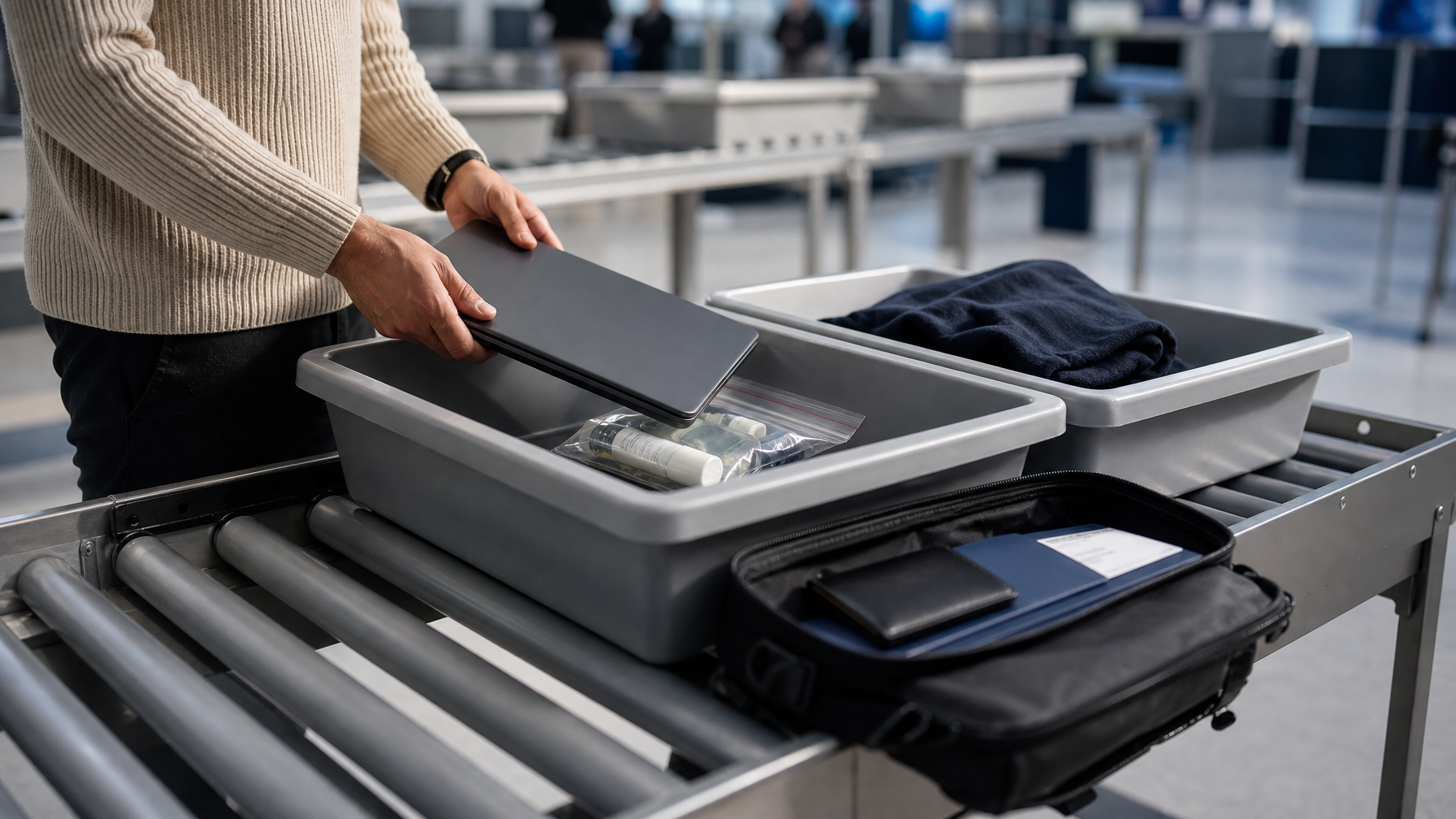
Common failure modes
The personal item is a second carry-on. Soft duffels and overfilled totes that pass a home eye-test and fail the metal sizer.
The bag fits empty and fails full. Online dimensions describe the shell. Your packing creates the real footprint.
Laptop in a bag that cannot stay under the seat. You end up standing in the aisle during boarding while the bag is gate-checked with the device still inside. If under-seat space is uncertain, keep the device on your person through boarding or use a bag you already know fits that aircraft family.
Documents buried. The bag is small enough, but every checkpoint costs five minutes because ID and liquids are at the bottom.
Assuming the first flight's rules apply to the second. Codeshares and mixed carriers are where a morning success becomes an afternoon fee.
A simple decision framework
| Your situation | Personal-item direction |
|---|---|
| Need 14 inch laptop at your seat and a daily bag after landing | Start with Haven Messenger; confirm ticket limits and pack flat |
| No laptop; maximum flexibility under tight space | Commuter Sling |
| Essentials only; carry-on holds the rest | Horizon Waist Pack |
| One bag for clothes and tech for the whole trip | Travel backpack / carry-on system (not this article's default) |
| Mixed carriers or unknown aircraft | Size for the stricter published limit; prefer compressible soft structure |

Bottom line
The best personal item bag for flying is not the bag with the boldest universal-fit headline. It is the bag that:
- Stays within the published personal-item limit on your ticket,
- Can compress into real under-seat space on the aircraft you are likely to board,
- Keeps identity, medication, and high-frequency items easy to reach, and
- Leaves clothing bulk to the carry-on so the under-seat bag stays a tool, not a suitcase.
Personal-item limits and physical under-seat space vary by airline, aircraft, route, fare, and seat location. Verify the operating carrier before you fly. Pack for the seat you will sit in, not for a universal promise.
Field & Ash builds everyday carry for modern movement. Product dimensions above are store specifications for empty bags; always confirm current airline baggage rules for your itinerary.