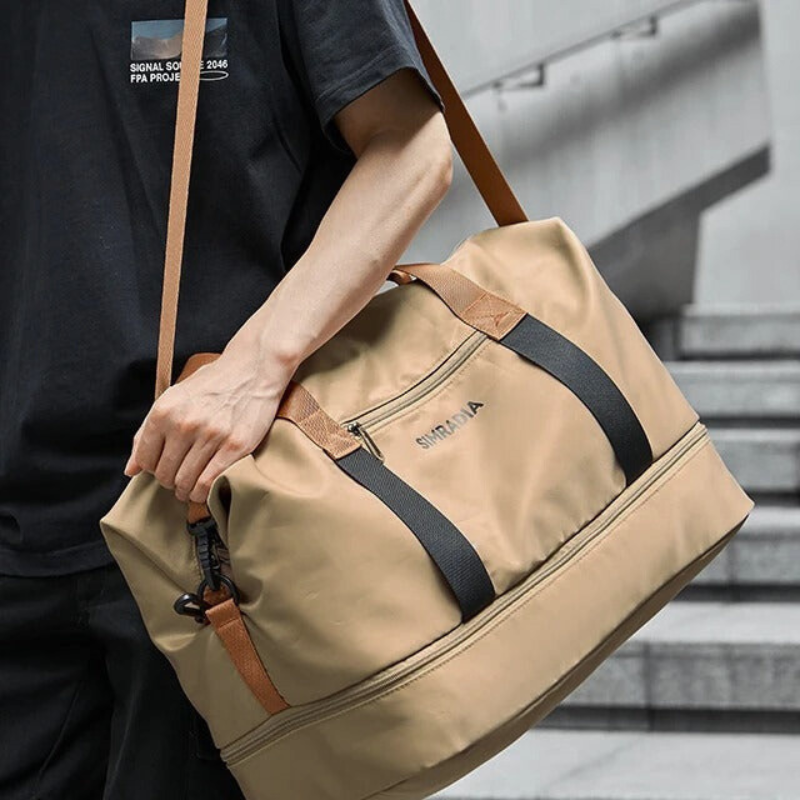



How to Pack Carry-On Only: The System That Works for 5 Days or 5 Weeks

You've watched someone roll a massive suitcase to the gate, wait while it gets tagged and gate-checked, then stand at the baggage carousel for twenty minutes at the other end. You've been that person. Most travelers have. The checked bag is the default — not because it's better, but because nobody taught a different approach.
The carry-on only system isn't about deprivation. It's not about wearing the same shirt four days in a row or skipping the things you actually need. It's about building a repeatable packing method that makes a checked bag redundant — for a five-day trip, a two-week business run, or anything in between. Once the system is in place, you'll find it works for longer trips too, because the logic doesn't change with duration.
This guide covers how to pack carry-on only: the four-category method, the clothing rules that scale with trip length, the shoe problem, and the bag that makes the whole system work without compromise.
The Problem With Checked Bags (Beyond the Fee)
The fee is annoying. But it's not the real cost. The real cost is time — an average 30 to 45 minutes waiting at baggage claim on the other end of a flight, multiplied across every trip you take in a year. Add the mental load of wondering whether it arrived, whether something was shifted around by security, whether you'll be the last person out of arrivals while your colleague who packed a carry-on is already in a taxi.
There's also a subtler cost: overpacking. Most people check a bag because they pack too much. Most people pack too much because they pack emotionally — "just in case" — rather than systematically. The carry-on constraint is useful precisely because it forces a decision. You can't bring everything. So you bring the right things.
The travelers who've figured out carry-on only don't feel restricted by it. They feel lighter. The bag is planned rather than piled. The process is fast on both ends. And the system, once built, transfers across trips without much rethinking.
Understanding What "Carry-On" Actually Means
Most major US airlines (American, Delta, United, Southwest) allow a carry-on bag up to 22 × 14 × 9 inches in the overhead bin, plus a personal item (a smaller bag that fits under the seat in front of you). Budget carriers are stricter — Spirit and Frontier, for example, charge for overhead bin bags entirely and only allow a free personal item.
International airlines vary. Many European carriers have tightened carry-on rules significantly in the past two years — Ryanair and easyJet limit overhead bags unless you pay for priority boarding. If you're flying internationally, check the specific allowance before you pack.
The practical takeaway: a 20–30 liter bag that fits within standard carry-on dimensions covers almost every route on a major carrier. If you're flying budget domestically or internationally on a strict carrier, plan for a smaller personal-item-only strategy and pack accordingly.
The Four-Category Packing Method
Every successful carry-on packing system organizes items into four categories. Not by type of clothing — by function. Here's how to think about them:
- Clothing layers — what you wear on your body, organized by versatility and layering logic
- Tech and cables — laptop, chargers, adapters, earphones, portable battery
- Toiletries — liquids in the 100ml TSA-compliant format, plus solid alternatives where possible
- Documents and daily access — passport, cards, boarding passes, anything you need to reach without digging
The method works because it forces you to evaluate what you're bringing by category before you pack it, not while you're packing. Lay everything out by category first. Then cut. Most people find they've already packed more than they need in at least one category — usually clothing — once they can see it all at once.
The Clothing Rule That Makes It Scalable
The most common mistake in carry-on packing is counting days. "I'm going for 10 days, so I need 10 shirts." That math doesn't work. It's what fills a checked bag.
The carry-on clothing rule is about versatility and wash, not volume:
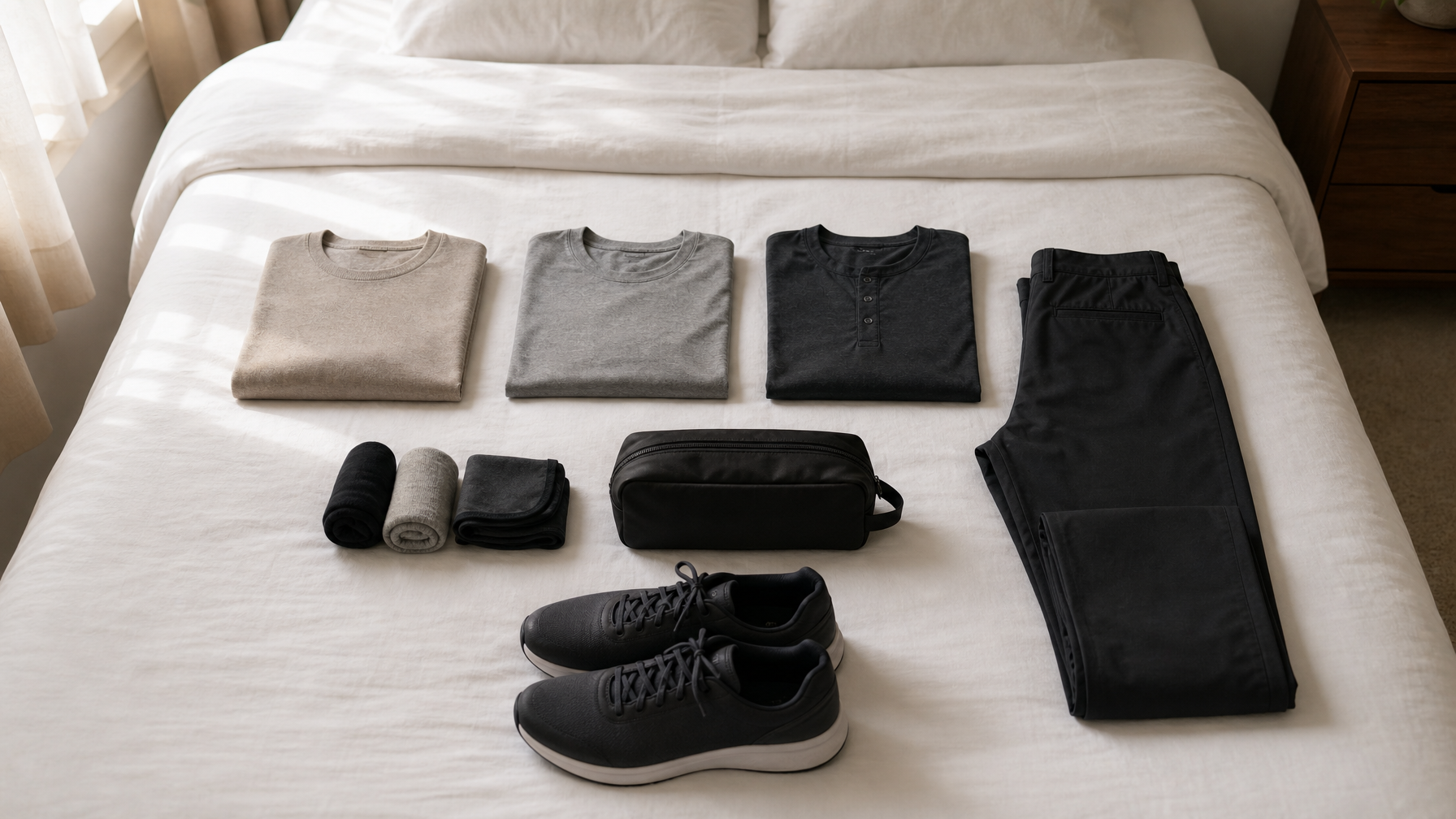
- Tops: three to four, in neutral colors that layer and mix. Merino wool is worth the investment — it doesn't hold odor, dries fast, and packs compactly. One should be slightly more polished than the others.
- Bottoms: two pairs maximum — one for casual/travel days, one that works for dinner or a meeting. Dark colors hide wear and photograph well.
- Underwear and socks: four to five pairs. These get washed in the sink — soap and water, hang overnight.
- Outerwear: one layer that handles weather and serves as your warmest layer. Wear it on the plane. It doesn't go in the bag.
For trips longer than five days, the system is identical — you're just planning to do laundry once. Almost every city hotel has laundry service. Almost every Airbnb has a washing machine. This is the variable people forget to account for when they're mentally pre-packing: you don't need clothes for every day. You need clothes for every situation, and a plan to wash them.
If you're building an everyday carry system that extends into travel — where the habits you've built for commuting transfer directly to trip preparation — the Working Minimalist EDC guide covers the underlying logic that applies to both contexts.
Shoes: The Variable That Decides Everything
Shoes are the thing that fills bags. They're bulky, they're heavy, and most people bring too many pairs. For carry-on only travel, the rule is simple: two pairs maximum, and ideally one.
Your footwear strategy determines your carry-on strategy. Here's the framework:
- One versatile pair: a dark, clean sneaker or a low-profile leather trainer that reads as smart-casual. Wear them on the plane. These go everywhere — dinner, walking, casual meetings.
- One backup pair if genuinely needed: sandals for a beach trip, or a more formal shoe for a wedding or presentation. Flat sandals pack flat. A second pair of trainers doesn't justify the space.
The travelers who've committed to carry-on only will tell you: after the second or third trip, you realize you were wearing the same pair of shoes the whole time anyway. The second pair was anxiety packing.
Choosing the Right Bag for Carry-On Only Travel
The carry-on packing system only works if the bag is built to hold it. That sounds obvious, but a lot of "travel backpacks" are either too small to carry a week's worth of gear, or too large to fit standard airline carry-on dimensions — leaving you in the worst position: oversized and understorage.
What to look for in a carry-on travel bag:
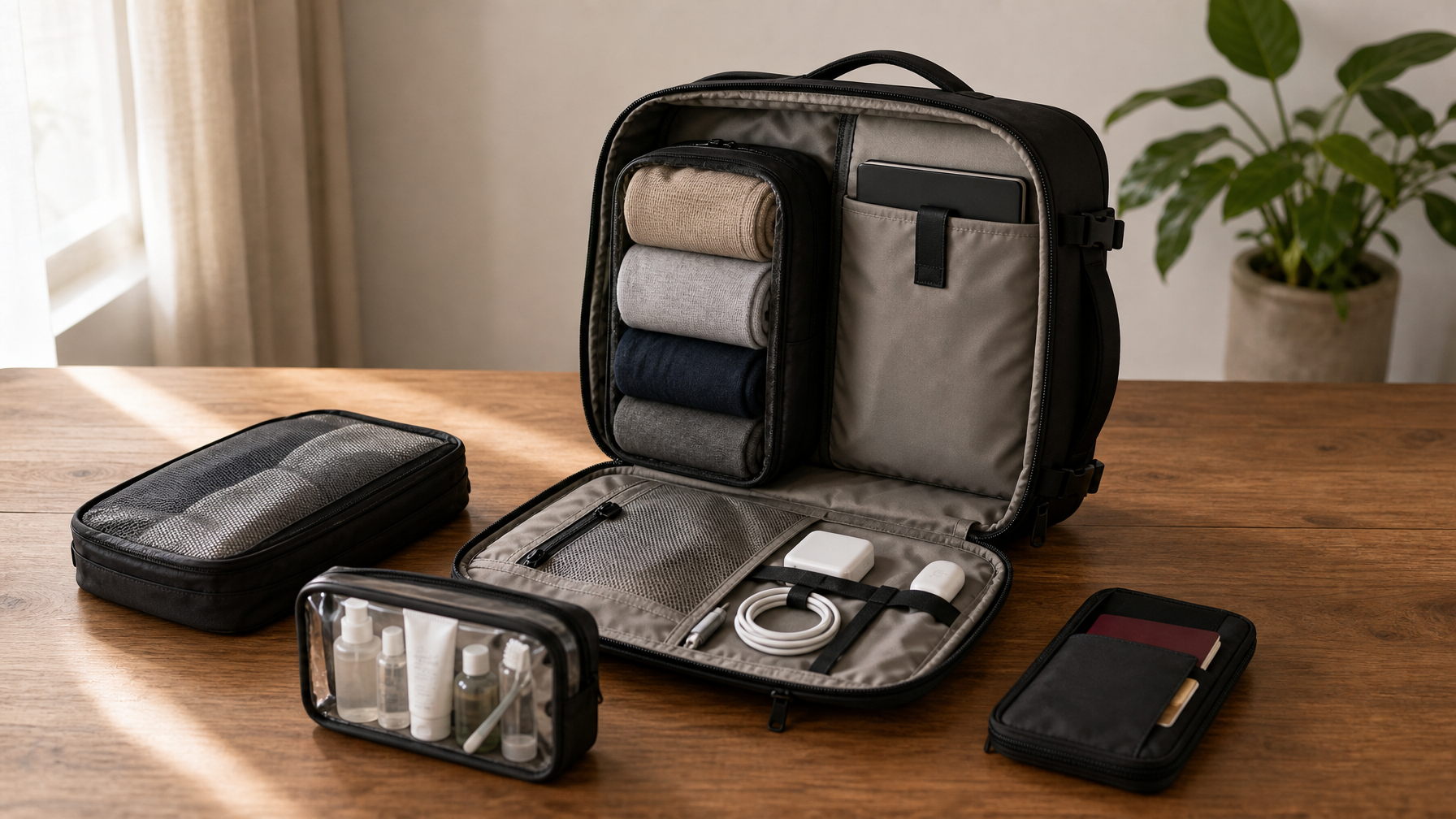
- 20–30 litres of capacity — enough for 5–7 days of clothing plus tech and toiletries. An expandable design (20–35L) gives you flexibility without forcing the bag to maximum capacity at the start
- A dedicated laptop sleeve — for airport security, this matters. You need to remove the laptop without unpacking the bag
- Organized interior — a single main compartment is fine for some travelers, but if you're mixing tech, clothing, and toiletries, dedicated zones prevent the rummage problem
- Dimensions that fit within airline carry-on rules — check the specific dimensions against the airline you fly most
The Field & Ash Transit Pack is built for exactly this use case — an expandable 20–35L carry with a padded laptop sleeve, organized interior pockets, and a profile designed to fit overhead bin dimensions on major carriers. When you're only taking one bag for a week-plus trip, the expandable capacity means you can compress it to a lighter pack for shorter stints and open it up when you genuinely need the room.
For shorter trips — three to four days where you're traveling lighter — the Apex Backpack offers a more compact carry with solid laptop protection and enough interior organization to handle the four-category method without the larger footprint.
What to Leave Behind — and How to Stop Worrying About It
The psychological part of carry-on only packing is harder than the practical part. Most "just in case" items stay in the bag on every trip. That's useful data.
A few categories worth rethinking before they go in:
- Multiple backup outfits — if you've never once reached for a backup outfit on a trip, stop packing them
- Full-size toiletries — solid shampoo, solid conditioner, and solid soap bars eliminate the liquids bag almost entirely and weigh almost nothing
- "Nice to have" tech — the tablet you might read on the plane, the camera you haven't used in three trips. If you're honest, your phone covers most of it
- Comfort items that never leave the bag — the neck pillow that stays in the bag, the sleep mask you could buy for $6 at any airport pharmacy
The r/onebag community's most common advice to first-time carry-on travelers: do one test pack, look at what's in the bag, then remove a third of it. The third you remove is almost always the third you don't use. If you've already thought through the weekend trip packing system, extend that logic — the same principles scale up to longer trips.
The Night-Before Routine That Removes the Morning Panic
One of the underappreciated advantages of carry-on only travel is that the packing itself becomes a ritual rather than a scramble. Because everything has a place, the process is consistent. You stop forgetting things because the system doesn't rely on memory.
A simple night-before routine:
- Lay everything out in the four categories and check against your mental list — not a written list, because after two or three trips you won't need one
- Pack tech and documents first, at the top or most accessible pocket — these are what you'll need to reach quickly at security and during the flight
- Pack clothing second, using compression rolls or a flat packing cube to keep everything contained in one zone
- Add toiletries last, in their own pouch that goes directly into the tray at security without you having to open the main compartment
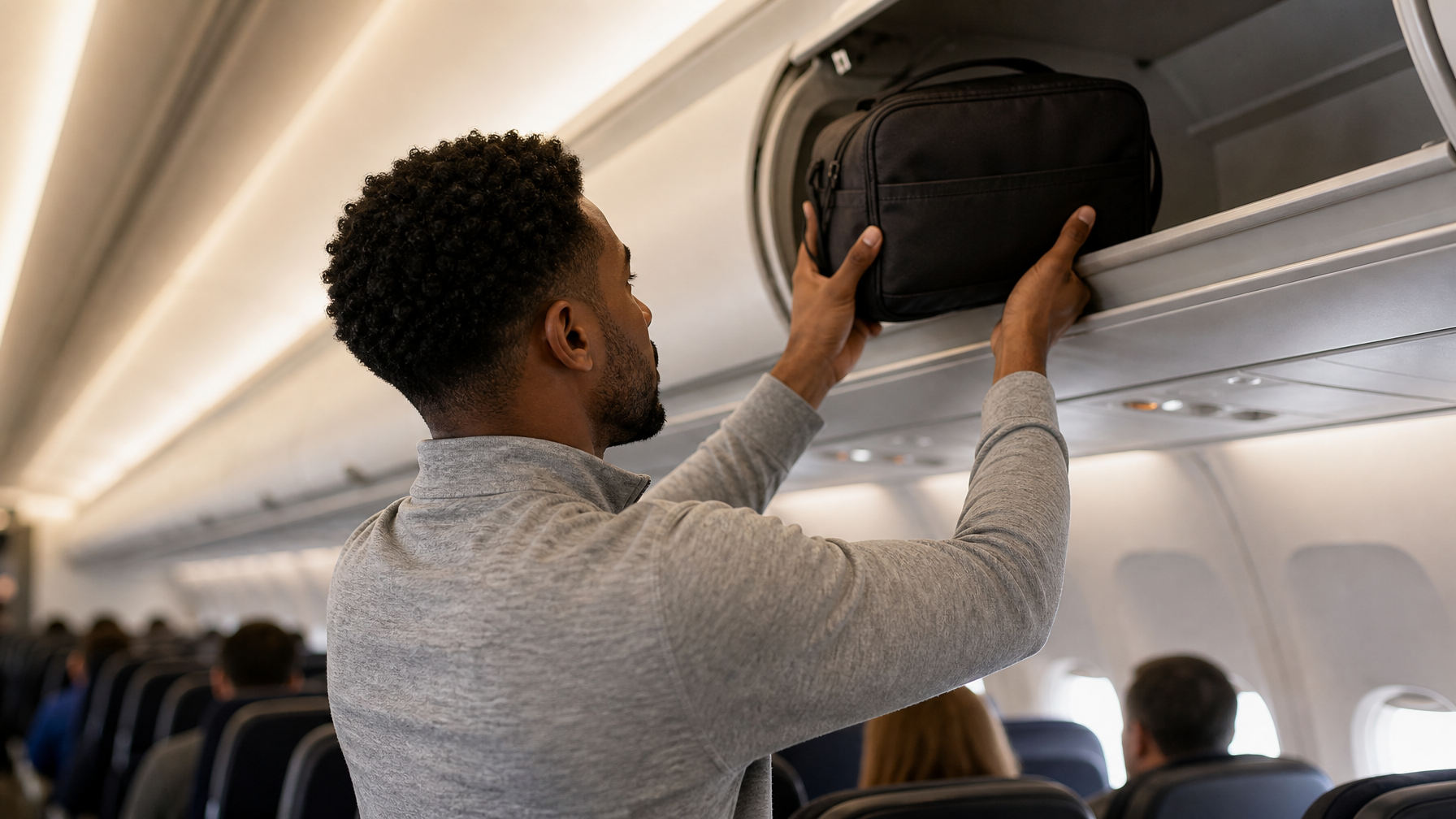
- Leave the bag slightly under-packed — a fully stuffed bag is harder to close in a hurry and signals to gate agents that it might not fit overhead
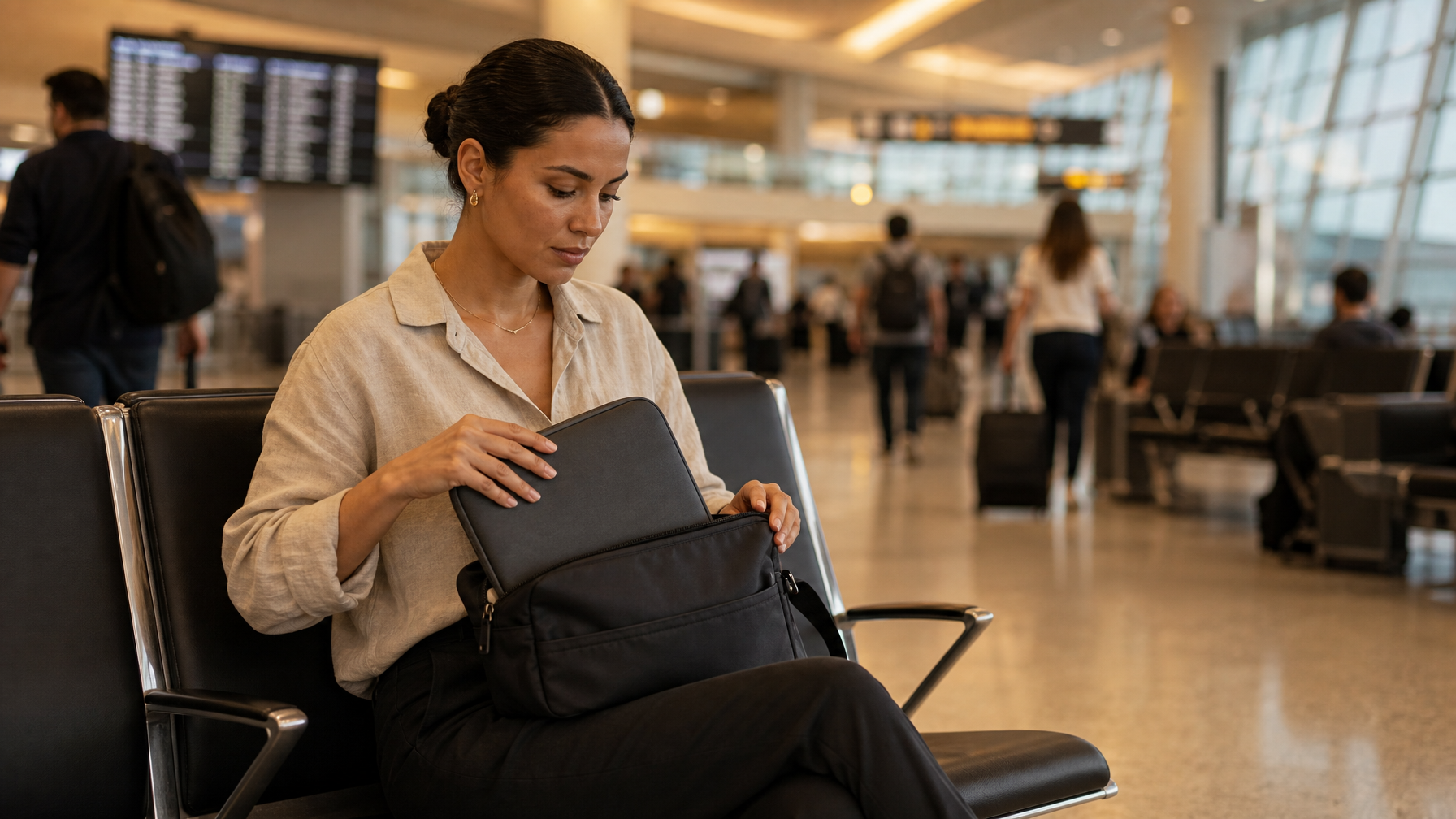
If you're building this system for both daily carry and travel — where your commuter bag and your travel bag are ideally the same piece of gear — the Haven Messenger works as the personal item that slides under the seat in front of you, keeping your daily carry essentials (laptop, cables, documents) accessible throughout the flight while your main bag goes in the overhead. For a deeper look at this kind of integrated carry system, the digital nomad carry setup guide covers the full approach for people whose work and travel overlap regularly.
Frequently Asked Questions
Can you really travel carry-on only for two weeks or longer?
Yes — and many long-term travelers do it indefinitely. The key is shifting from "clothes for every day" thinking to "clothes for every situation" thinking, combined with a simple laundry plan (sink-wash for underwear and socks, laundromat or hotel service for everything else once a week). The clothing doesn't change much after the first week — the system does.
What if my airline has strict carry-on size limits?
Check the specific allowance before you pack. Major US carriers typically allow 22 × 14 × 9 inches in the overhead bin. Budget carriers — especially in Europe — are stricter, and some charge for overhead bin access. For those routes, focus on a 20–25L bag that fits within their personal item dimensions, or check whether priority boarding (which grants overhead bin access) is worth adding to your fare.
How do you handle business trips with a dress code carry-on only?
The wrinkle-resistant fabric question matters here. Merino wool, technical wovens, and synthetic travel pants hold their shape better than cotton. For suits or dress shirts, most hotels offer pressing services — one pressed shirt on arrival covers a multi-day business trip. Wearing your most formal layer on the plane also removes it from the packing equation entirely.
Is one bag really enough, or do most people end up using both their carry-on and personal item?
Both slots are fair game. The carry-on goes overhead, the personal item slides under the seat in front of you. Many experienced carry-on travelers use a larger bag (25–35L) as the overhead carry-on and a slim everyday bag as the personal item for in-flight access to their laptop, documents, and water. The goal isn't to use fewer bags — it's to never check a bag again.