


What to Carry for a Day of City Exploration: The Setup That Keeps Up With You

You're out of the hotel by nine, no particular agenda, and six hours of city ahead of you. Maybe you've done this a hundred times. Maybe this is a new place. Either way, the question is the same one every experienced traveler eventually gets right: what do I actually need to carry today?
Not what you might need. Not a bag packed for every scenario. What you actually need for a full day moving through a city — its neighborhoods, transit system, markets, side streets, a lunch you didn't plan, a museum you walked past — and nothing that weighs you down while you do it.
The city exploration day is its own carry category. It isn't commuting (you're not going to a desk). It isn't a weekend trip (you're not packing for nights). It's something closer to an extended EDC — a deliberate, compact setup built for a day that will go longer and take more turns than you expect.
Getting this right starts with one decision that shapes everything else.
Start with the bag, then build the carry around it
Most people approach this backwards. They think about what they want to bring and then try to find a bag that fits it all. That logic leads to overpacking every time.
For a city exploration day, the bag decision should come first — and the right answer for most situations is a compact crossbody, not a daypack.
A daypack puts weight on your back, which sounds convenient until hour three of walking and standing in queues. It also signals "tourist" in a way that a crossbody worn close to the body doesn't. And when you sit down at a café, the backpack ends up on the floor, which creates the kind of security gap you'd rather not deal with.
A crossbody bag stays with you. It can rotate to the front when you're in a crowd. It lets you access your phone, transit card, or wallet without stopping, without setting the bag down, without a full unzip. In a city where you're moving constantly — in and out of metro exits, ducking into shops, covering ground on foot — that kind of frictionless access matters more than you'd expect.
The one exception: if you're carrying a laptop for a remote working half-day, or a camera kit that needs protected carry, a larger crossbody bag with a padded laptop compartment gives you that capacity without the backpack penalty.
For most city exploration days, 10–15 liters is the right range. Enough for everything on this list. Not so much that you start filling it with things you don't need.
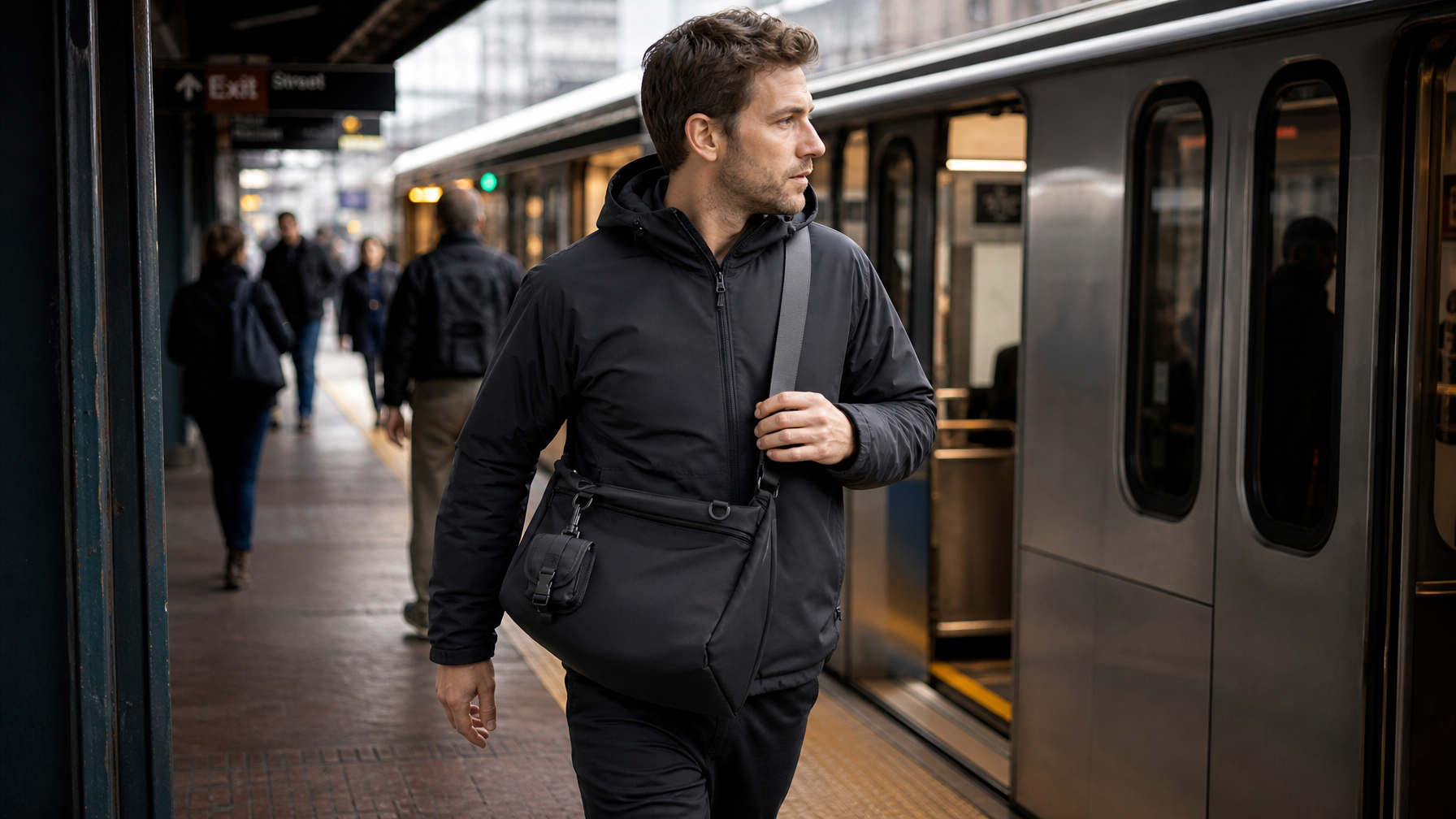
The city exploration carry list
The goal is a carry that covers a full day without redundancy. Every item earns its place by being genuinely useful across multiple situations — not just one.
Non-negotiables
- Phone. Your map, your transit card (in cities where apps replace physical cards), your camera, your boarding pass if you're mid-trip. The single most important item in the bag — everything else supports this one.
- Portable charger. A compact 10,000 mAh bank is worth more on a city day than almost anything else you could add. A dead phone in an unfamiliar city is a particular kind of problem. Keep it near the top of the bag, not buried at the bottom.
- Physical transit card or a small amount of cash. Apps fail. Systems go down. Keep a backup for any transit or payment situation where digital doesn't work. In many cities you cannot board without a physical card, regardless of what your phone says.
- Water bottle — collapsible or small. A collapsible 500ml bottle takes almost no space when empty and prevents the need to stop and buy water every hour. Pack it full, drink it, fold it flat.
- Weather layer. A packable jacket or ultralight rain shell — something that compresses small and deploys in under a minute if conditions shift. City weather changes faster than any forecast suggests, and a damp afternoon is miserable when you're still three hours from the hotel.
The carry that adapts to the day
- Small notebook or folded paper. For an address you wrote down, a table booking reference, or a name someone gave you on the street. Not essential on every day, but the one time you need it and don't have it is memorable.
- Sunglasses. These seem obvious until you forget them and spend the afternoon squinting across a whitewashed piazza.
- A second card and some local cash. Keep your backup payment method separated from your primary wallet — inside the bag rather than the same pocket. In the rare event a card gets compromised or a wallet goes missing, having a second option in the bag changes the severity of the situation considerably.
- Earbuds. For longer transit legs, navigating with audio directions, or creating a quiet bubble on a crowded bus.
- A small snack. Optional — but useful for stretching a good morning before you find the right place for lunch, rather than stopping at the nearest tourist trap because you're running out of energy.
Leave these at the hotel
Full-size laptop (unless the day includes specific work commitments). Camera gear beyond what fits a small pouch. Multiple guidebooks. Your original passport when it isn't required — a clear photocopy or phone screenshot covers most situations and keeps the original out of daily risk. The shorter the carry list, the better the day.
This same principle drives a solid minimalist everyday carry — the discipline of carrying only what you'll actually use applies equally to city exploration days as it does to daily commuting. The difference is the environment, not the philosophy.
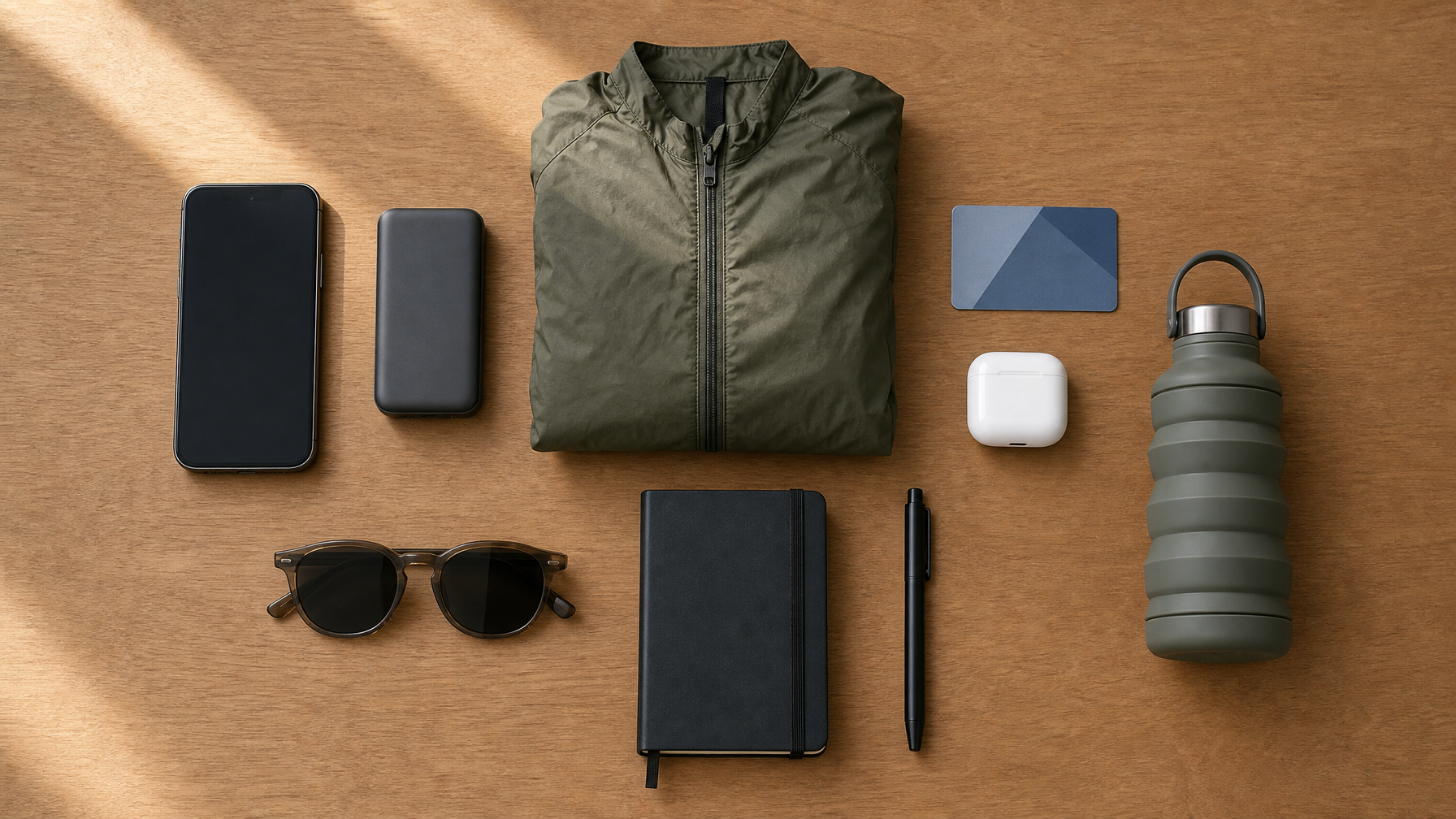
Planning for how the day will actually go
City exploration days have a shape. They start focused — a neighborhood you want to walk, a market someone mentioned, a café from a list you made. By early afternoon, the plan has dissolved into something better and more improvised. By evening you're somewhere you didn't expect to be, glad you packed light.
The carry that handles this well has three qualities:
Fast access. You're in and out of your bag constantly. Transit card at the turnstile. Phone for navigation. Sunglasses as you step outside. A bag with a single deep main compartment and no quick-access exterior pocket creates friction at every one of these moments. A bag with a dedicated front zip pocket — sized for the things you reach for most — removes that friction entirely.
Room for spontaneity. You might stop and pick something up. A book from a used bookshop. A small market find. A bottle of wine for later. The bag doesn't need to be large, but it shouldn't be so tight that one purchase makes you uncomfortable for the rest of the afternoon.
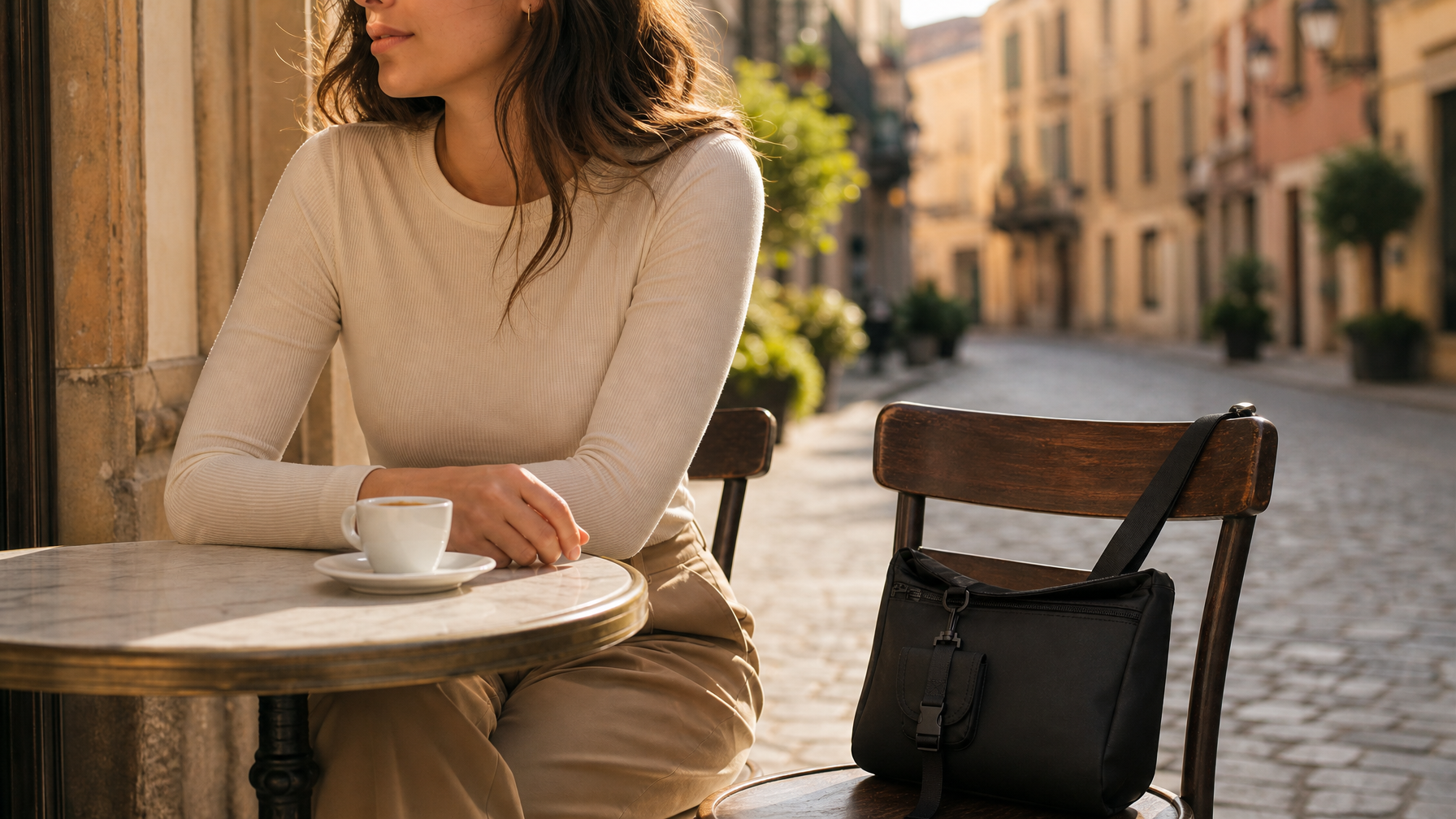
Stays with you when you sit. The best city day bags can move from crossbody to your lap to the back of a café chair without feeling like a risk. A bag you feel comfortable keeping in contact with at all times — rather than one you have to set on the floor and keep watching — makes long breaks genuinely relaxing instead of low-grade stressful.
If your city day also includes a work session — a morning at a café before you head out — the calculus shifts. That's a different setup, covered in detail in the guide on building the right work-from-anywhere bag setup. The two modes pair naturally on a single day if your bag handles both.
The anti-theft question, answered honestly
City travel forums spend considerable time on this topic. Pickpocketing in popular tourist destinations, crowded markets, and metro systems is real — and the anxiety around it shapes a lot of bag choices, not always for the better.
The wrong response is to buy the most conspicuous anti-theft gear available: slash-proof panels, RFID-blocking everything, alarmed zippers. This creates a sense of security while often not addressing the actual risk, which is almost always one of three things: a bag left unlocked, a bag set down and out of contact, or a moment of distraction in a crowd.
The right response is simpler:
- Use a crossbody bag that keeps both hands free and the bag in your line of sight.
- Choose a bag where the main compartment faces your body when worn — not the street.
- In genuinely crowded environments — packed metro, tight market — rotate the bag to your front. It takes two seconds and eliminates the most common scenario entirely.
- Don't carry your passport in the bag on days when it isn't required. Hotel safe, or a concealed document carrier for the original — day bag for everything else.
- A bag with a rear-panel security pocket (the panel that faces your body when the bag is worn) keeps your most valuable backup items — a spare card, emergency cash — in a position that requires removing the bag entirely to access. Nobody can reach it without you knowing.
The combination of a crossbody carry style and a bag with a rear security pocket covers most real-world risk without making the day feel like a security operation.
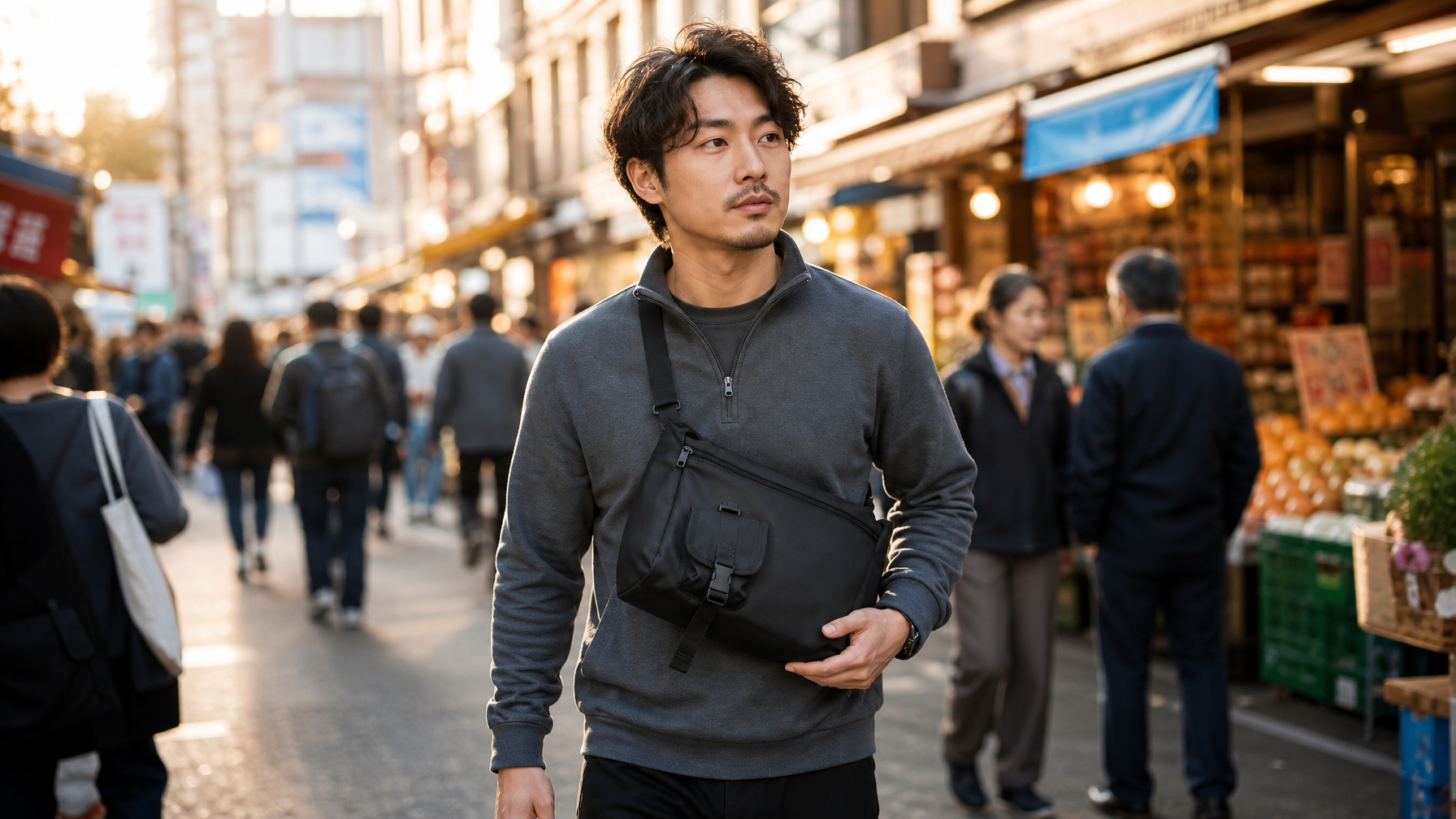
The bag that earns its place on city days
Most bags sold for city travel are either too large (daypacks that carry more than a full day warrants) or too small (fashion crossbodies that can't hold a water bottle and a layer at the same time). The setup that works — a crossbody compact enough to disappear into a city day but capable enough to carry everything on this list — sits in a narrower range than most people expect.
The Haven Messenger was built for exactly this mode. It's a structured urban crossbody: 600D Oxford shell, waterproof enough to handle an unexpected afternoon shower, with a padded 14" laptop compartment when the day includes work, and a multi-pocket interior for the rest. The detachable front accessory pouch clips on for days when you want your transit card and earbuds in their own dedicated pocket — and comes off when you want a cleaner carry profile.
The anti-theft rear zip pocket is one of its most-used features on travel days — not a checkbox feature, but a genuinely useful place to keep a backup card and a folded emergency note separate from your main wallet. The bag sits at hip level on a crossbody strap, moves to the front in a crowd, and rests on a café chair beside you without occupying the whole seat. At 1.21 lb empty, you stop noticing it within the first block.
For days when you're carrying even less — no laptop, nothing work-adjacent, just the city exploration essentials — the Commuter Sling offers a lighter alternative at 0.66 lb. It pairs well with days where you genuinely want to move fast and stay minimal. If you're navigating a city for a weekend with your main bag elsewhere, the weekend trip carry guide covers how these two bags work together across multi-day city trips.
Either way: the right city day bag is one you stop thinking about within the first hour. That's the standard worth holding.
Frequently asked questions
What size bag is best for a day of city exploring?
10–15 liters covers most city exploration days. This holds a packable layer, water bottle, charger, and daily carry without the bulk of a full daypack. A compact crossbody in this range is more useful than a backpack for urban environments where you're moving frequently and need quick access.
Should I use a crossbody or a backpack for city exploring?
A crossbody bag works better for most city days. It keeps both hands free, stays in your line of sight in crowds, rotates to the front for added security, and lets you access your phone and transit card without stopping. A backpack makes more sense if you're carrying a full camera system, laptop, or significantly more volume than a day of exploring requires.
How do I keep my belongings safe in a new city?
Choose a crossbody bag with a rear-panel security pocket that sits against your body when worn. In crowded markets or transit, rotate the bag to your front. Keep your passport at the hotel unless the day specifically requires it, and carry a backup card separated from your main wallet. Simple habits, consistently applied, address most real risk without heavy anti-theft gear.
What should I leave at the hotel on a city day?
Your main laptop (unless you have work commitments), original passport (carry a photocopy instead), extra clothing beyond one packable layer, and anything you packed "just in case" but haven't used in three days of the trip. The shorter the carry list, the better the day moves.