


The Working Minimalist: How to Build an Everyday Carry That Goes Everywhere

TLDR
Minimalist everyday carry is about intentionality — carrying only what earns its place in your bag. The right setup combines five core essentials, a bag built around how you actually move, and the discipline to leave everything else at home. Once you get it right, you stop thinking about your bag entirely.
It's 7:51am on a Tuesday. The platform at Union Square is packed, the train is two minutes out, and you've got a laptop, a meeting at 8:30, and a bag that opens in one motion. You reach in, pull out your phone without looking, check the delay notice, and zip it back in under five seconds. Nothing shifts. Nothing spills. Everything is exactly where you put it.
That's what a well-built everyday carry actually feels like. Not a gear collection. A system.
Most people carry too much.
Not dramatically too much — just enough that their bag has become a small, portable archive of things they might need someday. A charger for a phone they no longer own. Three pens, none of them great. A tangle of cables that haven't been used since last spring.
It costs you more than you realize: the extra weight, the friction of searching for what you need, the low-level mental noise of carrying gear you don't trust or use.
Everyday carry — EDC, in the community that's built around it — is the practice of carrying only what earns its place. Not less for its own sake, but less because everything that remains is exactly right.
This is a guide to building that setup. Not a gear list. A framework.
What Minimalist Everyday Carry Actually Means
The term "everyday carry" started in preparedness communities: people who thought carefully about what they'd want on their person if something unexpected happened. Over time, it expanded to include anyone who's intentional about what they bring through the day — commuters, travelers, remote workers, and people who simply want to move more efficiently.
If you're new to EDC thinking, What Is Everyday Carry? covers the full history and framework in detail.
Minimalist everyday carry is a subset: the idea that the best EDC isn't comprehensive, it's precise. You carry what you need for your actual day, not for a hypothetical emergency three standard deviations outside your normal life.
The practical result: a lighter bag, faster access to what matters, and a carry system so dialed in that it disappears into your routine.
Why Most People's Daily Carry Is Too Heavy
The weight creep happens gradually. A cable goes in for a trip and never comes out. A snack stays in the bottom of the bag for a week. You add a backup charger after one bad day and forget to remove it when you don't need it.
Before long, a bag that should weigh two pounds weighs five. And the extra weight isn't neutral — it changes how you move, how often you reach into your bag, and whether you actually enjoy carrying it.
The other problem is redundancy. Most people carry three or four things that do one job: multiple charging cables, a full-size wallet and a card holder, a notebook and a phone for notes. A considered everyday carry forces you to pick one thing that does the job well and trust it.
A well-built carry system disappears into your movement. You stop managing it and start moving through your day.
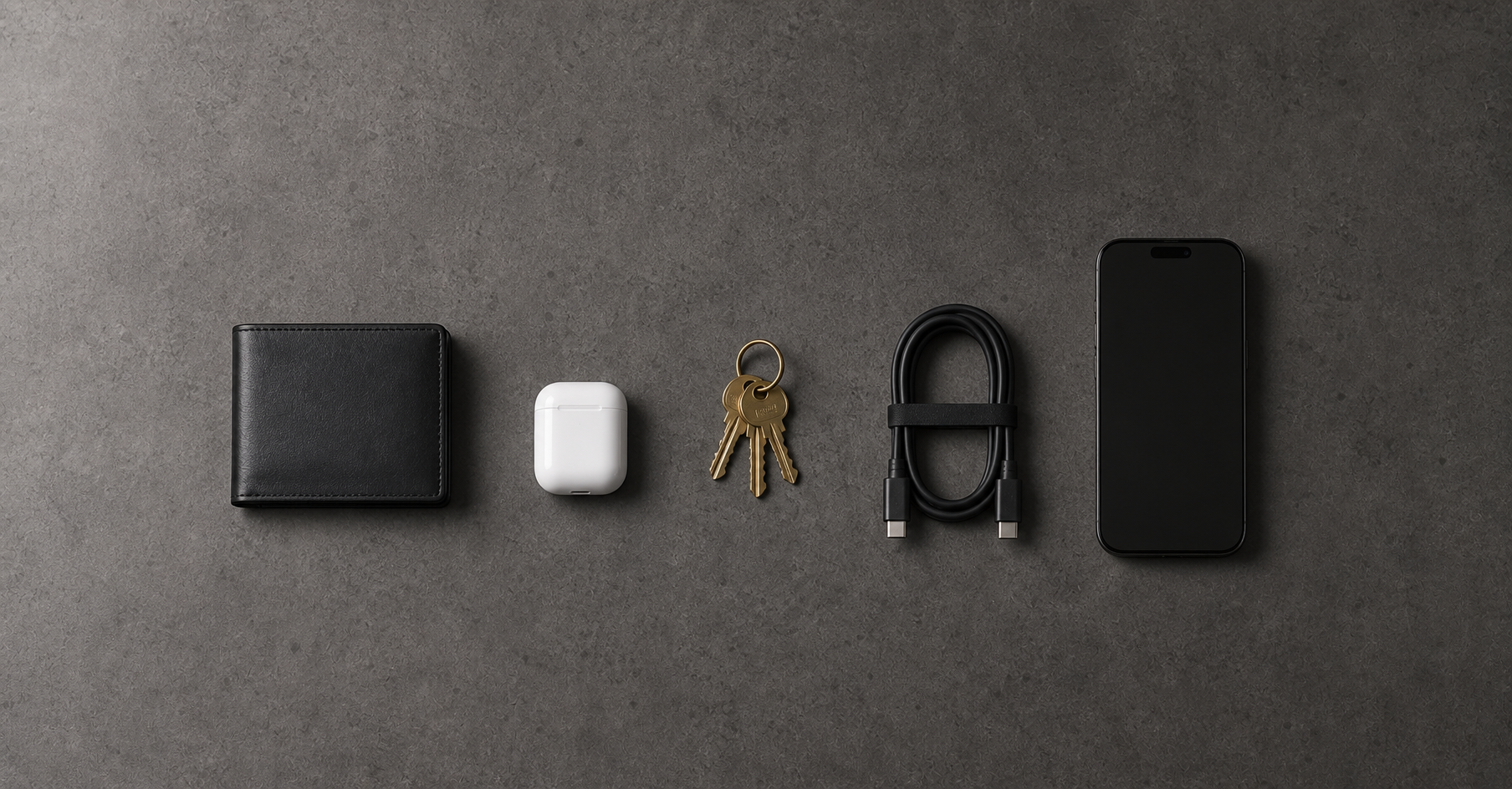
The 5 Items Every Everyday Carry Needs
These aren't suggestions. They're the core of any daily carry that actually works, regardless of your lifestyle or profession.
1\. Your Phone
The most powerful tool most people own. It replaces a camera, a GPS, a calendar, a wallet (if you use digital payments), a notebook, and a music player. The EDC starts with the phone and works backward from there — anything the phone handles, you don't need to carry.
2\. A Slim Wallet
A full-size bifold wallet filled with loyalty cards and old receipts is working against you. Pick something that holds your two or three essential cards, your ID, and a folded bill. Nothing else. The discipline required to keep a slim wallet slim is the same discipline that makes the rest of your carry work.
3\. Keys — Minimal
Most people carry more keys than they need. Audit yours. If you haven't used a key in six months, it doesn't go on the ring. A single compact key organizer or a small, high-quality keyring keeps this category contained.
4\. A Way to Stay Charged
One cable, one compact charger or power bank if your day requires it. Not both. Not three cables for three devices. One cable — ideally USB-C, which now covers most modern devices — and a charger that fits what your day actually looks like.
5\. The Right Bag
This is where most carry setups either work or fall apart. The bag is the system. It determines how everything else is organized, accessed, and carried — and it shapes how much you allow yourself to bring.
A good everyday carry bag has exactly enough space for what you need, not more. Too much space invites accumulation. Too little creates constant frustration. The sweet spot is a bag that fits your laptop, your essentials, and one or two extras — and nothing else.
Five items. Everything else is optional.

How to Choose the Right Bag
The bag category matters. Here's how to think about the main options:
Messenger Bags
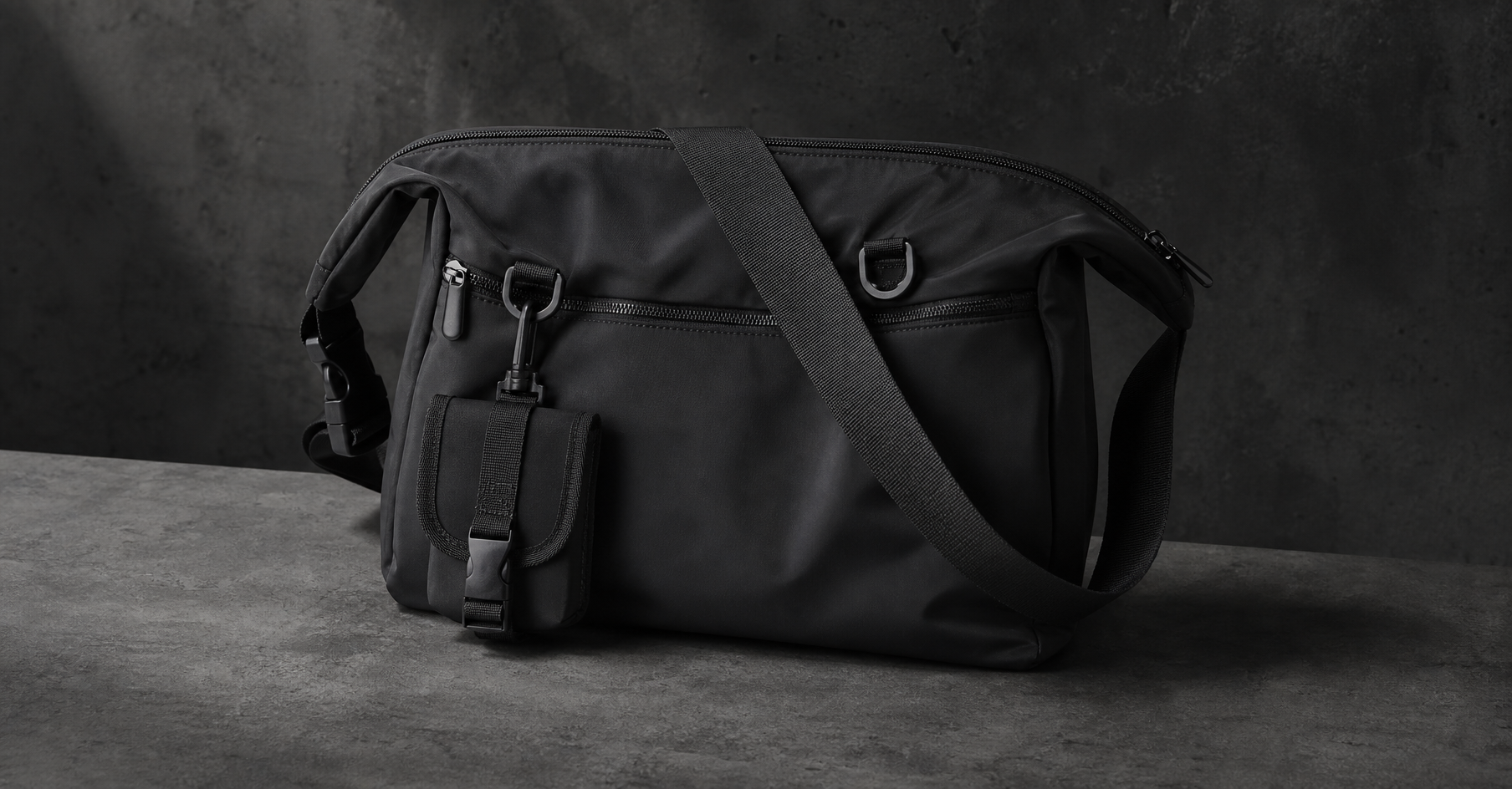
The best choice for most daily commuters and professionals. A modern commuter messenger sits close to your body, opens with a top-zip closure, and gives you fast access to everything inside without removing the bag. The horizontal orientation works naturally for a laptop. A well-designed option like the Haven Messenger fits a 14" laptop, your essentials, and a water bottle without becoming a suitcase.
The key advantage for a lean carry: the capacity ceiling is a feature, not a bug. It enforces discipline. You can't pack a messenger bag with a week's worth of gear the way you can a 30-liter backpack.
For a complete breakdown on what to look for in a commuter bag — weatherproofing, access speed, anti-theft design, and carrying style — the complete commuter bag guide covers every selection criterion in detail. For a reviewed comparison of the best commuter bags of 2026, matched by commute type, that guide covers the leading options.
Crossbody and Sling Bags
For lighter days — when you don't need a laptop — a compact crossbody or sling is excellent. It keeps the core carry accessible and adds almost nothing to your silhouette. On a day when your EDC is phone, wallet, keys, earbuds, and a notebook, a smaller crossbody is the right-sized solution. For a buying guide on what separates a genuinely good crossbody work bag from one that only looks right on a product page, crossbody bags for work covers the six criteria in detail.
Backpacks
Harder to maintain as a tight carry. The capacity that makes backpacks versatile also makes them magnets for accumulation. If you go the backpack route, choose one with a dedicated laptop compartment and limited secondary pockets — fewer pockets means fewer places for unnecessary gear to hide.

Building Your Carry by Use Case
Your setup should reflect how you actually spend your days, not how you'd ideally like to spend them.
The Office Commuter
Core carry: laptop, charger, slim wallet, keys, phone, earbuds, water bottle. Bag: messenger or laptop brief. One main compartment, a quick-access exterior pocket for your phone and transit card. The goal is subway-to-desk efficiency — nothing you have to dig for. For a complete item-by-item breakdown of every professional carry layer, the office EDC guide covers every tier from on-body carry through bag selection.
The Remote Worker
Core carry: laptop, power bank, one cable, slim wallet, keys, phone, a small notebook. Bag: messenger or compact crossbody depending on the distance. If you're coffee shop to coffee shop, weight matters more than capacity. The coffee shop carry guide covers exactly what to pack for a productive session away from a desk.
The Frequent Traveler
Core carry: everything above, plus passport, a compact packing cube for overnight essentials, and noise-canceling earbuds. The Haven Messenger fits under most airline seats and handles a 14" laptop, travel essentials, and a jacket without issue.
The Light Commuter
No-laptop days: phone, wallet, keys, earbuds, a transit card. Bag: sling or small crossbody. Anything larger creates the temptation to fill the space.
The Case for One Bag That Does Everything
The most refined version of minimalist everyday carry is the single-bag setup: one bag that works for your commute, your weekend trip, your coffee shop session, and your flight. You never have to transfer things between bags or remember which bag has what.
This requires choosing your bag carefully. It needs to feel right on a normal Tuesday, but capable enough to handle a three-day trip. Fast access for urban commuting and enough structure to protect a laptop. A waterproof or water-resistant shell for the commute you didn't plan around.
The bags that pull this off share a few traits: a padded laptop sleeve, a quick-access exterior pocket, a weatherproof shell, and a strap system that works whether you're crossing a platform or crossing a terminal.
One bag. Every trip.
Three Rules for Keeping Your Carry Dialed In
After you've built your first real everyday carry setup, maintaining it comes down to three habits:
- Everything goes back. After every trip, every commute, every errand — unpack what you added and put it back where it belongs. Anything that doesn't have a permanent home in the bag stays out of the bag.
- One in, one out. If something new goes in the bag, something else comes out. The moment you start adding without removing, the weight starts creeping.
- Audit monthly. Once a month, empty the bag entirely. If something hasn't been used in the last two weeks, it doesn't belong in the bag. This takes five minutes and keeps the system honest.
Frequently Asked Questions
What should I carry every day for a minimalist setup?
The EDC core is phone, slim wallet, keys, and a single compact charger or power bank if your day requires one. Everything else — laptop, notebook, earbuds, water bottle — gets added based on what your actual day looks like, not what you might theoretically need.
What bag is best for minimalist everyday carry?
A messenger bag or compact crossbody works best for most people. The limited capacity enforces discipline, and the top-zip or quick-access design means you're never searching through layers to find what you need. The Haven Messenger is built specifically for this: a 14" laptop sleeve, a padded organizer pocket, and a waterproof Oxford shell in a slim, structured profile.
For a full comparison of the leading work messenger options organized by use case, the best messenger bags for work in 2026 covers the top picks. For a reviewed list of the top laptop bags built for daily commuting, the best laptop bags for commuting covers the leading options by bag style and commute type.
How do I reduce what I carry every day?
Empty your bag completely and put everything on a flat surface. Then build your carry back from scratch, adding only what you actually used in the last week. Most people are surprised how much they were carrying that never came out of the bag.
Is a messenger bag or backpack better for everyday EDC?
A messenger bag for most daily carry situations. The capacity ceiling is lower, which prevents accumulation. The horizontal access means you can reach your laptop or phone without setting the bag down. And a good commuter messenger sits close enough to the body that it barely registers over a full day.
How many items should be in a tight everyday carry?
There's no fixed number, but a useful benchmark: if you can't list everything in your bag from memory, you're probably carrying too much. Most considered everyday carries come in between six and ten items total.
The Field & Ash Journal covers carry, craft, and the things worth keeping. For the foundational framework on EDC thinking, start with What Is Everyday Carry?. For applying this setup to coffee shop and remote work sessions, the coffee shop carry guide covers exactly what to pack. And for choosing the right commuter bag, the complete commuter bag guide covers every selection criterion.