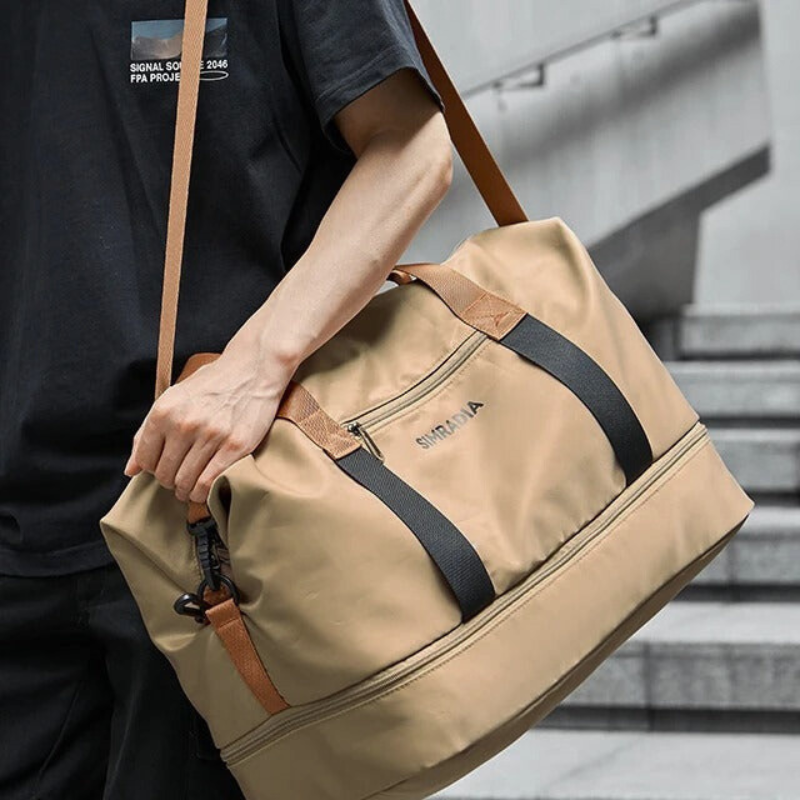



Anti-Theft Bags for Commuters: What the Features Actually Do (and Which Matter)

Your commute is crowded, fast, and full of small moments where your bag leaves your attention for a second. The train door opens. You set your bag down to grab coffee. You turn to check the platform sign. In a city commute, these seconds are normal. The question is whether your bag makes them easier or harder.
Anti-theft is a broad category. Some features genuinely change how secure your daily carry feels. Others sound good on a product page but don't hold up when you're shoulder to shoulder at rush hour. This guide separates the two.
The Real Risk in a City Commute
City theft is rarely dramatic. It's not someone running with your bag. It's a zipper eased open in a crowd, a phone slipped from an outer pocket while you're looking at your stop, a bag lifted from the floor beside your chair when you glance away.
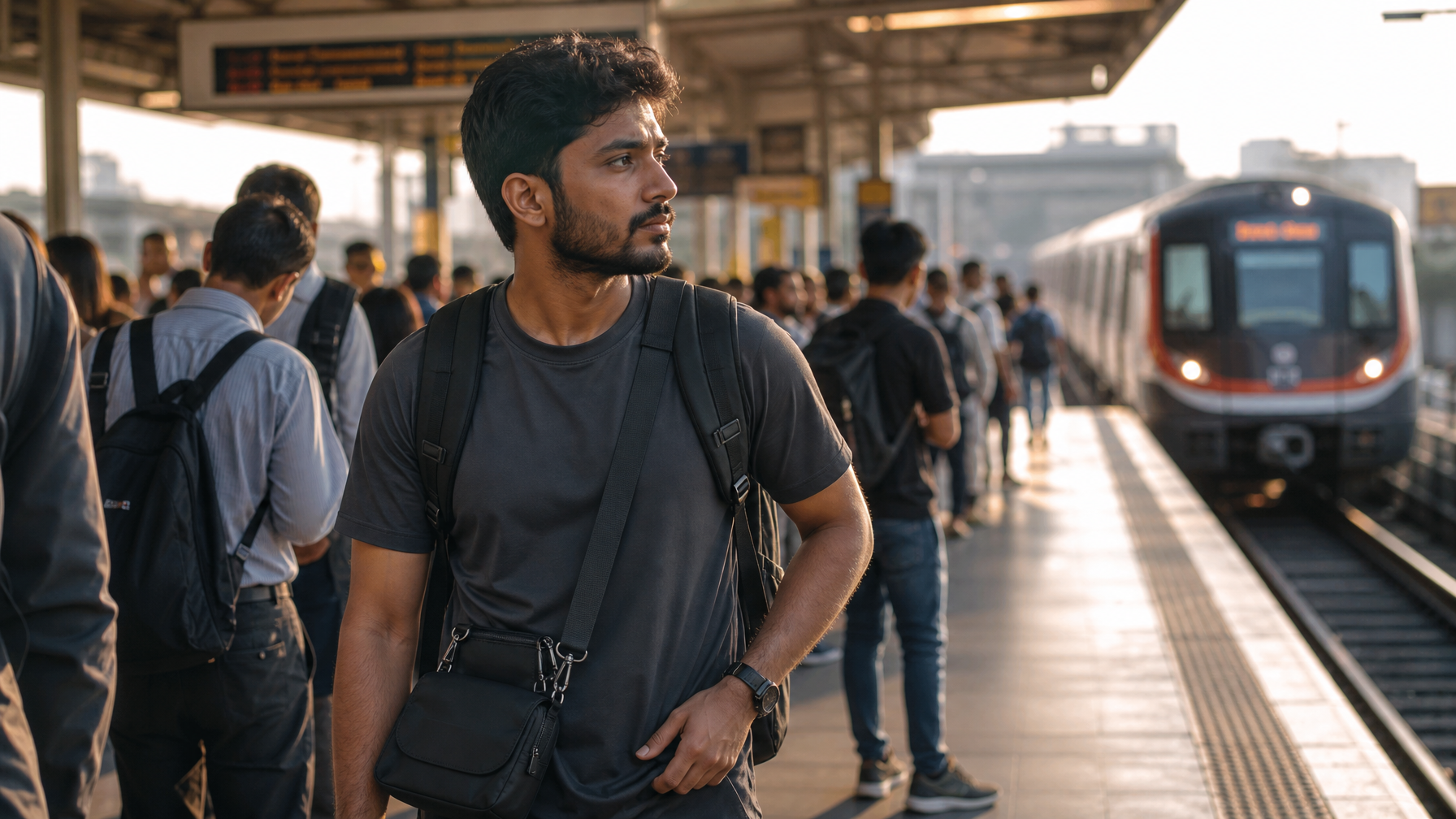
The pattern matters. Most incidents happen in three settings: transit (standing close together), cafés or co-working (bag out of contact), and walking through dense areas (bag swinging loose). A bag that stays close to your body, stays zipped when it should, and keeps your most valuable items in a place only you can reach solves almost all of it without looking like tactical gear.
What Anti-Theft Features Actually Do
Here is what each common feature does in practice, not just in marketing copy.
1. Hidden back pocket against your body. This is the single most effective anti-theft pocket design for commuters. A zip pocket placed on the back panel. The side that sits against your hip or back when worn crossbody. Is effectively invisible and inaccessible when the bag is on. It's where your phone, passport, or transit card should live while you move. You reach it easily by sliding the bag forward. Someone else doesn't.
2. Lockable or reversed zippers. Zippers that can be pulled to the bottom of the bag or tucked under a flap, rather than sitting open at the top, make casual opening much harder. They don't need to be actual locks. The point is that the zipper pull isn't sitting in plain sight at the highest, most accessible point.
3. Crossbody carry with stable strap position. A bag worn across your body stays in front of your hip or at your side where you can feel it. Compared to a shoulder bag that swings or a tote that hangs open, crossbody carry keeps contact. The strap itself matters. Wide, non-slip webbing keeps the bag from sliding around as you walk or turn.
4. Secure main closure, not just pockets. If the main compartment is open or uses a magnetic snap only, everything inside is one lean away from exposure. A top zip that runs the full width of the opening changes daily behavior: you zip it closed without thinking, even for short moves between a table and a counter.
5. Internal organization that prevents the rummage. The longer you search for something in your bag in public, the more you expose. A bag with defined pockets. Laptop sleeve, small interior zip for valuables, quick-access phone slot. Lets you retrieve without opening everything and spreading your carry across a café table.
Which Features Matter for Which Commute
Not every commuter needs every feature. What helps most depends on how you move.
If you ride subway, train, or bus at peak hours: hidden back pocket and crossbody stability matter most. You're standing close to others. Keep your phone and wallet on your body side, not in an outer pocket that faces outward.
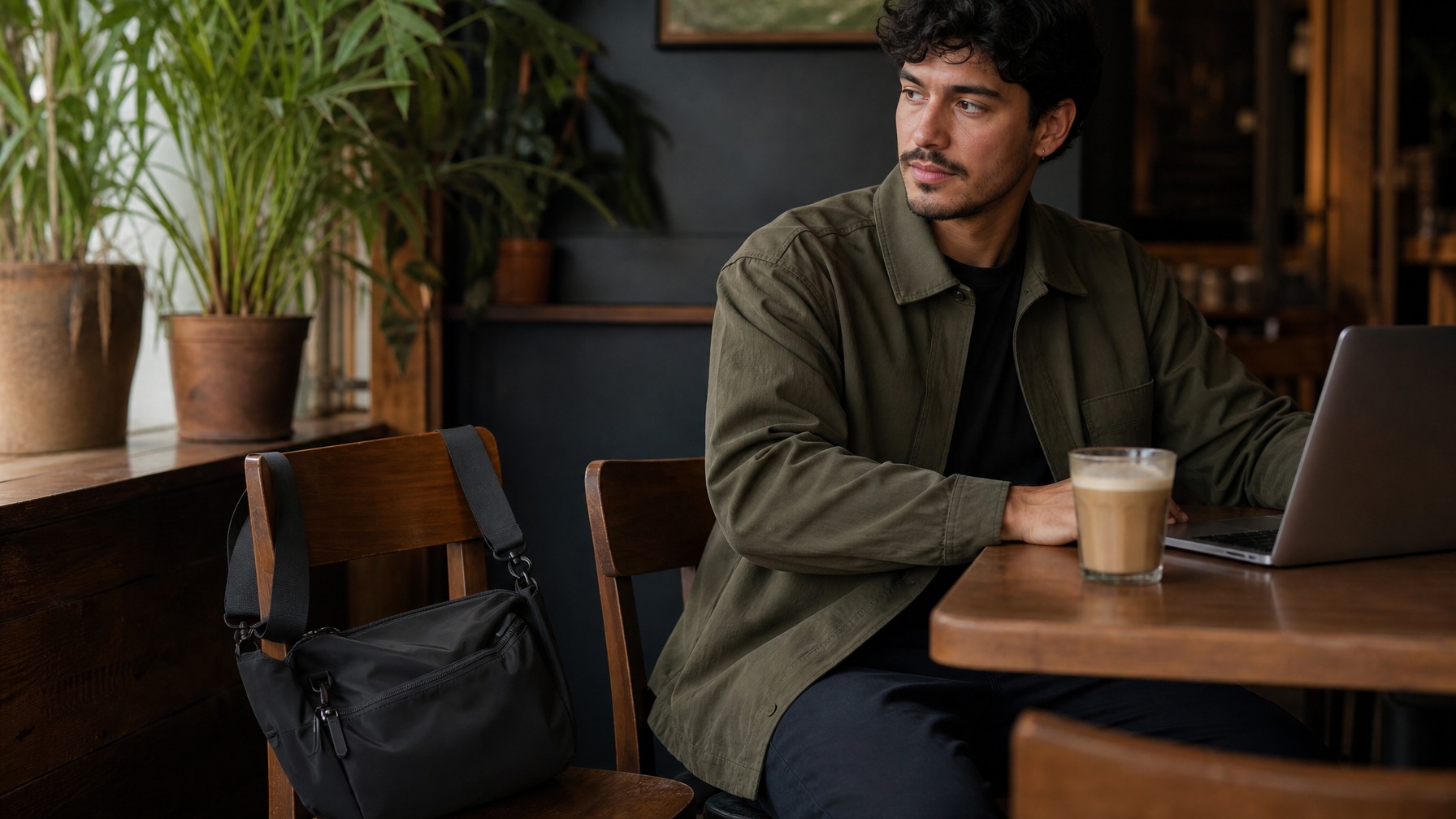
If you work from cafés or co-working between meetings: zippered main closure and a bag that stays on your chair matters more than anything. In our guide to working from coffee shops, the pattern is consistent. A bag on the floor is a bag forgotten. A bag on the chair back stays in contact.
If you commute on foot through busy areas: minimal external dangle and a bag that sits high at hip level, not low at your knee, reduces opportunity. A compact crossbody moves with you instead of swinging away from you.
Haven Messenger ($89). Hidden pocket and daily crossbody stability
The Haven Messenger was built for this exact pattern. It carries a padded 14-inch laptop sleeve inside, but the anti-theft detail commuters notice first is the hidden back zip pocket. When the bag is worn crossbody, that pocket sits flat against your body. Large enough for a phone and passport, secure without you having to think about it.
The top zip runs full width, so closing it is one motion as you stand up. The wide seatbelt-style strap keeps the bag from rotating off your hip as you move through a crowd. The shell is 600D Oxford exterior with waterproof construction, so a rainy commute doesn't become a second risk. For daily subway and mixed café commuting, this layout keeps your most important items on your body side and your main compartment zipped without adding bulk.
Apex Backpack ($139). When you carry more and still need secure access
Some commuters carry more than a messenger can hold cleanly. Extra layers, gym kit, larger laptop. The Apex Backpack handles that while keeping security features practical. It uses anti-theft zippers on the main compartments that sit flat and are less exposed than reversed coil zippers jutting out, plus a chest buckle that keeps the bag from shifting on your back in crowded conditions.
What makes a backpack feel secure in a city isn't just the zipper. It's how the bag sits high and close to your body rather than hanging low where you can't sense movement. When the weight is centered and the straps keep it stable, you notice if someone brushes against it. Which is exactly what you want in dense transit.

Horizon Waist Pack ($59). The second layer for high-density days
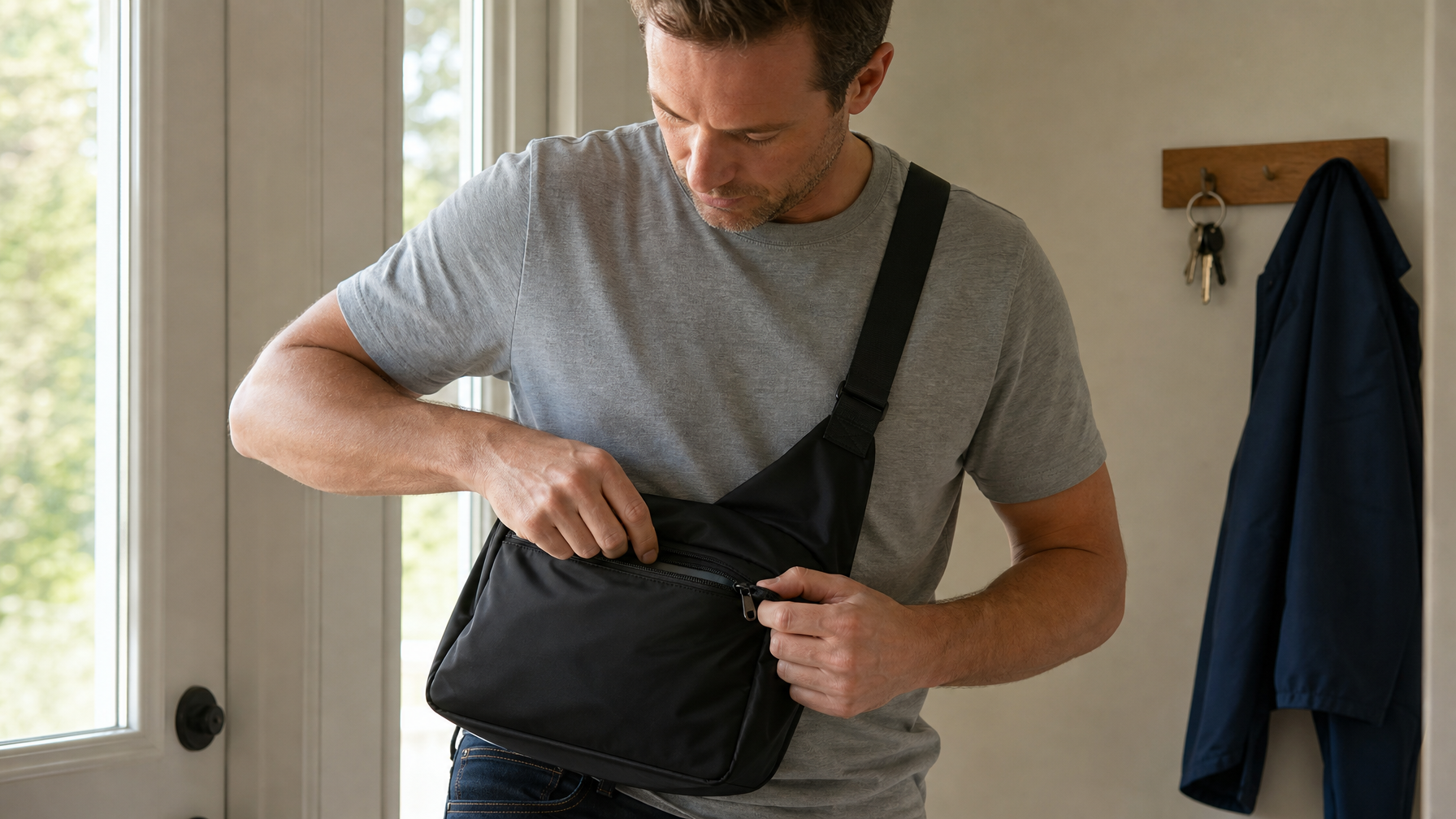
For days when the commute feels especially packed. Transfers, markets, events. A waist pack worn crossbody in front is the most secure configuration without thinking about it. The Horizon Waist Pack is designed for exactly that. Its anti-theft zipper faces your body when worn, and the reinforced strap resists slicing while staying light enough that you forget it's there.
This isn't a replacement for a main bag. It's a second layer for valuables on days when you want your phone, cards, and ID in a bag that never leaves your front. Many commuters pair a slim waist pack with their Haven Messenger or Apex Backpack. Main bag for work gear, waist pack for what absolutely can't leave your person.
What Doesn't Help As Much As It Sounds
A few features are over-sold. They help in edge cases, but shouldn't drive your decision for a daily city commute.
RFID-blocking lining on its own. Useful if you carry contactless cards loose, but most people carry cards in a phone that already limits contactless exposure. The bigger daily win is a defined, body-side pocket for cards. Not a special lining.
Cut-proof cable straps that feel like a chain. If the strap is heavy and uncomfortable, you'll stop wearing the bag crossbody, which defeats the security benefit of crossbody carry in the first place. A reinforced but comfortable strap you actually wear matters more than a technical spec you won't.
Versus buying a dedicated anti-theft travel bag. Travel anti-theft bags skew bulky and overbuilt for an office. For daily commuting, a well-designed everyday bag with a hidden back pocket and stable carry outperforms a travel-specific bag that looks out of place at work. Save the heavy-duty travel lock bag for international trips covered in our carry-on only system.
How to Choose Today
Start with how you move, not with a feature list.
If your commute is mostly transit and short walks: choose a compact crossbody with a hidden back zip pocket against your body. The Haven Messenger fits that brief. It stays close, keeps your phone on your body side, and zips closed in one motion.
If you carry more or bike to work and need stability: choose a backpack that sits high and has secure, low-profile zippers plus a chest strap. The Apex Backpack holds that role without adding tactical weight.
If you want a dedicated secure layer for cards and phone on high-density days: add the Horizon Waist Pack worn crossbody in front. It keeps essentials in front of you even when your main bag is on your back.
For more on keeping your daily carry organized and quick to access, read how to organize your bag so you never have to rummage in public.
FAQ
Are anti-theft bags actually more secure?
The most useful anti-theft features are simple: a hidden pocket on the body side, a full-width top zip, and crossbody carry that keeps the bag in contact. Those three change daily behavior more than any single technical material.
Do I need RFID protection in a commuter bag?
For most commuters, a defined body-side pocket matters more than RFID lining. If you carry cards loose, a small zip wallet inside the hidden back pocket gives you both organization and reduced exposure without an extra lining claim.
What's the best everyday anti-theft bag for commuting?
For a daily mixed commute of subway, walking, and cafés, a compact crossbody with a hidden back pocket like the Haven Messenger performs best because it stays close, keeps valuables on your body side, and looks appropriate for work.
Should I use a backpack or messenger for city security?
If you want your bag in front of you where you can see it, a messenger or crossbody like the Haven Messenger makes sense. If you carry more weight and want stability on your back, choose a backpack like the Apex Backpack that sits high, close, and has secure low-profile zippers.
Is a waist pack secure enough for valuables in a city?
Yes, when worn crossbody in front. A waist pack like the Horizon Waist Pack keeps your phone and cards in front of your body where any movement is immediately noticeable. It works well as a second layer with a main work bag.