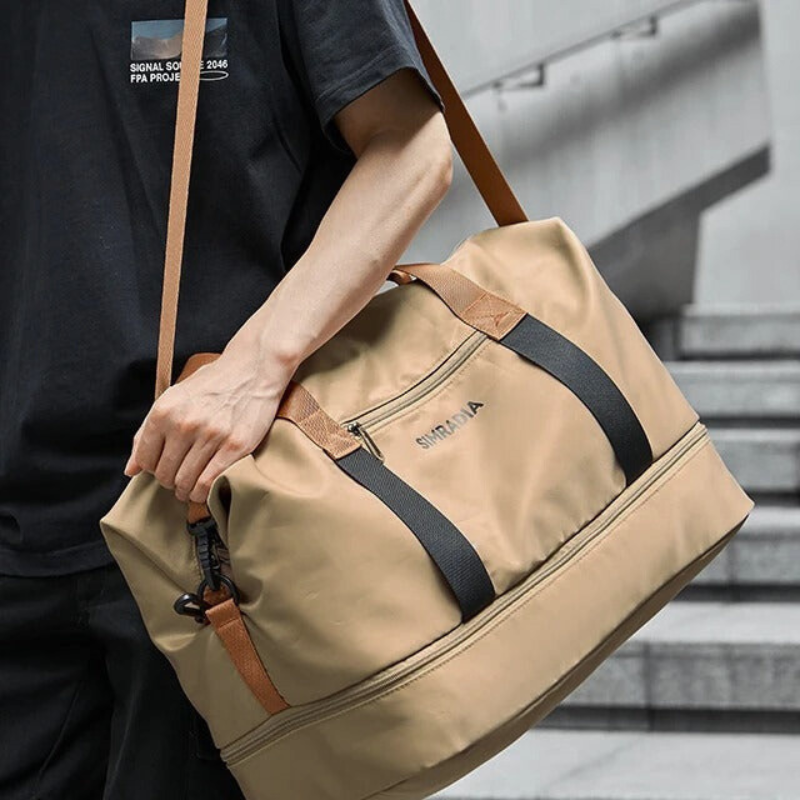



The Productivity Rituals of People Who Work From Everywhere

You've watched them work.
On the train. In the corner of a busy café. At a hot desk in a city you've never been to. They look settled. Not just set up. Laptop open, coffee at hand, bag in reach. They're not fighting their environment. They're barely noticing it.
This is not a personality trait. It's a system.
People who can work productively from almost anywhere have figured out something the flexibility revolution hasn't published in a LinkedIn post yet: the ritual matters more than the location. And the ritual is portable, if you've built it to be.
The Problem With Location Dependence
Most people's productivity is bound to a specific environment. The right desk. The familiar monitor. The noise level they've calibrated over months in the same chair. When any of those things change, output drops.
That's not weakness. It's the result of never needing to build portability into the system. Office environments breed location dependence by design. There's nothing wrong with that, until the day your work requires you to be somewhere else.
Hybrid workers feel this acutely. Three days in the office, two from home. And the two home days are somehow always the harder ones. Frequent travelers feel it more: a hotel room that belongs to someone else, a client's open floor that smells different and has the wrong kind of chairs.
The people who work well from everywhere have generally lived through that disorientation and come out the other side with a different approach. They stopped trying to recreate the office. They built a ritual that travels with them instead.
What the Ritual Actually Is
Ritual here is not mystical. It's a short, repeatable sequence of actions that signals to your brain: we're working now.
Behavioral scientists call this an implementation intention. A specific plan for when, where, and how a behavior will happen. The more concrete and consistent the implementation, the more reliable the behavior. For people in fixed offices, the commute itself often functions as this ritual. The physical transition from home to work mode happens automatically. When the location becomes variable, the ritual needs to be something you carry.
Most mobile workers develop a version of the same sequence without realizing they're doing it:
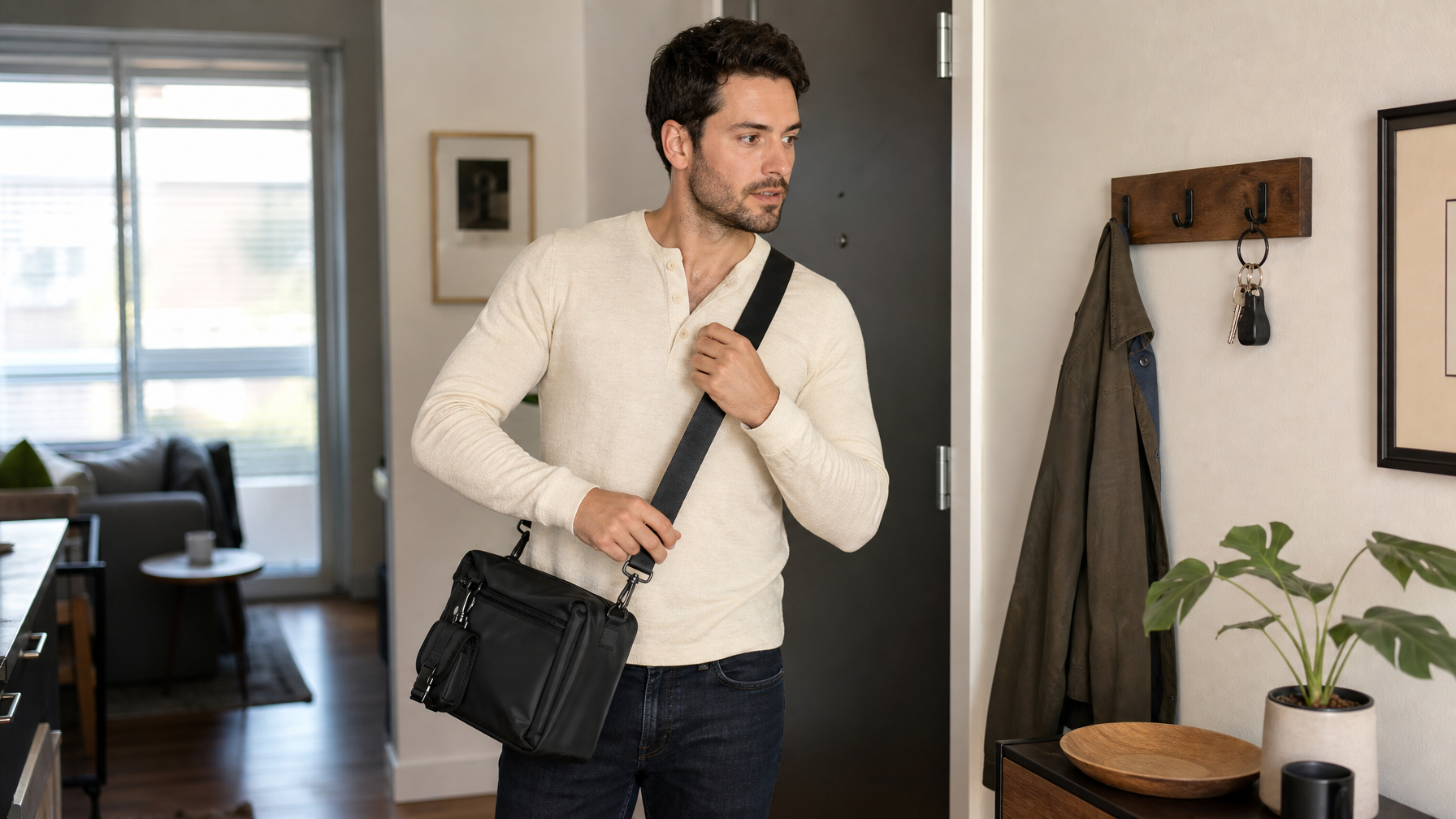
Arrive. Orient. Set up. Put the bag down. Take out the laptop. Place the notebook and pen in the same position. Put the coffee in the left corner. This is not superstition. It's a consistent environmental anchor that activates focus without requiring a fixed physical space.
The sequence is the trigger. The café can be different. The chair can be wrong. The noise level can be higher than you'd like. But if the first ten moves are always the same, the brain shifts into work mode anyway.
The carry system is the sequence. The reason people who work well from everywhere often have very specific bags and very specific organization systems is not that they're gear obsessive. It's that the bag is the only consistent element across every work environment. The bag is where the ritual lives.
The Five Rituals Mobile Workers Share
Across research. Productivity communities, remote work forums, and conversations with people who've figured this out. Five consistent habits appear in people who work well from everywhere.
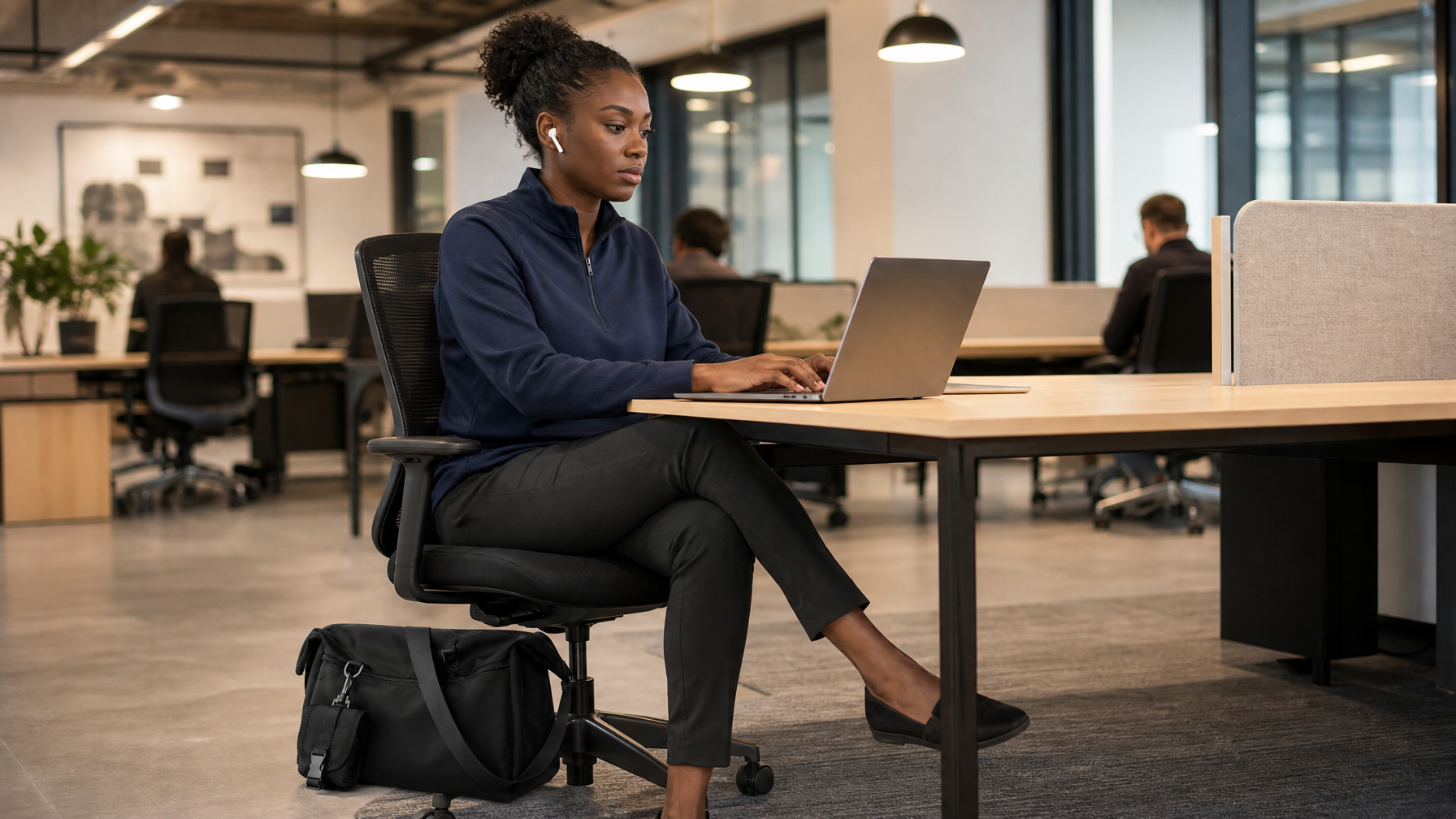
1. They protect the first hour. Before checking email, before responding to messages, before anything reactive: they do the work. The first hour is the highest-leverage hour. It requires the same setup regardless of location, which means the carry has to make setup fast. A bag that requires excavation to find the laptop, the charger, the notebook kills the first-hour window before it starts.
2. They pack the same way every time. Laptop sleeve. Always. Charger in the left front pocket. Notebook in the right. Earbuds in the small interior zip. The same position, every bag, every day. When you know exactly where everything is, you can retrieve it without breaking focus. Even in a noisy environment, even while someone's talking to you. Organizational consistency eliminates cognitive friction from the carry itself.
3. They use audio as an environment. The single most common thread: noise-canceling earbuds with a consistent type of audio. Instrumental, brown noise, café ambience. This is the portable environmental override. The earbuds go in at the same point in the setup sequence, every time, and they tell the brain: focus time. The location becomes irrelevant.
4. They keep the bag light enough to always have it with them. Experienced mobile workers don't leave the bag in the car, in the hotel room, or at the desk. They carry it. Not because they're always working, but because the ritual requires having the tools within reach. A bag heavy or awkward on body becomes something you set down and walk away from. A bag light enough to forget you're wearing it stays close.
5. They end deliberately. The ritual has a closing sequence too. Laptop goes in. Charger coiled. Notebook closed. Bag zipped. This marks the end of the work session as clearly as the opening sequence marked the beginning. Without it, work bleeds into the rest of the day. The bag closing is the period at the end of the sentence.
What the Carry Needs to Do
If the carry system is the consistent element across variable environments, the carry has to behave consistently. That shapes what makes a bag suitable for mobile work in a way that pure capacity or aesthetics don't capture.
Organization that's actually predictable. Not just organized. Systematically organized. A dedicated laptop sleeve isn't just padding. It's a location: the laptop is always there, accessible in under five seconds, without disturbing anything else. The bag that requires reorganization every time you pack it doesn't support the ritual. The bag where everything has a fixed place does.
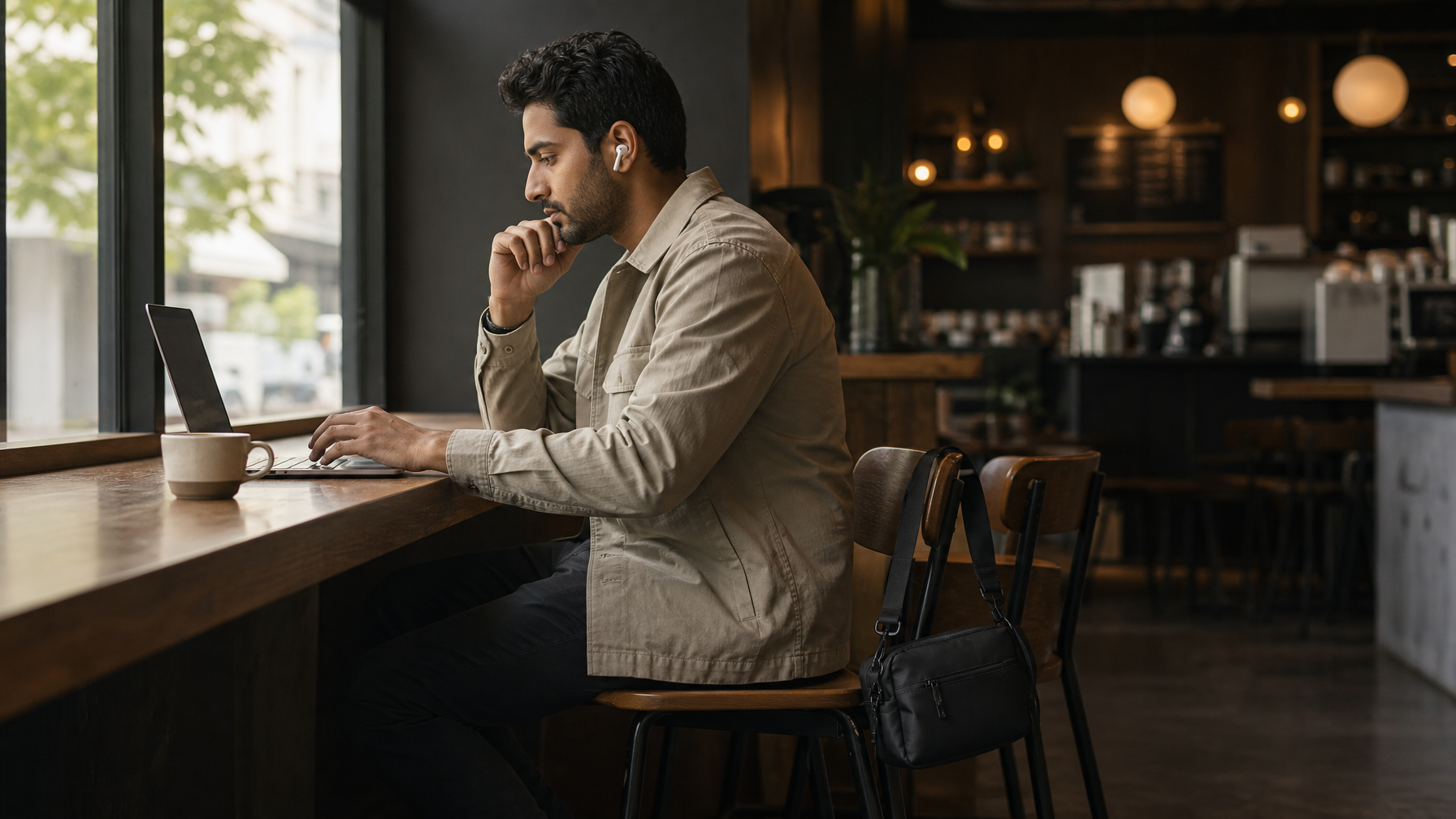
A form factor that stays with you. Crossbody carry is more common among experienced mobile workers than backpack carry for a practical reason: a crossbody stays on your body during transitions. You don't have to take it off to board a train. You don't set it down and leave it somewhere. It's there until you choose to set up. At which point the ritual begins.
Weight you don't notice. The bag needs to carry a laptop, a charger, earbuds, a notebook, and a few personal items. And still feel like not much. This is one of the clearest separators between bags built for occasional use and bags designed for daily carry. A bag that's heavy empty requires a conscious decision to carry it. On some days, it stays behind. That's a break in the system.
The Haven Messenger sits at 1.21 lbs, with a dedicated padded 14" laptop sleeve, a multi-zone interior with a quick-access front pocket and a secured back pocket, and a seatbelt-style crossbody strap designed to stay put. The organization is predetermined. The laptop is always there, the charger coils into the same pocket, the front zone handles daily access items. That's the infrastructure the ritual needs.
For days that require a more professional presentation. A client meeting, a conference session, a formal office. The Metro Laptop Brief offers a slimmer profile with a dedicated laptop sleeve and a clean exterior that reads as deliberate rather than casual. The tradeoff is form factor: a brief requires one hand, where a crossbody doesn't. Some mobile workers carry both. The crossbody for movement, the brief for sitting rooms. Either works, as long as the organizational logic stays consistent.
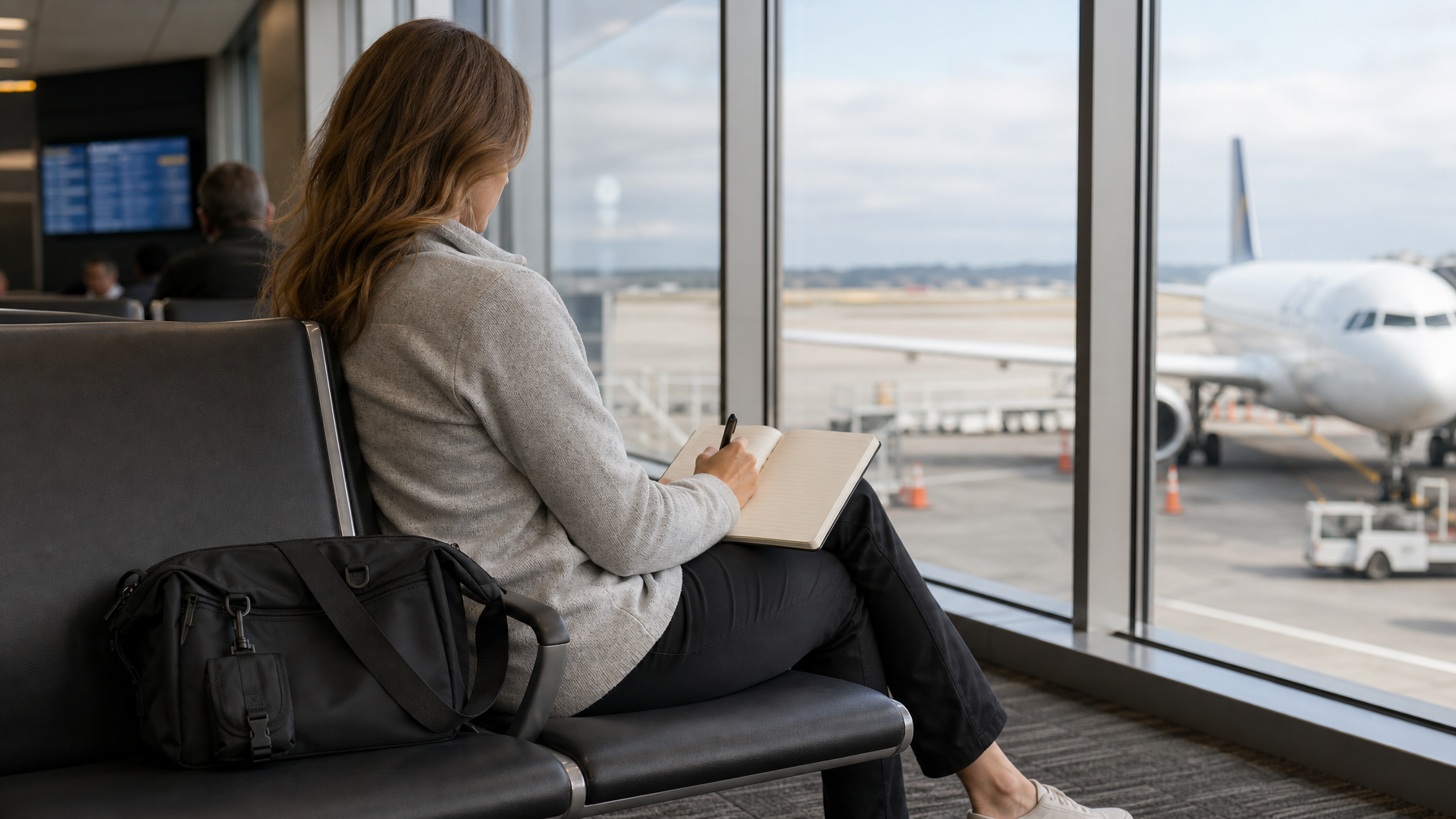
When the Ritual Is Working
You notice its absence more than its presence.
A day when you forgot the earbuds feels off. Not because of the noise, but because the setup sequence had a gap. A week using a borrowed bag with no organizational logic is genuinely disruptive: nothing is where you expect it, so every retrieval requires attention, which accumulates across the day into friction that compounds.
When the ritual is working, you stop thinking about it. The setup takes under two minutes. The environment becomes irrelevant. You're at the hot desk, or the hotel room, or the airport gate. And you're working, because the sequence ran, the tools are where they always are, and the brain shifted into the mode it's supposed to be in.
This is the real payoff of building portability into your system. Not the ability to work from a hammock. That's a fantasy most people don't actually want. The real payoff is reliability: wherever you are, whatever the environment, you can sit down, run the sequence, and get to work. That's a significant practical advantage in a working life that increasingly doesn't sit still.
Building Your Ritual
Three things worth testing if you want to build a portable work ritual:
Define your setup sequence. Write out the exact first five actions you take when arriving at any work location. Make it specific enough to run without thinking. Repeat it consistently for two weeks. You're building a conditioned trigger. Once it's established, it requires no willpower.
Lock your carry organization. Pick a zone for every item you regularly need and enforce it. The laptop is always in the main sleeve. The charger is always in the same pocket. Never pack opportunistically. Always put things in their designated spots. After a week, retrieval becomes automatic.
Choose the bag that makes the ritual easy. Not the biggest bag, or the most feature-rich, or the one with the best reviews. The one that makes the setup sequence fast and keeps things where you put them. If packing or unpacking requires reorganization, the bag is working against the ritual.
The research on implementation intentions suggests that a ritual doesn't require willpower once it's established. It runs on its own. The carry system is how you give the ritual a physical home that travels with you.
Wherever that happens to be.
Related reading: The Capsule Carry System covers how to decide what goes in the bag, and How to Organize Your Bag covers how to set up the interior zones that make the ritual automatic.