


The Client Meeting Bag: What to Carry When You Leave the Desk

TLDR: A client meeting bag is what you take when you leave the desk, not a second office. Pack the device you will actually open, a thin identity kit, and one print stack. Leave chargers, extra layers, and "just in case" cables at the desk unless the meeting is off-site for hours. Choose a structured brief when the walk is short and the room is formal. Use a messenger or light backpack only when the kit is heavier.
Client Day Carry already covers a full local day of back-to-back external meetings. This article is narrower. You are leaving your desk for one meeting, or two, then coming back. The bag should not still be packed for a whole office day.
The failure mode is the same every time. You grab the work bag that already lives under the desk. It still has lunch remnants, a spare hoodie, three cables, and a notebook you will not open. You walk into the room looking like you brought the office with you.
If you need the full-day packing system, stay with Client Day Carry. Use this piece when the job is shorter: leave the desk, sit down, present, leave.
For how the bag itself should be organized so you are not dumping it later, see How to Organize a Work Bag.
What "leave the desk" actually means
Write the meeting on one line: location, length, whether you need a laptop, whether you need paper.
Stay-in-building meeting. Same floor or a neighboring conference room. You may only need a notebook and a badge. A bag is optional if pockets already hold phone, wallet, and keys.
Short off-site, under two hours. Client office, nearby cafe, or a coworking room. You need the device you will present from, identity, and a thin print stack. You do not need a day's water, lunch, or a second pair of shoes.
Longer off-site. Half day or more, unknown wifi, unknown outlets. Then you add a charger and maybe a water bottle. That is the edge of this article. Past that, you are packing a workday, not a meeting kit.
The test: if you would be embarrassed to empty the bag onto the client's table, the kit is still an office drawer.
The kit, in packing order
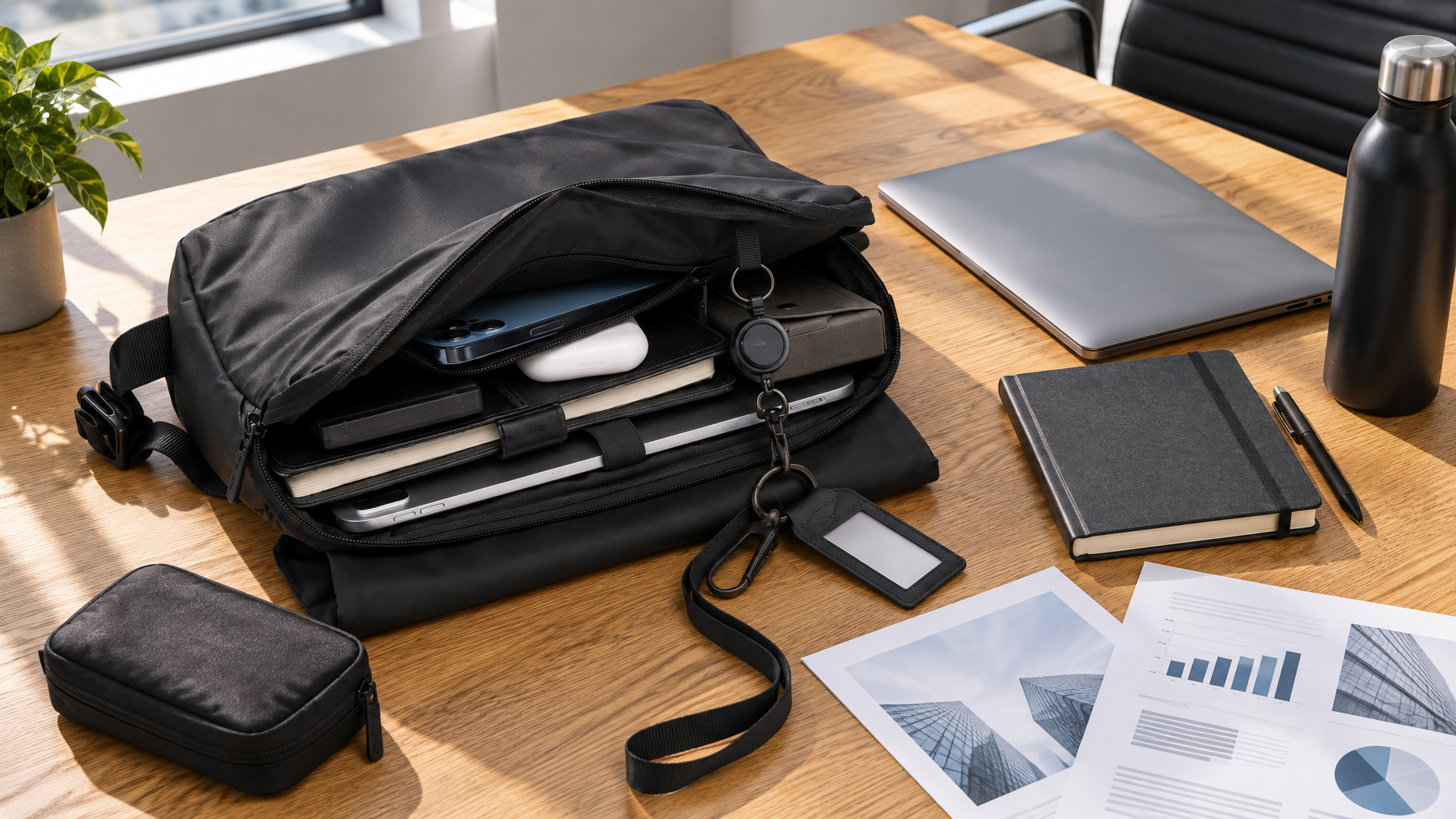
Pack on a clear surface the night before or at the desk before you walk. Same order every time so you can find things without unzipping everything in the lobby.
1. Device. One laptop up to 14 inches, or one tablet, not both unless you already use both in the room. On the Metro Laptop Brief, the 14-inch variant is the laptop job at $99. The 11-inch iPad variant is $79. Do not bring a 15-inch machine and hope the sleeve is "close enough."
2. Identity. Badge, business cards if you still use them, a pen that works. Phone and wallet stay on your person, not loose in the main compartment.
3. Paper. One slim notebook or a folder with the agenda and two spare one-pagers. Not a stack of old printouts "in case they ask."
4. Power, only if the meeting is long. One short cable that matches the device. Leave the laptop brick at the desk for a one-hour meeting in a building that has outlets you will not use.
5. Water, only if you will be gone through a meal window. Otherwise it is weight and a leak risk next to paper.
That is the whole list. Headphones only if you take a call on the walk. A light layer only if the room is known to be cold.
Why the everyday work bag fails this job
A bag built for a full desk day has volume you will fill. The Haven Messenger is honest about laptop days: a laptop up to 14 inches sits in the open main compartment. There is no padded dedicated sleeve. That cavity is useful when you commute. For a single client meeting it is extra space. Extra space collects the charger you did not need and the notebook from last week.
A large work backpack has the same problem at larger scale. The padded sleeve is empty, so you "use the space." You arrive looking like you packed for travel.
The meeting bag should be small enough that the kit has nowhere to hide. Structure helps when you set the bag beside a conference chair. A floppy tote dumps.
Three formats that fit a leave-the-desk meeting
1. Structured brief: the default for a short, formal room
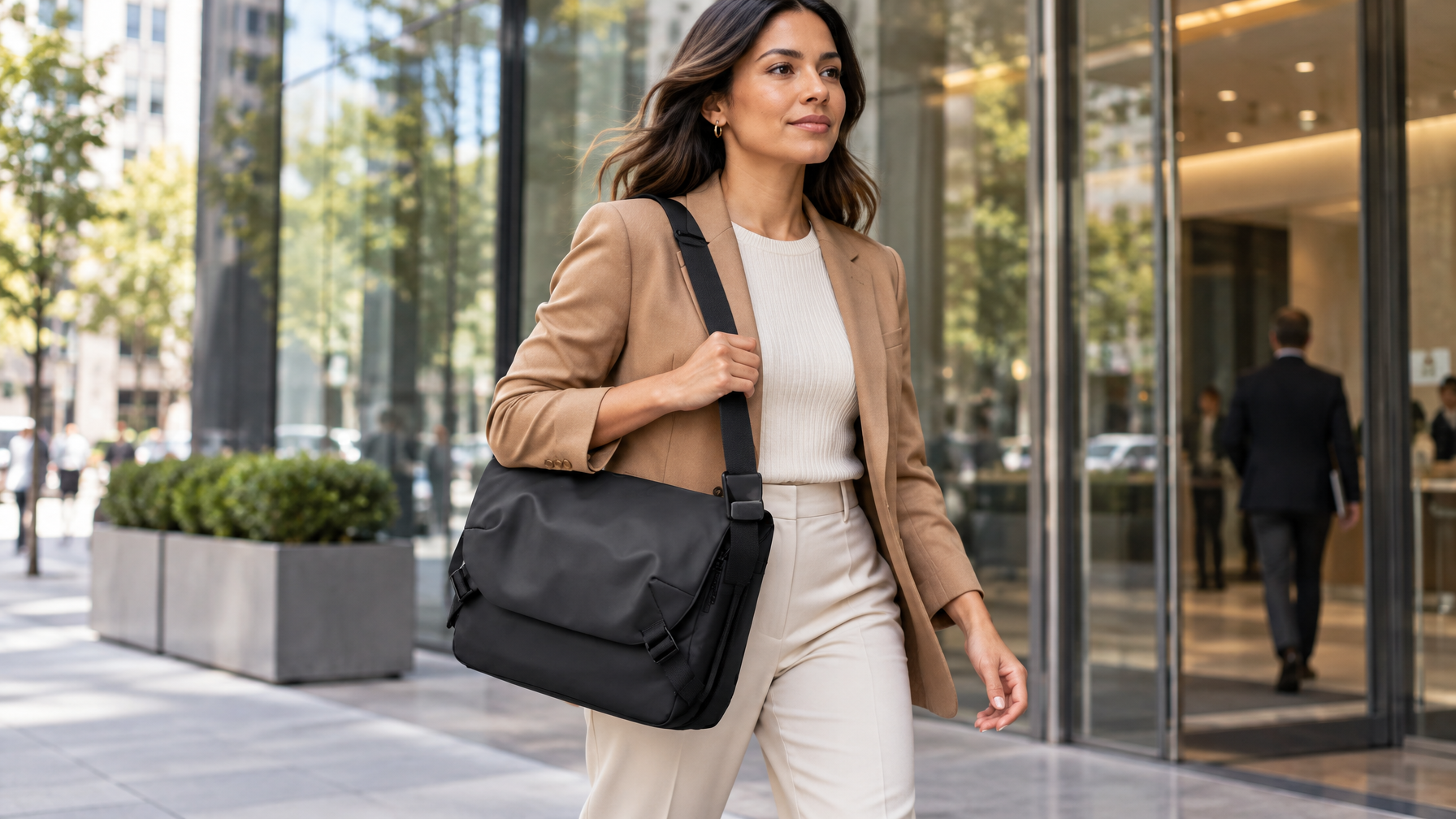
The Metro Laptop Brief is the catalog match for this article. Office-forward, flap closure with hasp, padded device sleeve, front zip, interior zip, phone pocket, key holder. The 14-inch size is about 13.7 × 3.5 × 10.2 inches and about 1.21 lb. The 11-inch size is smaller and lighter.
Wear the padded strap across the body or on one shoulder for a short walk. Set it beside the chair, not on the table unless they do. Open the flap once for the laptop and notebook. Do not rummage.
Use Metro when the meeting is in a lobby, a conference room, or a client office and you want the bag to look like it belongs there. Do not use it as a hiking pack. It is not that job.
2. Messenger: when the walk is longer and the kit is a little heavier
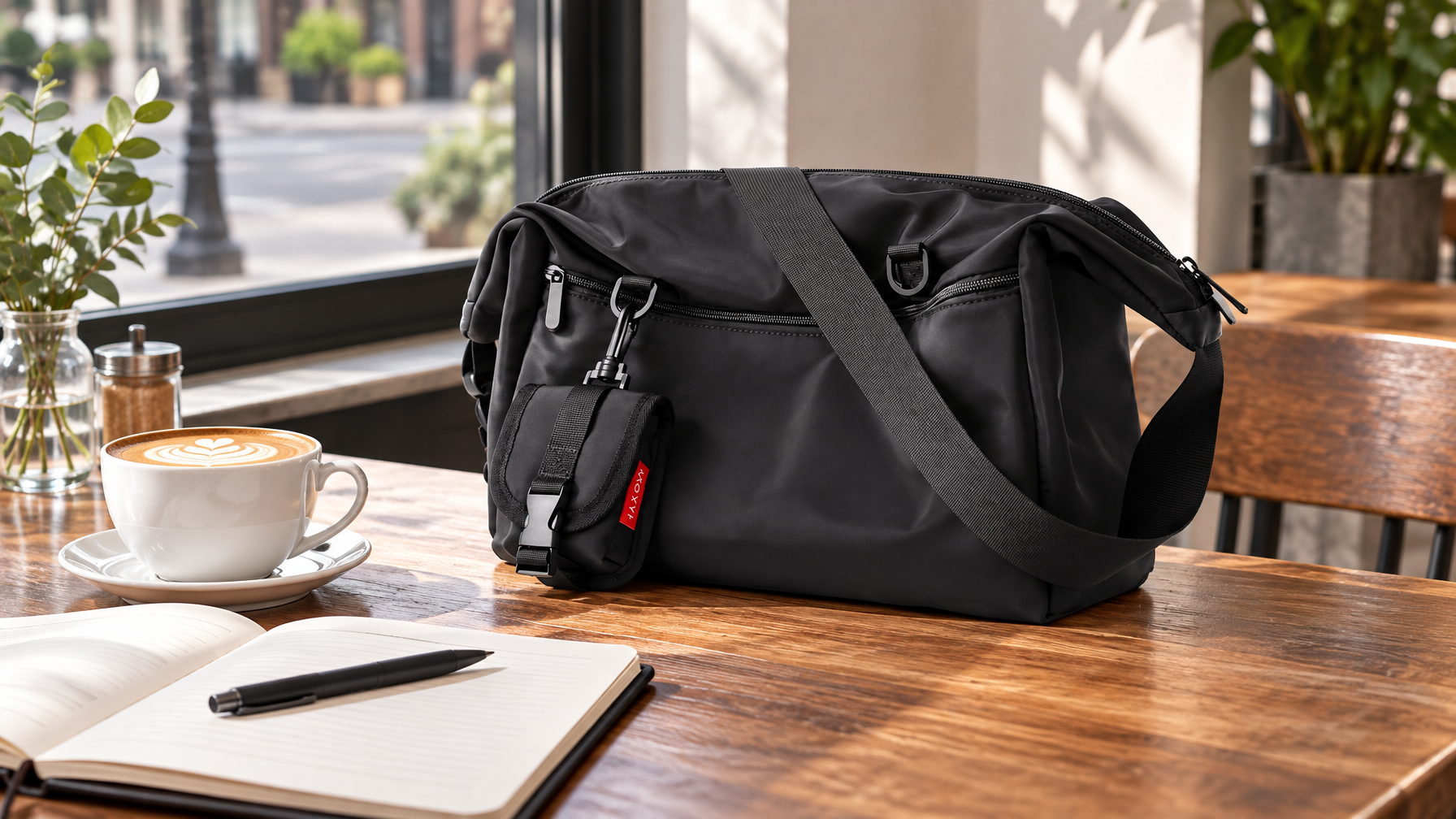
The Haven Messenger stays useful when you still need a 14-inch laptop in the main compartment plus a water bottle in the interior mesh pocket. Price is $89. The fabric is water-resistant, not waterproof. The front pocket is for phone, wallet, and card together. The separate back pocket fits a phone and wallet together. The detachable pouch holds one small essential, such as AirPods, not a pile of accessories.
Use Haven when you leave the building and walk or take a short transit hop, then sit down. Do not treat it as a brief. It is a messenger with an open main cavity. Keep the meeting kit small on purpose or it will look like a commute bag.
3. Light backpack: when you also carry water and a layer
The Lite Backpack can hold a 15.6-inch laptop in a padded sleeve. Price is $89. Weight is about 1.0 lb. Use it for a client meeting only when you need volume besides the device: water, a jacket, maybe a lunch you will eat after.
The risk is the empty sleeve and the extra cavity. If you catch yourself packing the whole desk, switch back to the brief for these outings.
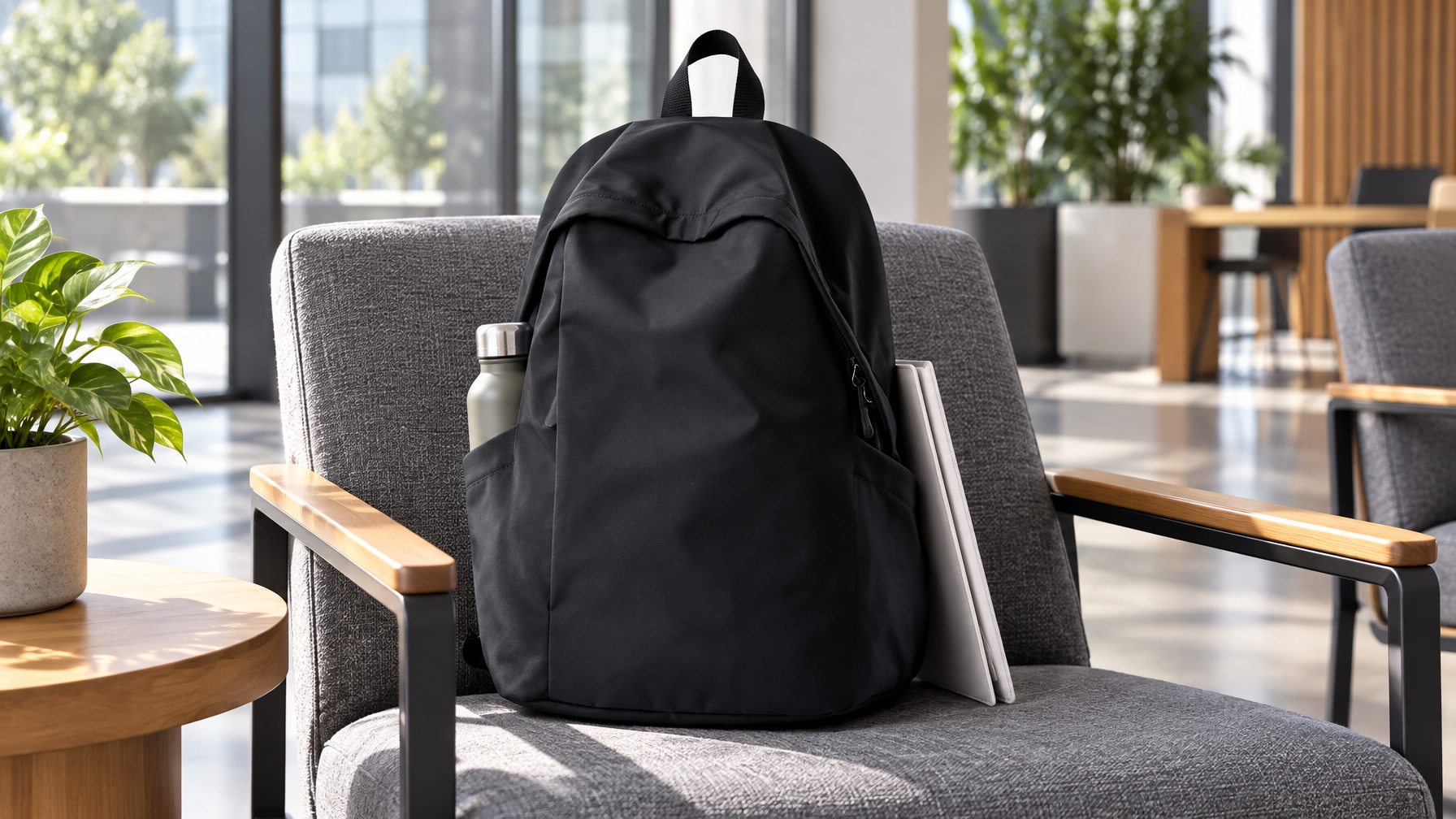
If you are choosing brief versus backpack for the week as a whole, not just this meeting, read Desk Bag vs Work Backpack.
In the room
Sit. Put the bag on the floor at your feet or on the empty chair beside you if the room allows it. Take out the device and the notebook in one motion. Close the bag. Do not keep it unzipped like a toolbox.
If you need a charger, plug in before the conversation starts. If you do not need it, it should not be in the bag.
When the meeting ends, reverse the order: device, notebook, folder, close. Do not restock from pockets into the main compartment in the hallway. That is how the kit grows again.
What not to bring
- The second laptop "in case"
- A full charging brick for a 45-minute meeting
- Gym shoes
- Yesterday's lunch container
- A stack of unrelated printouts
- Every pen you own
Those items belong at the desk or in the full-day bag from Client Day Carry. Mixing the two kits is how a short meeting starts to feel like travel.
A simple rule for the next meeting
If you can name the device, the paper, and the identity items in one breath, the kit is the right size. If you cannot, empty the bag onto the desk and rebuild it in the order above.
The Metro Laptop Brief is the starting point when the room is professional and the walk is short. Step up to Haven or Lite only when the walk or the volume is real.