


Desk Bag vs Work Backpack: How to Choose When Both Days Exist

TLDR: Desk days and load days ask for different bags. A slim brief keeps a laptop day light and professional when the walk is short. A work backpack earns its straps when the kit gets heavier, the laptop gets larger, or the day includes real stairs and distance. Choose by the week you actually live, not by a single format identity.
Hybrid weeks break a lot of bag advice.
Monday might be a desk day: laptop, notebook, charger, water, a light layer. You want a clean profile walking into a lobby and a bag that sits quietly under a desk. Thursday might be a heavier day: larger machine, extra cables, lunch, a thicker jacket, a longer walk from transit. The same "one perfect bag" pitch starts to feel dishonest.
This is not a fashion vote between brief and backpack. It is a job match. The right question is which day you are packing for most often, and whether one format can cover the other without punishing your shoulder or your patience.
Start with the week, not the product page
Write two real days side by side.
Desk day load: laptop or tablet, charger, notebook, pen, phone, wallet, keys, water, one small extra. Walking distance from car, transit, or bike to desk. How often you open the bag at meetings.
Load day load: everything above plus whatever actually shows up: second device, lunch container, gym layer, presentation printouts, larger laptop, rain shell. Distance and stairs. Whether you stand longer on platforms.
If both columns look almost the same, one bag can still win. If they diverge hard, you either own two formats or you accept that one day will always feel compromised.
For a deeper method on weight and real load, see How Heavy Should Your Everyday Bag Be? The same honesty applies here: list what leaves the house, not what you wish left the house.
What a desk bag is actually for
A desk bag (here, a structured laptop brief) optimizes for a controlled professional day.
It should:
- Hold a daily laptop kit without looking like overnight luggage
- Open in a way that keeps the desk surface calm
- Sit upright or flat without dumping
- Stay comfortable on a shorter commute without needing full backpack harness geometry
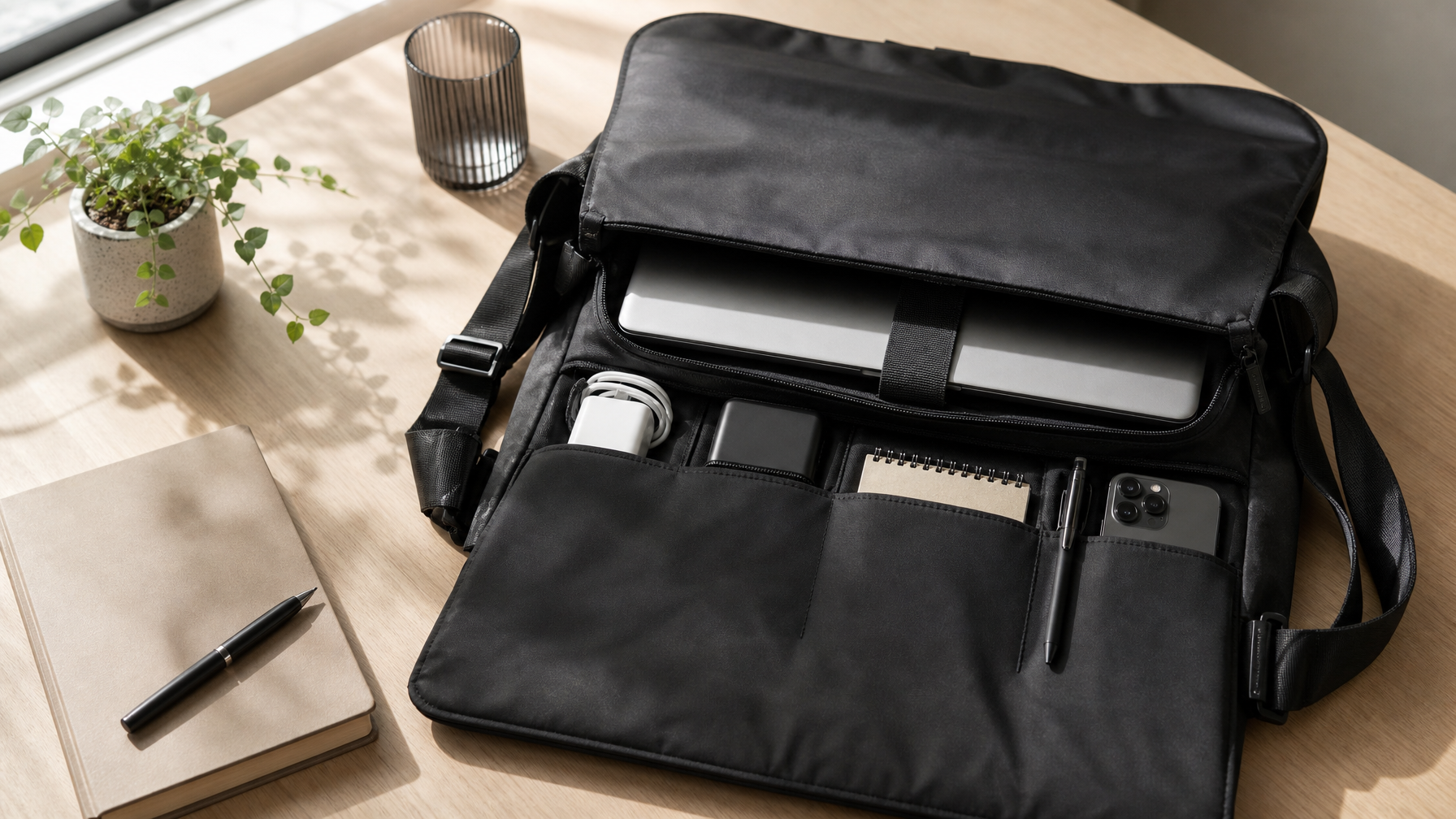
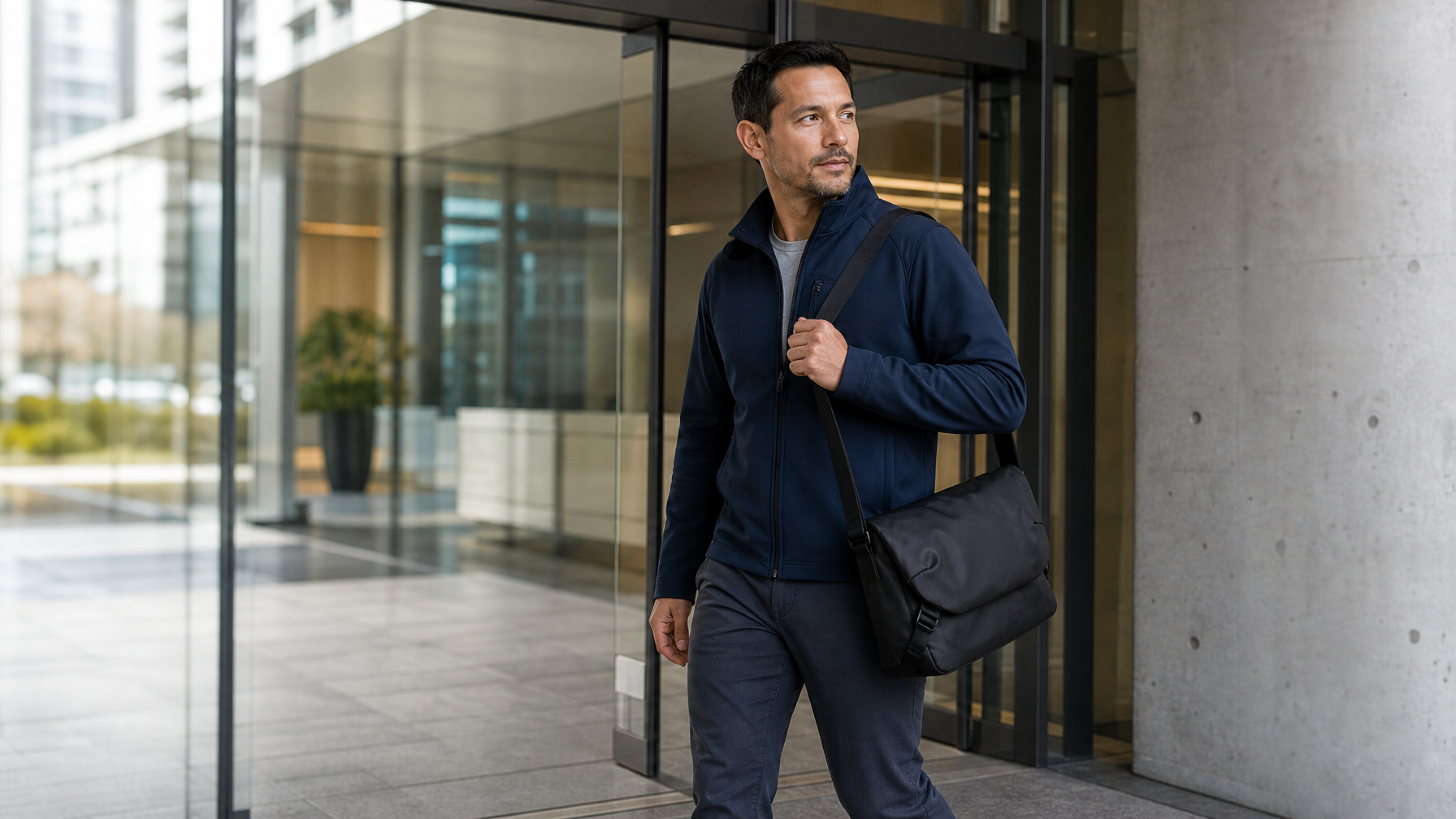
The Metro Laptop Brief is built for that job: slim flap structure, padded device sleeve options for tablet or 14" laptop days, front quick-access pocket, and a profile that reads office-forward instead of expedition-forward. It is the better default when most of your friction is "look put together at the door and at the table," not "haul a heavy kit across the city."
Desk bags fail when you pretend they are adventure packs. Overstuff a brief and the strap digs, the silhouette bloats, and you start hunting for a backpack you already knew you needed.
What a work backpack is actually for
A work backpack optimizes for load, distance, and hands-free movement.
It should:
- Carry a heavier or bulkier kit without collapsing into one dark cavity
- Spread weight across both shoulders (and ideally a sternum or hip assist when the load is real)
- Protect a larger laptop when that is your actual machine
- Survive stairs, longer walks, and weather-facing commutes without constant reshuffling
The Apex Backpack is the Field & Ash answer when the day is heavier: higher capacity, separate padded laptop and tablet compartments, S-shaped straps, and an air-cushion belt for longer carry. It is not trying to be a slim lobby brief. It is trying to keep a serious daily kit from becoming a shoulder argument.
Backpacks fail the desk-day test when they are oversized for a light kit. You look more prepared than you need to be, and you carry empty volume that still has weight and bulk.
The decision rule
Use this in order.
1. Count true load-day frequency.
If three or more weekdays regularly exceed a slim brief's honest capacity, the backpack is your primary, not your backup.
2. Measure the walk.
Short garage-to-elevator days favor a brief. Multi-flight stairs, long blocks, or standing transit with a heavy kit favor two straps.
3. Check laptop size.
If you routinely carry larger than a compact brief is built for, stop forcing the format. Apex exists specifically for larger machines and heavier device pairs.
4. Check meeting optics and desk behavior.
Client-facing lobby days and tight under-desk space still matter. A brief often wins those days even if a backpack wins Thursday.
5. Decide one-bag vs two-bag honestly.
Many hybrid workers do best with both: Metro for desk-forward days, Apex for load days. That is not indecision. It is matching tools to jobs. For the two-bag hybrid pattern in a different frame, see Two Bags for Hybrid Work.
Side-by-side: what changes in practice
| Factor | Desk bag (brief) | Work backpack |
|---|---|---|
| Best day | Laptop + light kit, polished arrival | Heavy kit, longer walk, larger laptop |
| Comfort geometry | Single strap, fine for shorter carries | Dual straps + support for real weight |
| Desk manners | Slim, quiet under table | More bulk; still workable if not overpacked |
| Organization style | Few clear zones | More compartments; needs discipline so it does not become a dumping ground |
| Failure mode | Overstuffed, strap dig, stretched silhouette | Empty bulk, oversized look on light days |
Neither format is morally superior. The week decides.

How to pack each without turning it into a junk drawer
Brief days: One device zone, one small-item zone, one water/layer decision. If you need a third "maybe" category every morning, you are packing a backpack day into a brief.
Backpack days: Assign compartments on purpose. Laptop and tablet stay in their sleeves. Cables in one pouch. Lunch sealed. Layer in a predictable place. A backpack with no system becomes slower than a smaller bag because every retrieval is a search.
Access still matters. High-frequency items should not require emptying the main cavity. That standard is the same whether the silhouette is brief or backpack. For the broader filter, see The Field & Ash Carry Standard.

A simple weekly assignment
Try this for two weeks without buying anything new.
- Label each calendar day D (desk) or L (load) the night before.
- Pack the matching format only.
- Note shoulder fatigue, lobby friction, and whether you dumped the bag at night.
If D days dominate and feel easy in a brief, Metro is your primary. If L days dominate or leave you sore in a single-strap bag, Apex is your primary. If the labels split evenly and both days feel better in their own tool, keep both and stop apologizing for it.
Related reading when the comparison is pure format theory rather than hybrid-week jobs: Messenger Bag vs. Backpack for Your Commute. This article stays on the desk-day versus load-day split because that is where most hybrid friction actually lives.
Field & Ash picks for this decision
- Desk-forward days: Metro Laptop Brief, slim, structured, office-readable.
- Load-forward days: Apex Backpack, capacity, dual-device structure, harness comfort for heavier kits.
Carry deliberately. Match the bag to the day you are actually walking into.
FAQ
Can one bag cover both days forever?
Sometimes, if your loads stay close. When desk days and load days diverge, one bag usually means permanent compromise on comfort, bulk, or professionalism.
Is a backpack unprofessional for client days?
Not automatically. Overstuffed bulk and tactical theater read worse than a clean backpack silhouette. For polished short days, a brief still often fits the room better.
Should I default to the bigger bag "just in case"?
Only if the just-in-case items actually leave the house most days. Empty capacity still has mass and visual weight.
Where does a messenger fit?
On mixed commute days that want quick front access and a lower profile than a full backpack. This article's split is brief versus backpack for hybrid desk/load weeks; messengers remain a third tool when that is your actual motion pattern.