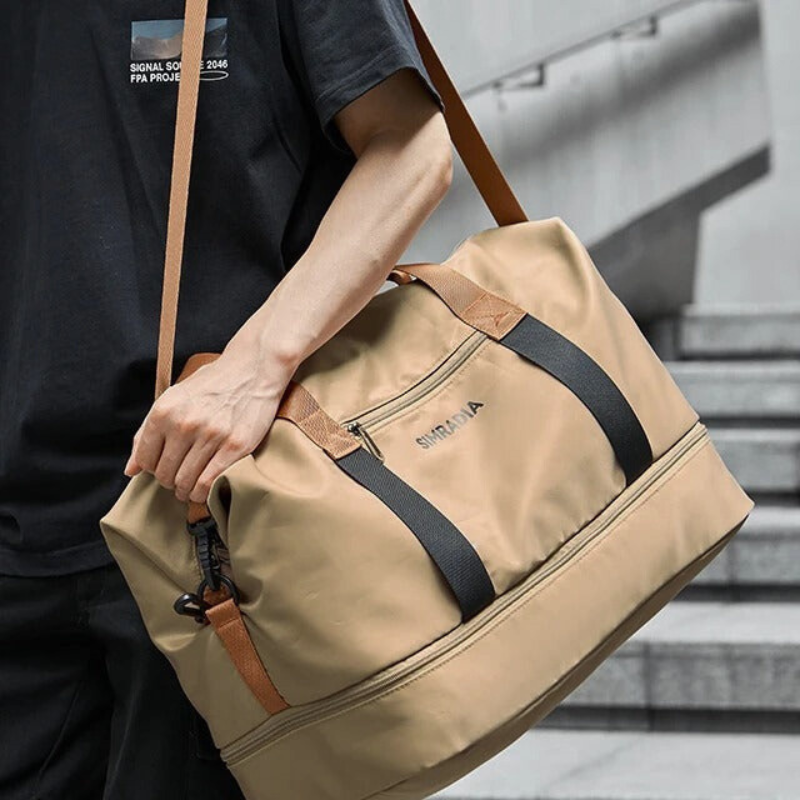



Shoulder Fatigue Checklist: Is It the Bag, the Strap, or the Load?

TLDR: Shoulder fatigue is rarely a mystery. Weigh the bag as you actually pack it. Check whether one shoulder is doing all the work. Check whether the strap is sitting on bone. Then change the load, the strap, or the format, in that order. Do not buy a new bag until you have named which of the three failed.
Most people blame the bag. The bag is sometimes the problem. More often it is a laptop plus a water bottle plus a jacket you packed “just in case,” hanging from one thin strap for forty minutes.
This is a checklist, not a buying guide. You run it on a weekday you already commute. You change one variable at a time. Adjacent pieces already cover weight in general (How Heavy Should Your Everyday Bag Be) and bag size (What Size Bag Do You Actually Need). Use those for numbers. Use this when the pain is specific: one shoulder, same route, same kit.
If the dump-and-rebuild habit is filling the bag, start with How to Organize a Work Bag before you change hardware.
The three causes, in order
1. The load. Weight and how it sits. A 14-inch laptop plus a full bottle plus chargers is a different job from a tablet and a wallet.
2. The strap. Width, padding, length, and where it lands on your trapezius or collarbone. A good bag with a strap parked on bone will still hurt.
3. The format. One-shoulder messenger or brief versus two-shoulder backpack versus a sling that never holds a laptop. Format only after load and strap, because a lighter kit often makes the current format fine.
Do not skip to format. That is how you own three bags and still carry yesterday’s brick.
Checklist A: the load (do this tonight)
Weigh the packed bag on a kitchen scale. Write the number. Then empty it onto a table and sort three piles:
Must travel. Device you will open. Phone, wallet, keys. Badge. One cable that matches the device.
Sometimes. Water if the route has no fountain. A layer if the office is cold. A notebook if you actually write.
Never this week. Second charger, gym shoes, last week’s printouts, a full-size keyboard you have not paired.
Put only Must travel back in. Weigh again. If the second number is much lower and the shoulder already feels quieter on a walk around the block, the bag was not the first problem. The kit was.
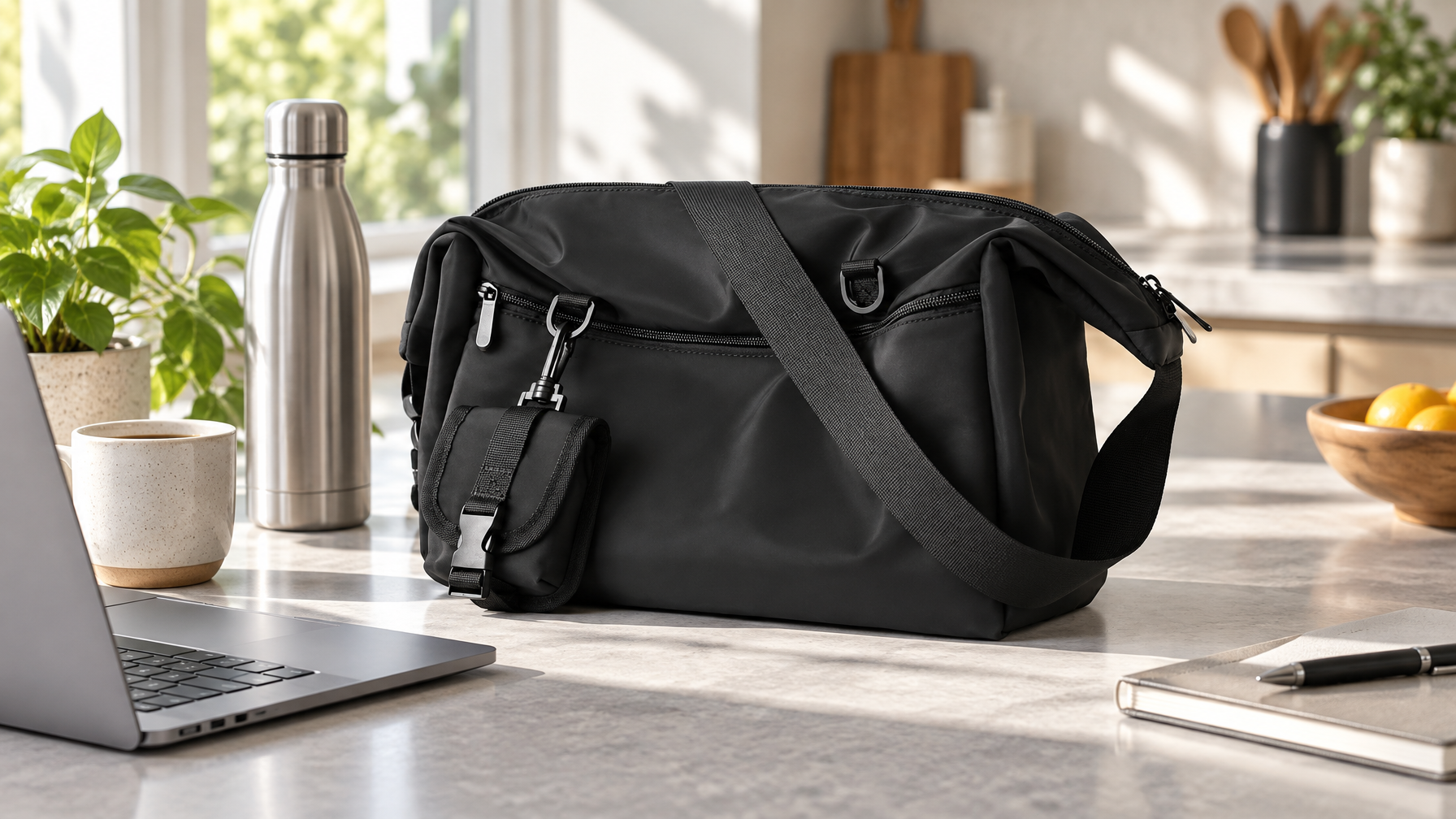
A laptop up to 14 inches in the Haven Messenger sits in the open main compartment. There is no padded dedicated sleeve. That cavity invites extra weight. Treat it as a limit, not as storage.
Checklist B: the strap (do this on the walk)
Wear the bag as you wear it to work. Do not pose.
Length. The bag should sit at the hip, not bouncing at the thigh and not jammed under the armpit. If you keep hiking it up, the strap is too long.
Contact patch. A narrow cord on the collarbone concentrates force. A wider padded strap spreads it. If you feel a hot line after ten minutes, the strap is the variable.
Switch test. On a messenger or brief, switch shoulders at the midpoint of the commute for three days. If both sides complain equally, it is load or format. If only the usual side complains, you are overusing one shoulder.
Backpack straps. Both straps on. Sternum strap or hip belt engaged if the bag has them. One-strapping a backpack recreates messenger load with worse geometry.
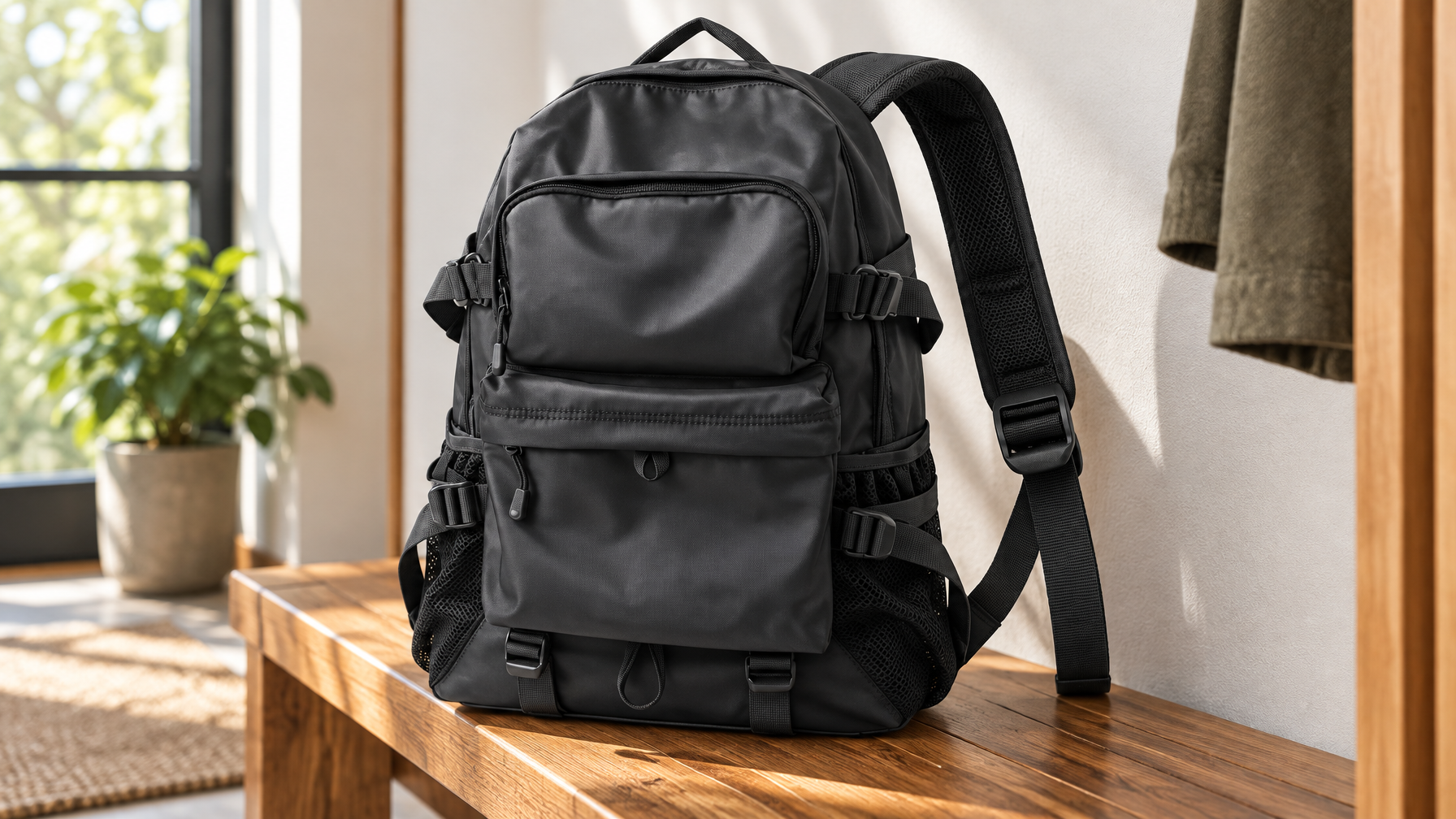
The Apex Backpack is the heavy-load format in this catalog: S-shaped padded straps, air-cushion belt, separate laptop and tablet compartments, 20-35 L, 15.6-inch variant $139 and 17.3-inch variant $159. Use it when the scale still reads high after you cut the Never pile. Do not use it as a fashion backpack with one strap dropped.
Checklist C: the format (only after A and B)
If the light kit still hurts on one shoulder, change how the weight hangs.
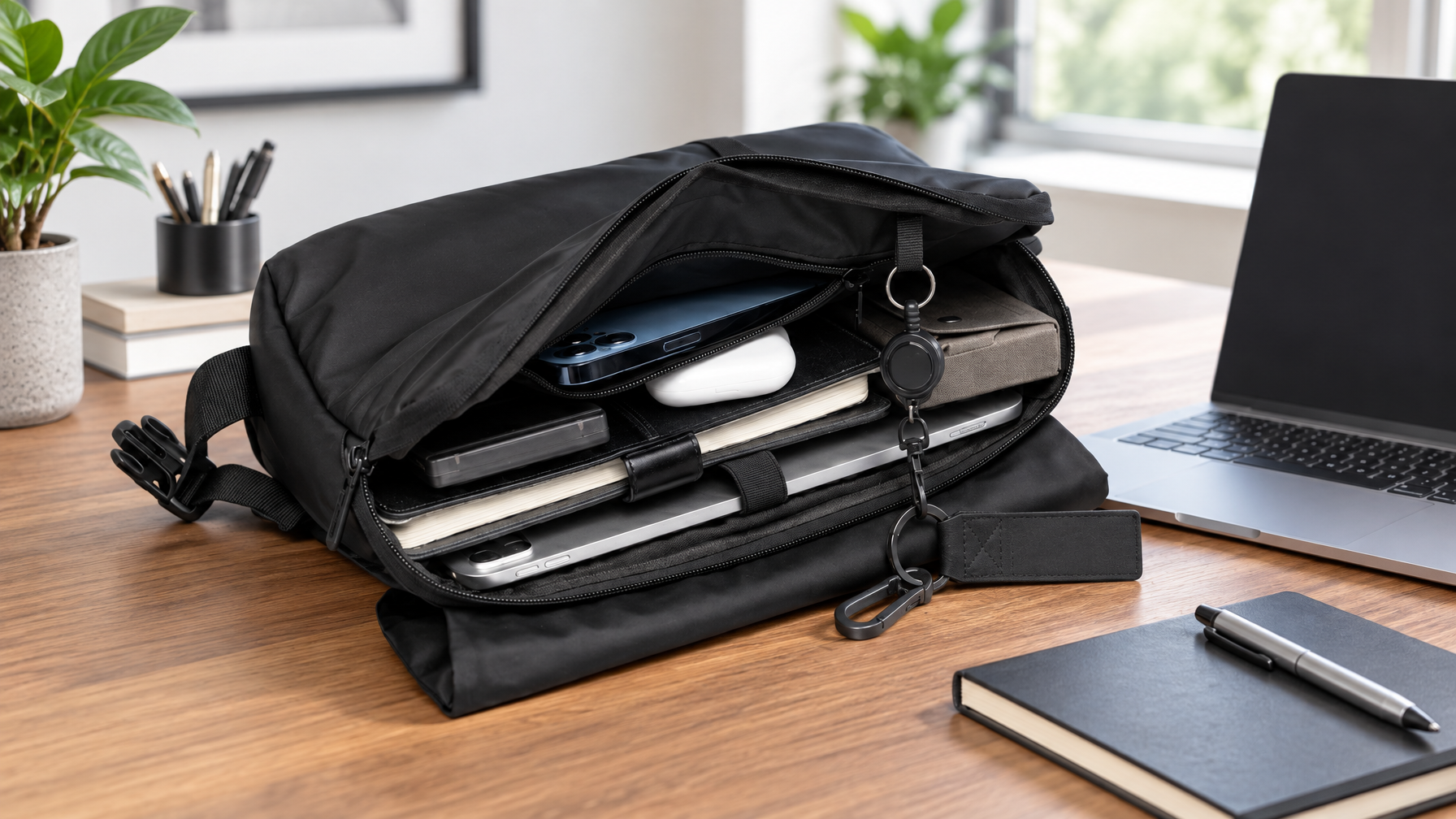
Stay one-shoulder when the kit is thin: notebook, tablet, or a short leave-the-desk meeting. The Metro Laptop Brief is the structured option: flap, padded device sleeve, 14-inch variant about 13.7 × 3.5 × 10.2 inches and about 1.21 lb at $99, 11-inch variant $79. A brief still loads one shoulder. Keep the walk short.
Move to two shoulders when a 14-inch or 15.6-inch laptop plus water is daily. Apex is the ergonomic heavy option. The Lite Backpack is the light two-shoulder option at about 1.0 lb and $89, padded sleeve up to 15.6 inches. Lite still has volume. If you refill it, you are back at Checklist A.
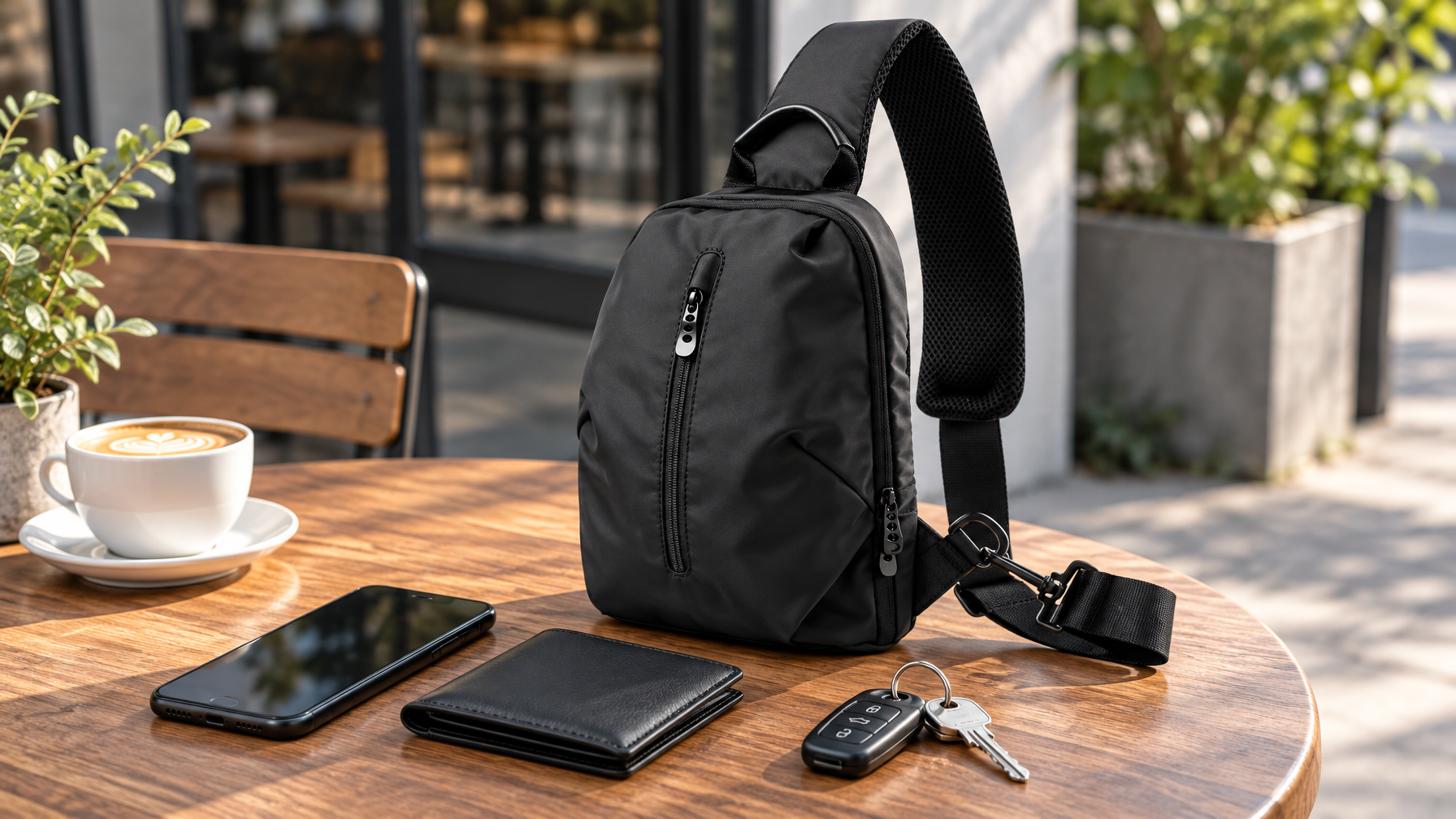
Drop to a sling when there is no laptop. The Commuter Sling fits up to a 9.7-inch tablet, about 11 × 6 × 3 inches, 0.66 lb, $89. Cross-chest wear spreads load better than a skinny shoulder bag with a laptop inside. Do not put a 14-inch machine in a sling.
For brief versus backpack as a weekly pattern, not a pain diagnosis, see Desk Bag vs Work Backpack.
A three-day test, one change per day
Day 1. Same bag. Must-travel kit only. Same route.
Day 2. Same kit. Adjust strap length and, if messenger or brief, switch shoulders at the midpoint.
Day 3. If it still hurts, change format: two-shoulder if you still carry a laptop; sling if you do not.
Write which day the shoulder quieted. That is the cause. Buying a fourth bag without that note is guessing.
What this checklist will not fix
Numb fingers, neck pain that wakes you, or pain that remains when you are not wearing a bag. That is medical, not packing. Stop the experiment and see a clinician.
A water-resistant shell does not change strap physics. Do not call any Field & Ash bag waterproof in this diagnosis. Haven’s fabric is water-resistant, not waterproof.
FAQ
Does a padded strap always solve it?
No. Padding helps a moderate load. It will not save a 17-inch laptop plus lunch on one shoulder.
Should I stop using a messenger?
Only if Checklist A and B fail and the commute is long. Messengers are fine for a thin kit and a short walk.
Is a backpack automatically kinder?
Only with both straps on and a load that belongs in a backpack. One-strapping it is worse than a decent messenger.
Where does Haven fit?
Haven is a one-shoulder messenger: 14-inch laptop in the open main compartment, $89. Use it when the kit stays honest. Use Apex when the scale stays high.
Close
Name the cause: load, strap, or format. Change that one thing. The Apex Backpack is the starting point when the remaining kit is genuinely heavy. Stay with a brief or sling when it is not.