


What Size Bag Do You Actually Need for Commuting?

Most people answer the size question backward.
They start with a laptop measurement, or a liter number on a product page, or a photo of a bag that looks about right on someone else's shoulder. Then they buy. A few weeks later the bag is either half empty every day, or so full that the zippers strain and the water bottle never quite fits.
Size is not a single number. It is a match between what you carry on a normal day, how you move, and how much empty space you are willing to haul when the load is light. Get that match right and the bag disappears into the commute. Get it wrong and you feel it every morning.
This guide is a practical framework for choosing the right size, not a catalog of every bag on the market. We will map small, medium, and large carry to real commuting loads, then show how Field & Ash options sit in each lane.
Stop Shopping by Liters Alone
Liter ratings help when you compare two backpacks in the same format. They fail when you compare a structured messenger to a soft pack, or a slim brief to a roll-top travel bag. Two bags can share a similar volume and feel completely different once a laptop, a bottle, and a jacket are inside.
A better starting point is three questions:
- What is in the bag on four out of five workdays? Not the peak day. The ordinary day.
- How do you move? Long walking segments and stairs punish bulk. Short walks to a car punish under-protection more than oversize.
- What is non-negotiable? Laptop size, a full water bottle, presentation materials, a change of clothes. Anything that must fit every day sets the floor.
If you cannot answer those honestly, empty your current bag on a table tonight. Photograph the pile. That photo is a better brief than any size chart.
The Three Load Lanes
Most commuting carry falls into one of three lanes. People get into trouble when they buy one lane up "just in case" and live in the smaller lane every day.
Small load: laptop days that stay light
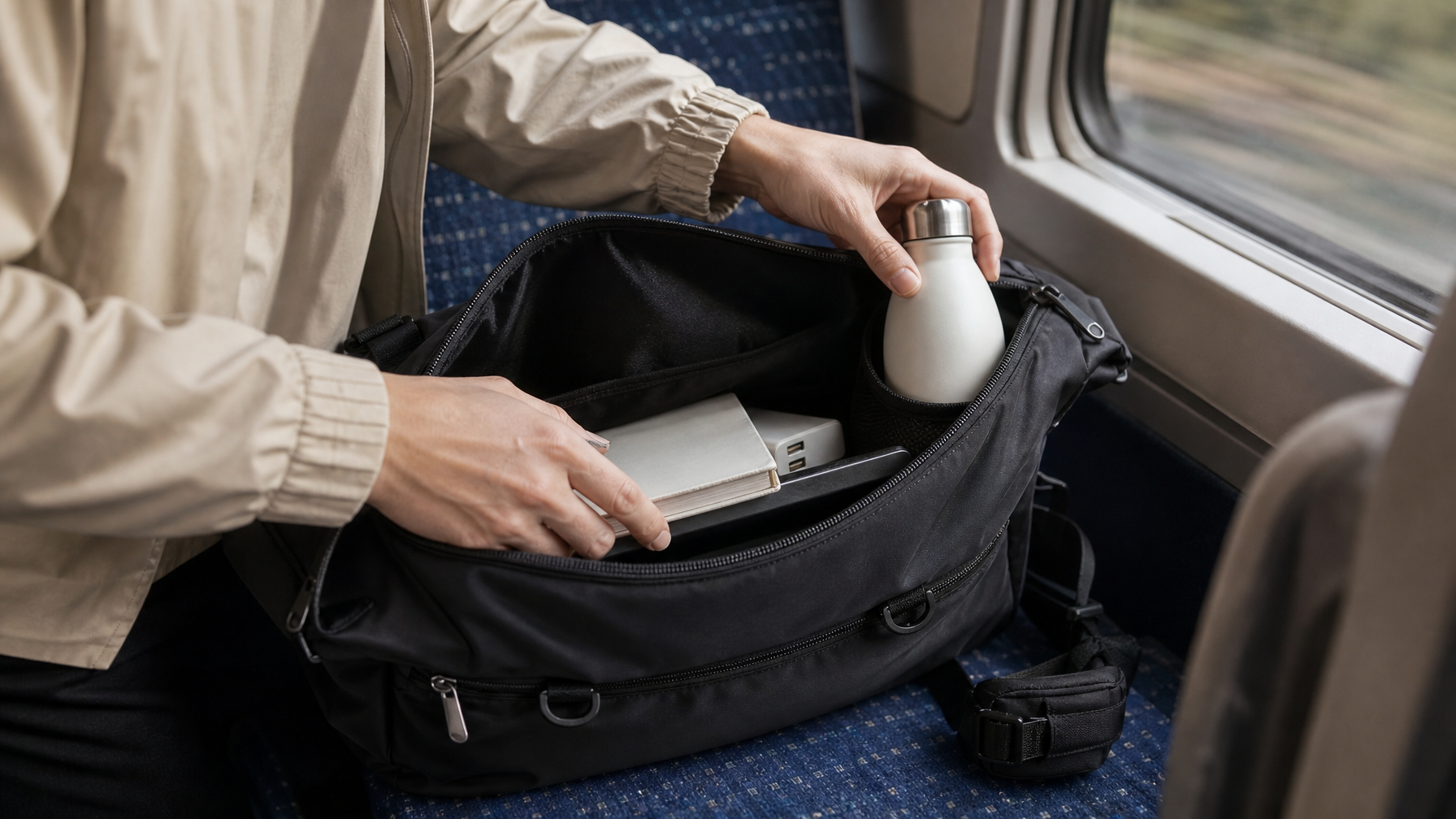
Typical contents: laptop up to about 14", thin charger or power bank, phone, wallet, keys, earbuds, maybe a slim notebook. No gym kit. No spare shoes. No full water bottle most days.
What you need: a bag that holds a 14" laptop securely, keeps small essentials findable, and stays close to the body on transit. Extra empty volume becomes dead weight and a temptation to accumulate junk.
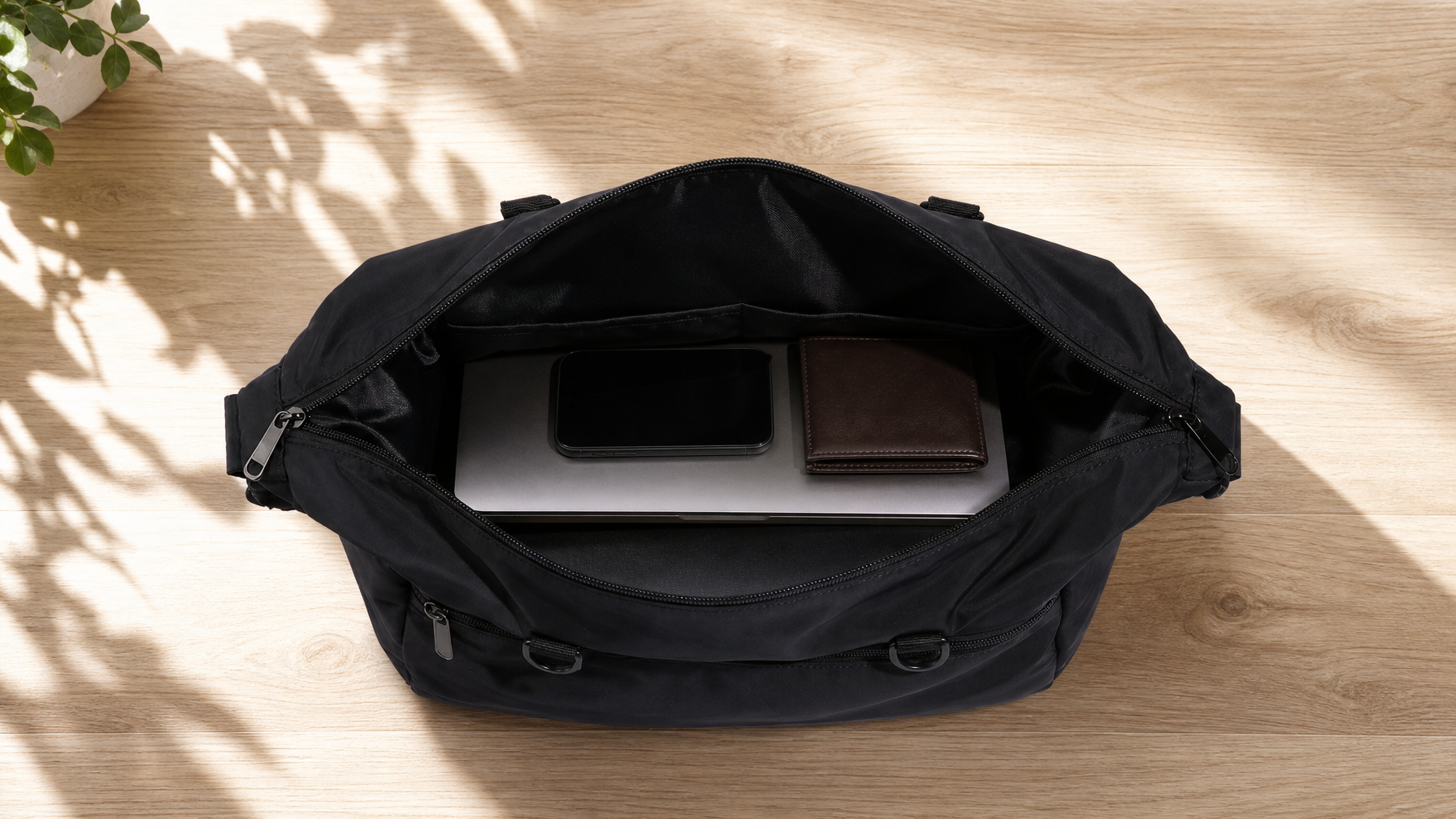
In the Field & Ash catalog, this is the Haven Messenger lane. At $89 and 1.21 lb empty, Haven is built for a daily professional load without backpack bulk. The main compartment holds a laptop up to 14" directly (there is no separate padded sleeve). Interior slip pockets, an interior zip pocket, and a mesh bottle pocket organize the rest. A front pocket fits phone, wallet, and card together. A back zip pocket sits against the body for the same high-value pair when you want them less exposed on a crowded car.
Dimensions sit in a compact structured range (about 12.9 × 7 × 11.8 in). That is enough for a serious work day and small enough that you notice when you start packing "just in case" extras.
Medium load: laptop plus the things that make the day work
Typical contents: laptop, charger, bottle, light layer or softshell, notebook, maybe a small tech pouch, lunch, or client materials a few times a week.
What you need: more structured volume and clearer organization than a minimal messenger, without jumping to a full travel pack. This is where many people who felt cramped in a small bag land happily.
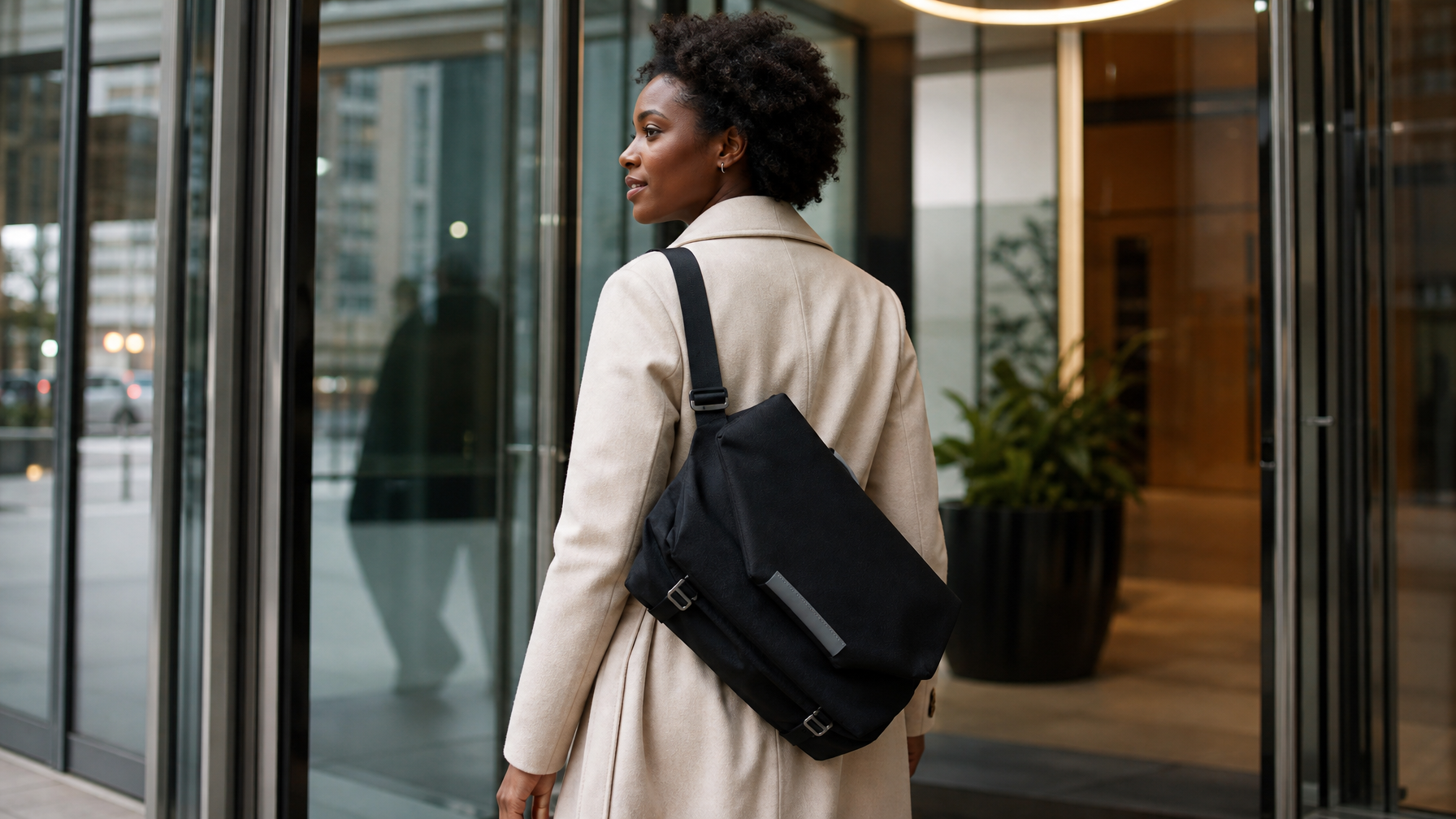
The Summit Messenger ($129. $149) is the medium-messenger answer in the catalog: padded sleeve for up to a 14" laptop or 12.9" tablet, multiple compartments for phone, wallet, charger, and small gear, and a more substantial everyday structure than Haven. Choose Summit when Haven's compact main compartment is consistently full before you add the bottle and jacket.
If you prefer a backpack silhouette at this load, the Venture Backpack ($139) and Lite Backpack ($89) cover organized daily carry with different weight and aesthetic tradeoffs. Lite is the lightest backpack option at about 1.0 lb for a set daily load. Venture steps up organization and presence for people who want more structure without going full large-capacity.
Large load: heavy laptop days, multi-device, or dual-purpose carry
Typical contents: 15". 17" laptop, tablet, full bottle, jacket, cables, sometimes gym clothes or materials that used to force a second bag.
What you need: real capacity, dual device protection when you carry two screens, and straps that stay comfortable when the bag is actually full. Buying large "for flexibility" when your average day is small is how bags become storage units you wear.
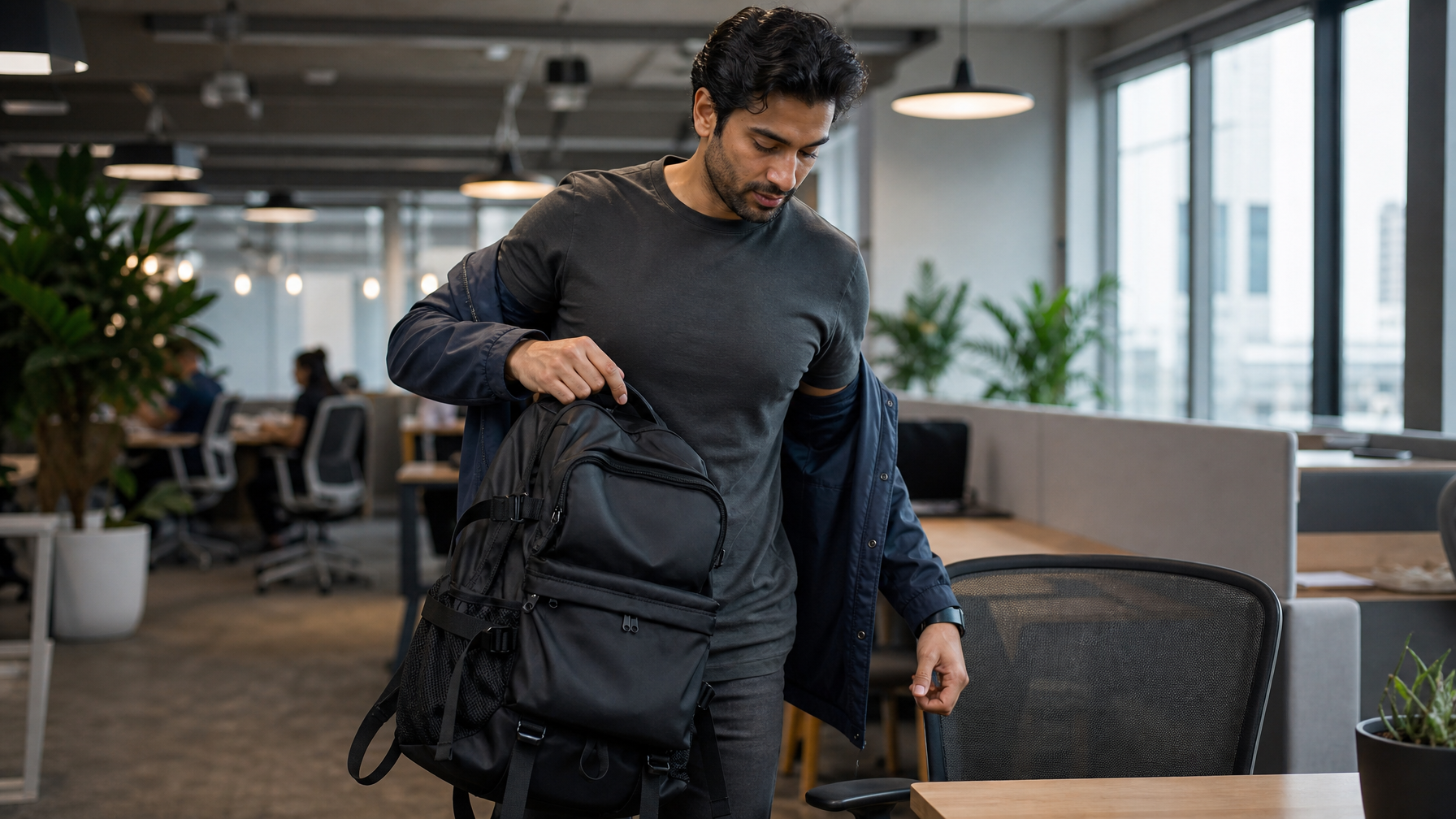
The Apex Backpack ($139 / $159) is the high-capacity daily option: variants for 15.6" and 17.3" laptops, separate padded laptop and tablet compartments, multi-layer interior, and a chest buckle for stability under load. Capacity sits in the roughly 20. 35 L working range depending on how you pack it. Choose Apex when a messenger regularly fails to close comfortably, or when a 17" machine is non-negotiable.
When the "large" need is travel expansion more than daily office bulk, the Transit Pack ($199) is the expandable 20. 35 L roll-top path. It is the better pick when weekends and short trips share a bag with the commute, not when every Tuesday is already maxed.
A Simple Decision Framework
If four of five days look like laptop + essentials: Stay in the small lane. Start with the Haven Messenger. Do not buy Apex "for growth." Growth usually means more clutter, not more need.
If you regularly add bottle + layer + pouch and Haven feels tight: Move to medium. Summit Messenger if you want to stay crossbody. Lite Backpack or Venture Backpack if two straps fit how you walk.
If a 15". 17" laptop, two devices, or a packed daily kit is normal: Large is honest. Apex Backpack for heavy office and transit days. Transit Pack when expansion for trips matters as much as the weekday.
If your load swings hard between light and heavy days: Two-bag systems beat one oversized bag. Many people pair Haven for light days with Apex or Transit Pack for heavy and travel days. That is not failure. It is accurate sizing twice.
Laptop Size Is a Floor, Not a Complete Answer
A 14" laptop does not automatically mean a small bag. A 14" machine plus gym kit plus lunch is a medium or large problem. A 16" laptop with nothing else can still live in a well-designed pack if the sleeve and access are right.
Check three laptop-related details after you know your load lane:
- Does the bag state a clear max laptop size? Haven: up to 14" in the main compartment. Summit: padded sleeve up to 14". Lite and Nomad: up to 15.6". Apex: 15.6" or 17.3" by variant. Transit Pack: up to 15.6".
- Is protection a dedicated sleeve or the main compartment? Haven uses the main compartment directly. Do not expect a separate padded sleeve on Haven.
- Can you reach the laptop without dumping the bag? Security lines and café transitions punish bags that force a full unpack.
How Commute Type Changes the Size Call
Mostly walking and stairs. Prefer the smallest lane that still fits the real load. Bulk multiplies with distance. Crossbody messengers and light packs win when every block is on foot.
Mostly transit standing-room. Profile and control matter as much as liters. A compact messenger you can rotate forward often beats a large pack that sticks into the aisle.
Mostly car or short walks. You can tolerate a larger bag more easily, but you still pay for empty volume when you carry the bag from garage to desk. Size to the desk walk, not the trunk.
Bike or scooter segments. Stability and secure closure matter. Backpacks with a chest strap (Apex) or tightly worn crossbodies beat loosely swinging large messengers.
For a deeper format comparison after you know your size lane, see Messenger Bag vs. Backpack: Which Is Actually Better for Your Commute?.
Common Sizing Mistakes
Buying for the vacation week. One trip a quarter should not define the bag you wear two hundred workdays a year. Use a travel-capable bag for travel, or an expandable option you only open when needed.
Matching a photo, not a pile of gear. Lifestyle images compress scale. Your charger brick does not compress.
Confusing organization with capacity. More pockets do not create more space. They create places to hide things you did not need.
Ignoring empty weight. A large bag that weighs 3 lb before packing steals budget from contents. If weight is your main friction, read How Heavy Should Your Everyday Bag Be? after you lock size.
Quick Size Map (Field & Ash)
- Small daily laptop commute: Haven Messenger ($89)
- Medium messenger commute: Summit Messenger ($129. $149)
- Medium light backpack: Lite Backpack ($89)
- Medium organized backpack: Venture Backpack ($139)
- Large / multi-device daily: Apex Backpack ($139. $159)
- Large expandable / trip-capable: Transit Pack ($199)
FAQ
What size bag do I need for commuting with a laptop?
Size to your full ordinary load, not the laptop alone. A 14" laptop with only essentials often fits a compact messenger like the Haven Messenger. Add bottle, layer, and a pouch most days and you are usually in medium. Multi-device or 17" machines push you to a larger backpack such as the Apex Backpack.
Is a bigger bag always more versatile?
No. Extra volume becomes empty weight and clutter storage on light days. Versatility is the ability to carry what the day requires without friction, not the ability to carry everything you own.
How many liters should a commuter bag be?
There is no universal number. Many daily laptop commutes work in compact structured bags that feel smaller than travel packs in the 20. 35 L class. Use liters to compare similar backpacks. Use your gear pile to choose the lane.
Should my gym clothes live in my work bag?
Only if the gym is part of most workdays. If it is twice a week, a second small bag or a locker plan often beats permanently upsizing the commute bag.
Can one bag cover commute and weekend trips?
Sometimes. Expandable designs like the Transit Pack are built for that overlap. If your weekday load is already large every day, you may still want a dedicated small bag for light office days.
The right size is the smallest bag that fits your real Tuesday without negotiation. Everything above that is optional capacity you will either ignore or fill. Empty the bag, count the ordinary day, pick the lane, and let the product page confirm laptop fit after the decision is already honest.