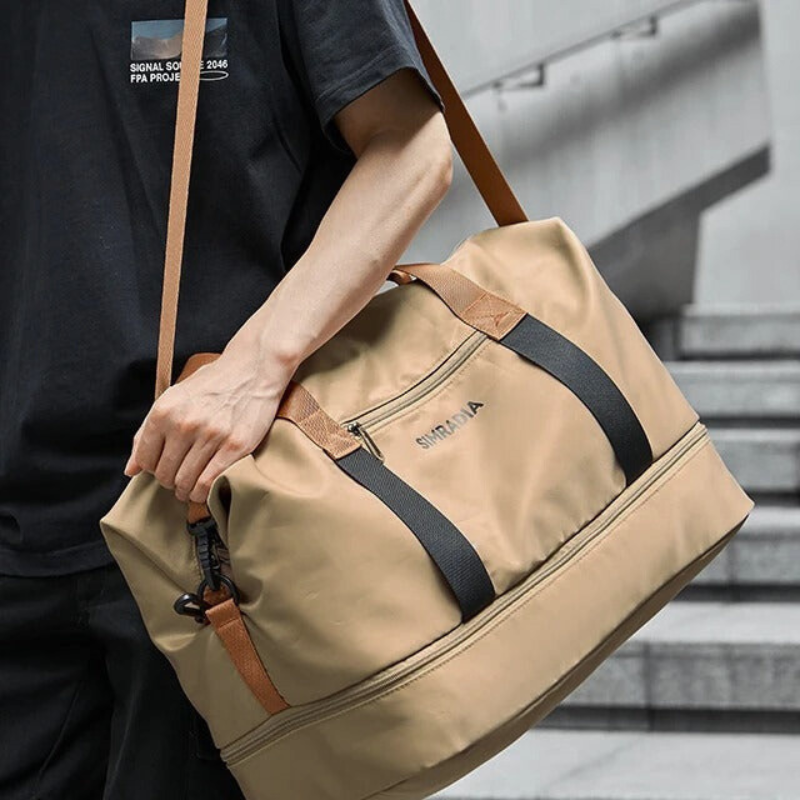



The Anatomy of a Good Carry Bag: 7 Things That Separate Great Bags from Forgettable Ones

Most people learn what a bag needs by enduring what it lacks. A year with a bag that wore their shoulder down teaches them about carry position. A morning spent digging for a transit card in the rain teaches them about access pattern. A zipper that fails at week three teaches them about hardware.
Most buyers approach a bag from the outside: the silhouette, the price, the main compartment spec. These details tell you very little about whether the bag will actually work. The seven things that separate a good carry bag from a forgettable one are mostly invisible in a product photo.
This guide covers each of them, in order of how much they affect the daily experience.
1. Pack Weight
The bag's empty weight is the fixed cost of carrying it every day. A bag that weighs two and a half pounds empty before you have added a laptop, a water bottle, or a charger has already claimed a significant share of the load you can carry comfortably.
Pack weight compounds over distance. A commuter who drives to a parking garage notices it less than someone who walks two miles from the station. On a transit-heavy commute, every pound the bag contributes is a pound that doesn't belong there.
The practical question is not how much the bag can hold, but how heavy it is before you put anything in it. A bag that carries the same load as a heavier option at 40 percent less pack weight is a better bag for most commutes.
The lightest bag in the Field & Ash catalog is the Commuter Sling at 0.66 lb. At the other end of the catalog range, larger structured options run 2.0 to 2.5 lb empty. For a daily walking commute, that difference is felt every evening.

2. Access Pattern
Access pattern describes how you get to what you need, and what that requires from your body.
Some bags put the most-used items. Phone, transit card, earbuds, wallet. In a front pocket or a dedicated quick-access compartment that opens toward you while the bag is on your shoulder. Others put everything inside the main compartment and require you to stop, unclip a fastener, and reach in.
The distinction matters most on transit. In a busy station, the difference between reaching into a front pocket and stopping to open a main compartment is the difference between a friction-free commute and a small daily interruption that adds up over a year.
The Haven Messenger organizes access around two dedicated pockets: a front pocket that fits phone, wallet, and card together (accessible while the bag stays at your side), and an anti-theft back pocket that sits against your body when worn. For daily transit carry, these two access points cover the items you reach for constantly. Without requiring the main compartment to open at all.
3. Interior Organization
Interior organization determines whether a bag functions as a carry system or a container you sort through.
The test is simple: after a week of daily use, can you find each item in your bag without looking? If yes, the interior design fits your load. If you regularly reach around to locate the charger you know is somewhere in there, the interior has failed.
Good organization is not about the number of pockets. A bag with twelve pockets and no clear logic for how to use them is less organized than a bag with four pockets that each correspond to a distinct category of item. The hand needs to go to the right location without deliberation.
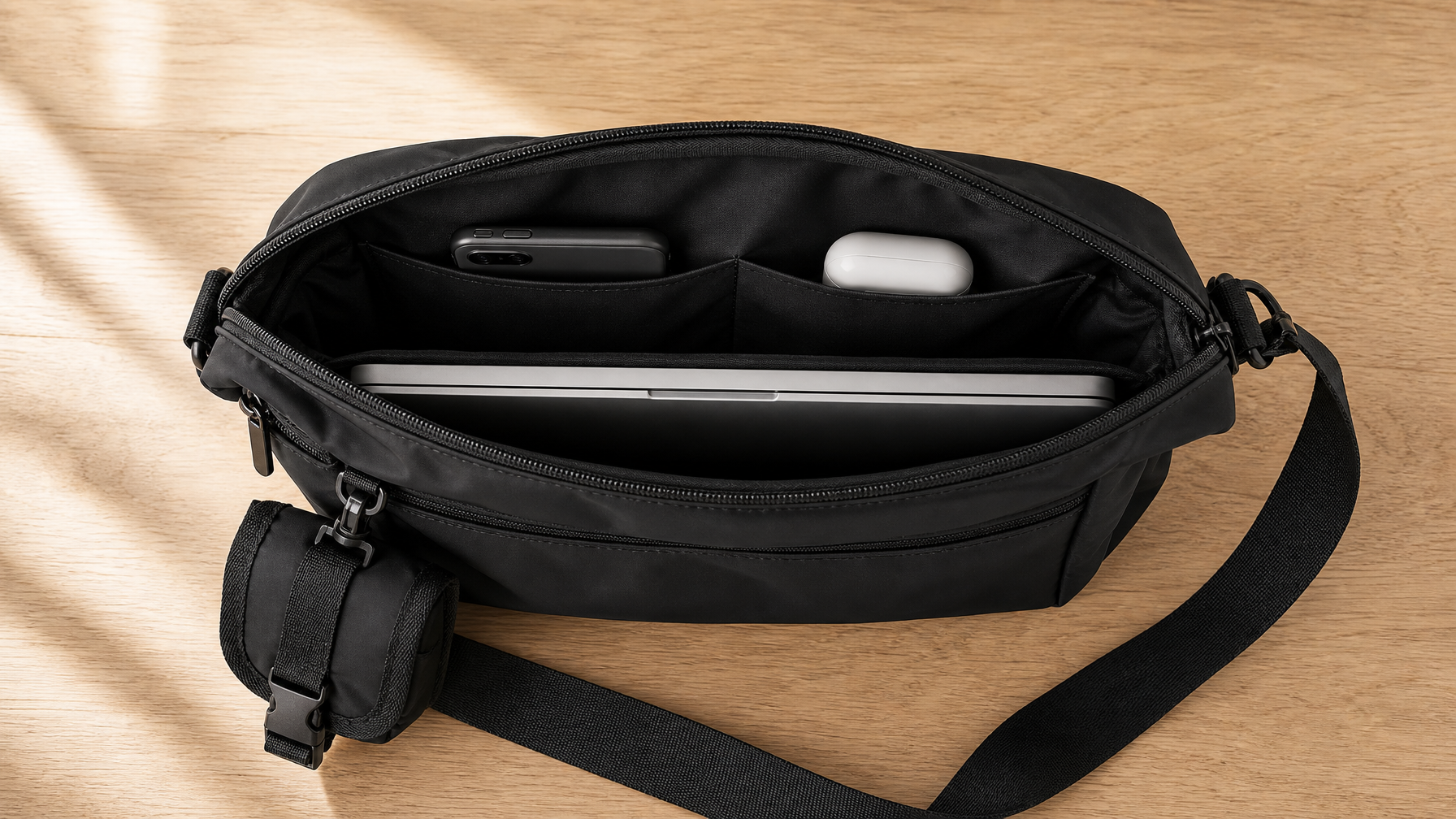
The Metro Laptop Brief demonstrates this with minimal design: a keychain holder, a dedicated interior phone pocket, an interior zip compartment, and a padded laptop sleeve. Four pockets with clear assignments. After one week of use, the hand reaches the right pocket without thought.
4. Structure Under Load
Structure describes how the bag behaves when it is full, half-full, and nearly empty.
A bag with good structure holds its shape at any load level. The laptop compartment stays defined whether the bag is packed to capacity or carrying a fraction of that. The front pockets do not press flat against the main compartment when the bag is full. The silhouette does not change day to day based on how much is inside.
A bag without structure collapses around whatever is inside it. On light days it looks deflated. On heavy days it sags in a way that shifts the load off-center. Neither condition is catastrophic, but both mean the bag is reacting to the load rather than containing it.
The Summit Messenger achieves its structure through a padded laptop sleeve and a multi-compartment interior that holds its form whether the daily load is light or full. The bag behaves the same on a Tuesday with a laptop and two folders as it does on a Friday with half that.
5. Weather Resistance
Weather resistance separates a daily carry bag from one that has to be managed around the weather.
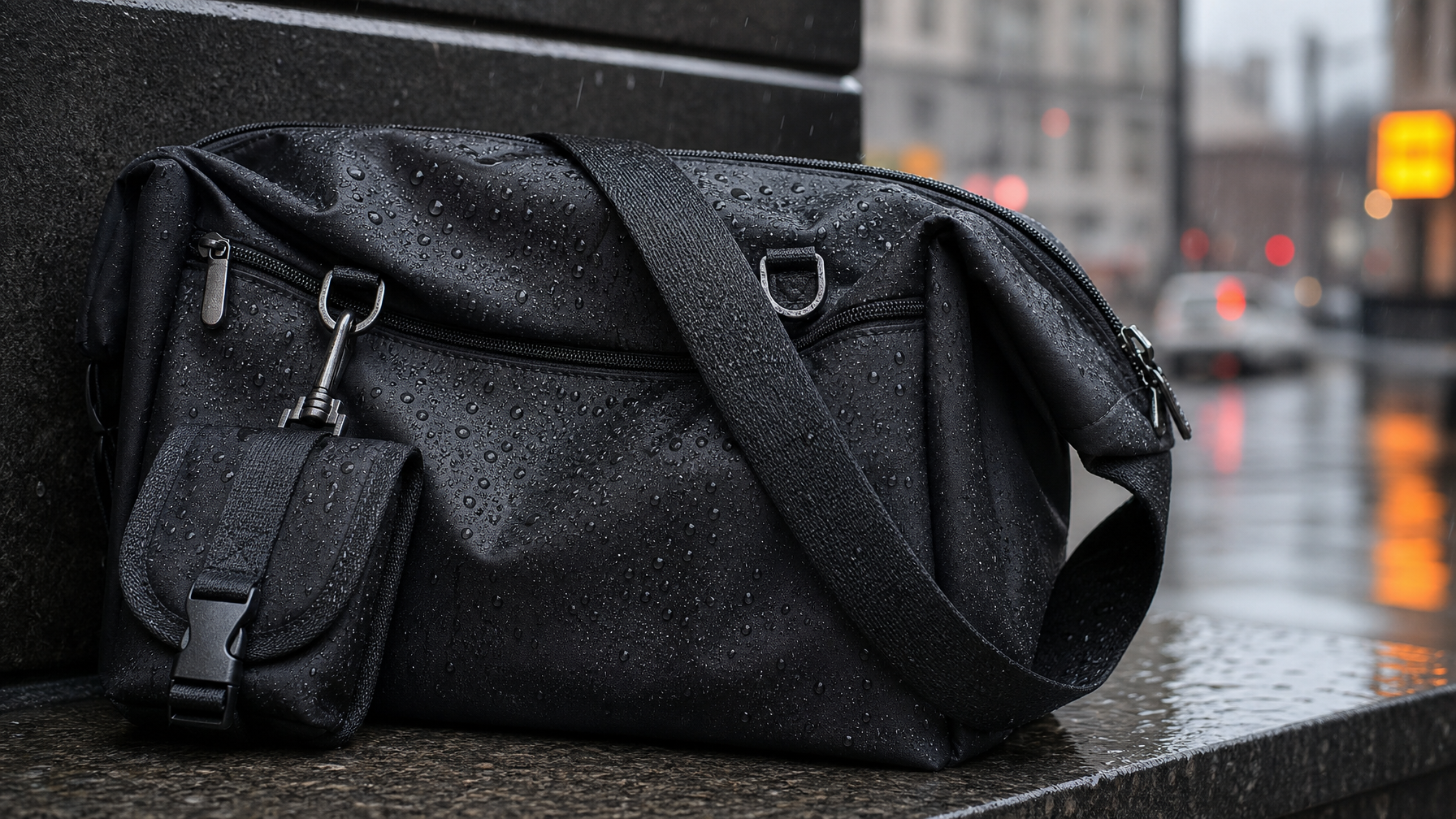
The distinction between waterproof and water-resistant matters more than the word on a product page. A waterproof shell keeps contents protected in sustained rain. A DWR-coated fabric sheds light moisture. Neither is the same as an uncoated canvas or leather that absorbs water and changes the bag's weight and feel in the process.
For a daily urban commute in a temperate climate, a water-resistant Oxford nylon exterior handles most situations. The Haven Messenger's 600D Oxford shell is the same material used across most of the Field & Ash catalog: moisture beads off the exterior without penetrating. It is not a submersion bag, but it handles being caught in the rain without becoming a problem.
For alpine climates or sustained heavy rain, the evaluation shifts toward sealed seams and heavier waterproofing treatments. For the average city commute, 600D Oxford nylon is the practical answer.
6. Carry Position
Carry position describes how the bag contacts your body and what that means for how you move through a day.
A backpack distributes weight across two shoulder points. It handles heavier loads better than any single-shoulder option and keeps the weight centered on the body. The trade is that the bag comes off the back for access, and on crowded transit it occupies more space than a single-strap alternative.
A crossbody bag sits at the hip on a single diagonal strap. It does not come off the body for front-pocket access. On crowded transit, it stays close and moves with you. The load is single-shoulder, which becomes relevant on long carry distances under heavier loads.
The right carry position depends on how you move, not on bag capacity. A transit-heavy commute that involves standing in crowded carriages favors a crossbody. A long walking commute with a heavier load favors a backpack. The Lite Backpack is the lightest two-shoulder option in the Field & Ash catalog at 1.0 lb. On walks over a mile with a full tech load, the two-point carry becomes meaningfully more comfortable than single-shoulder.

7. Hardware Behavior
Hardware covers the zip mechanism, buckle engagement, and strap adjustment. The tactile interface between the bag and your hands every day.
A zipper that requires two hands to operate is a problem on transit. A buckle that does not release cleanly is a minor friction that accumulates across a year of daily use. A strap adjustment slider that slips under load means you are resetting the carry position throughout the day rather than once in the morning.
The practical test: can you do everything the bag requires with one hand while the bag is on your body? Open the front pocket, close the main compartment, adjust the strap. If any of those require stopping, removing the bag, or using both hands, the hardware is creating friction the bag's other features cannot recover from.
This is the hardest criterion to evaluate from a product page. If possible, handle the bag in a store before committing, or buy from a retailer with a return window long enough to carry the bag through a full week of normal use.
How to Apply This Before You Buy
Most of these seven criteria require the bag to be in your hands. A product page tells you the material and the dimensions. It does not tell you how the zipper sounds, whether the strap adjusts in one pull, or how the bag sits against your body when it is half-loaded.
Before evaluating any bag, identify which criteria matter most for your specific carry. If you walk two miles on your commute, pack weight and carry position are top priorities. If you spend your commute standing in crowded transit, access pattern and compact profile carry more weight. If your days alternate between a formal office and a remote café, structure and exterior profile become the deciding factors.
The seven criteria above do not change. Which ones matter most depends entirely on how you move and what you carry. That match. Between the bag's design decisions and your daily requirements. Is what separates a bag that works from one that merely looks right in a photo.
If you are evaluating a Field & Ash bag, every order ships with a 30-day return window. That is long enough to carry it through a full week, test the access pattern on your actual commute, and check the hardware across multiple loadouts before committing.
FAQ
What should I look for when buying a commuter bag?
The most relevant criteria for most commuters: pack weight, access pattern, interior organization, weather resistance, and carry position. Start with how you move. On foot, by transit, or by car. And let that narrow the field before evaluating individual bags. Our complete commuter bag guide covers the selection process in detail.
How do I know if a bag is actually worth buying?
A bag is worth buying when, after a full week of use, you stop noticing it. The carry disappears into the routine. That is the functional definition of a bag that fits how you move.
Does price determine bag quality?
Price is not a reliable proxy for fitness for purpose. A $69 bag that handles your specific load, commute pattern, and access habits without creating friction is a better bag for that person than a $200 bag that does not. The criteria that matter are behavioral, not material. Our best commuter bags under $100 guide shows how much the right bag can do within a strict budget.
Is the Haven Messenger a good everyday carry bag?
The Haven Messenger scores well on access pattern (front and back pockets for the most-used items), weather resistance (600D Oxford shell), and carry position (crossbody, close to the body on transit). It is built around a professional daily load. Laptop up to 14 inches, daily essentials. Without backpack bulk. For a transit-heavy commute with a standard tech kit, it covers most of the criteria above without compromise.