


Are Messenger Bags Professional? The Question Every Commuter Eventually Asks

You've done the research. You know what size you need, you've looked at the specs, and you keep coming back to the same answer: a messenger bag. Crossbody carry, fast access, compact without being cramped. It makes sense for how you move.
But somewhere in the back of the decision sits a question you haven't fully resolved: Will this look professional?
Not "will it hold my laptop." Not "will it survive the commute." Those questions have obvious answers. The style question is harder to shake. Conference rooms. Client meetings. The moment you set your bag on the table across from someone who matters. Will a messenger bag read like you've thought about how you show up. Or like you borrowed the bag from a college student?
It's the right question to ask. The answer is yes. With some conditions worth understanding before you buy.
Where the Professional Concern Comes From
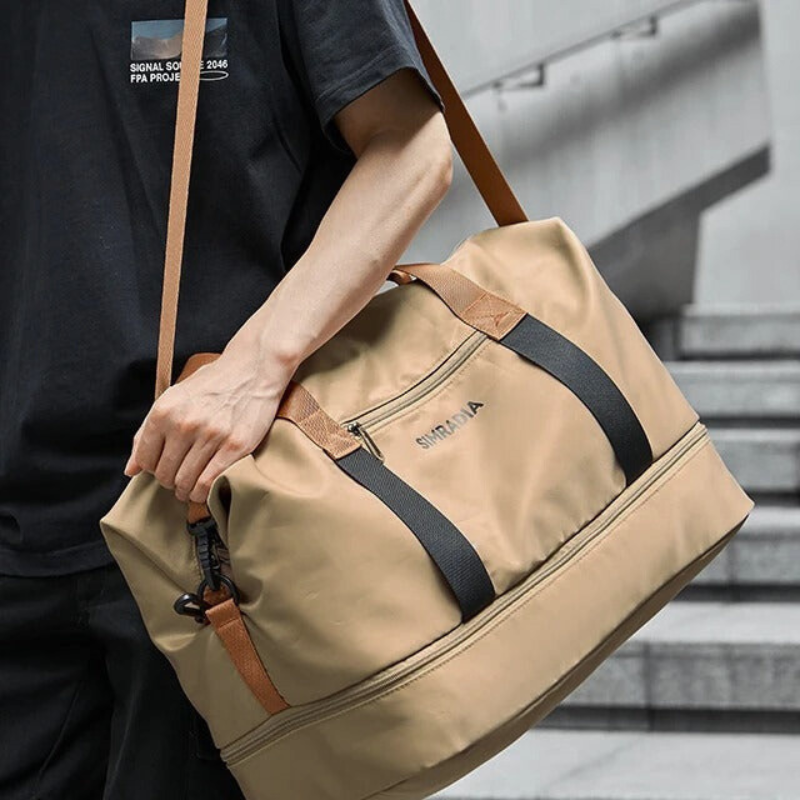
The hesitation has a real source. For about two decades, messenger bags moved through distinct cultural phases: bike courier, then college campus, then creative-industry professional. The visual association with student carry is persistent. Part of the concern comes from a specific silhouette: the classic courier messenger. Wide, flat, single large compartment, flap-top closure, worn slumped low across the back. Is not a professional-looking bag. That version exists, and it earned the reputation.
The professional question is also context-specific. A bag that reads entirely right in a design studio or a technology company might feel out of place in a traditional law firm. Environment matters, and the messenger bag's professional register is not universal.
What's changed is the design language. Modern structured crossbody messengers have moved away from the flat-flap courier aesthetic entirely. They hold their shape. They sit smaller. They look intentional. The question now is not "is a messenger bag professional?" but "is this specific messenger bag professional in this specific context?" Those are different questions with more useful answers.

What Makes a Messenger Bag Look Professional
Four things determine whether a messenger bag reads as professional in a meeting room.
Structure and silhouette. A professional bag holds its shape whether it's packed or near-empty. A bag that collapses into itself when you set it on a chair. Or swells unevenly depending on what's loaded. Reads as uncontrolled. A bag that maintains a clean, consistent silhouette regardless of its contents reads as chosen. That difference is visible from across the room.
Hardware and material. Exposed, chunky hardware in mixed finishes draws attention to itself. Clean, low-profile hardware in a single consistent finish disappears from the frame. Which is what you want in a professional setting. The bag should not be announcing its construction details from across the conference table. Material matters too: a shell that wears well, holds its color, and doesn't pill or scuff after a week reads entirely differently from one that doesn't. The material doesn't need to be leather, but it needs to hold up over time.
Carry position and size. The classic large-format messenger worn slung low and heavy across the back is the silhouette that reads informally. A compact bag that sits close against the body. Crossbody at the hip. Reads differently. The way a bag moves with you is part of the signal it sends.
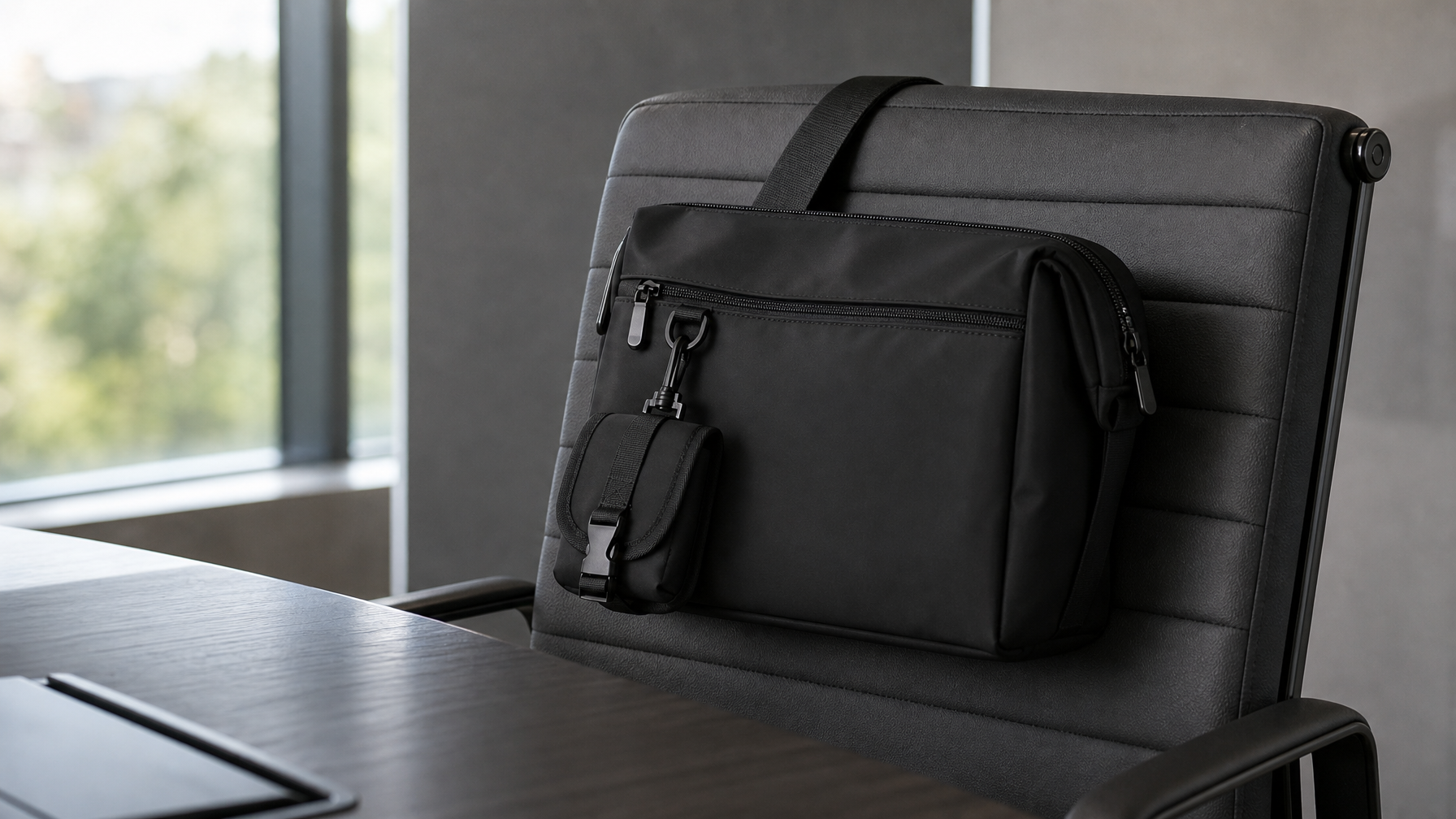
How the bag behaves when you set it down. In a meeting room, the bag will end up beside you. On the chair, on the floor, or in some cases on the table. A bag that falls over, slumps, or needs to be repositioned to look composed draws attention to itself. A bag that sits flat, stays closed, and holds its shape does not.
The Context Question: Where a Messenger Bag Works
In most modern work environments. Technology, media, consulting, professional services, financial services, creative industries. A structured crossbody messenger is entirely unremarkable. Nobody in those rooms is thinking about your bag. It's the carry of a professional who's figured out their setup.
There are environments where it reads differently. Traditional large law firms, certain institutional finance roles, formal client-facing settings where specific carry formats are part of the established professional register. In those environments, a structured slim briefcase still dominates, and a messenger bag reads as against the grain. Not unprofessional, but noticeable enough that it becomes part of the first impression.
Know where you're going. For most professionals in 2026, a structured crossbody messenger is fully appropriate and increasingly standard. For a specific subset of highly formal sectors, it's worth a read of the room before committing to the style.
What the Full Professional Day Looks Like
One of the most underappreciated dimensions of the messenger-bag-for-work question is how the bag handles the full day. Not just the meeting room.
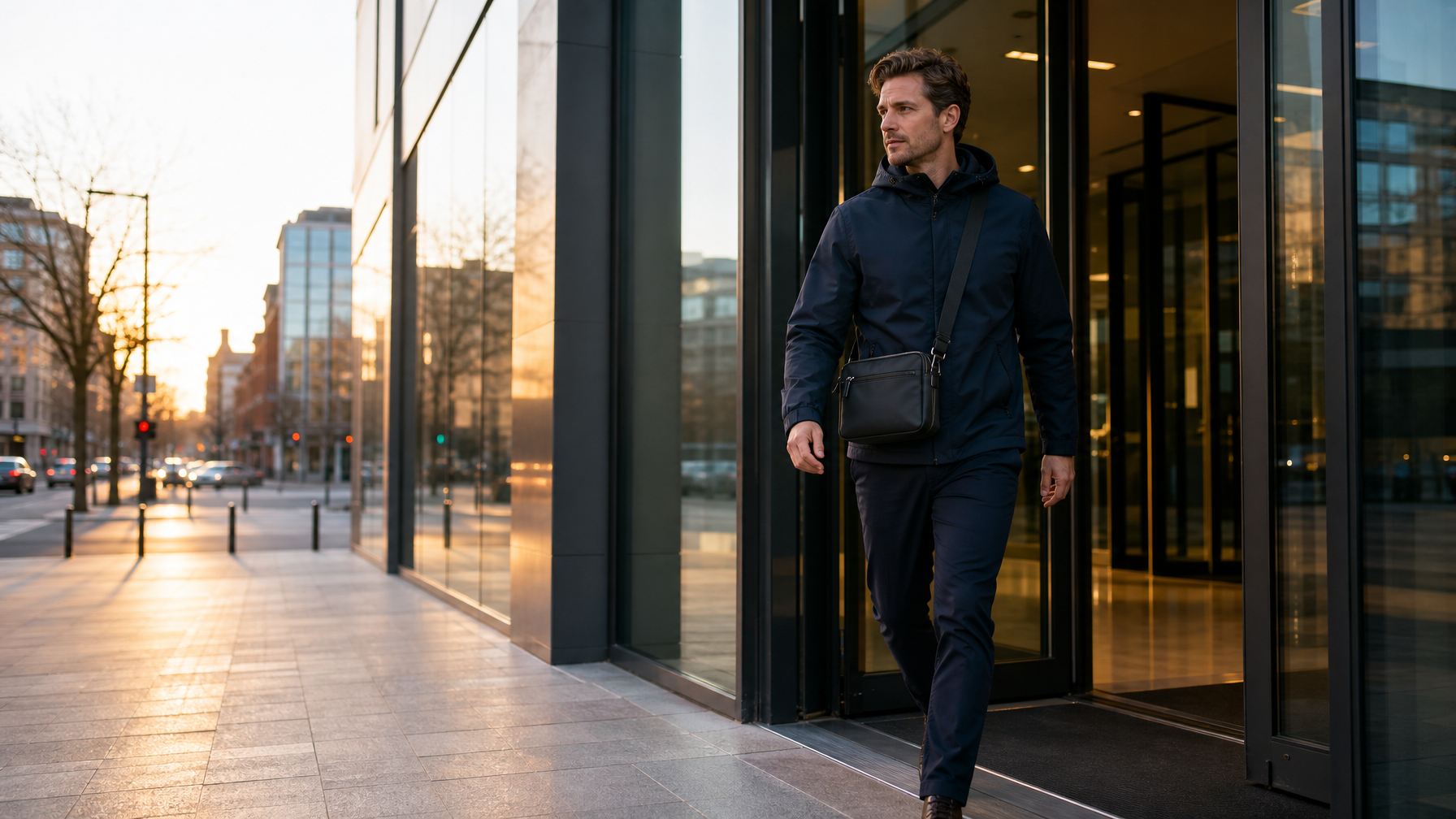
The crossbody carry position solves a specific transit problem. On a packed train or bus, a backpack takes up space someone else needs. A briefcase in one hand is awkward in any crowd. A crossbody bag rides close to your body, moves with you, and doesn't require removal at the turnstile or the lobby security desk. The commute gets meaningfully easier.
At the desk, the bag needs to let you get to your laptop and essentials without turning the whole thing over. The single-large-compartment courier messenger fails here. Everything ends up piled in one space. An organized interior with a dedicated padded laptop sleeve, a quick-access front pocket for daily items, and a secured back pocket for anything worth protecting makes arrival faster and departure faster.
In the meeting room, the bag sits quietly beside you, holds its shape, and reads as considered.
Between meetings. The coffee stop, the lunch break, the afternoon stretch at a coworking desk. The bag rides crossbody without asking anything of you. You stop thinking about it. That's what a well-chosen bag does.

Haven Messenger ($89). The Professional Answer
The Haven Messenger is the carry that makes this argument concrete rather than theoretical.
At 1.21 lb and 33×18×30 cm, it sits compact and close against the body. Not the sprawling flat silhouette that reads informally. The 600D Oxford shell holds its shape whether the bag is fully loaded or carrying a lighter day. All-black matte hardware in a single consistent finish. Nothing draws the eye.
The padded 14" laptop sleeve keeps your machine protected and separated from the main compartment. An interior pocket system means daily items. Charger, cables, earbuds. Stay in defined places rather than piling up together. The detachable front accessory pouch clips to a D-ring on the bag's face and holds the items you reach for dozens of times a day: phone, transit card, earbuds case. No main compartment required for any of them.
The anti-theft back pocket sits against your body when the bag is worn crossbody. Invisible from the outside, immediately accessible to you, inaccessible to anyone else. On busy transit or in unfamiliar environments, it handles anything worth keeping secure.
In a meeting room, the Haven Messenger sits on the chair beside you and holds itself. Clean silhouette, consistent finish, no movement. The bag reads as chosen.
Frequently Asked Questions
Is a messenger bag appropriate for a job interview?
In most industries, yes. A structured crossbody messenger. Compact, clean silhouette, well-maintained. Is entirely appropriate for a professional interview. The exceptions are highly formal environments where specific carry formats are part of the established professional identity signal: certain law firms, institutional finance roles. If you're uncertain about the company's culture, a structured messenger is as defensible as a slim brief.
Do messenger bags look professional on women?
The crossbody style is one of the most practical carry positions for everyday professional use, regardless of the wearer. A structured messenger bag worn crossbody reads the same way on any professional. The factors that determine professional register. Silhouette, hardware, carry position, how the bag holds itself. Are the same.
Can I bring a messenger bag to a client meeting?
Yes. The relevant factor is whether the bag can sit quietly beside you once you're in the room. Not whether the format is inherently appropriate. A compact structured messenger that holds its shape on the chair or table beside you is a non-issue in any modern professional setting.
What size messenger bag looks most professional?
Compact reads more professional than large for most professional loads. A bag sized for its contents. Laptop and daily essentials. Sits smaller and holds its shape better than an oversized bag carrying more air than gear. The Haven Messenger at 33×18×30 cm handles a laptop and a full day's essentials without excess volume.
Are backpacks less professional than messenger bags?
Neither format is inherently more or less professional. A clean, structured backpack in a professional environment reads the same way as a clean, structured messenger. The signals that determine professional register. Material consistency, hardware finish, structure, how the bag holds itself when set down. Apply across both formats equally.
The Short Answer
A messenger bag is professional when the bag holds its shape, the hardware is consistent and understated, and the carry sits compact and close to the body. Those criteria are met by a specific category of modern structured crossbody messenger. Not by every bag that calls itself a messenger.
The question "is a messenger bag professional?" has always been, at its core, a question about which messenger bag. That more specific question has a more specific, more actionable answer.