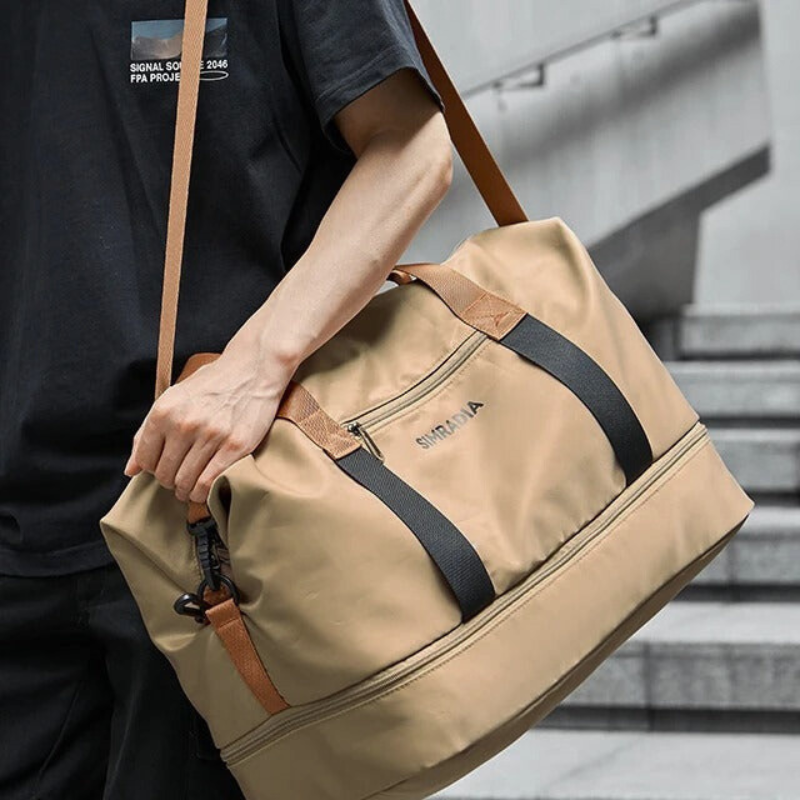



The Best Commuter Bags of 2026

TLDR
The right commuter bag depends on how you commute more than what you carry. Transit commuters (subway, bus) need a top-zip crossbody with anti-theft design and fast one-motion access. Walking commuters need strap comfort and weatherproofing. Cycling commuters need a roll-top or waterproof backpack. Drivers need a slim profile that goes from car to desk without friction. This guide matches the bag to the commute — and covers the best options across all four types.
Most "best commuter bag" guides treat all commuters the same. They're not. The daily subway commuter navigating a packed platform needs something completely different from the cyclist covering three miles in the rain. The ten-minute walk from a parking garage to the desk has different bag requirements than a forty-five minute subway ride.
The bag that works for one commute type is often wrong for another. This guide organizes picks by how you actually get to work — so the recommendation is relevant to your specific situation.
The Four Commute Types
Before the picks, a short framework. Commute type determines which bag features matter most.
Transit commuters (subway, bus, commuter rail) prioritize access speed, anti-theft design, and a compact profile that doesn't require extra space on a crowded train. The bag opens in motion, sits flat against the body, and keeps everything exactly where it was put.
Walking commuters cover real distance on foot, which makes strap comfort and weight distribution more important. A bag that's fine for a five-minute walk can become a real burden over thirty minutes. Weatherproofing matters more — you're exposed longer between stops.
Cycling commuters need volume flexibility (a jacket one day, nothing extra the next), high weatherproofing (rain is unavoidable on a bike), and a bag that stays stable at speed without swinging.
Driving commuters have the simplest requirements: the bag goes from car to desk and back. Transit-specific features like anti-theft design and one-motion access matter less. A slim, structured profile that fits under a conference table matters more.

The Best Commuter Bags by Commute Type
For Transit Commuters: Field & Ash Haven Messenger ($89)
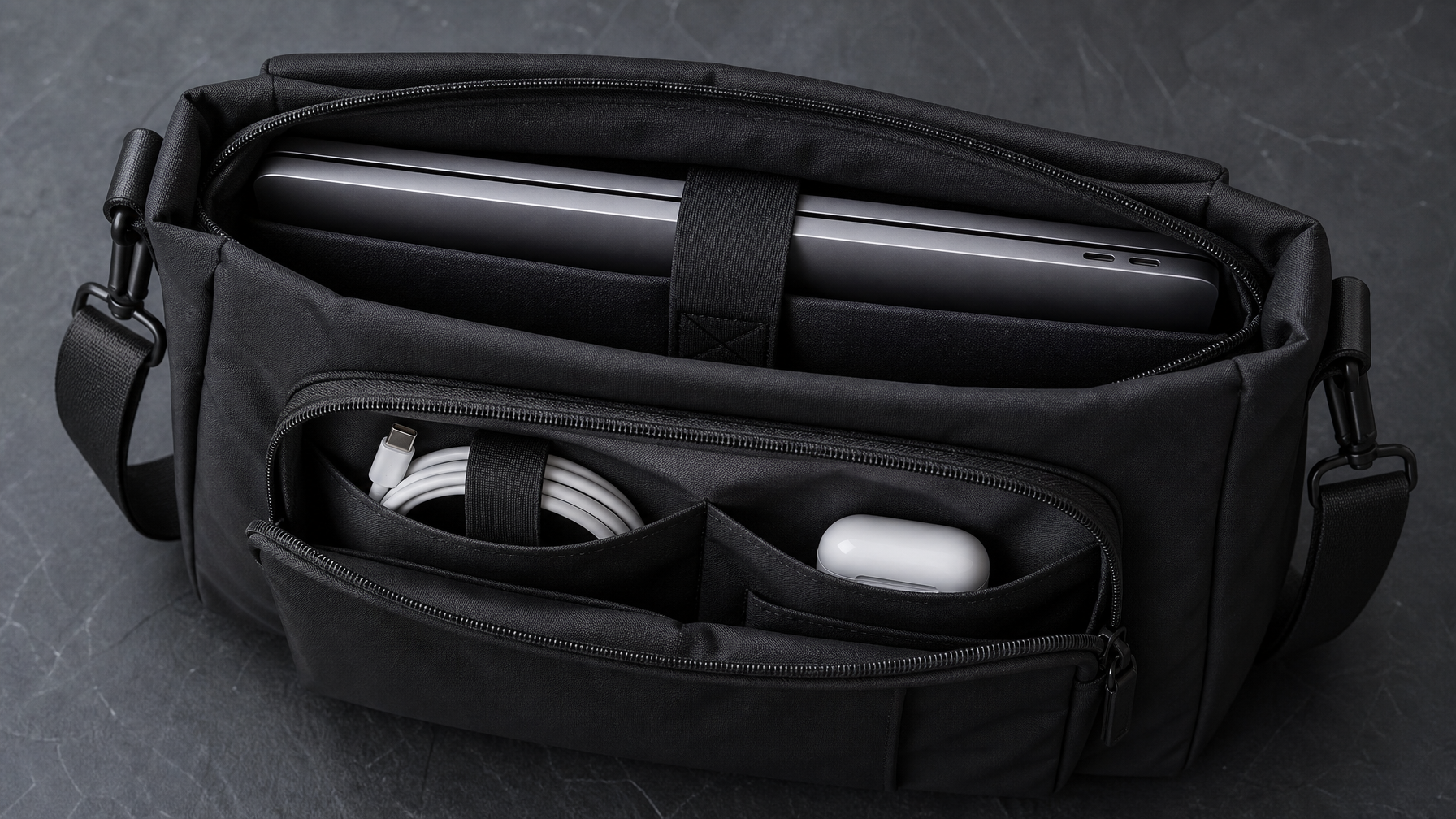
The Haven was designed around the transit commuter's exact problem: get a 14" laptop and a full daily kit onto a crowded train, survive rain, protect the laptop from transit bumps, and access everything without stopping.
The top-zip closes and opens in one motion at hip level — the fastest possible access for someone moving through a platform. The front organizer pocket keeps daily-use items (earbuds, charger, pen) accessible without opening the main bag. The anti-theft back security pocket — a pocket that faces your body when the bag is worn — keeps wallet and passport safe on a packed subway.
The 600D Oxford shell handles daily rain without saturating. The wide seatbelt-style webbing strap keeps the bag stable on the body across a full commute, at a diagonal that positions the bag at hip level for fast access while standing or moving.
At $89, it delivers the full transit-optimized feature set at a price well below comparable bags from premium urban carry brands.
The transit commuter's pick. No close second at this price point for this specific use case.
For Professional or Driving Commuters: Field & Ash Metro Laptop Brief ($79)
The Metro Brief is a more structured, professional-profile option for commuters who go from car to office — or who work in environments where a crossbody messenger would feel out of place.
A flip-top closure with a hasp lock, a slim padded 14" laptop compartment, and 600D Oxford construction give it the same weatherproofing as the Haven in a more desk-friendly form factor. The slimmer, more angular profile fits cleanly under a chair or on a conference table. For driving commuters, the flip-top works well — there's no transit platform pressure that demands one-handed access.
The driving commuter's and formal office pick.
For Cycling Commuters: Timbuk2 Classic Messenger (~$109)
The Timbuk2 Classic is the established benchmark for cycling-specific messenger bags. Its roll-top closure adjusts volume day-to-day, seals the interior in sustained rain better than a zip, and allows the bag to compress flat on light days. The Cordura construction handles the kind of weather cycling commuters actually encounter.
The trade-offs are significant for non-cyclists: roll-top access is slower, interior organization is minimal, and the styling is utilitarian. For transit riders, these trade-offs aren't worth it. For bike commuters, they are.
The cycling commuter's pick.
For Long Walking Commutes
For commutes involving 30+ minutes on foot, the strap system matters as much as the bag design. The Haven's wide seatbelt strap handles long walking commutes comfortably — the crossbody diagonal distributes weight differently from a straight-drop shoulder bag and reduces fatigue over distance.
If you prefer a backpack for walking, choose one with a padded dedicated laptop sleeve and 15–20 liters of capacity. Contoured shoulder straps are non-negotiable for walks over 20 minutes. Avoid bags over 20L — the weight penalty compounds over a real walking commute.

What to Look For (The Non-Negotiables)
Whether you're buying a crossbody, a brief, or a backpack, these features apply across the board.
A dedicated laptop sleeve. Not a padded divider inside the main compartment — a fully enclosed, separate pocket for the laptop. The distinction protects the machine regardless of what else is packed in the bag.
Real weatherproofing. 600D Oxford nylon or ballistic nylon with weather-resistant zippers. The practical test: does the bag keep a laptop dry in heavy rain for fifteen minutes? If yes, it passes the daily commuter standard.
The right size. 10–15 liters for most daily commutes. Enough for a laptop, charger, earbuds, notebook, and a water bottle. Above 16 liters and the bag adds unnecessary bulk on packed transit.
A strap system that fits your carry style. Wide, padded, or seatbelt-style straps for crossbody and shoulder bags. Contoured, adjustable straps for backpacks. The wrong strap creates fatigue that accumulates across a full week.
For a complete breakdown of every selection criterion, the complete commuter bag guide covers all of it in depth. For a side-by-side comparison of the leading work messenger options, the best messenger bags for work in 2026 covers each pick by use case.
Size Guide
| Daily Carry | Recommended Capacity |
|---|---|
| Laptop + essentials only (transit commute) | 10–12L |
| Full daily kit: laptop, charger, notebook, water | 12–15L |
| Hybrid commute + gym or change of clothes | 15–20L |
| Extended remote work or travel days | 20–25L. For a deep-dive comparison across laptop bag styles for daily commuters, the best laptop bags for commuting covers the leading options organized by bag type. |
Frequently Asked Questions
What's the best commuter bag for the subway?
The Field & Ash Haven Messenger ($89). Top-zip access in one motion, anti-theft back security pocket, 14" laptop sleeve, and 600D Oxford shell — the full transit-optimized feature set.
Is a messenger bag or backpack better for commuting?
For subway and bus commuters, a messenger bag. Faster access, less space taken up on the train, anti-theft positioning. For walking commuters covering 30+ minutes on foot or cycling commuters, a backpack distributes weight better. See the commute-type framework above. For a full comparison of the top work messenger options — picks across transit, formal office, and cycling use cases — the best messenger bags for work in 2026 covers each in detail.
What size commuter bag do I need?
10–15 liters for most daily commutes. 12L fits a laptop, charger, earbuds, and a notebook cleanly. Go up to 15L if you regularly carry a water bottle or additional gear. For how the right bag fits into a complete daily carry system, the everyday carry guide covers the EDC layer that goes inside it.