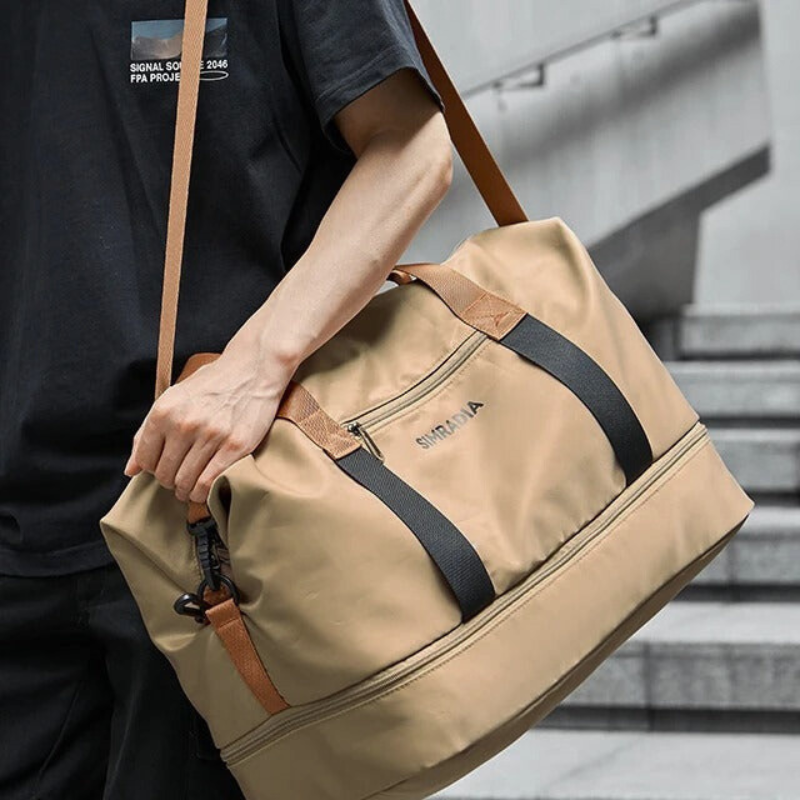



What Is Everyday Carry (EDC)? A Complete Guide for Modern Commuters

TLDR
EDC stands for everyday carry: the intentional, curated set of items you bring with you every day. It started in survivalist communities, evolved through online gear culture, and is now simply the framework that serious commuters and modern professionals use to move through their days more efficiently. The core is always the same — phone, wallet, keys. Everything else is built around how you actually live.
It's a Tuesday morning and you're already running three minutes late. You grab your bag, step out the door, and realize somewhere between the elevator and the street that you're missing your earbuds. You go back. Now you're five minutes behind. You make the train but you're standing, and the charger you definitely packed is buried somewhere under last week's gym clothes and a lip balm from 2024.
Now picture the other version of that morning. You leave two minutes earlier than you need to. Everything is in its place. Earbuds in the front pocket, charger in the side slot, laptop sleeved, keys in your hand. You board the train, put headphones in, and disappear into your commute.
The difference isn't luck. It's a system. That system has a name: everyday carry.
What Is Everyday Carry (EDC)?
Everyday carry, universally abbreviated as EDC, refers to the specific set of items a person intentionally chooses to bring with them every day. Not everything in their bag. Not whatever ends up in their pockets at the last minute. The deliberate, considered selection of tools and gear that supports how they actually move through their life.
The term is both a noun and a philosophy. Your EDC is the physical list of items. The practice of EDC is the ongoing process of refining and optimizing that list so it works harder and weighs less.
At its core, EDC is a response to a real problem: most people carry too much, too randomly, and without a system. Bags become catch-alls. Pockets fill with things that aren't useful. The gear that matters gets buried under the gear that doesn't. EDC is the discipline of reversing that.
Where EDC Came From
The term gained traction in online communities in the early 2000s, particularly in survivalist and preparedness forums where people discussed what tools, knives, and emergency items they kept on their person at all times. The r/EDC subreddit, EverydayCarry.com, and forums like BladeForums built a culture around sharing "pocket dumps": photographs of everything someone carried on a given day, laid out on a flat surface.
In those early years, EDC skewed tactical. The community conversation centered on folding knives, multitools, flashlights, and compact first aid kits. Being prepared for a wide range of scenarios was the point.
What happened over the following decade was a gradual and meaningful evolution. As the practice moved from prepper communities into mainstream culture, the definition of "prepared" shifted. Prepared for the modern professional doesn't mean prepared for a power outage. It means prepared for a dead laptop battery on the way to a client meeting, a forgotten charger at a coffee shop, a commute that turns into a full workday on the road.
Today, most people practicing EDC are not preppers. They're commuters, remote workers, frequent travelers, and anyone who has decided that what they carry is worth thinking carefully about.
The Core EDC: The Non-Negotiables
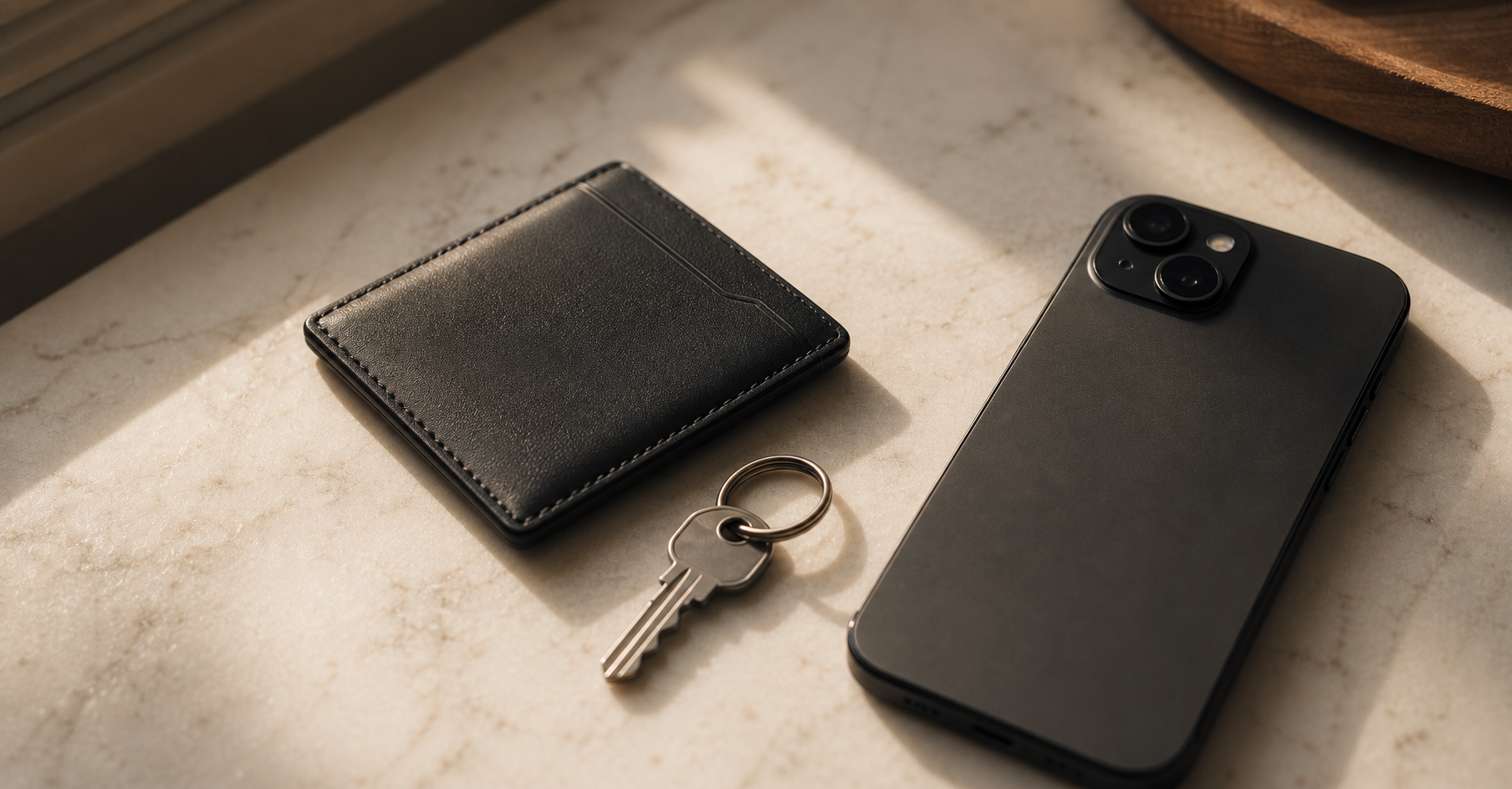
Every EDC, regardless of lifestyle or profession, starts from the same three items. These are the non-negotiables. Everything else is context-dependent.
Phone
The most powerful tool most people own, and the one item that has made more traditional EDC gear redundant. A smartphone replaces a camera, a GPS, a watch, a notebook, a wallet (if you use digital payments), and in many cases, a laptop for basic tasks. EDC thinking starts with the phone and works backward: if your phone handles it, you don't need to carry a physical version.
Wallet
A wallet that forces you to confront what you actually use. Full-size bifolds filled with loyalty cards, expired IDs, and receipts are the enemy of a considered carry. The goal is a slim card holder with two or three cards, an ID, and a folded bill. The discipline required to keep a slim wallet slim is the same discipline that keeps your whole carry clean.
Keys
The final non-negotiable, and often the messiest category. Most people carry more keys than they have locks. An honest audit of your keyring almost always reveals at least one key that hasn't been used in six months. A compact key organizer or a minimal ring with only what you actually use keeps this category from becoming dead weight.
Building Outward: The Commuter Layer
Once the core three are settled, the commuter layer is everything that goes in the bag for a typical workday. Unlike the core, this tier changes based on where you're going and what you're doing. The discipline is in not letting it expand beyond what the day actually calls for.
Laptop
If your work requires it, it goes in. If it doesn't, it stays home. Carrying a laptop out of habit when you have no meetings and no work that requires it is one of the fastest ways to make your bag heavier than it needs to be.
Charger or Power Bank
One cable, one power source. The key decisions here are whether you need a wall charger or a power bank (determined by how reliably you'll have outlet access), and whether USB-C covers all your devices (for most people today, it does). The goal is one cable that handles everything.
Earbuds
A single pair of earbuds or noise-canceling headphones, not both. They serve the same function. Pick the one that fits how you use them most, and leave the backup at home.
Notebook
A slim A5 or A6 notebook earns its place in most commuter carries. It's faster for a quick sketch, safer for a sensitive note, and more reliable than a battery-dependent app. It doesn't need to be expensive. It needs to be there.
Water Bottle
Context-dependent. If your commute is short and your destination has water, leave it. If you're out for three or four hours between stops, bring it. A collapsible or slim-profile bottle works better than a wide-mouth bottle in a compact crossbody.
EDC Bags: The Tier That Changes Everything
The bag is where most EDC setups succeed or fail. It's not just a container. It's an organizational system, an access structure, and a daily interface. A bag that's too large invites accumulation. A bag without clear organization creates the chaos that EDC exists to eliminate.
For most commuters and professionals, the choice comes down to three categories:
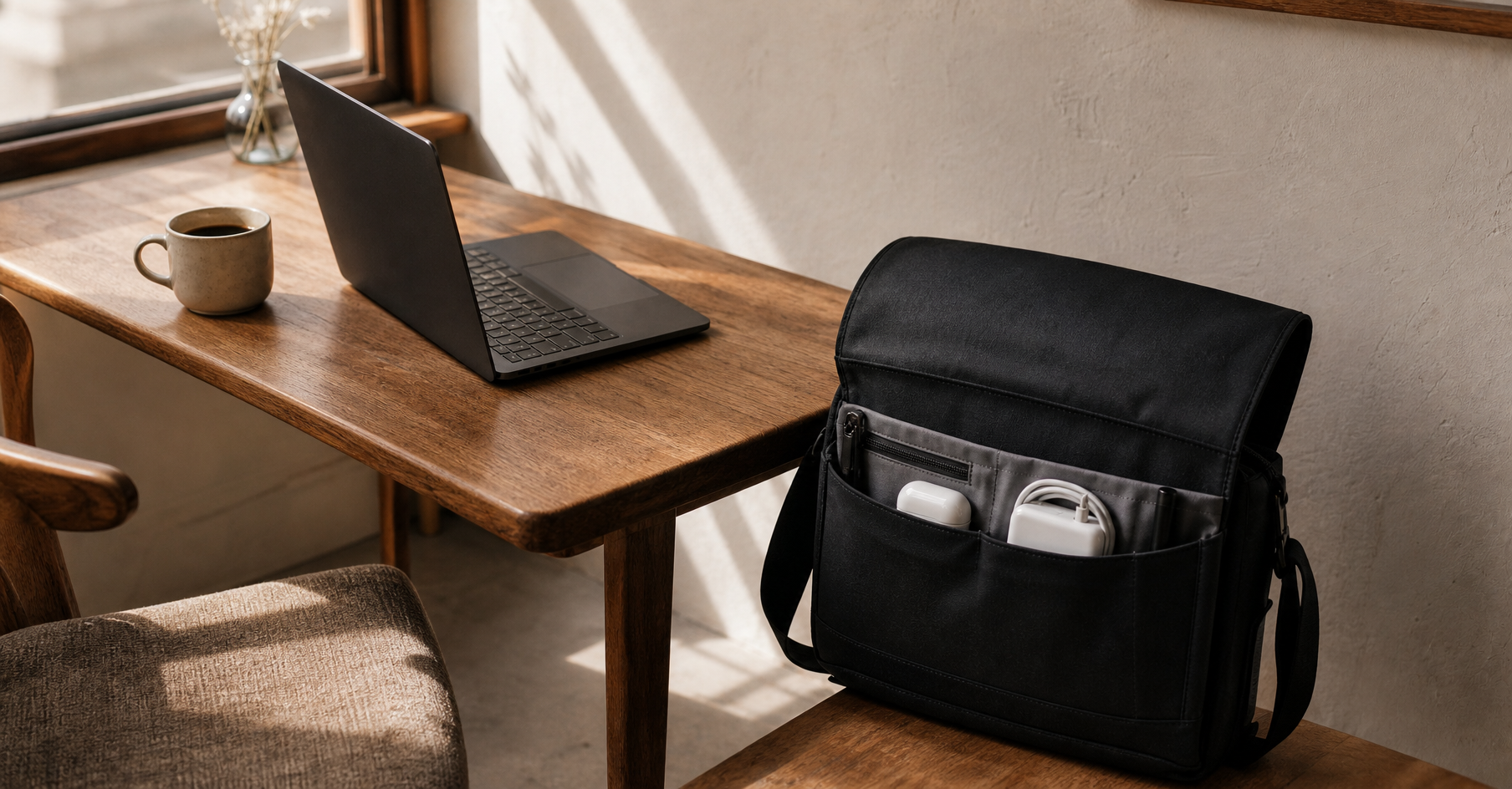
Commuter crossbody bags work best for laptop-centric carries. They zip open at the top, sit against the body in crossbody style, and offer fast access without removing the bag. The structured profile keeps the load close to the body on crowded transit. The Haven Messenger was built specifically for this use case: a padded 14" laptop sleeve, an organizer pocket for core carry items, a waterproof nylon shell, and a top-zip closure that opens in one motion at a platform or a café table.
Sling and crossbody bags are better for lighter days when a laptop isn't in the mix. They keep the core carry accessible and add almost nothing to your silhouette. On a day when your EDC is phone, wallet, keys, earbuds, and a notebook, a smaller crossbody is the right-sized solution. For a complete buying guide on what makes a crossbody bag work for a professional commute, crossbody bags for work covers the six criteria in detail.
Backpacks offer capacity but require more discipline. The larger the bag, the easier it is to fill it with gear that doesn't belong in a daily carry. If you go the backpack route, choose one with a dedicated laptop compartment and minimal secondary pockets, and treat the extra capacity as something to resist rather than fill.
For a complete guide to selecting the right commuter bag — from weatherproofing standards to access speed to anti-theft design — the complete commuter bag guide covers every criterion in detail. For a reviewed comparison of the best commuter bags of 2026, matched by commute type, that guide covers the leading options.
For a complete comparison of the best messenger bags for a daily work commute, the best messenger bags for work in 2026 covers the top options by use case. For a reviewed roundup of bags built specifically for daily laptop commutes, the best laptop bags for commuting covers the top options across styles.

EDC for the Modern Commuter: What It Actually Looks Like
Take the framework above and apply it to a real commute. Here's what a tight, fully considered modern commuter EDC looks like in practice:
In pockets: Phone, slim wallet, keys. Nothing else.
In the bag, main compartment: Laptop in its sleeve. One small pouch with any secondary items (a medicine tablet, a spare transit card). Nothing loose.
In the organizer pocket: Earbuds case, USB-C charger, one cable, a pen.
In the exterior quick-access slot: Nothing, or a folded note or transit card if not using digital payment.
Total item count: Eight to twelve items. Every one of them used within the week. Nothing in the bag that isn't earning its place.
That's it. That's a well-executed EDC. Not a survivalist loadout. Not a gear collection. A system so familiar that you stop thinking about it and start focusing on wherever you're going. For a complete item-by-item breakdown of every professional carry layer — on-body carry, fast-access pocket, main compartment, and context-specific additions — the office EDC guide covers every tier in detail.
How to Audit and Tighten Your EDC
The best EDC setups are not built once and left alone. They're maintained. Here's the audit process that keeps a carry honest:
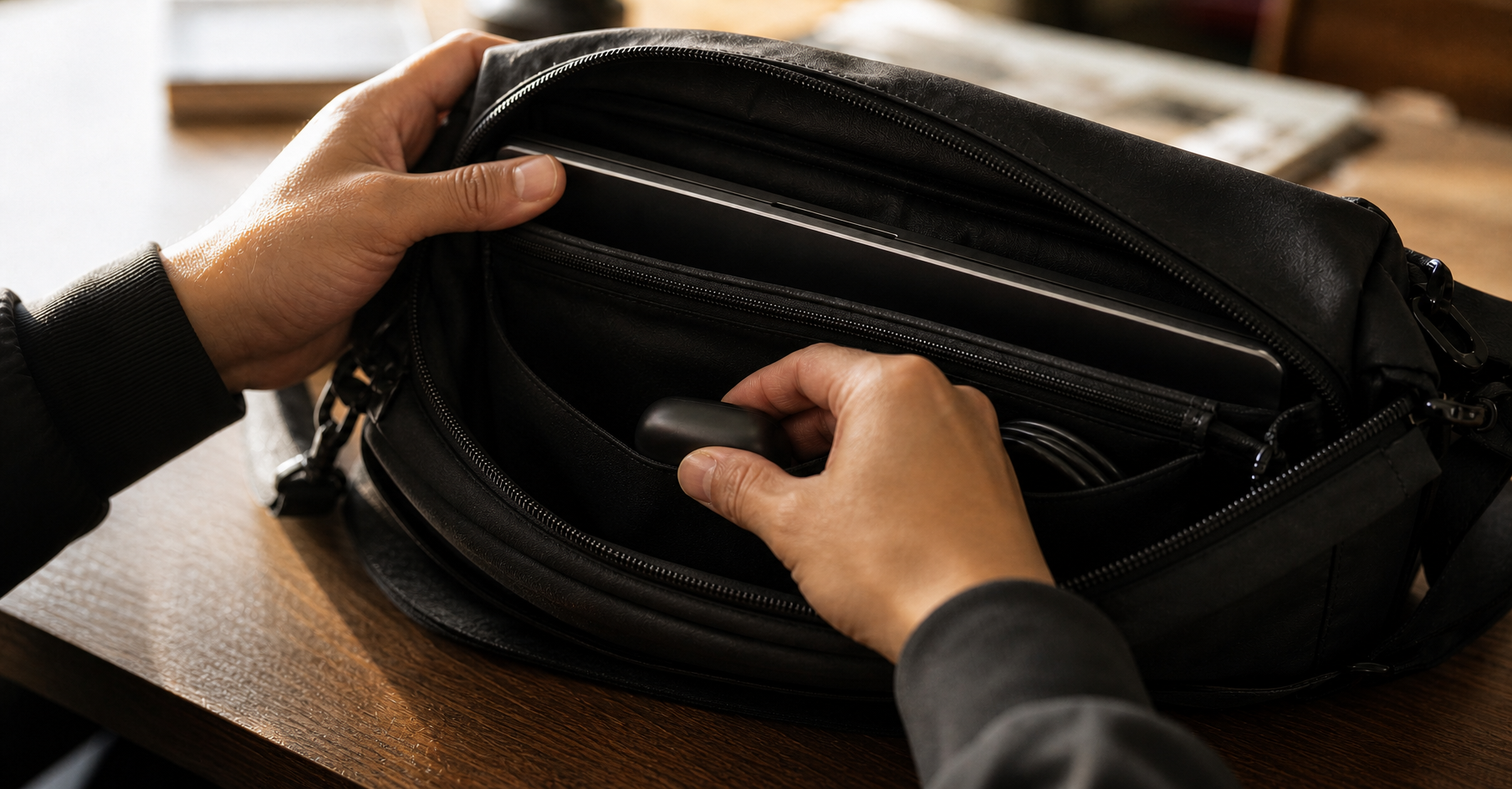
Empty the bag completely. Put everything on a flat surface. Don't edit as you go; just empty it.
Sort into three piles: things used in the last week, things used in the last month, things not used in over a month.
The third pile doesn't go back in. Items used within the last week belong in the bag. Items used within the last month go in a separate pouch that travels with you only when they're needed. Everything else lives at home.
Repeat monthly. The audit takes five minutes. It prevents six months of slow accumulation from undoing the whole system.
For more on building and maintaining a carry that stays lean over time, the working minimalist guide covers the full framework in detail. For the specific application of EDC thinking to remote work and coffee shop sessions, the coffee shop carry guide is worth reading alongside this one. For a complete breakdown on choosing the right commuter bag, the complete commuter bag guide covers all of it.
Frequently Asked Questions
What does EDC stand for?
EDC stands for everyday carry. It refers to the deliberate set of items a person carries with them every day, chosen for utility, quality, and fit with their actual lifestyle.
What should my EDC include?
The core three are always phone, slim wallet, and keys. From there, your EDC expands based on your day: laptop, charger, earbuds, a notebook, and a bag that keeps everything organized and accessible. The goal is to carry only what you'll actually use, nothing more.
How is EDC different from just having a bag?
EDC is intentional where most bag packing is reactive. The practice of everyday carry involves consciously choosing what earns a place in your carry, giving each item a consistent home, and regularly auditing what's in the bag to prevent accumulation. Most people's bags are archives of things they might need. An EDC is a system of things they do need.
Is EDC only for men?
No. The EDC community started with a male-skewing demographic due to its tactical roots, but the principles apply to anyone who wants to carry more intentionally. The practice of curating your daily carry around utility and simplicity has no gender dimension.
Do I need special gear to start an EDC?
No. The core three — phone, wallet, keys — you already have. Building a considered EDC is less about acquiring new gear and more about editing what you already carry, giving it a proper organizational home, and maintaining the discipline not to let it drift back toward chaos.
What's the best bag for an EDC setup?
A bag with a dedicated laptop sleeve, organized pockets, and fast top-zip access. The Haven Messenger was built around exactly these requirements: a padded 14" sleeve, an organizer pocket for your daily carry, a top-zip closure that opens in one motion, and a waterproof nylon shell.
The Field & Ash Journal covers carry, craft, and the things worth keeping. For the full framework on building a lean carry system, start with the working minimalist guide. For applying EDC thinking to coffee shop and remote work sessions, the coffee shop carry guide is worth reading alongside this one. And for choosing the right commuter bag, the complete commuter bag guide covers all of it.