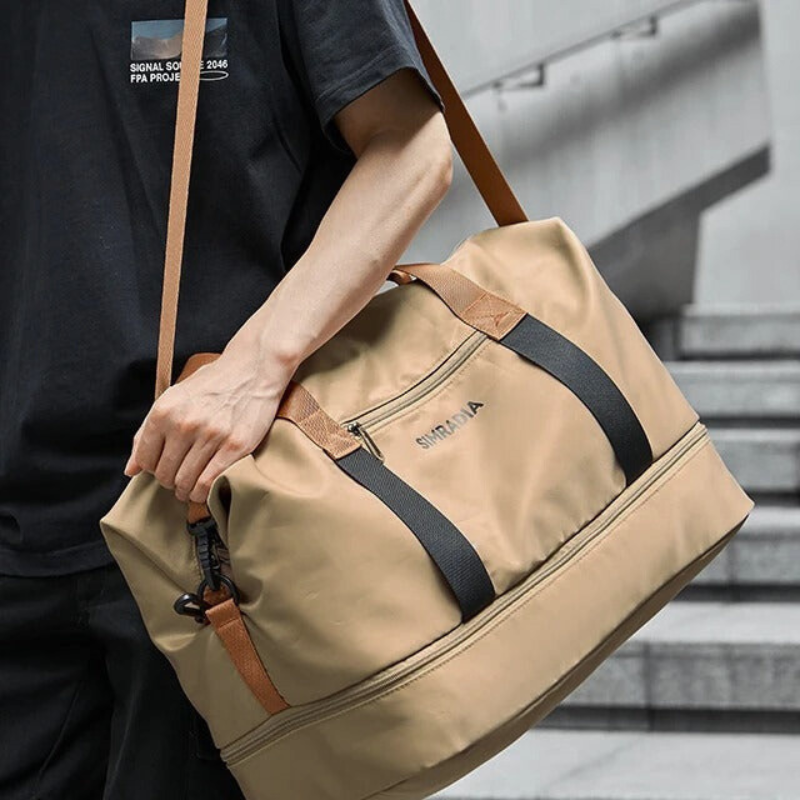



Office EDC: What Professional Commuters Actually Carry Every Day

TLDR
Office EDC is the specific subset of everyday carry built around a professional commute — the items you carry on your body and in your bag every single work day. For most urban professionals, this means three pockets, one bag, and a fixed kit that never changes: phone, wallet, keys on the body; laptop, charger, earbuds, notebook, water in the bag. The goal is zero decision-making about what to grab before you leave.
Most EDC content online is built around tactical gear — flashlights, multitools, pocket knives. That's a legitimate carry interest, but it's not office EDC. Office everyday carry is simpler and more demanding in a different way: it has to work in a professional environment, survive a full commute, and never slow you down.
The professionals who've got it right don't think about their carry anymore. The bag is always packed. The items are always in the same place. The commute works because the system works.
This guide lays out what that system looks like — item by item, layer by layer — and how to build one that fits a commute rather than a concept.
What Office EDC Actually Is
Everyday carry has two distinct contexts: recreational (gear you might need in an emergency or outdoors) and professional (gear you'll actually use on a typical work day). Office EDC is purely the second category.
The defining constraint of professional everyday carry is environment: you're in transit, at a desk, in meetings, and in cafes or co-working spaces. The carry has to fit all four without drawing attention, slowing you down, or failing at any point.
A useful test: if an item stays in your bag for three consecutive weeks without being touched, it doesn't belong in your daily carry. Office EDC is defined by use, not by contingency.
The Five Layers of a Professional Carry
A clean office EDC breaks into five layers by location and frequency of use.
Layer 1: On-Body Carry
These are the items in your pockets every day, accessible without opening the bag.
Phone. Every professional commuter's primary tool. Kept in a front trouser pocket or chest pocket where it's reachable without stopping. A slim case adds minimal bulk while protecting the most expensive item in the daily kit.
Wallet. The thinner the better for transit commuters. A slim bifold or cardholder with 2–4 cards and transit cash handles everything a daily commute requires. A full-size wallet adds unnecessary bulk and creates friction in crowded transit.
Keys. Consolidated to the minimum: building key, one car key if needed, and a transit card or access fob if not on the phone. A small matte carabiner clips them to a belt loop or bag D-ring — zero fumbling at the door.
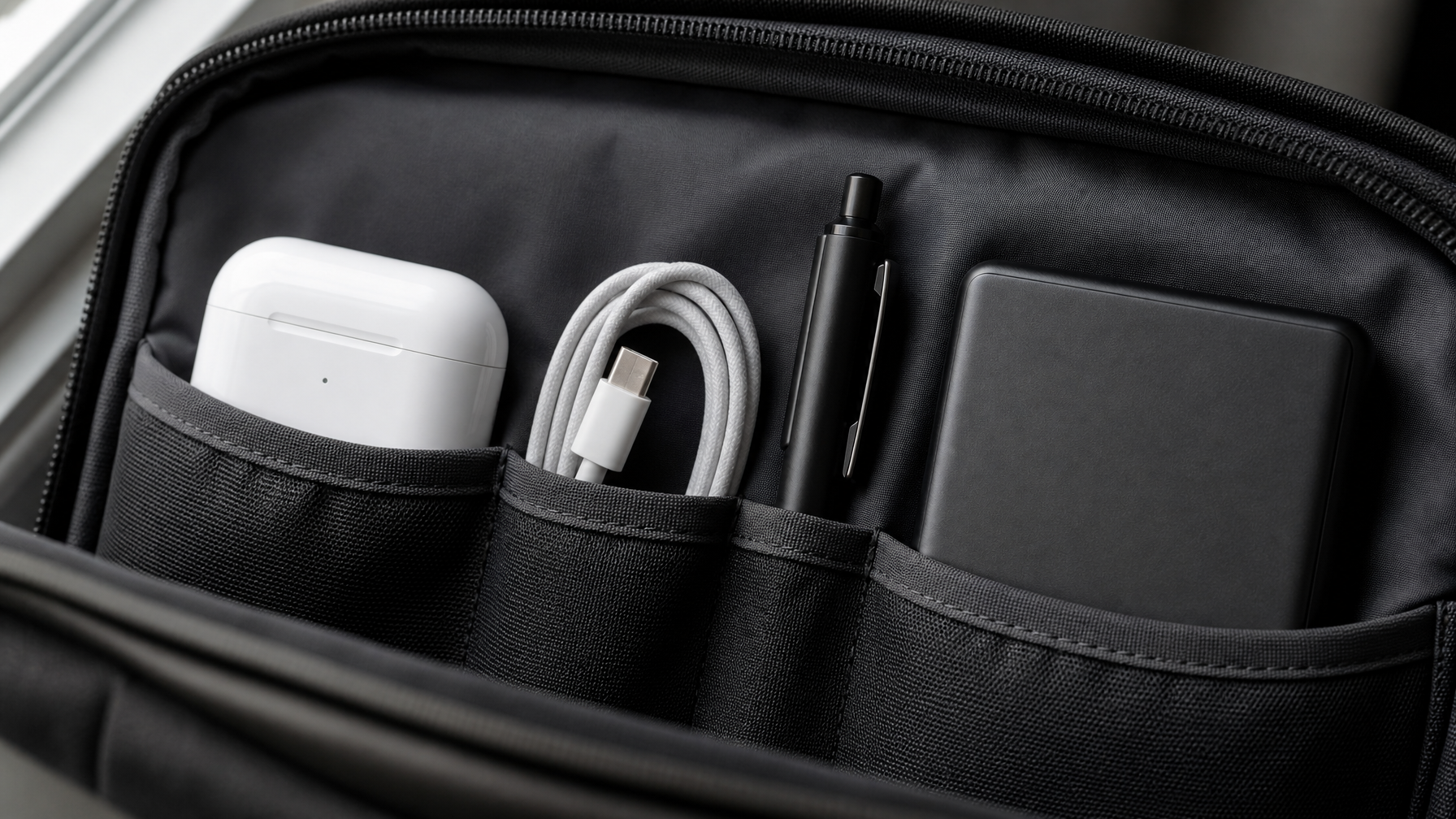
Layer 2: Fast-Access Pocket (Front Organizer)
These items live in the front pocket of the bag — accessible in one motion without opening the main compartment.
Earbuds. AirPods Pro or equivalent. The most-reached-for item in any transit bag after the phone. Front pocket placement means they come out and go back without opening the main bag.
Charging cable. A single USB-C cable handles charging across devices. Coiled small and kept in the same slot every day.
Portable charger. A slim MagSafe-compatible or USB-C charger for the rare dead-battery situation. Optional for commuters who charge reliably at a desk.
Layer 3: Main Compartment (Daily Kit)
Laptop. The anchor of any professional bag carry. A 14" machine in a dedicated padded sleeve — separate from everything else, never sharing space with items that shift in transit.
Laptop charger. Not always necessary if the office has charging infrastructure, but for co-working or café days, a slim GaN charger takes minimal space and eliminates a dead-battery problem entirely.
Notebook. A slim A5 or pocket-size notebook for meetings, ideas, and anything that shouldn't be typed. One pen — black, fine tip, clips onto the notebook cover or sits in the front organizer.
Water bottle. A 500ml slim-profile bottle that fits in a side sleeve or inside the main compartment. For transit commuters, smaller is better — a 1L bottle creates unnecessary bulk on a packed train.
Layer 4: Context-Specific Additions
Items that enter and leave the carry depending on the day — not permanent fixtures.
Reading material. A paperback or e-reader for longer transit commutes. Not a daily necessity for shorter commutes.
Snack or lunch. In a separate bag or compartment if applicable. Never loose in the main compartment with the laptop.
Device adapters. HDMI, USB-A, or Ethernet — only when a specific meeting requires them.
Gym gear. A separate bag. The daily work carry should never double as a gym bag — it introduces moisture, compresses the laptop sleeve, and breaks the organizer system.
Layer 5: What Doesn't Belong
Full-size umbrella. A compact travel umbrella clips to a bag handle or fits in a side sleeve. A full-size umbrella adds bulk and is almost always unnecessary.
Printed documents. Scanned and sent the night before. Physical paper in the bag creates an organizational layer that undermines the clean carry system.
Multiple charging cables. One USB-C cable handles almost every modern device. More than one cable in a daily bag is clutter.
Tactical items. Multitools, pocket knives, flashlights — none of these belong in a professional urban everyday carry. They add weight, create complications on travel days, and signal the wrong context in most office environments.
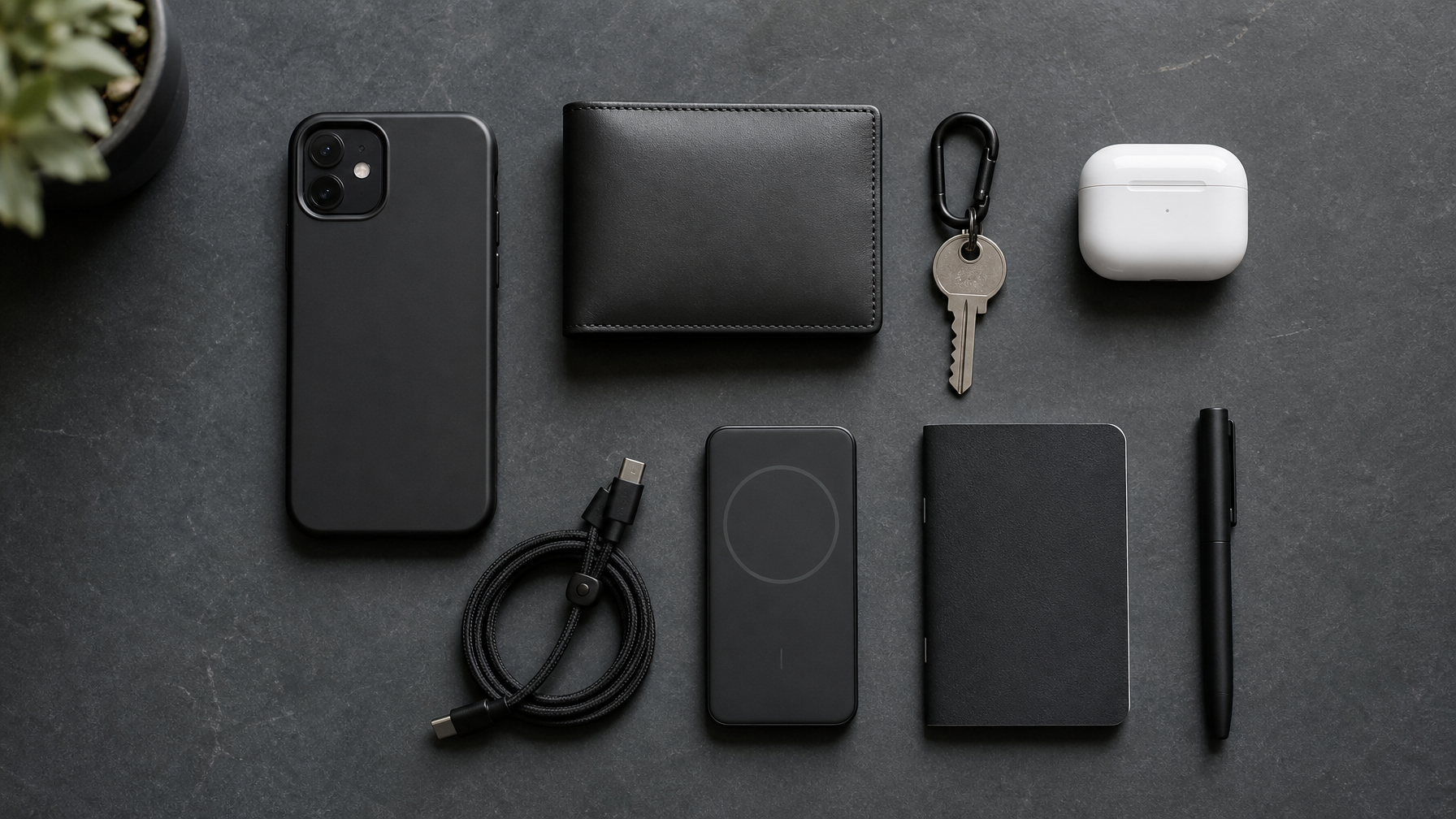
The Complete Office EDC Checklist
On-body (pockets):
- Phone
- Slim wallet (2–4 cards max)
- Keys (minimum set, carabiner)
- Transit card (if not on phone)
Front bag pocket (fast access):
- Earbuds
- USB-C cable
- Slim portable charger
Main compartment:
- Laptop (14" in dedicated sleeve)
- Laptop charger (optional)
- Slim A5 notebook
- Single pen
- Water bottle (500ml)
Context-specific (by day):
- Reading material (longer commutes)
- Snack or lunch (in a separate bag)
- Device adapters (meeting days only)
Editing the Carry
Most professional carry systems fail from accumulation, not design. Items get added and never removed. The bag gets heavier. The organizer system breaks down as items migrate to wrong pockets.
A carry audit every two weeks resets the system. The test: open the bag, pull everything out, and put back only what was touched in the last seven days. Whatever doesn't make the cut stays home.
The correct weight for a fully packed 12–14L daily commute bag with a 14" laptop: under 10 pounds. If the loaded bag weighs more than that, there's excess in the system.
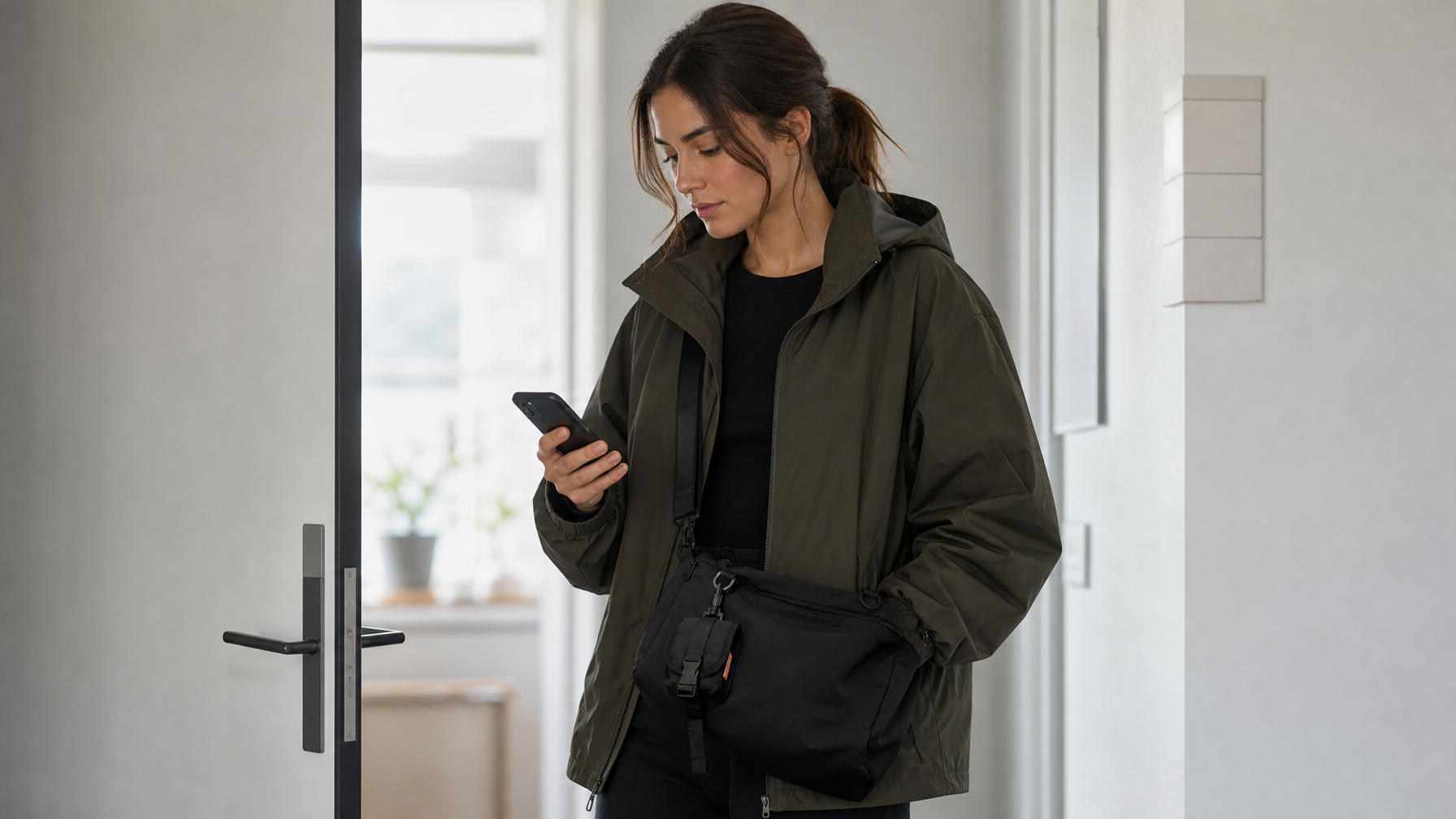
EDC by Commute Type
The core carry is fixed. What changes is configuration — how items are positioned for a specific commute.
Transit (subway, bus): Phone in a front trouser pocket, not the bag — accessible for payment at turnstiles without opening or removing the bag. Keys clipped to a belt loop or inside the front bag pocket. Bag front pocket organized for commute order: transit card first, earbuds second, cable last.
Walking: Weight distribution matters over longer distances. Pack heavier items (laptop, water) centered and low in the main compartment, lighter items (notebook, cable) toward the top. A wide crossbody strap distributes across the chest rather than concentrating on one shoulder.
Cycling: On-body carry reduces to essentials only — phone in a jacket pocket, slim wallet and key in a zip pocket. Everything else travels in the bag, zipped and weatherproofed.
Driving: The carry can be slightly expanded — an extra adapter, a second cable — because the bag goes from car to desk without transit pressure. Speed-of-access features matter less.
The Bag's Role in the System
The EDC system is only as good as the bag that holds it. A bag with the wrong structure collapses the system: no dedicated laptop sleeve means the laptop migrates; no front organizer means earbuds disappear into the main compartment; no fast-access closure means friction every time you need something in transit.
The structural requirements for a bag that holds a clean office EDC:
- A dedicated, fully enclosed laptop sleeve
- A front organizer pocket for fast-access daily-use items
- A top-zip or other single-motion closure
- An anti-theft back pocket for wallet and transit card
- 10–14L total capacity
The Field & Ash Haven Messenger meets all five at $89. For a full breakdown of how to evaluate any commuter bag, the complete commuter bag guide covers every criterion in detail. For the wider EDC framework, What Is Everyday Carry? is the foundation. And for the lean carry mindset that keeps the system clean, The Working Minimalist covers the full approach. For a reviewed comparison of the best commuter bags of 2026, matched by commute type, that guide covers the leading options. For a reviewed comparison of the top laptop commuter bags, the best laptop bags for commuting covers the full range across bag styles.

Frequently Asked Questions
What is office EDC?
Office everyday carry is the fixed set of items a professional carries every single work day — on the body and in the bag. Unlike tactical or recreational EDC, it's built around professional environments: transit, desk work, meetings, and cafes. The goal is a carry system that requires zero decision-making each morning.
What should I carry in my work bag every day?
The core: laptop in a dedicated sleeve, USB-C charger and cable, earbuds, slim notebook, pen, and a water bottle. On the body: phone, slim wallet, and a minimal key set. Everything else is context-specific and only enters the bag when the day requires it.
How heavy should my daily work bag be when fully packed?
Under 10 pounds for a 12–14L bag with a 14" laptop and full daily kit. If the loaded bag exceeds that, there's excess in the system — either the bag is too large, the kit is over-stocked, or both.
Should I carry a multitool or pocket knife for office EDC?
For most urban professional environments, no. A multitool or knife adds weight, creates complications on travel days, and is almost never used in an office context. If you work in a hands-on environment — a workshop, field role, or outdoors-adjacent position — the calculus is different.
What's the best wallet for a commuter EDC?
A slim bifold or cardholder with 2–4 cards. The thinner the wallet, the less it registers in a front pocket and the faster the transit card gets out. Full-size wallets slow down the commute-speed access that defines good urban EDC.
How do I stop my carry from getting heavier over time?
A two-week carry audit: pull everything out of the bag, put back only what was touched in the last seven days. Most carry bloat comes from items added for a specific day that never got removed. The audit takes two minutes and resets the system.
The Field & Ash Journal covers carry, craft, and the things worth keeping. For the full EDC framework from the ground up, What Is Everyday Carry? covers the foundation. For building the lean carry mindset, The Working Minimalist covers the full approach. For the right bag to hold the system, the complete commuter bag guide and best messenger bags for work cover both.