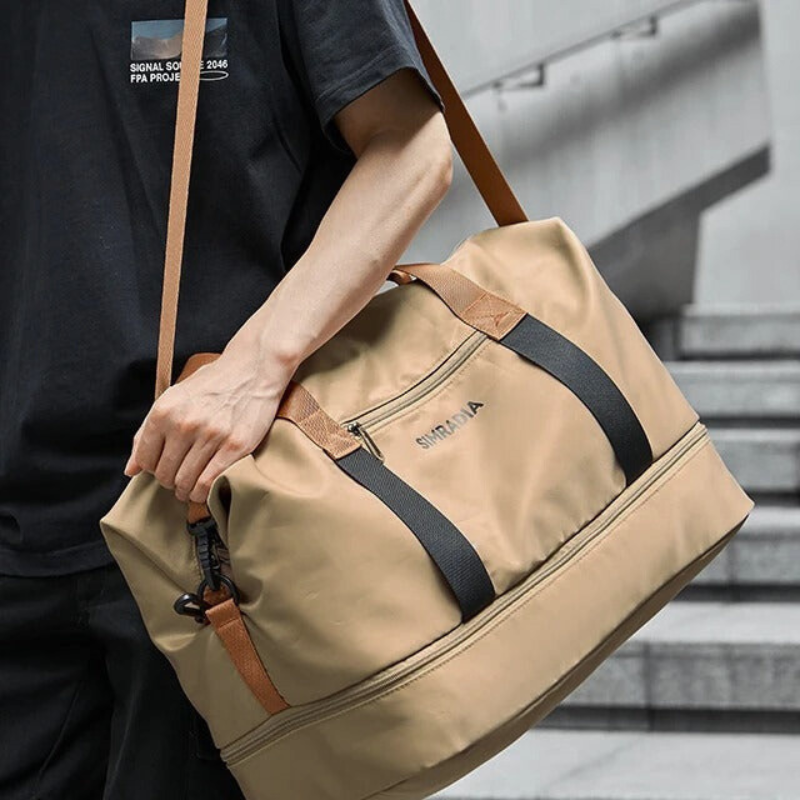



Crossbody Bags for Work: What to Look For Before You Buy

TLDR
A crossbody bag works for work when it has a dedicated laptop sleeve, a wide strap that sits diagonally without sliding, weatherproofing rated for daily commutes, and a profile that holds a laptop without excess bulk. The carry position — strap from shoulder to opposite hip — keeps the bag stable in transit, the laptop accessible, and your hands free. This guide covers the six criteria that separate a genuinely good crossbody work bag from one that just looks right on a product page.
Most crossbody-for-work content focuses on aesthetics. The recommendation engine prioritizes what looks right in product photos over what holds up across six months of daily commuting. A bag that looks right in a flat lay can fail completely by the third week — a strap that slides off the shoulder, a main compartment where the laptop shifts against everything else, a profile that's too bulky for a packed train.
The right crossbody work bag doesn't announce itself. It disappears into the commute because it solves the commute's actual problems.
This guide covers the six criteria that actually matter — and one that most people overlook entirely.
Why Crossbody Works for Commuting
The case for crossbody over backpack or shoulder bag comes down to three things: stability, access, and profile.
Stability. A crossbody strap — running diagonally from one shoulder to the opposite hip — distributes load across the torso and prevents the bag from swinging when you move. A standard single-shoulder bag slides off the shoulder constantly on a packed train. A backpack is stable, but it requires removal every time you need something.
Access. A crossbody bag sits at hip level, reachable with one hand while standing or moving. The laptop and front pocket items are accessible without removing the bag or stopping. For transit commuters, this is a meaningful practical advantage over a backpack.
Profile. A properly sized crossbody bag (10–14L) takes up significantly less space on a crowded train than a backpack. It sits against the body rather than protruding behind, which matters on platforms and in tight transit cars.
The Six Criteria That Actually Matter
1\. A Dedicated Laptop Sleeve
This is the most important structural feature in any work bag, crossbody or otherwise. A dedicated laptop sleeve is a fully enclosed, padded pocket built for the laptop alone — completely separate from the main compartment. Not a padded panel on the inside of the main compartment. Not a sleeve that shares space with other items.
The practical difference: in a bag with a real dedicated sleeve, you can fill the main compartment completely and the laptop remains isolated, padded on all sides, and immovable. In a bag without one, the laptop shifts against your charger, notebook, and water bottle every time the bag moves.
For a 14" MacBook or equivalent, the sleeve should hold the laptop snugly with a slim case on — no side-to-side movement, no pressure from adjacent items.
2\. Strap Width and Anti-Slip Design
The strap is where most crossbody bags for work fail. A narrow strap (under 1") concentrates weight on a small contact point and slides off the shoulder. After a full commute, it creates discomfort that compounds across the week.
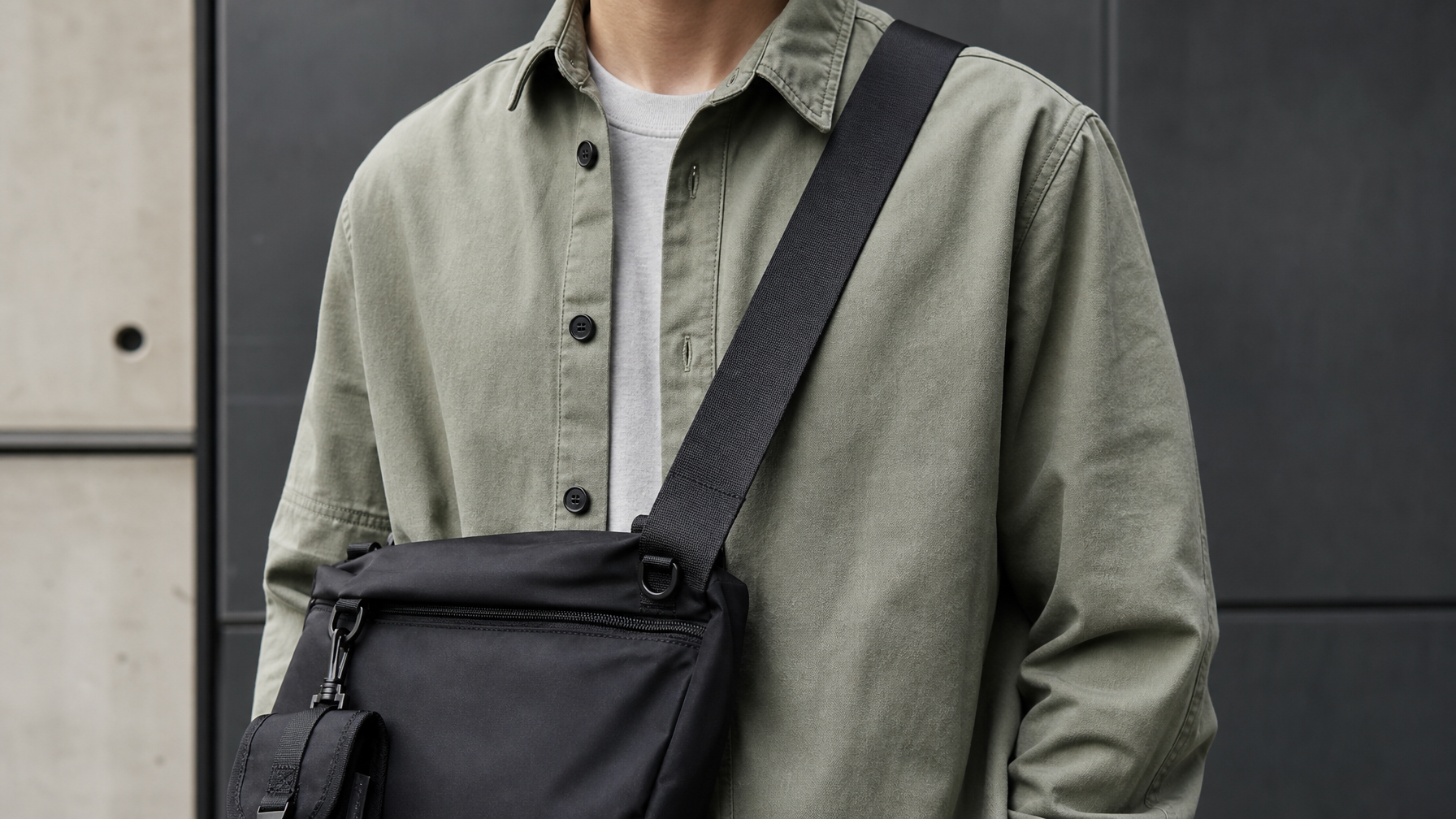
The correct specification: a strap of at least 1.5", ideally wider — up to 2" for a wide flat seatbelt-style design. A wide flat strap distributes weight cleanly and stays positioned without constant adjustment.
The crossbody configuration — diagonal from shoulder to opposite hip — is essential. A straight shoulder drop positions the bag behind or beside you, creating access friction and more movement. The diagonal positions the bag at hip level in front of the body: stable, accessible, and properly balanced.
3\. Weatherproofing
A commuter bag that can't survive rain is not a commuter bag. The practical standard for daily commuting: the shell and zippers handle sustained light-to-moderate rain for the duration of a typical commute (10–30 minutes) without saturating.
600D Oxford nylon is the reliable daily commuter material — a dense weave with a water-resistant finish that handles rain, wet transit surfaces, and moisture from a packed train without absorbing it.
The test to run before buying: with the bag packed normally, pour 500ml of water across the shell. It should bead and run off, not absorb. If the fabric darkens and holds moisture, it's not genuinely weatherproofed.
4\. Anti-Theft Design
For transit commuters specifically, a back security pocket — one that sits against your body when the bag is worn — is a meaningful practical feature. It keeps your wallet, phone, and transit card inaccessible to someone standing behind you on a train.
Most general bags don't have this. Bags designed specifically for commuting do. The feature adds zero weight and no bulk, and it eliminates a real transit risk without any behavioral change required.
5\. Professional Appearance
A crossbody work bag needs to read as appropriate in the environments where you use it. For most modern workplaces — co-working spaces, design studios, tech offices, client-facing roles — a clean, unbranded technical nylon crossbody in a neutral color (black, charcoal, navy) works without friction.
For formally structured environments (law firms, financial services, traditional corporate settings), a crossbody may or may not fit the visual standard. A slim laptop brief is a better match for those contexts.
The test: would you be comfortable carrying this bag into a client meeting or investor presentation? If the answer varies by day, the bag is at the edge of your environment's tolerance and a brief silhouette may serve better.
6\. Weight When Fully Packed
An empty bag's weight determines its fully packed weight ceiling. A crossbody bag should weigh under 1.5 lbs empty. Every pound of bag weight gets added directly to the carry weight.
For a standard daily kit (14" laptop, charger, earbuds, notebook, water bottle), total loaded weight should stay under 10 lbs. A heavy empty bag — common in leather crossbodies and some canvas designs — can push a moderate daily kit over that threshold before you've added anything else.
How Crossbody Differs From a Shoulder Bag
The distinction matters practically, not just semantically. A shoulder bag uses a drop strap that positions the bag vertically beside or behind the body. A crossbody bag uses a longer strap worn diagonally, positioning the bag at the front of the hip.
The functional differences:
Stability: Crossbody wins. The diagonal distributes load; the straight drop slides.
Access: Crossbody wins. Hip-level positioning means one-hand access while moving; a shoulder bag sits behind the hip and requires reaching back or swinging the bag forward.
Security: Crossbody wins. The bag sits in front of the body, visible, with the back pocket (if present) inaccessible to others.
Comfort over distance: Both can be comparable with a wide enough strap, but crossbody distributes better over longer walking distances.
The practical takeaway: a bag marketed as a "shoulder bag" with a drop strap is a different carry experience from a true crossbody, even if the bag design looks similar.
Size Guide
| Daily carry | Crossbody capacity |
|---|---|
| Laptop + essentials only | 10–12L |
| Full daily kit: laptop, charger, notebook, water | 12–14L |
| Full kit + gym or change of clothes | Use a separate bag |
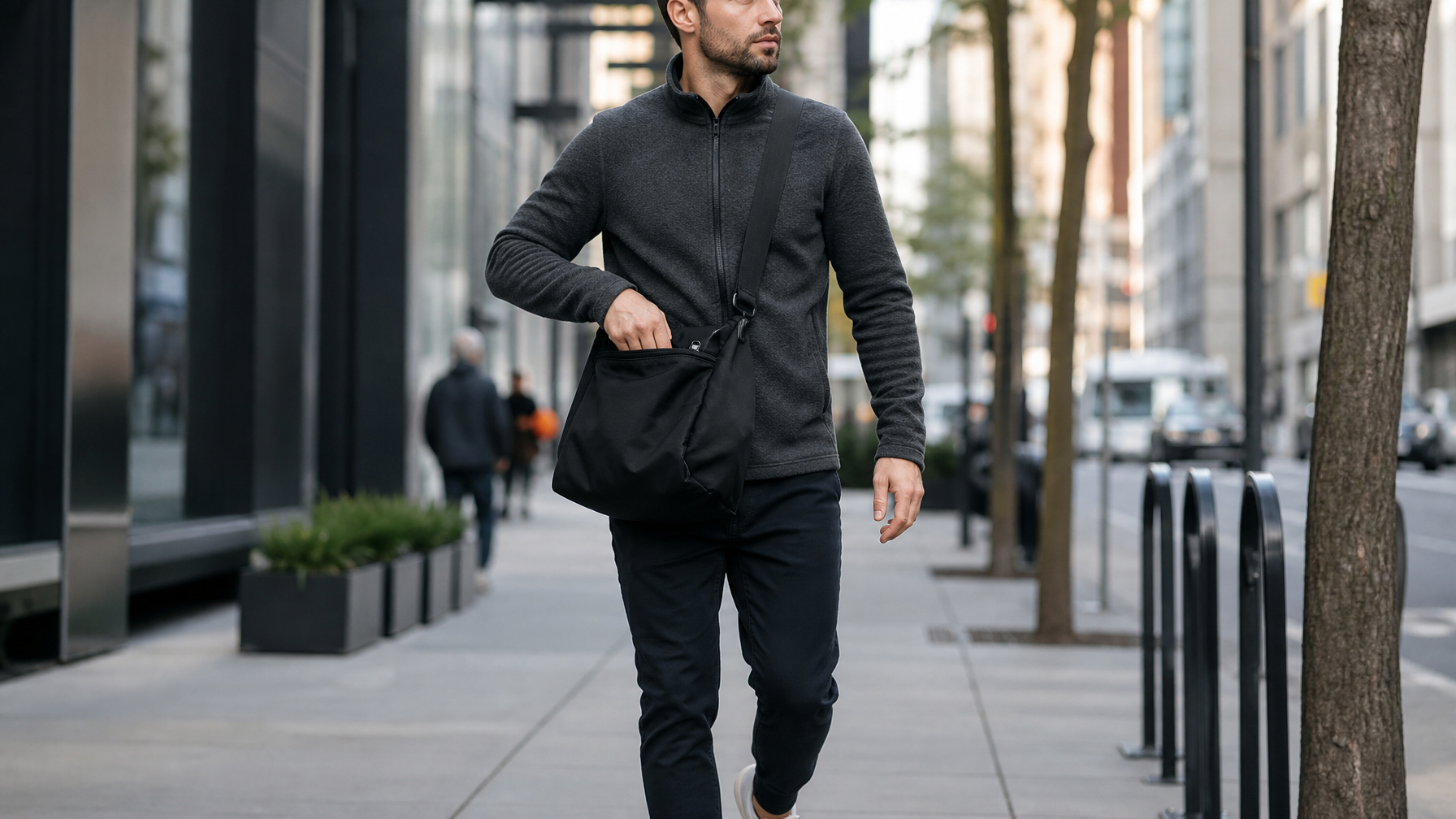
The 12–14L range is the correct spec for most professional crossbody carries. Below 10L and a 14" laptop typically won't fit with room for anything else. Above 14L and the bag starts to defeat the profile advantage of crossbody over backpack.
A Note on Who Crossbody Bags Are For
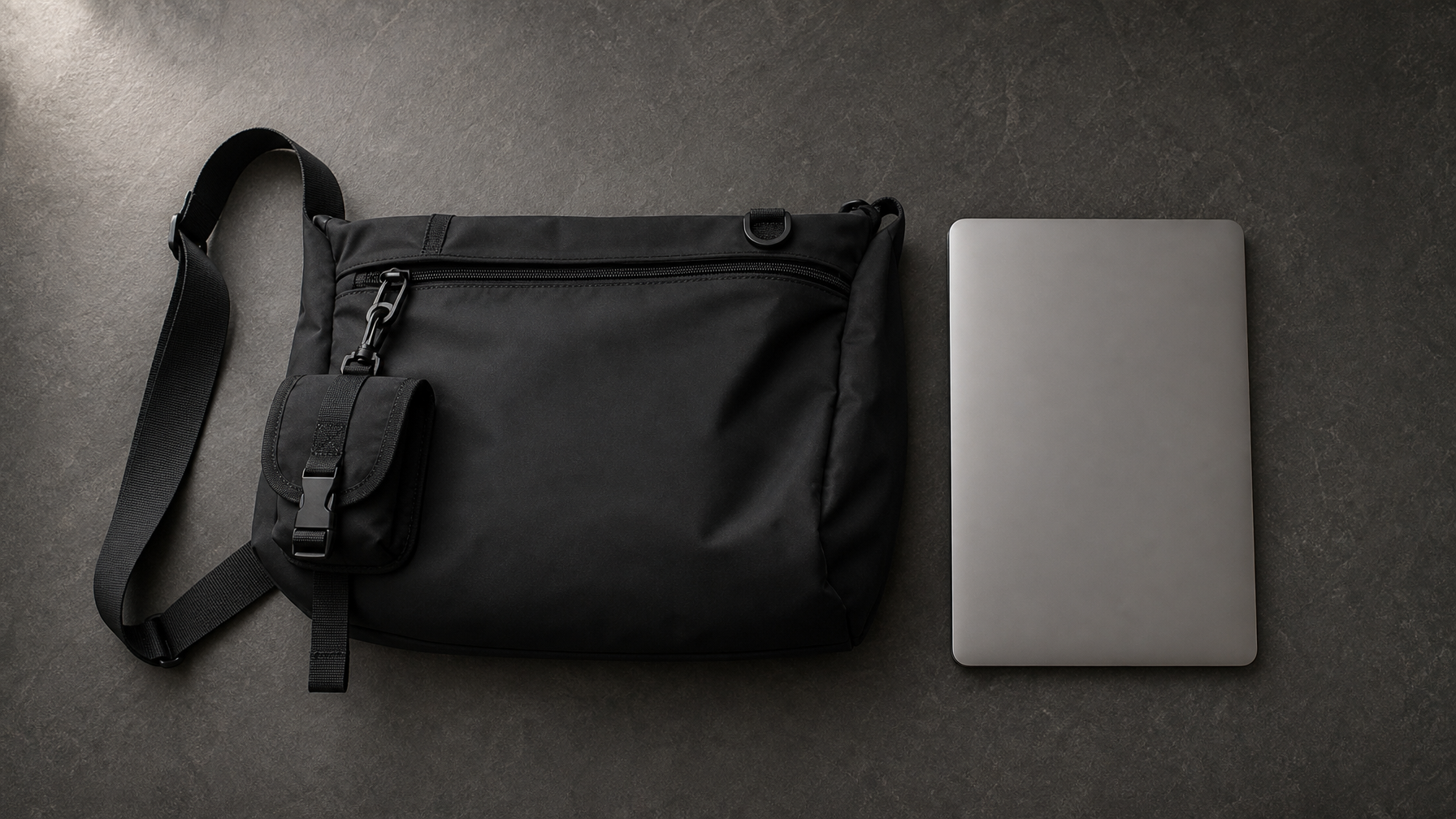
Crossbody carry is not gendered carry. It's a practical solution for commuters who want one-hand access, transit stability, and a compact profile. Men and women who commute by subway, bus, or on foot carry crossbody bags for exactly the same practical reasons.
The bag design that matters is structure and capacity — not who it's marketed to. A 12–14L crossbody with a dedicated laptop sleeve, weatherproofing, and a wide anti-slip strap is the correct specification regardless of who's carrying it.
The Field & Ash Haven Messenger: How It Meets the Criteria
Running the Haven Messenger through the six-criteria framework:
| Criterion | Haven Messenger | Notes |
|---|---|---|
| Dedicated laptop sleeve | Yes | Fully enclosed, padded, 14"-rated |
| Strap width | 2" seatbelt-style webbing | Stays stable throughout commute |
| Weatherproofing | 600D Oxford shell | Handles sustained rain without saturating |
| Anti-theft design | Yes | Back security pocket, body-facing |
| Professional appearance | Clean, unbranded | Works across modern professional environments |
| Empty weight | Under 1.5 lbs | Keeps loaded carry under 10 lbs |
At $89, it delivers the full crossbody commuter feature set. For a direct comparison against other work bags, the best messenger bags for work covers four options side by side. For the broader commuter bag context across all commute types, the best commuter bags breaks it down further. For a full roundup of the best laptop bags for commuters — including backpacks, briefs, and crossbody options — the best laptop bags for commuting covers each in detail.

Frequently Asked Questions
Are crossbody bags professional enough for work?
For most modern professional environments — tech, creative, co-working, remote work, client services — yes. A clean, unbranded nylon crossbody in black or a neutral dark color reads as a quality commuter bag. For strictly formal environments (law, finance, traditional executive settings), a slim laptop brief is a better visual fit.
What size crossbody bag do I need for work?
12–14L for most daily professional carries with a 14" laptop. Below 10L and you may not have room for the full daily kit. Above 14L and the profile advantage of crossbody over backpack starts to disappear.
Can crossbody bags hold a laptop?
Yes, with a dedicated laptop sleeve rated for your machine size. The sleeve should be fully enclosed and sized specifically for the laptop — not a padded divider shared with the main compartment. For a 14" MacBook or equivalent, look for a sleeve rated to 14" with a snug fit.
What's the difference between a crossbody and a messenger bag?
Most messenger bags are worn crossbody — the terms are often used interchangeably for bags with a long diagonal strap. Messenger bag typically refers to a larger bag (originally used for courier work) while crossbody can refer to smaller bags. For commuter purposes, the carry configuration is what matters: diagonal strap, hip-level positioning, one-hand access.
Do crossbody bags hurt your shoulder?
With the right strap width, no. A narrow strap (under 1") concentrates weight and creates fatigue over a full commute. A wide strap (1.5"–2") distributes weight across the shoulder and torso without a pressure point. The crossbody diagonal also distributes weight better than a straight shoulder drop over longer transit commutes.
Can men wear crossbody bags to work?
Yes. Crossbody carry is a functional choice, not a style category. Men who commute by subway or bus adopt the crossbody configuration for the same practical reasons anyone does: one-hand access, transit stability, and a compact profile on a packed train.
The Field & Ash Journal covers carry, craft, and the things worth keeping. For the full set of commuter bag selection criteria, the complete commuter bag guide covers every decision point. For the EDC fundamentals that inform what goes inside the bag, What Is Everyday Carry? is the foundation. For a ranked comparison of top commuter bags across all carry types, the best commuter bags breaks it down by commute.