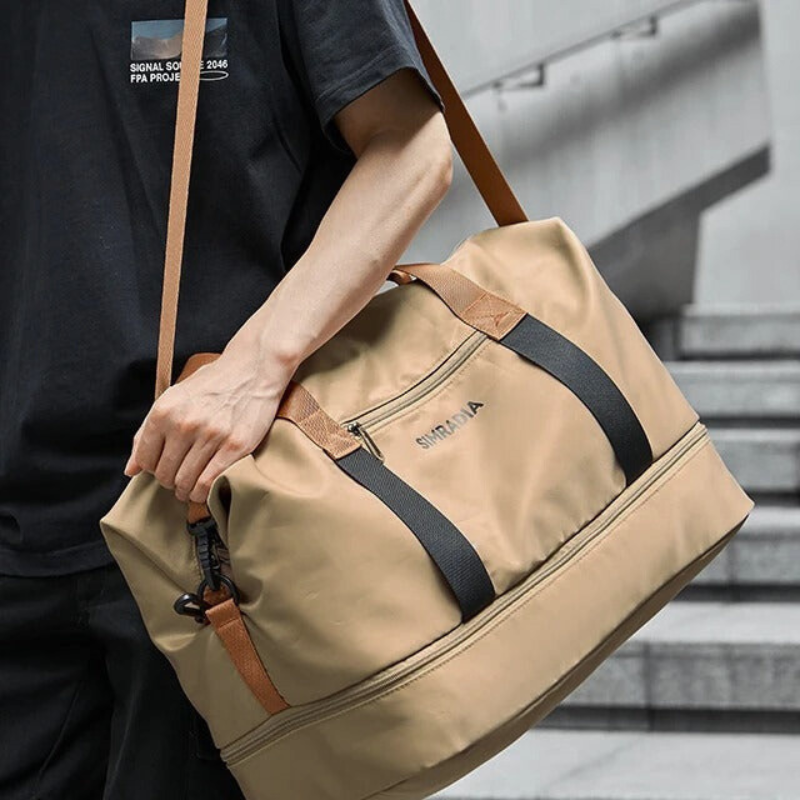



The Coffee Shop Carry: How to Build the Perfect Work-From-Anywhere Bag Setup

A productive coffee shop session isn't just about finding a good seat or decent Wi-Fi. It's about arriving with exactly what you need and nothing you have to manage. The right bag, packed the right way, is the difference between setup in thirty seconds and setup in five minutes of rooting around.
You know the feeling. You've claimed the corner table by the window — good light, outlet nearby, just enough ambient noise to focus. Your flat white arrives. You open your bag.
And then you spend the next four minutes looking for your charger.
It's in there somewhere. Under a water bottle you packed three days ago. Behind a cable you haven't used since last month. By the time you find it, the moment is gone. The table next to you has filled up. The good light is blocked.
A great coffee shop carry isn't about bringing more. It's about knowing exactly where everything is the moment you need it.
Why the Right Bag Changes Everything
Most people underestimate how much their bag shapes the quality of a coffee shop work session.
A bad bag means fumbling. It means setting things on the floor because the table is too small to spread out. It means anxiety about your laptop sliding around in a compartment built for something else. It means the bag itself becomes a problem you're managing, not a tool that disappears into the background.
A good bag does the opposite. It fits cleanly beside or under a café table. It opens with one hand so you can access your phone without disrupting your laptop. It keeps your charger in the same pocket every time, so finding it is automatic. When the bag is right, you stop thinking about it — and you start thinking about your work.
This is the standard worth building toward.
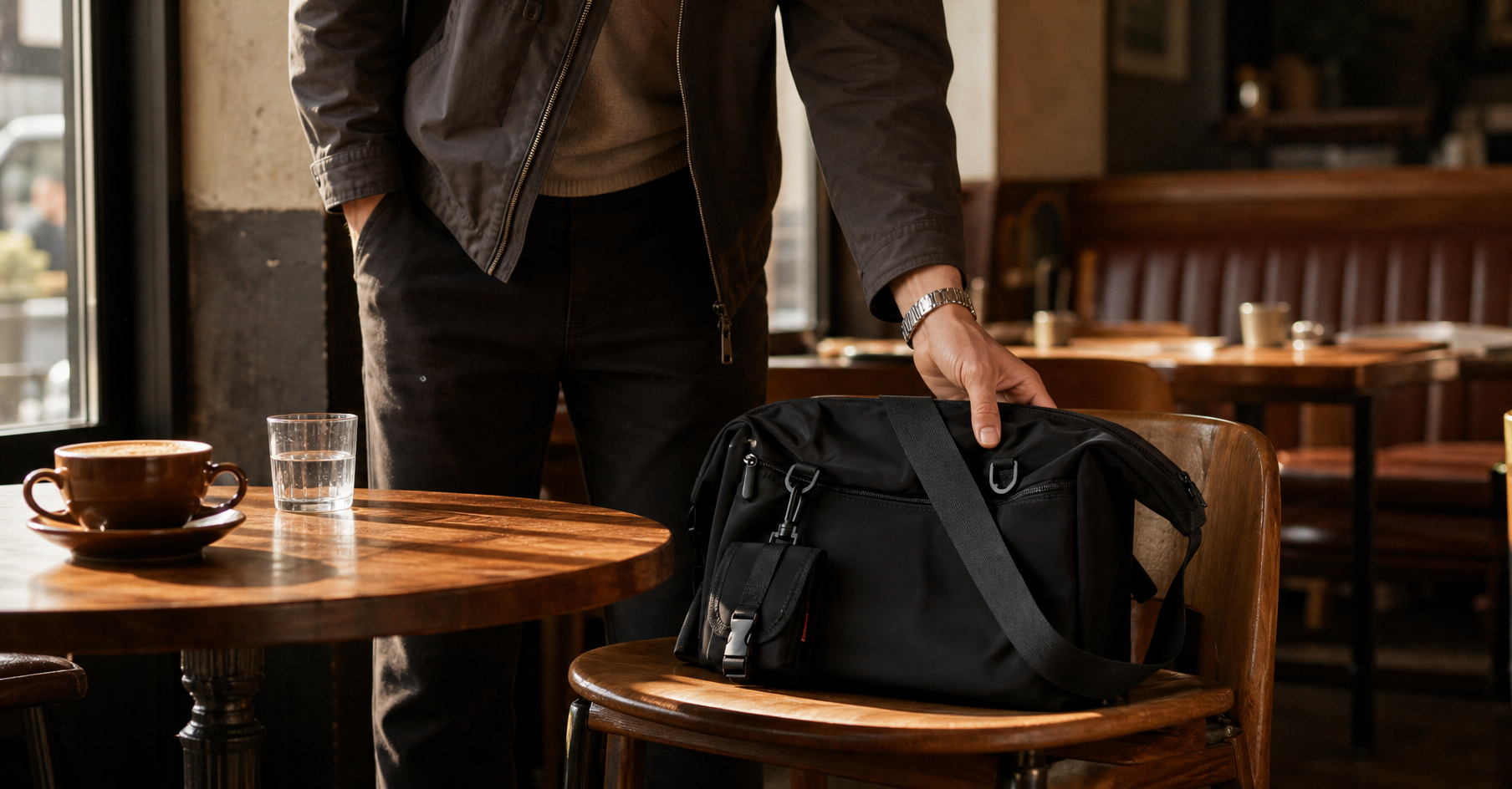
The Coffee Shop Carry Essentials
There's a core set of items that every serious coffee shop work session requires. Everything beyond this list is either a luxury or dead weight.
The Laptop
The obvious one — but the details matter. Know your machine's battery life before you decide whether to bring a charger. A MacBook Air running a typical writing or browser session gets five to seven hours of real-world battery. If you're working a three-hour session, you might not need the charger at all, which is one less thing to manage.
If you do need power, bring the right cable and a charger small enough to tuck into a dedicated pocket. Loose cables in a main compartment are one of the most common sources of bag chaos.
Earbuds or Headphones — One, Not Both
Noise-canceling earbuds are one of the most underrated tools in a coffee shop carry. A good pair creates an acoustic envelope that cuts ambient noise without isolating you completely — the level of focus most people find productive in public spaces. Bring one option. Not earbuds and a pair of over-ears as a backup.
A Slim Power Solution
If your work session runs longer than your battery, a compact USB-C charger or a slim power bank solves the problem without requiring an outlet hunt. The best coffee shop-ready power banks are about the size of a lipstick and add negligible weight. One cable, one power source. Keep them in the same external pocket every time.
A Small Notebook
Digital note-taking works. But there's something about a physical notebook in a coffee shop — the speed of a quick sketch, the permanence of writing something down without a notification interrupting — that's worth the minimal added weight. A slim A6 notebook takes up almost no space and earns its place.
Your Wallet and Keys — Pocketed, Not in the Bag
At a coffee shop table, your wallet and keys should live in your front pocket, not in your bag. You'll need your wallet to order. Your keys should be accessible without opening the bag. Keeping them in the bag creates unnecessary interaction — unzip, search, re-zip — every time you need them.

What to Look for in a Coffee Shop Bag
The bag you commute with and the bag you work from need to meet different criteria. The coffee shop context has specific requirements that most bags only partially address.
One-Motion Access
The best bags for coffee shop use open in a single gesture — a quick-release buckle, or a top-zip. You reach in, you grab what you need, you're back to work. Bags with complex closure systems that require two hands to open create constant interruption.
Table-Friendly Profile
Coffee shop tables are small. A bag that sits easily on a chair beside you — stable, not requiring a second chair or the floor — makes the whole session more comfortable. Commuter crossbody bags and structured messenger hybrids win here. A large backpack that can only stand upright is the wrong shape for this environment.
A Dedicated Laptop Sleeve
Not a shared compartment. Not a padded divider. A fully enclosed, padded laptop sleeve that keeps the machine stable and protected regardless of what else is in the bag. This is non-negotiable. The sleeve also makes packing and unpacking faster — slide the laptop in, done.
External Pockets That Make Sense
One or two external pockets, each with a clear purpose: earbuds in one, charger and cable in the other. When you can reach your tools without opening the main compartment, the bag becomes significantly less disruptive to use.
A Slim, Low-Profile Build
At a café table, you want a bag that doesn't announce itself. A slim commuter crossbody disappears into the scene. An overstuffed backpack or barrel bag takes up floor space and creates visual clutter that, in a small café, can make other patrons uncomfortable.
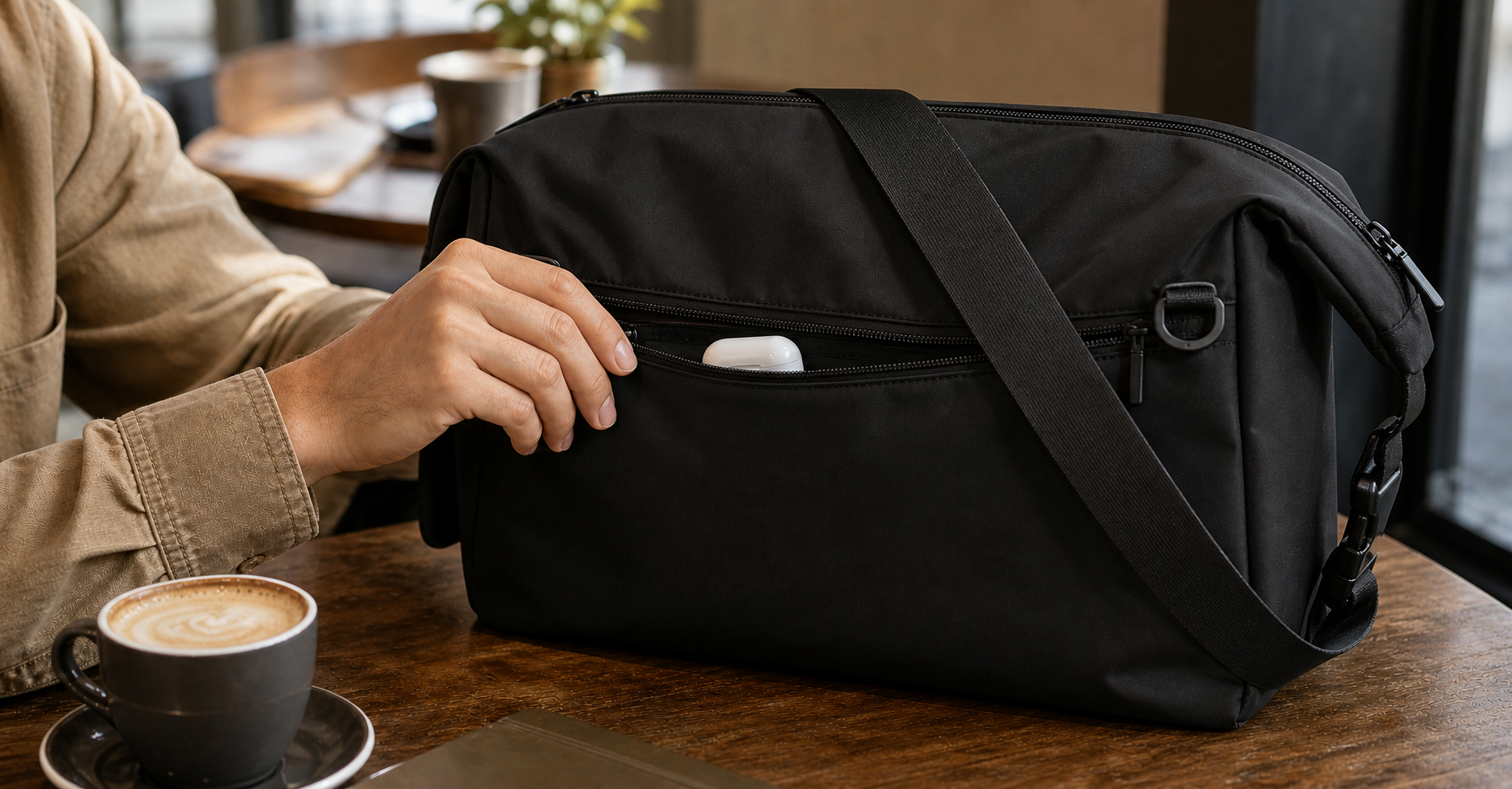
Our Coffee Shop Bag Pick
The Haven Messenger was built exactly for this use case. The padded 14" laptop sleeve keeps the machine protected and separate from everything else. The front organizer pocket keeps keys, earbuds, and a pen accessible without opening the main bag. And the top-zip closure opens in one motion, which at a café table becomes something you notice and appreciate daily.
It sits easily on the chair beside you. It stands up on the floor when needed. The waterproof Oxford shell means a wet table or a light rain on the walk over isn't a concern. And at a size that carries everything you need without excess, it disappears into the session rather than becoming a piece of furniture you're working around.
For sessions where you're not carrying a laptop — a notebook-only morning, an afternoon of reading and planning — the Metro Laptop Brief offers a slimmer profile with the same quick-access structure.
How to Pack Your Coffee Shop Carry
Packing structure matters as much as what you pack. Here's the system:
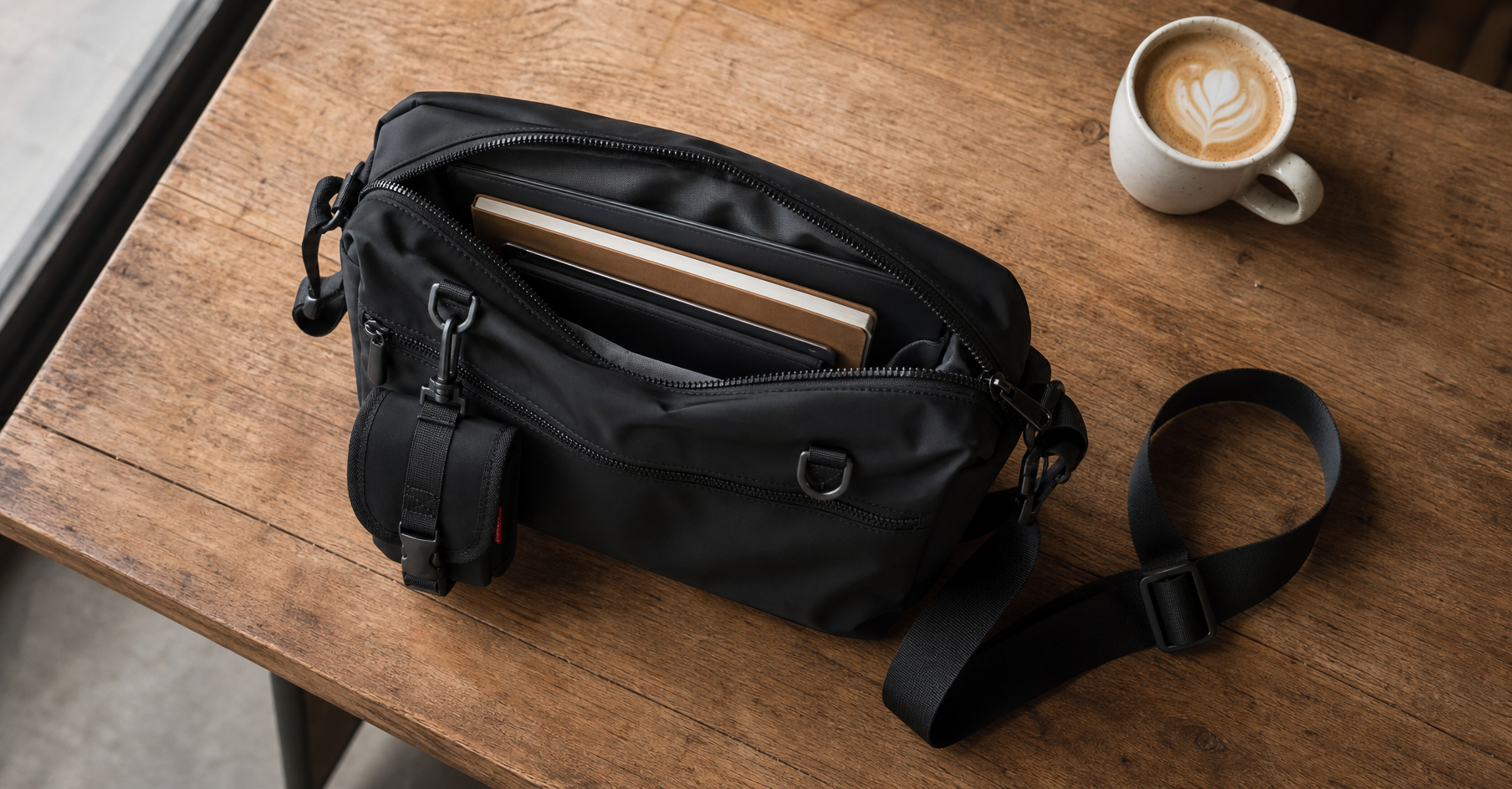
Main compartment: Laptop (sleeved), small notebook, one packing cube or pouch with any secondary items (a thin jacket, a book).
Front organizer pocket: Earbuds, charger, one USB-C cable, a pen. Nothing else.
Exterior pocket or quick-access slot: Phone if it's not in your pocket. Nothing else.
The principle: every item has one home in the bag, and it goes back to that home every time. When you repack after a session, you're not reorganizing — you're just putting things back.
The Coffee Shop Carry vs. the Commute Carry
There's meaningful overlap between a commute bag and a coffee shop bag, but the priorities differ in one key way: the commute values capacity and durability, while the coffee shop values access speed and compactness.
The good news is that the best everyday bags serve both contexts. An urban commuter crossbody that works for a daily commute — laptop protected, essentials organized, weatherproofed — is also the right shape for three hours at a café table. You don't need a separate bag for each context. You need one bag that does both without compromise.
If you're still working out which bag type fits your day, the working minimalist's carry guide covers how to think about bag selection across use cases. For a deeper breakdown on what to look for in a commuter bag specifically, the complete commuter bag guide covers every selection criterion.
Frequently Asked Questions
What bag is best for working from a coffee shop?
A slim commuter crossbody or structured messenger hybrid with a dedicated laptop sleeve, one or two organized external pockets, and a single-motion closure. The goal is fast access and a table-friendly profile — not the largest bag you own.
What should I bring to work from a coffee shop?
The essentials: laptop, earbuds, a charger or power bank if needed, a slim notebook, and your phone. Wallet and keys stay in your pocket. Everything else is extra weight you won't use.
How do I keep my bag organized for café work?
Give every item a fixed home in the bag — laptop in the sleeve, charger in the same external pocket every time, earbuds in their own slot. When packing is automatic, access is automatic. The session starts the moment you sit down.
Is a messenger bag better than a backpack for coffee shop work?
For most coffee shop environments, yes. A commuter crossbody sits on the chair beside you, opens in one motion, and has a profile that works on a small café table. A large backpack needs floor space and usually requires more time to access.
What's the best laptop bag for remote workers?
One that fits your laptop in a dedicated padded sleeve, has a clear organizational structure for cables and accessories, opens quickly, and works as comfortably in a café as it does on a commute. The Haven Messenger is the bag we built for this exact use case. For commuters who split time between office and remote locations, the best laptop bags for commuting covers the full range of work-optimised carry options.
The Field & Ash Journal covers carry, craft, and the things worth keeping. For the foundational EDC framework, start with What Is Everyday Carry?. For building the leanest possible daily carry system, the working minimalist guide covers the full approach. And for choosing the right commuter bag, the complete commuter bag guide covers all of it.