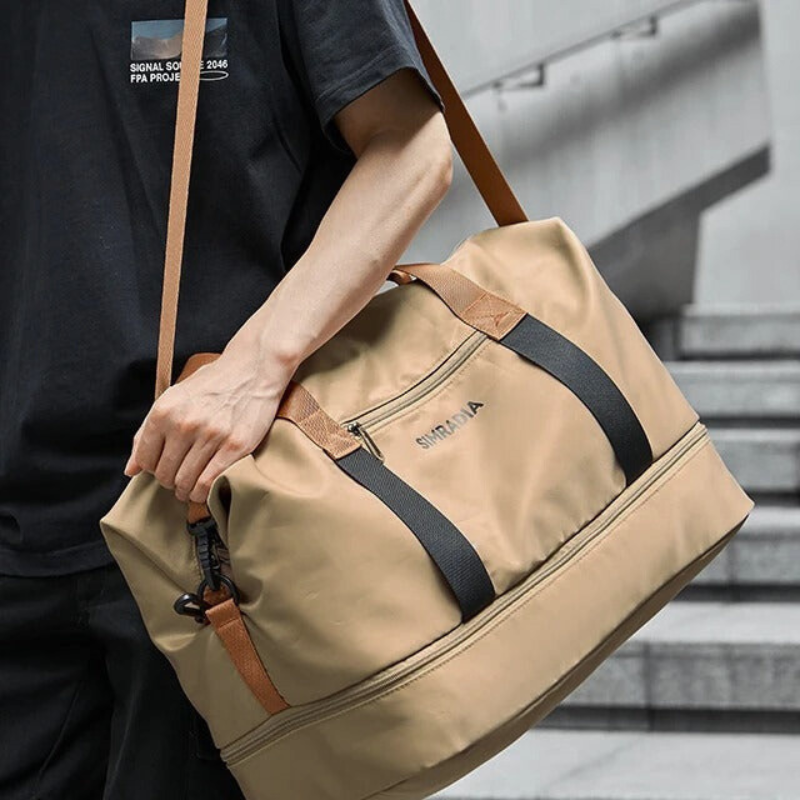



How to Pack for a Weekend Trip: The Bag Setup That Actually Works

TLDR: The right weekend travel bag solves three problems most bags ignore — enough capacity for three days without forcing you to overpack, volume flexibility so you're not locked in, and comfortable carry across airports, transit, and city walking. Add a compact crossbody for day carry, and the whole trip moves faster. Skip the checked bag entirely.
Most packing guides start with a list. This one starts with the bag — because the bag shapes the list, not the other way around.
When the bag is wrong, everything else compensates. You stuff shoes in a plastic bag. You wrinkle your jacket trying to close the zipper. You check in extra luggage because there's nowhere to put your toiletries without cross-contamination. The bag isn't the accessory. It's the system.
A good weekend travel bag does four things: it holds three days of clothing without feeling cavernous, it adapts when your load changes day to day, it carries comfortably whether you're walking ten minutes from a terminal or riding the subway across a city, and it keeps your laptop and gear protected alongside your clothing. That's it. Most bags fail at one or more of these.
Here's how to get the setup right.
What to Look for in a Weekend Travel Bag
Capacity: 30–35L with volume flexibility
Under 25L and you're making compromises — either on clothing or on a second pair of shoes, which rarely fits cleanly alongside soft goods. Over 40L and the bag starts to fight you at security, on trains, and in tighter hotel rooms.
The 30–35L window is where a three-day trip actually lives. One pair of shoes, three days of clothing rolled tight, a toiletry kit, a light jacket, and your tech gear. A bag sized for it doesn't leave dead space that shifts while you walk, and it doesn't require a strategic Tetris session to close.
Even better: a bag with expandable volume via a roll-top closure. You start compressed and open it up only when the load demands it. That flexibility covers both the trip there and the return, when your bag may be carrying more or less than when you left.
Keeping wet and dirty items contained
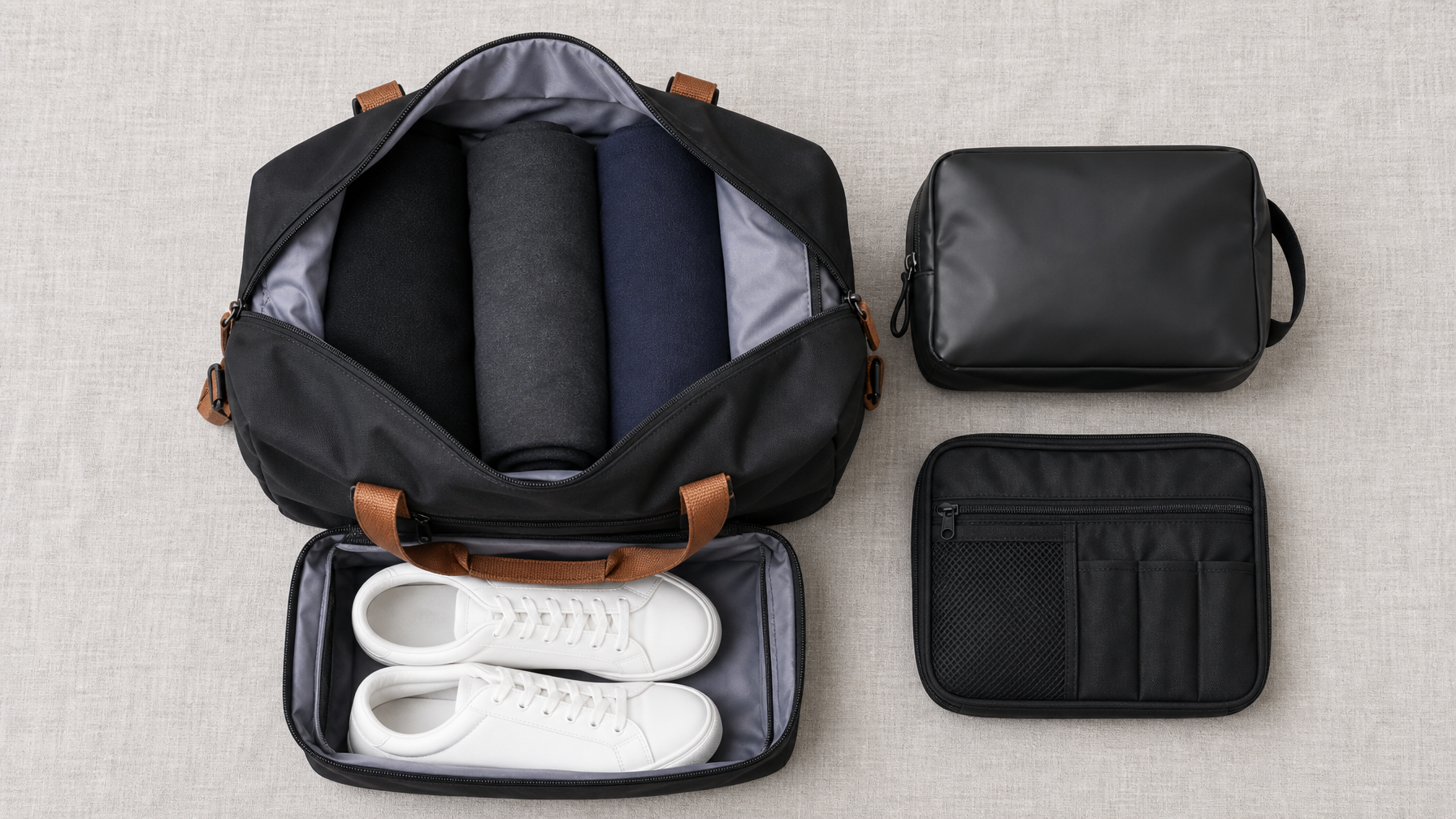
If you're going anywhere with a gym, a pool, a rainy city day, or a beach — wet and dirty items need to stay away from clean clothing. A bag with structural wet-dry separation handles this automatically. For bags without a dedicated compartment, a waterproof packing pouch solves it just as well: pack wet gear inside, seal it, and it stays contained regardless of what's around it.
Mesh pockets breathe, which means they transfer — they're not the solution here.
Shoe management
Shoes are the contaminant. The outsoles of a pair of sneakers worn across a city sidewalk carry more than most people want to think about. A bag with a dedicated shoe compartment is the cleanest solution — footwear isolated end to end, fully separate from clothing.
For bags without one, a shoe bag or large zip pouch keeps footwear contained just as effectively and adds almost no weight to the overall kit.
Carry options
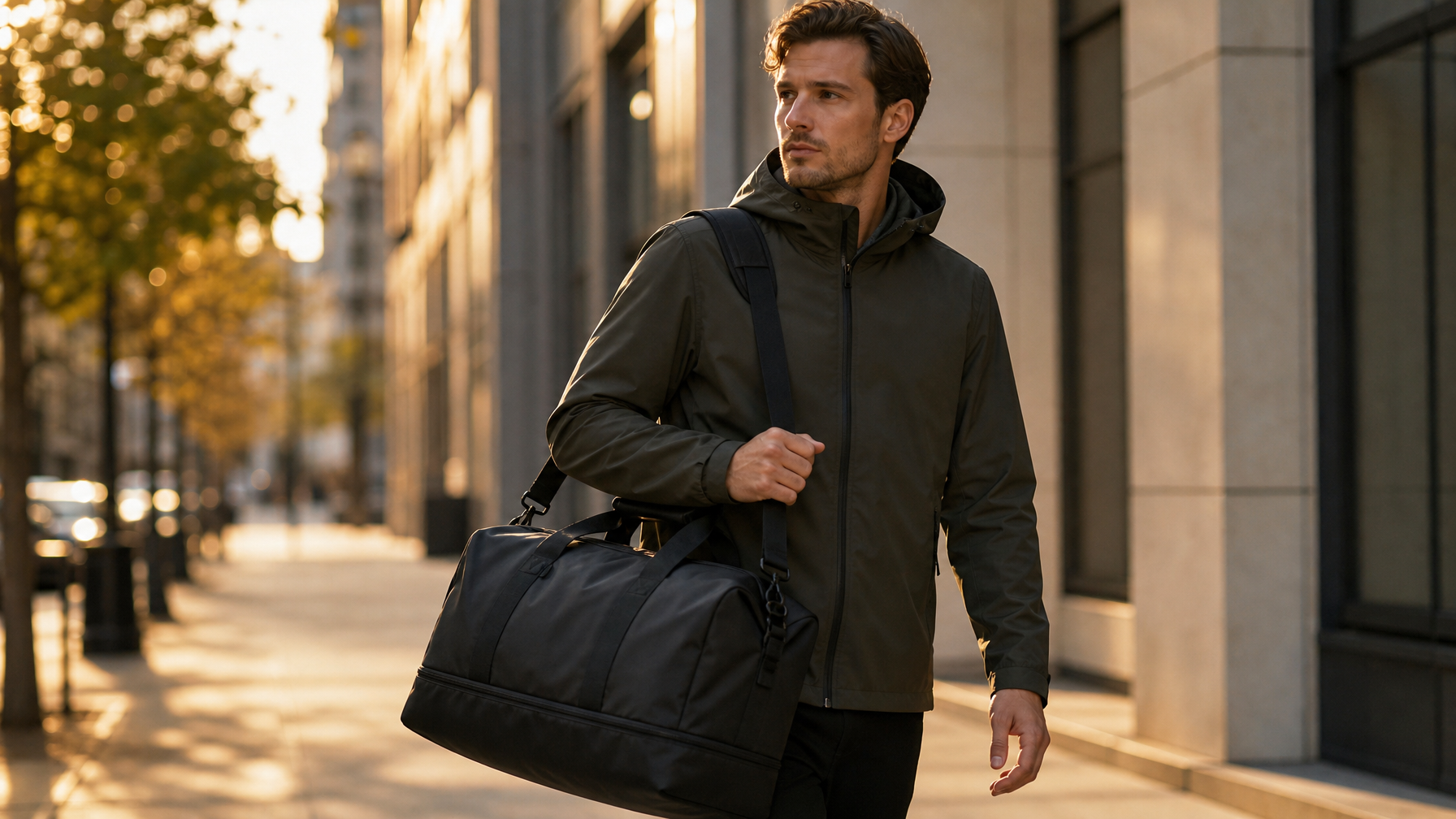
A single weekend trip often involves several modes of movement: rideshare to airport, gate-to-gate in a terminal, city walking to the hotel, subway back at the end. The bag needs to adapt across all of them. Dual top handles give you control for short lifts. Padded shoulder straps let you go hands-free over distance. A bag that only works well in one carry mode adds friction everywhere the mode changes.
Weather resistance
A weekend trip in any city involves rain risk. Oxford fabric or nylon with a waterproof treatment means your bag doesn't start the return trip damp. High-density Oxford is the reliable standard — it repels daily rain and rough handling without saturating.
The Two-Bag Setup vs. One Bag
For weekend travel, there's a debate worth addressing: one bag or two?
One bag — a single backpack that holds everything — works best when your trip is primarily point-to-point, your destination has laundry access, or you're specifically trying to minimize what you carry as a personal practice. It's a legitimate system and there's a real discipline to it.
Two bags — a main carry for clothes and gear, plus a compact crossbody or messenger for day use — is often more practical for the way a weekend trip actually unfolds. Your main bag goes in the hotel room. Your day bag carries your wallet, phone, water, and a light layer while you move through the city. When the day's done, you're not hauling a 35L pack through a restaurant.
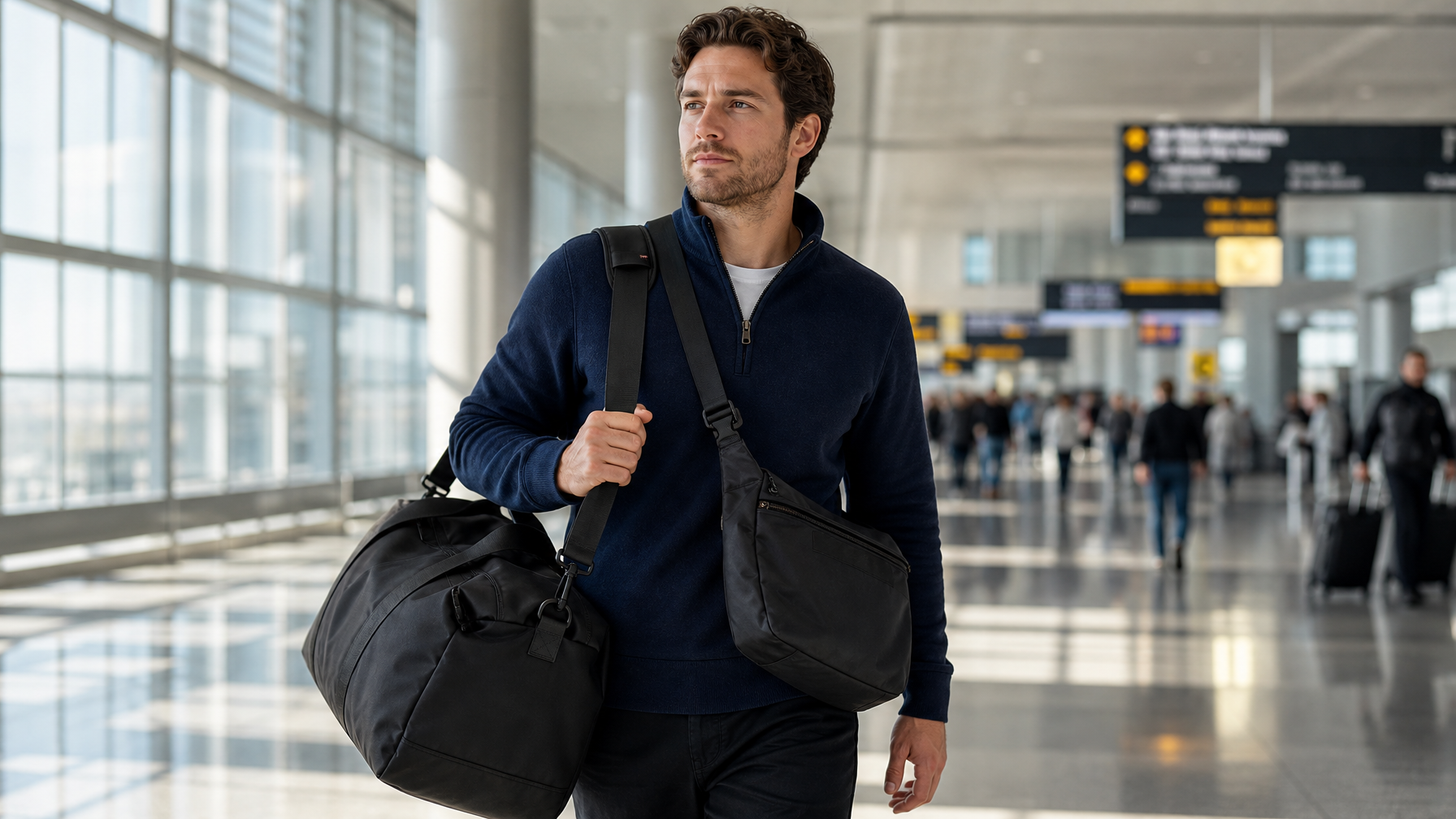
The math on two bags: a structured expandable backpack as the primary, combined with a compact crossbody messenger bag as the personal item, covers both the travel leg and the on-the-ground days without compromising either. The messenger goes under the seat in front of you. The main bag goes overhead or in the car. You arrive with both bags sorted and the system stays clean.
How to Actually Pack It
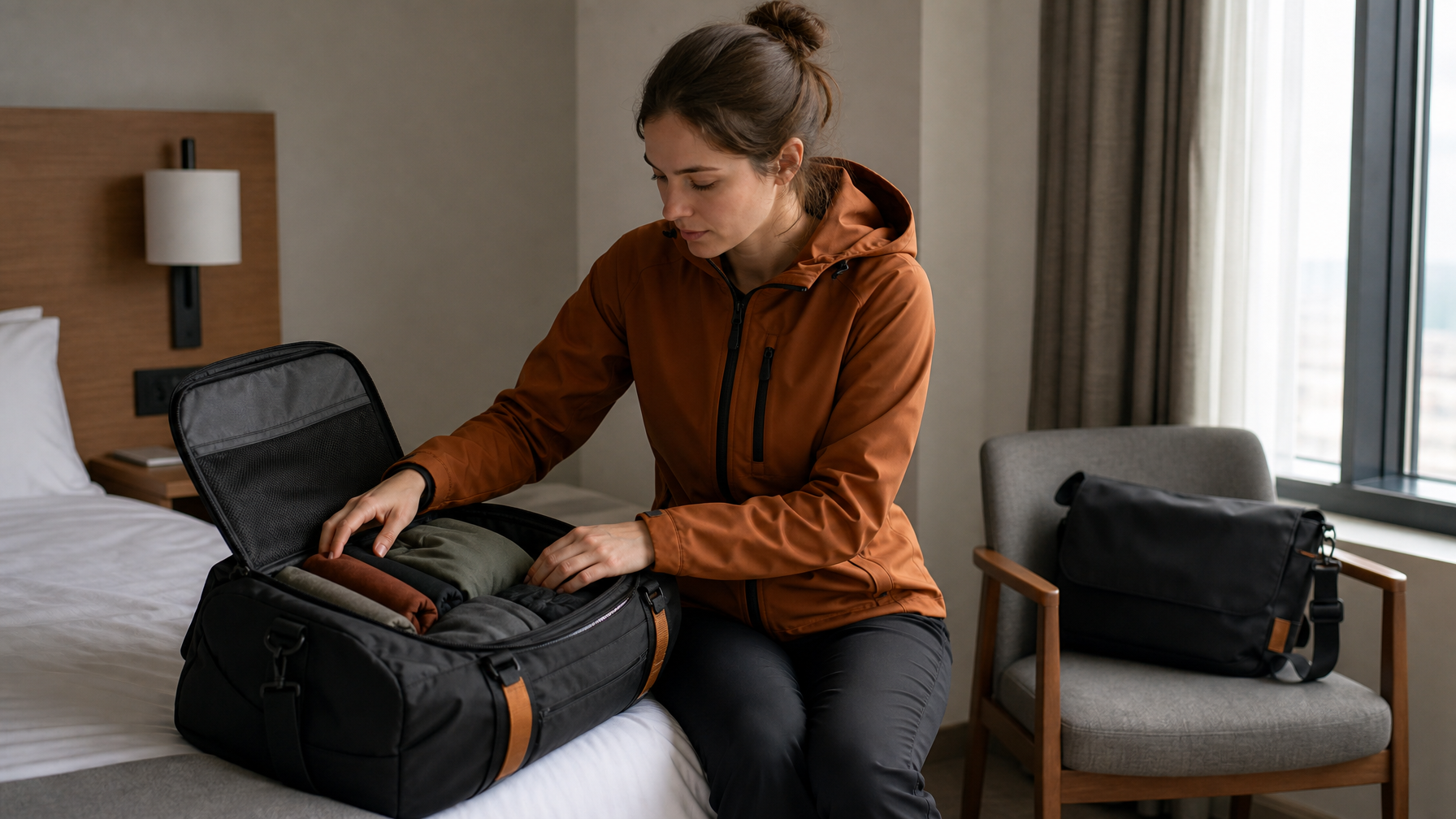
Getting three days into one bag without chaos comes down to five habits, not tricks.
1. Roll, don't fold. Rolled clothes take up roughly 30% less volume than folded ones and wrinkle less. Roll from the bottom of the garment toward the collar. Tighter rolls for T-shirts, looser for heavier pieces like jeans or fleeces.
2. Shoes go in first. Pack your shoes before anything else. They're the inflexible item — your clothes conform around space, shoes don't. Use a shoe bag to keep footwear isolated from your clothing, and pack it at the base of the bag before anything else goes in.
3. Heavy items at the base. Jeans, your toiletry kit, anything dense and heavy goes at the load-bearing point. Light items — shirts, socks, a light jacket — go on top or in outer pockets. This keeps the bag from pulling awkwardly when you're carrying it for more than a few steps.
4. Toiletry kit in a standalone pouch, waterproof. Don't let a leaking product ruin your trip. A waterproof toiletry pouch means any spill stays contained. It also means you can pull the whole kit out at security without touching anything else in the bag.
5. One outfit for travel days, two for the trip. Three days doesn't mean three separate complete outfits. It means one set for the travel days (wear it on the plane, wear it home) and two for the destination days. Build around a base layer that works with multiple combinations — a dark technical quarter-zip or a clean unbranded hoodie covers more ground than three different tops.
If you want a practical starting point for thinking about daily carry more broadly, our guide to building a minimalist everyday carry covers the same reduction logic applied to your regular routine.
What Makes a Good Weekend Bag — A Buying Guide
Before you commit to a bag, run it through these five questions:
Does it have enough capacity for a realistic weekend load? 30–35L covers most three-day trips. For roll-top designs, volume flexibility — the ability to compress down on lighter days — matters as much as the maximum number.
Can you keep wet and dirty items separated? Structural wet-dry compartments are ideal. If the bag doesn't have one, a waterproof pouch handles it just as cleanly. What doesn't work: mesh pockets that breathe and transfer.
Can it carry multiple ways? Padded shoulder straps and a top handle give you the flexibility to match the carry to the moment — hands-free for longer walks, one-handed for quick lifts.
Is the material waterproof or at minimum water-resistant? A weekend trip in any city involves rain risk. High-density Oxford fabric or nylon with a waterproof treatment means your bag doesn't start the return trip damp.
Does the capacity close cleanly? The bag should close with your full standard load inside. A bag that bulges at the zip is the wrong size for your carry.
The Bag We Recommend for Weekend Travel
The Transit Pack is built for this format. At 20–35L expandable via roll-top closure, it covers a three-day trip without committing to a fixed volume — tighten it down for a lighter pack, open it up when you've added the jacket, an extra layer, and a few days of gear. The Oxford exterior handles city rain and rough handling without soaking through. The padded 15.6" laptop sleeve keeps work gear isolated from your clothing. Padded shoulder straps and a soft top handle give you two carry modes for moving between gates, transit stops, and hotel lobbies.
At $199, it's built to handle the full trip — airport to hotel to city carry — without requiring a separate organizational system on top of it.
For wet items and shoe management: a waterproof packing pouch keeps wet gear contained inside the main compartment, and a shoe bag isolates footwear from clothing regardless of what else is in the bag. Both pack flat and add almost no weight.
Pair it with a compact crossbody Haven Messenger as the personal item under the seat and the two-bag system handles everything from the airport to the day's last errand without missing a step.
The Goal Isn't to Pack Less — It's to Pack Right
The carry-on-only conversation usually frames minimalism as the objective. Pack fewer things. Own less. Be more intentional. All of that is true, but it's the wrong starting point for most people.
The real goal is a weekend trip where you're not thinking about your bag. Where you're not rummaging at 6am in a hotel room trying to find your charger, or holding up security because your shoes are buried under three days of clothing. Where you arrive and the bag is just done — it did its job and gets out of the way.
The right bag, packed the right way, does that. The details matter, but they're learnable in one or two trips once the bag stops creating friction.
If you're thinking about upgrading your daily commuter carry as well, our guide to the best laptop bags for commuting covers the same logic applied to the daily grind.