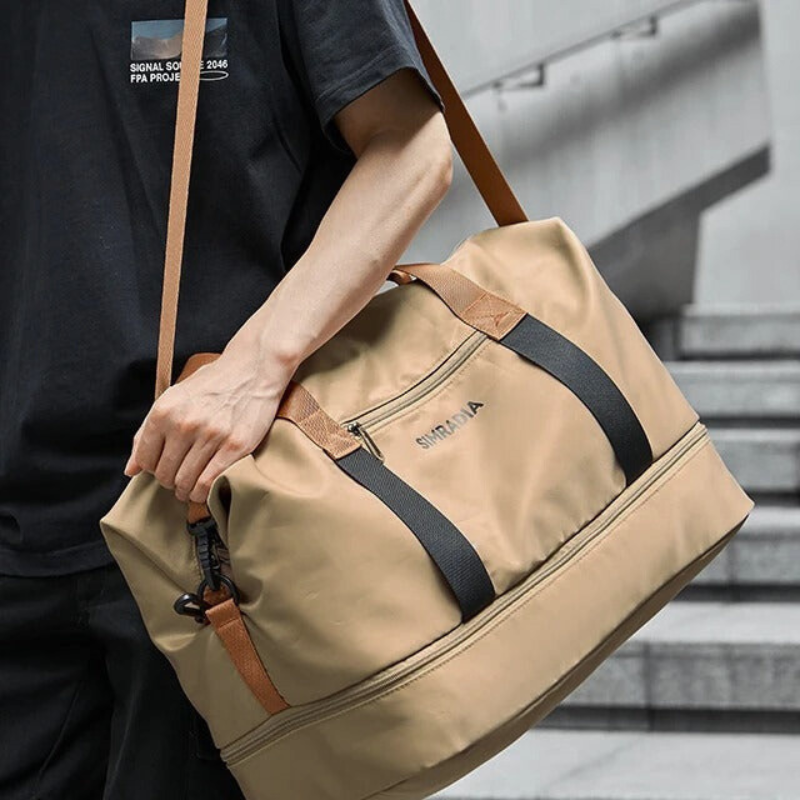



The Best Minimalist Shoulder Bags of 2026: Small Carry, No Compromises

You know the type of bag that looks minimal in photos and then somehow still weighs on your shoulder by 3pm. It's bigger than it needs to be, it's got pockets you never use, and half the reason you bought it "for minimalism" was the aesthetic, not the function. A genuinely minimalist shoulder bag isn't defined by how little it holds. It's defined by whether everything it holds actually needs to be there — and whether the bag gets out of your way once it is.
That distinction matters more than most buying guides admit. Small isn't automatically minimal. A small bag with the wrong pockets, the wrong strap, or no real internal structure is just a smaller version of the same problem. The goal isn't "as little bag as possible." It's a bag sized exactly to what you actually carry on a normal day, built well enough that it disappears into your routine.
What "Minimalist" Actually Means for a Shoulder Bag
Minimalist carry gets treated as a style choice, but for a shoulder bag it's really a set of functional decisions. A genuinely minimalist bag has:
No dead space. If a bag is built to hold a laptop but you only ever carry a phone and a wallet, you're carrying a bag sized for a life you don't have. The minimalist choice is a bag sized for your actual day — not the largest bag you might theoretically need once a year.
A small, fixed set of pockets that map to real items. Minimalist doesn't mean "one big compartment." It means every pocket has an obvious, repeated use — one for your phone, one for cards, one for keys — so you're not digging through a single cavity to find anything.
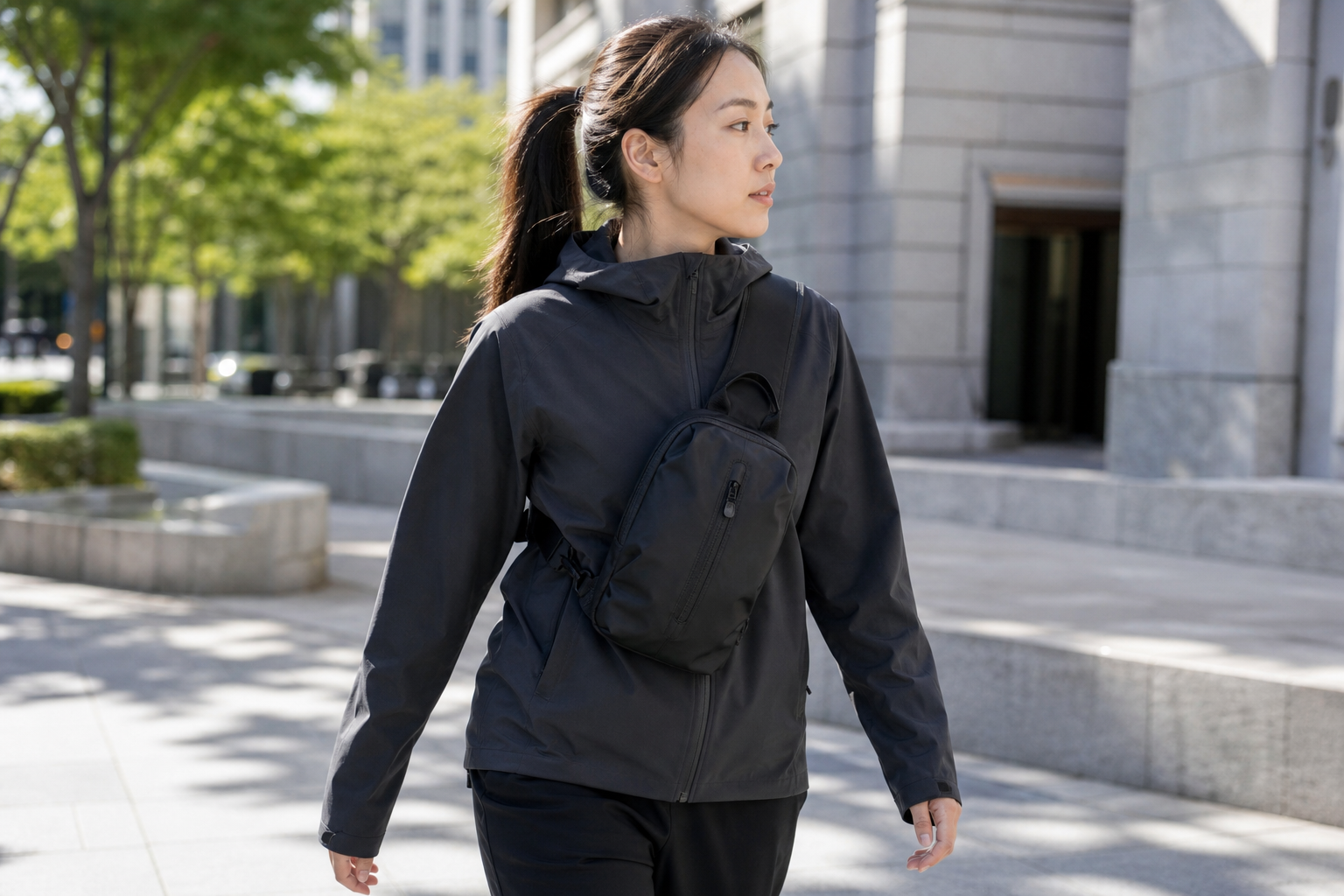
A strap and profile built for all-day wear, not just the store mirror. A bag that looks sleek on a hanger but shifts, bounces, or digs into your shoulder after twenty minutes of walking isn't minimalist in any way that matters day to day.
Hands-free by default. The point of going small is usually to stop carrying something in your hands. If the bag still requires constant adjustment or a hand on the strap, it hasn't actually solved the problem it was bought to solve.
The Three Sizes of "Small," and Who Each One Is For
Not every minimalist shoulder bag is minimal in the same way. Before comparing specific bags, it helps to separate them by what they're actually sized to carry.
Phone-and-wallet small
This is the true minimum: a bag built for a phone, a slim wallet, keys, and maybe sunglasses or earbuds. No tablet, no laptop, no ambition to be anything more. If your day genuinely doesn't require a device beyond your phone — an errand day, a short commute, an evening out — this is the right category, and going any bigger just means carrying unused space.
Tablet-capable small
One step up: still compact, but with enough structure for a small tablet or e-reader alongside the phone-and-wallet basics. This is the category for people who read or take light notes during a commute but don't need a full laptop setup.
Laptop-capable compact
The largest of the three, and arguably the hardest to get right, because most "laptop bags" abandon the small-profile promise the moment they add a padded sleeve. A genuinely minimalist laptop-capable bag keeps the compact crossbody profile while still protecting a 14" laptop — which is a narrower design problem than it sounds, and most bags in this category solve it by just becoming a small backpack instead.
What to Look For Before You Buy
Weight before capacity
Weight is the number most buying guides skip and it's the one that determines whether the bag actually feels minimal after a full day of wear. A bag under roughly 0.7 lb (0.3 kg) genuinely disappears on your shoulder. Anything approaching a full pound starts to have presence, even before you put anything inside it. If you're comparing two bags with similar capacity, the lighter one is almost always the better minimalist choice.
Pocket count, not pocket size
More pockets isn't more minimal — the wrong number of pockets is. Too few and everything pools into one compartment, defeating the point. Too many and you're managing a system instead of using a bag. Two to three purpose-built pockets (main compartment, a slim interior slot, a quick-access exterior pocket) is usually the right range for a genuinely small bag.
Adjustable strap, worn close to the body
A minimalist bag should sit close and stay put — not swing, not require repositioning every few minutes. An adjustable strap that lets you cinch it tight across your body (rather than a fixed-length strap you're stuck with) is what actually delivers the hands-free promise.
Breathable back panel if you're walking or cycling
Small bags worn close to the body in warm weather or during an active commute benefit from a back panel that isn't solid fabric pressed against you all day. It's a detail that rarely shows up in product photos but matters immediately in daily use.
The Bags We Recommend, by Category
Phone-and-wallet small: Commuter Sling
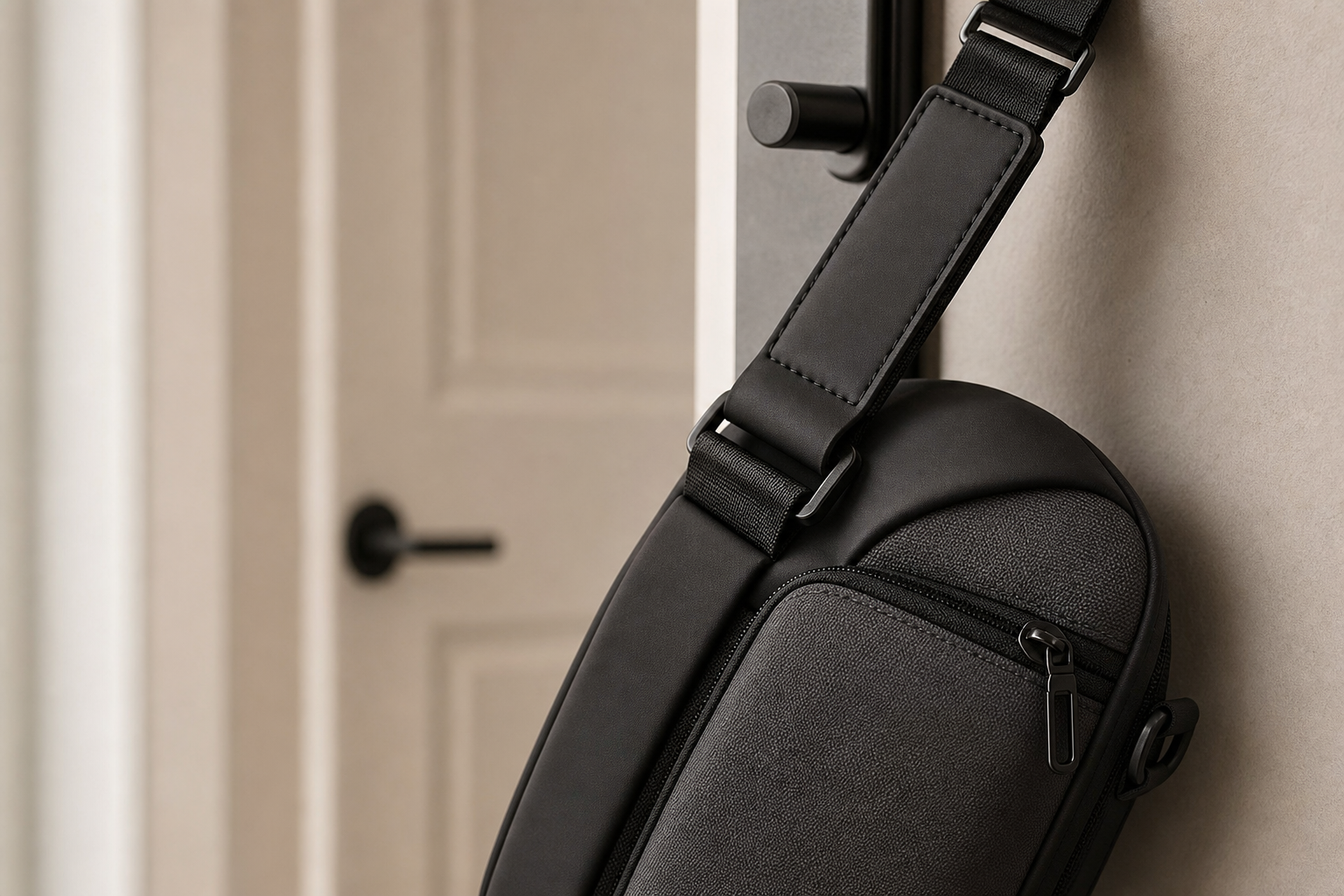
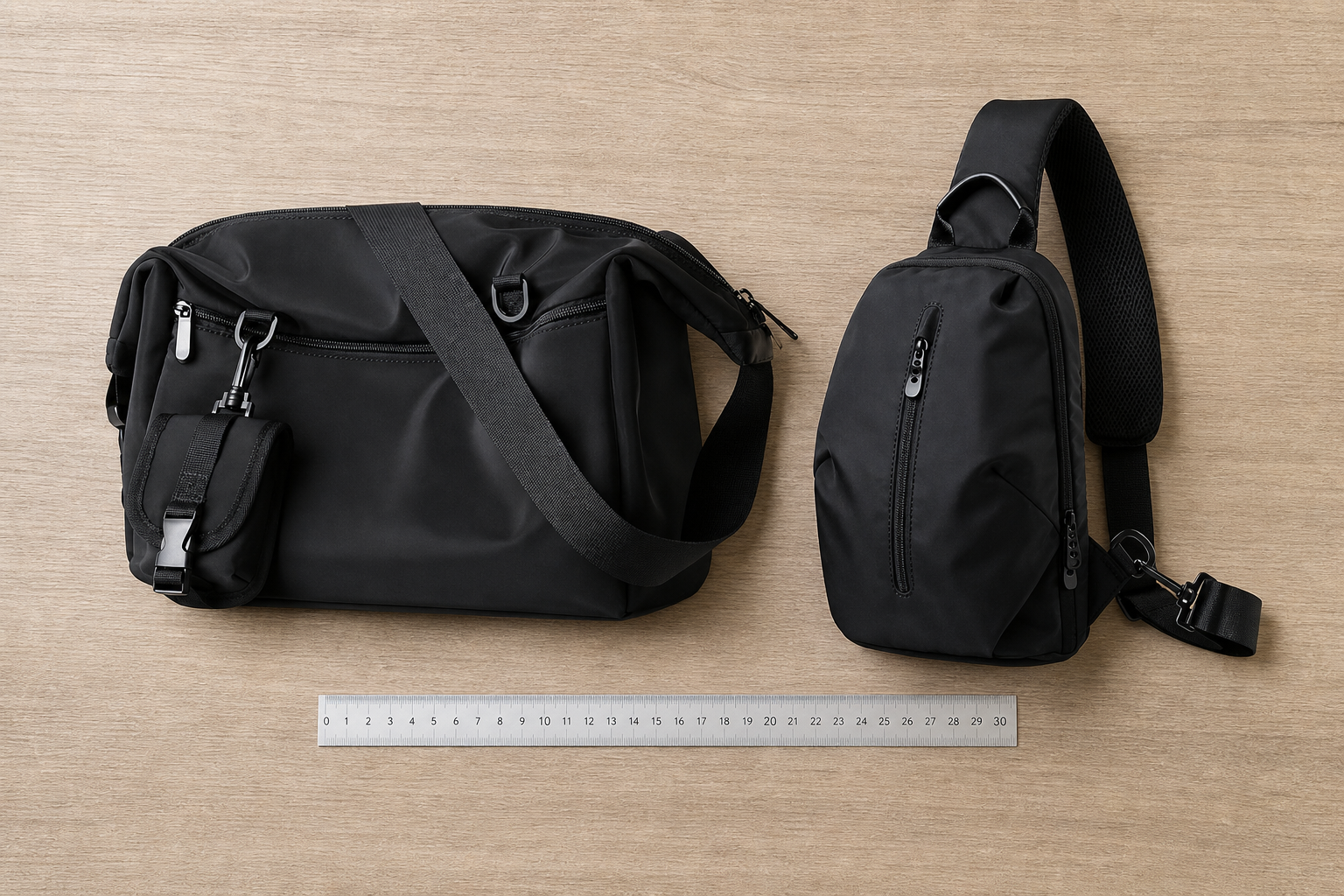
The Commuter Sling is the lightest bag in the Field & Ash catalog at 0.66 lb (0.3 kg), sized for a tablet up to 9.7" but genuinely built for the phone-wallet-keys day. It has a breathable back panel — a real advantage for anyone wearing it during an active commute or a warm afternoon — plus a shoulder strap lanyard hook for something small like sunglasses. The strap adjusts up to 110 cm, so it wears equally well across the chest or the back. At $89, it's priced identically to our full-size messenger, which tells you the price reflects the build quality, not the size.
Budget entry point: Transit Crossbody
For readers who want the smallest possible buy-in, the Transit Crossbody sits at $69 — the lowest price in the catalog — with a dual-zip main compartment plus interior slot and cell-phone pockets. It doesn't have a dedicated laptop sleeve, which keeps it firmly in the phone-and-wallet or small-tablet category, and it's the only bag in the lineup available in a gray colorway if you want something other than black.
Laptop-capable compact: Haven Messenger
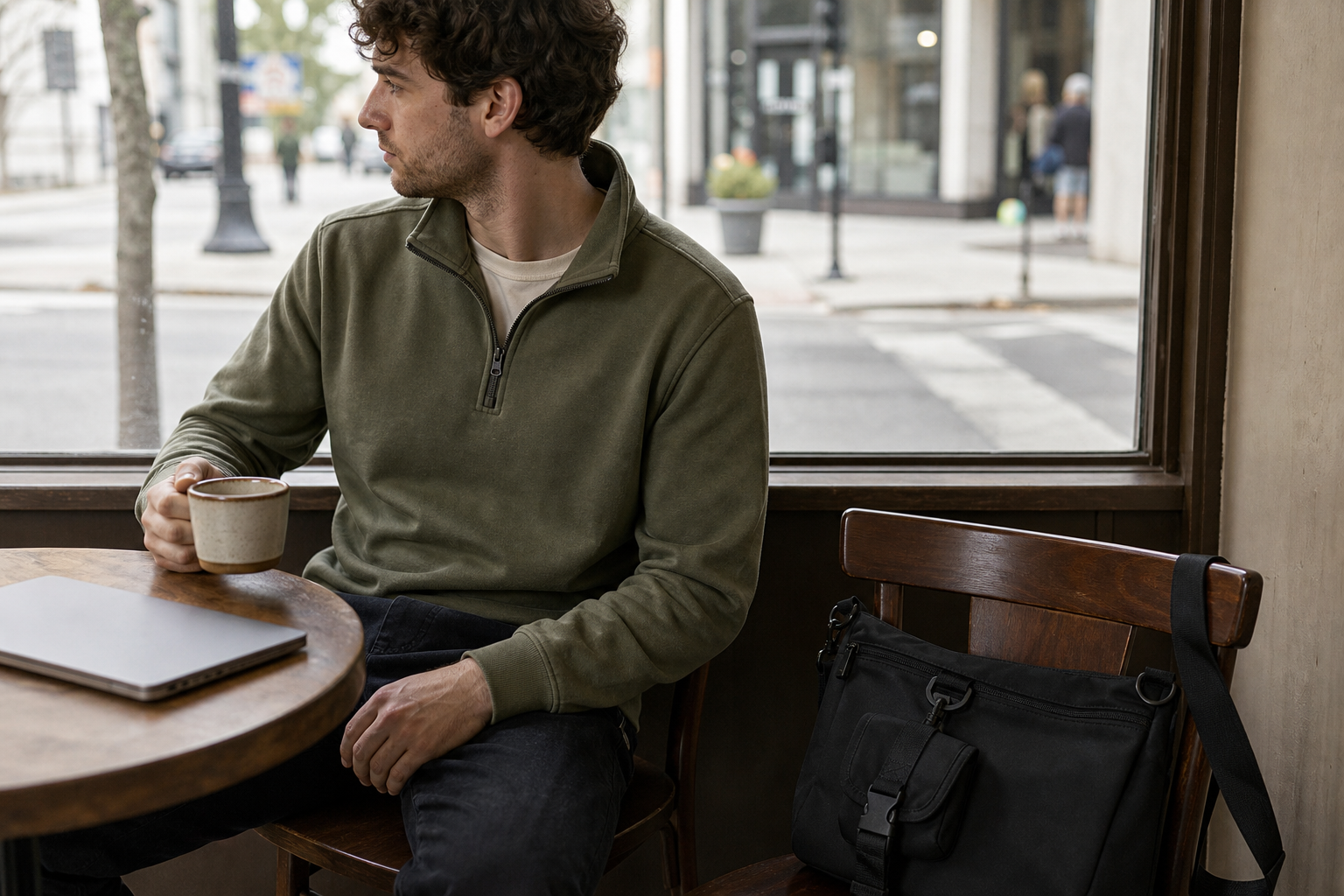
If your day includes a laptop and you still want the smallest reasonable footprint, the Haven Messenger is the answer. At 1.21 lb it's heavier than the sling and crossbody options, but it's the lightest bag in the catalog that still protects up to a 14" laptop with a padded sleeve — and its detachable front accessory pouch means small items (cards, cables, a phone) don't get lost inside the same compartment as the laptop. It's the right choice when "minimalist" needs to include "still fits my work laptop," which is the most common compromise point in this category.
How to Decide Between Them
The honest answer is to work backward from your actual laptop-carrying frequency, not your ideal one. If you carry a laptop most days, buying a phone-and-wallet bag "to force minimalism" just means you'll be carrying a second bag on top of it — which defeats the entire premise. If you rarely carry more than your phone, a laptop-capable bag is dead weight you're paying for and wearing for no reason.
A useful test: track what you actually carried for the last five workdays. If a laptop showed up in that list three or more times, size up. If it didn't show up at all, the smallest option on this list is the right one, and anything bigger is just a habit you haven't broken yet.
Frequently Asked Questions
What's the difference between a sling bag and a crossbody bag? The terms overlap heavily in casual use, but a sling bag typically has a single strap designed to sit across the back and swing to the front for access, while a crossbody sits at the hip with the strap running diagonally across the chest. Both are worn hands-free and both belong in the minimalist category — the right one usually comes down to which feels more secure for your specific commute or activity level.
Can a minimalist shoulder bag actually replace a backpack? For most single-device, single-day carry, yes — the weight savings and hands-free profile are genuine upgrades over a backpack for anyone not carrying bulky gear. It becomes a harder swap once you regularly carry more than a laptop, a charger, and small essentials; at that point a backpack's dedicated compartments start to earn their extra size and weight.
How do I know if a bag is genuinely minimalist or just marketed that way? Check three things before the aesthetic: actual weight (not just dimensions), whether the pocket count matches what you'd actually use, and whether the strap adjusts to sit close to your body. A bag that's small in a photo but heavy, over-pocketed, or fixed-strap isn't minimalist in daily use — it just photographs that way.
Is one pocket enough, or do I need multiple compartments? A single compartment works if you genuinely carry two or three items total. The moment you're carrying more than that, a single pocket becomes a place things get lost, not organized — which is why even the smallest bags on this list use two to three distinct pockets rather than one large space.
If your daily carry sits somewhere between "genuinely minimal" and "still needs a laptop," our guide to building a minimalist everyday carry covers the full decision framework beyond the bag itself.