


Why Most Messenger Bags Disappoint (And What a Good One Actually Does)

You bought the bag because it looked right. The photos showed it slung low over a shoulder, organized and purposeful. The reviews were mostly positive. The price felt reasonable.
Then it arrived. And within a week, you remembered that this has happened before.
The laptop doesn't sit securely — it shifts when you move. The strap digs in by lunchtime. Nothing has a dedicated place, so everything migrates to the bottom. You find yourself rooting through the bag at the train doors while people wait behind you. The bag hasn't made your commute easier. It's added friction to it.
This experience is common enough to have a pattern. Most messenger bags sold today are built to photograph well, not to work well. Understanding the gap between the two — and knowing what to look for — is the difference between a bag that becomes part of your routine and one that sits unused by the door after three months.

The Four Ways Messenger Bags Fail
Most messenger bags fail in the same four places. Once you know what to look for, you'll recognize them in every product photo — and avoid them before the bag arrives at your door.
1. The strap that punishes you by mile two
A thin strap is a design decision that trades long-term comfort for a cleaner silhouette. Most entry-level messenger bags use a narrow webbing strap — often less than an inch wide — that concentrates load on a narrow band of muscle and bone across the shoulder and neck. Over an hour of daily commuting, this becomes a real problem.
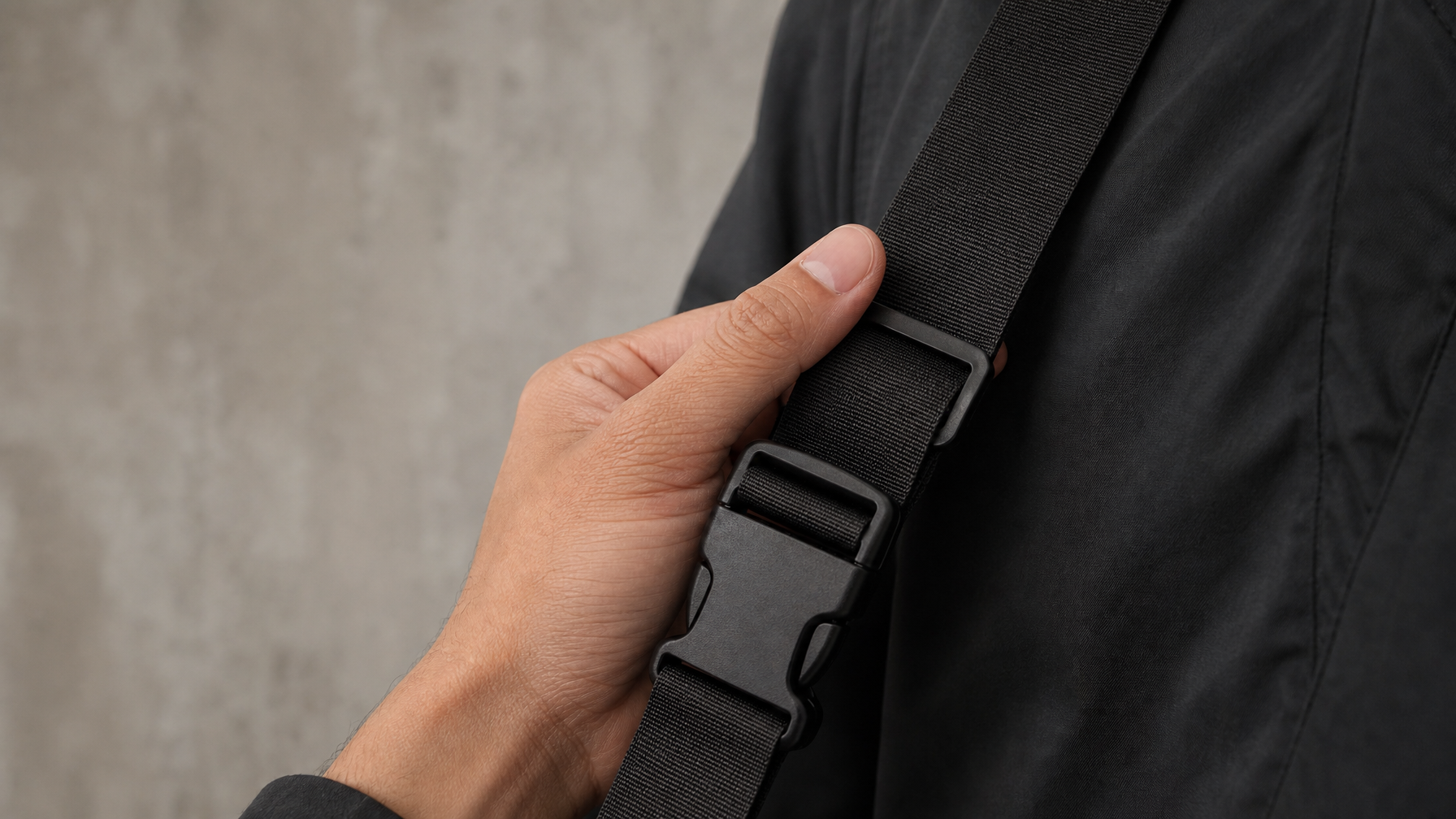
A strap width of 1.5 to 2 inches distributes load meaningfully. Combined with a side-release buckle (which lets you take the bag on and off quickly without fighting a clip), the strap should feel like part of the bag's system, not an afterthought. If a product page doesn't specifically call out strap width, assume it's narrow.
2. No dedicated laptop protection
Laptop sleeves in cheap messenger bags are frequently the same main compartment, loosely padded at one face. The laptop sits alongside everything else — chargers, notebooks, water bottles — and takes knocks with every step.
A real laptop sleeve is a dedicated padded compartment, usually built into the rear face of the bag, sized to hold a specific laptop size (12", 13", 14", 15.6"), and separated from everything else. The laptop doesn't shift. It doesn't sit on a charger. It is in its place, protected, every time.
For a full review of what separates functional laptop bags from ones that merely describe themselves as laptop bags, the complete commuter bag guide covers this in detail.
3. Organization that doesn't organize anything
The interior of a disappointing messenger bag looks fine in photos: a few slip pockets, maybe a key clip, a pen loop. In daily use, those pockets are either in the wrong place, the wrong size, or not anchored enough to hold their contents.
By Wednesday, everything has migrated to the main compartment. You know the cable is in there somewhere. Your keys were in the front pocket but now they're not. You're rummaging when you should be walking.
Good interior organization follows a logic: a laptop in its own zone, quick-access items near the top, secondary storage in the main body. Every category of item has a home. When the bag is zipped, you know exactly where everything is — not because you remember where you put it, but because there was only one right place.
4. The wrong closure for the way you actually move
Traditional messenger bags use a large flap closure — a fold of material that covers the entire front face, secured with a buckle or magnetic clip. It's a classic look. It is also slow. Opening a flap closure while standing, moving, or in a crowded space requires two hands and a flat surface to rest the bag on.
For daily commuting, a top-zip closure is functionally superior. One hand, one motion — the bag opens cleanly at the top and everything is accessible in seconds. The difference becomes obvious on a Tuesday morning, standing on a train platform, trying to get your transit card without stopping to put your bag down.
This doesn't mean flap-closure bags are bad. It means the closure you choose should match the environment you're in. If you're on foot in a city and moving through transit every day, speed of access matters more than aesthetic.
What a Good Messenger Bag Actually Does
A good messenger bag has four qualities that are easy to describe and uncommon enough in practice to be genuinely worth seeking out.
It fits your laptop without compromise
The padded sleeve is sized for your actual device. Not "fits most laptops" — fits a 13" laptop, or a 14" laptop, in a dedicated compartment that doesn't double as a tablet shelf or overflow space. If a bag says it fits up to 15.6" but the padded sleeve is 13" wide, your laptop is sitting in a bag that was never designed for it.
It carries comfortably for a full day
Comfort is not just strap width — it's the combination of where the bag sits on your body (hip level is better than waist level for a crossbody), how the weight is distributed across the strap, and how much the bag itself weighs empty. A bag that weighs 2.5 pounds before you put anything in it starts every morning with a deficit.
For context: a well-built messenger bag in the 1.0–1.5 pound range carries a laptop, daily essentials, and a water bottle without ever feeling like a burden. Anything heavier than 2 pounds empty needs to justify that weight with features you actually use.
It gives you quick access without opening everything
A dedicated front pocket — a real zip pocket, not a sleeve — handles the things you need constantly: transit card, phone, AirPods, lip balm, small notebook. Everything else lives in the main compartment. You should never have to fully open your bag to get the thing you need most often.
This is a feature that sounds minor until the first morning you're at a turnstile with your hands full. Then it becomes one of the most important things about the bag.
It handles the weather
A laptop is typically the most expensive thing in your bag. A bag made from untreated canvas or basic polyester will let water through in a heavy rain — and if your laptop is in a sleeve inside that bag, it's exposed. A 600D Oxford shell doesn't mean the bag is waterproof in a submersion sense, but it means light-to-moderate rain doesn't reach the interior. That's the standard for a daily commuter bag.
What to Look for Before You Buy
When evaluating any messenger bag, run through five questions before committing:
- What's the strap width? Look for at least 1.5 inches and a side-release buckle for easy removal.
- Is the laptop sleeve separate from the main compartment? "Laptop compartment" should mean padded, dedicated, and sized for your specific device.
- What does the interior organization look like? Count the dedicated pockets and ask whether each has a clear purpose — or whether they're decorative.
- What's the closure type? Match it to how you commute. Transit heavy? Top-zip wins. Occasional-use bag? Flap is fine.
- What's the shell material? Oxford nylon or coated canvas for weather resistance. Pure uncoated canvas in a rainy city is a bad trade.
The guide to crossbody bags for work covers how to apply these criteria to specific commute types if you're deciding between a messenger and a crossbody carry style.
The Bags Worth Considering
Once you know what to look for, the field narrows considerably. A few bags earn their reputation for the right reasons.
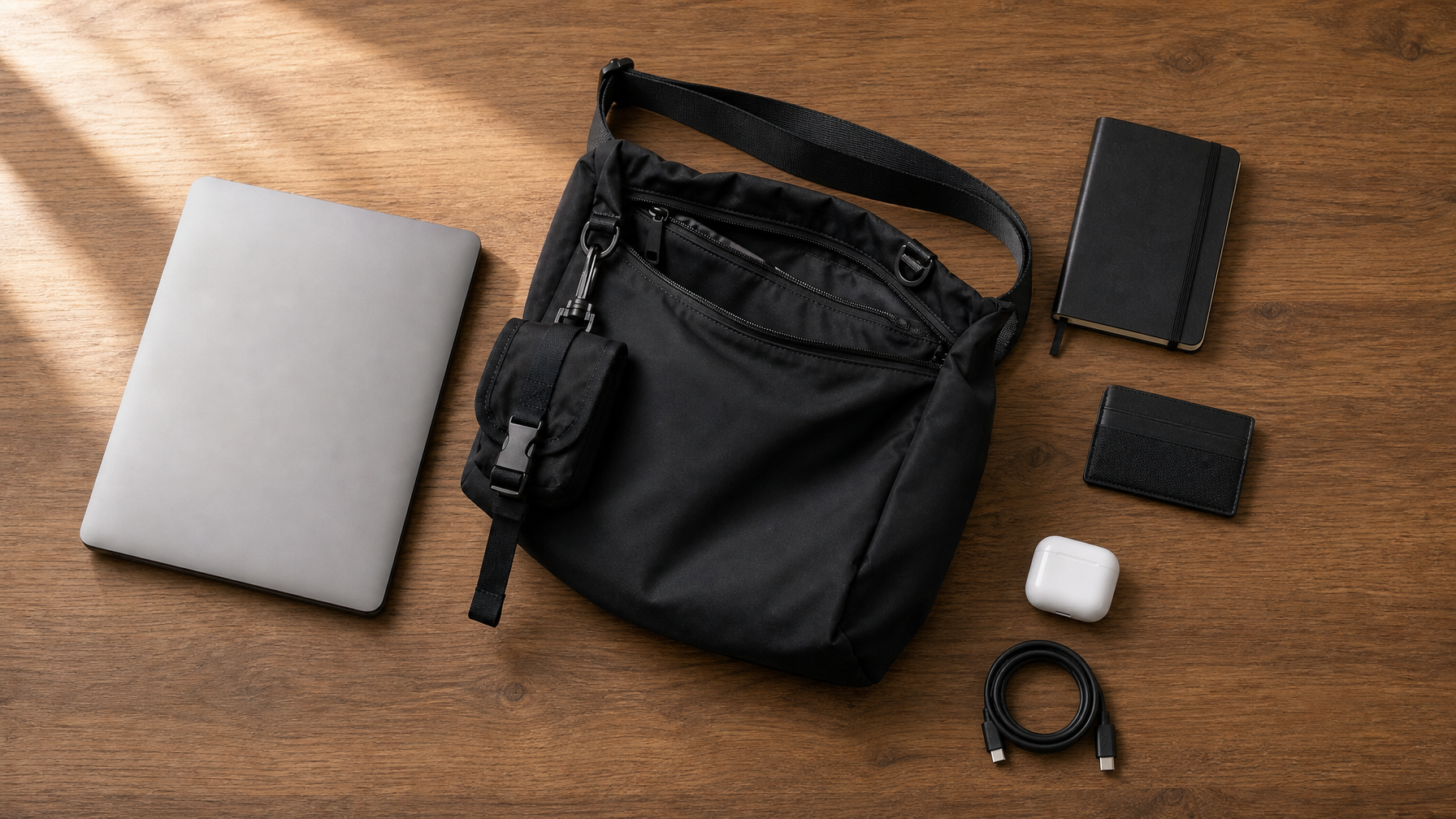
The Haven Messenger ($89) is the bag most daily commuters are actually looking for. It has a top-zip closure that opens the main compartment cleanly, a dedicated padded 14" laptop sleeve, a wide seatbelt-style shoulder strap with a side-release buckle, and a 600D Oxford waterproof shell — all at a price that doesn't require a waiting period. The interior has a mesh compartment, organizer pockets, and an anti-theft back zip pocket. A detachable front accessory pouch on a D-ring handles fast-access items independently. It weighs 1.21 pounds empty. It does everything a daily commuter bag should do, without the visual weight of a larger bag.
If you carry more — a larger laptop, more equipment, or a commute that transitions into a day trip — the Summit Messenger ($129–$149) steps up with a significantly larger footprint (42 cm wide vs. 33 cm), a fold-over flap closure with G-hook buckles, and a reflective safety strip useful for cycling commutes. It's the right choice when the Haven's capacity isn't enough.
For commuters who want something slimmer and more office-forward — less urban carry, more boardroom-adjacent — the Metro Laptop Brief ($79–$99) takes a different approach: a structured front-flap messenger form with a hasp-lock closure, a narrow profile, and an interior organized for professional daily carry. It weighs under 1.2 pounds and sits closer to the body than the Haven.
All three are built from Oxford fabric, priced under $150, and designed for daily use — not occasional use with the expectation of "treating it gently." For a broader comparison of options in the category, the best messenger bags for work guide covers the full landscape.
The Difference a Good Bag Makes
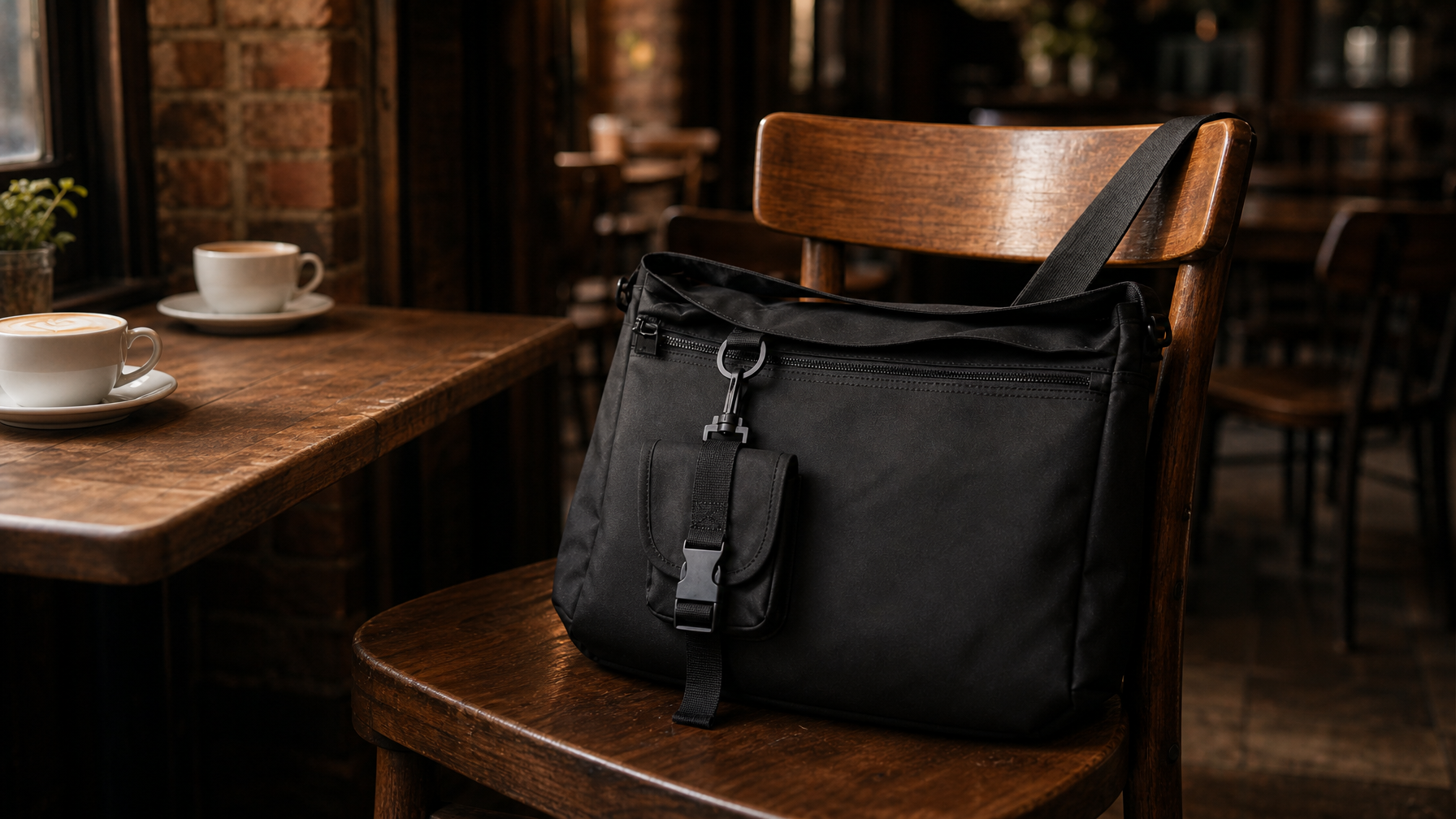
When a messenger bag works, something quiet happens: you stop thinking about the bag. You don't adjust the strap on the walk to the train. You don't rummage for your transit card. You don't arrive at the coffee shop and discover your charger has been riding on top of your laptop all morning. The bag does what it's supposed to do, and your attention goes to the rest of your day.
This is not a small thing. It sounds obvious until you've spent a year carrying a bag that requires constant management — adjusting, reorganizing, compensating for its weaknesses. A well-designed bag removes all of that overhead. After a week of use, you stop noticing the bag entirely. That's when you know it's working.
Most messenger bags disappoint because they were designed to photograph well, not to work well. A good one does both — but function comes first, and the design follows from it.
Frequently Asked Questions
Are messenger bags good for daily commuting?
Yes, when they're built for it. The key features that make a messenger bag functional for daily commuting are a wide shoulder strap (1.5"+ for comfort), a dedicated padded laptop sleeve, quick-access front pockets, and a weather-resistant exterior. Bags without these features are better suited for occasional use.
Is a messenger bag better than a backpack for commuting?
It depends on your commute. Messenger bags worn crossbody are faster to access (no removing from both shoulders), sit lower and more discreetly in crowded transit, and transition more naturally from transit to desk. Backpacks distribute weight better across both shoulders for heavier loads or longer walks. For a detailed comparison, the complete commuter bag guide covers both in the context of specific commute types.
How much should I spend on a good messenger bag for work?
A well-built daily commuter messenger bag typically falls in the $75–$150 range. Below that, you're likely compromising on strap quality, laptop protection, or material durability. Above $150, you're paying for brand premium or materials that aren't necessary for everyday urban carry. The Haven Messenger at $89 and the Summit Messenger at $129–$149 both sit at the functional part of this range.
What's the best messenger bag material for wet weather?
Look for 600D Oxford nylon or coated canvas. These materials resist light-to-moderate rain without soaking through. "Water resistant" and "waterproof" mean different things — Oxford shell bags are water resistant (rain won't penetrate), not waterproof (not rated for submersion). For daily city commuting, water resistance is sufficient and preferable to heavy waterproof treatments that add weight.