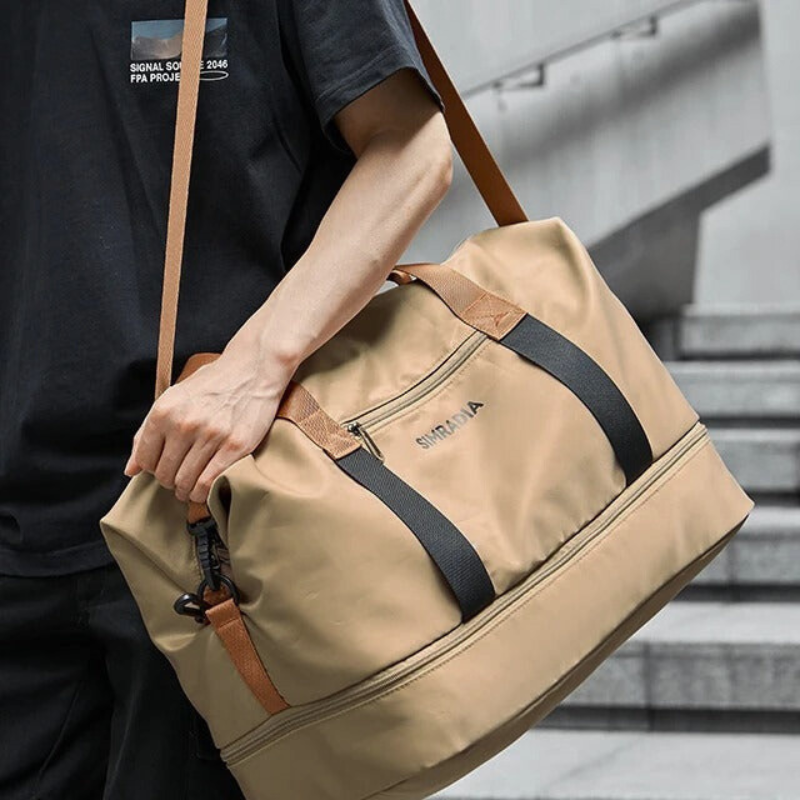



The Best Bags for Subway Commuters: What to Carry When Space Is Limited

Subway and urban rail commuting rewards bags that stay close to the body, open only when you choose, and never force a full unpack between stops. Space is scarce. Hands are often full. Your bag moves through crowds, turnstiles, and seats that were not designed around a large pack.
This guide is for people who ride dense transit most weekdays: subway, metro, underground, light rail, and crowded bus corridors that behave the same way. It is not a fashion roundup. It is a practical filter for choosing an urban commuter bag when every extra inch and every open zipper becomes a problem.
If you are still comparing formats more broadly, start with the complete commuter bag guide. If laptop days are your main constraint, pair this with how to commute with a laptop.
What subway commuting actually demands
1. A small footprint in motion
On a packed car, a bag that sticks out becomes other people's problem and yours. Crossbody messengers and slings keep the load on one plane of your body. Large backpacks can work if they sit high and stay zipped, but a wide pack that swings when you turn will catch poles, doors, and strangers.
Prefer:
- A silhouette that stays against your torso
- A depth you can predict when the bag is full
- A strap system that does not need constant readjustment mid-ride
2. Controlled access, not constant access
Transit is a sequence of short windows: tap card, board, stand, exit, walk a block, sit down at a desk. You need phone, wallet, and transit card without emptying the main compartment onto a seat.
A front pocket that holds phone, wallet, and card together is more useful than ten tiny pockets you never learn. Keep the main cavity closed while you move.
3. Security by position, not by marketing
"Anti-theft" labels vary. What matters on a train is simpler:
- Zippers you can feel and close
- A back pocket that sits against your body when the bag is worn crossbody
- A habit of wearing the bag in front in dense crowds when you want extra control
For a deeper feature breakdown, see anti-theft bags for commuters.
4. Weather that matches real sidewalks
Most urban bags are water-resistant shells, not sealed dry bags. That is enough for wet platforms and short walks if the top stays closed. Do not buy a stiff waterproof expedition pack for a ten-minute outdoor segment unless your city regularly soaks you for longer. For the language gap between water-resistant and waterproof, read waterproof vs water-resistant bags when it is live, or treat fabric claims as system claims: shell plus zippers plus habit.
Load rules for limited space
Build the bag around what you must have between home and desk, then stop.
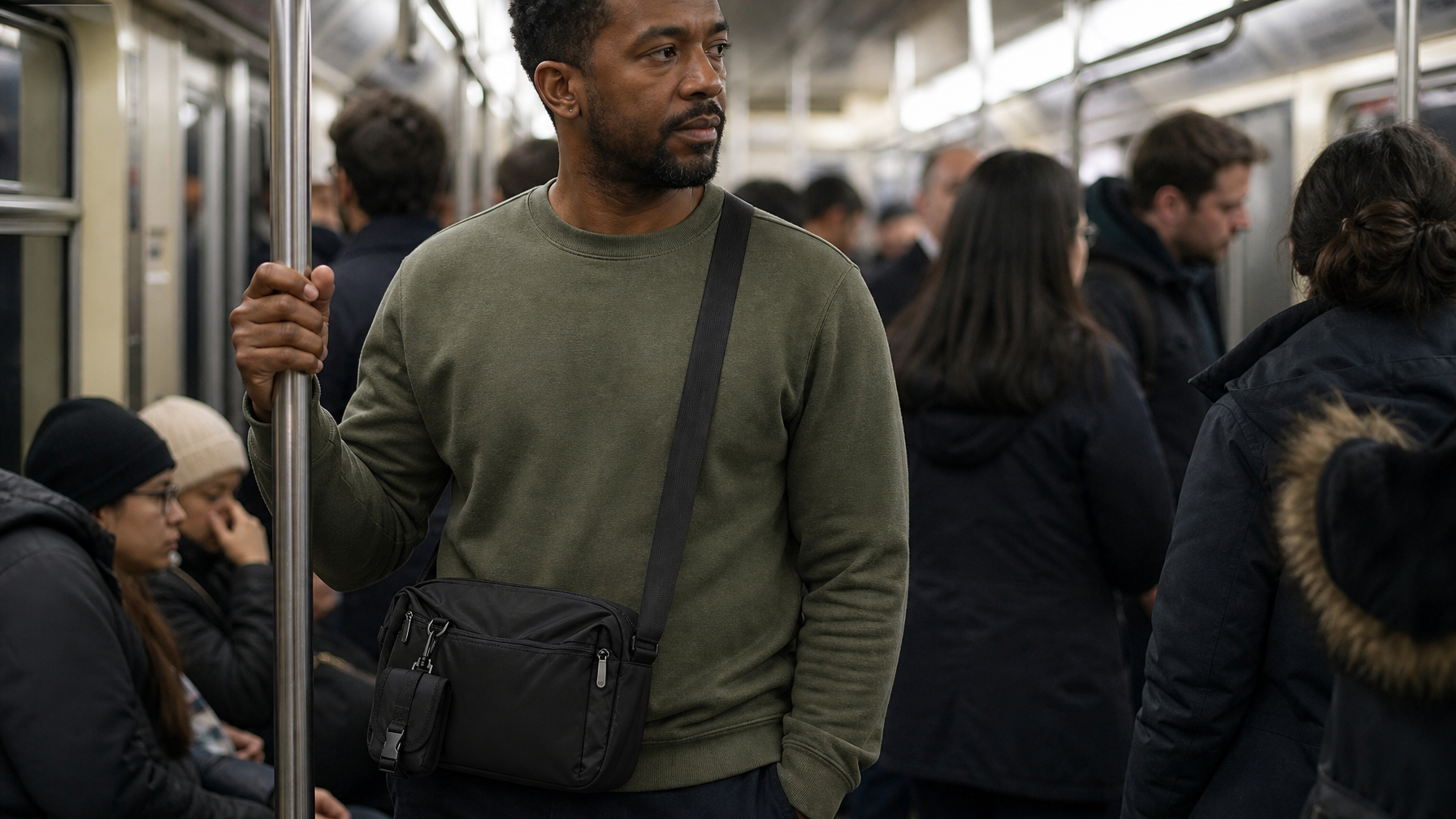
Always on you in outer pockets
- Phone
- Wallet or slim cardholder
- Transit card or phone wallet pass
- Keys (clipped or in a dedicated small pocket)
Main compartment only when needed
- Laptop up to the size your bag actually accepts
- Charger if you will not find power
- Headphones in a small pouch
- Light layer in wet or cold seasons
- Water bottle only if the bag has a stable place for it
Leave at home on pure transit days
- Backup shoes
- Full gym load (unless you deliberately run a gym-to-office system)
- Multiple notebooks "just in case"
- Extra cables you have not used in a month
Organization matters more than capacity. A clear system beats a bigger bag. Use the approach in how to organize your bag and the weekly habit in the Sunday bag reset.
Format choice: messenger, sling, or compact backpack
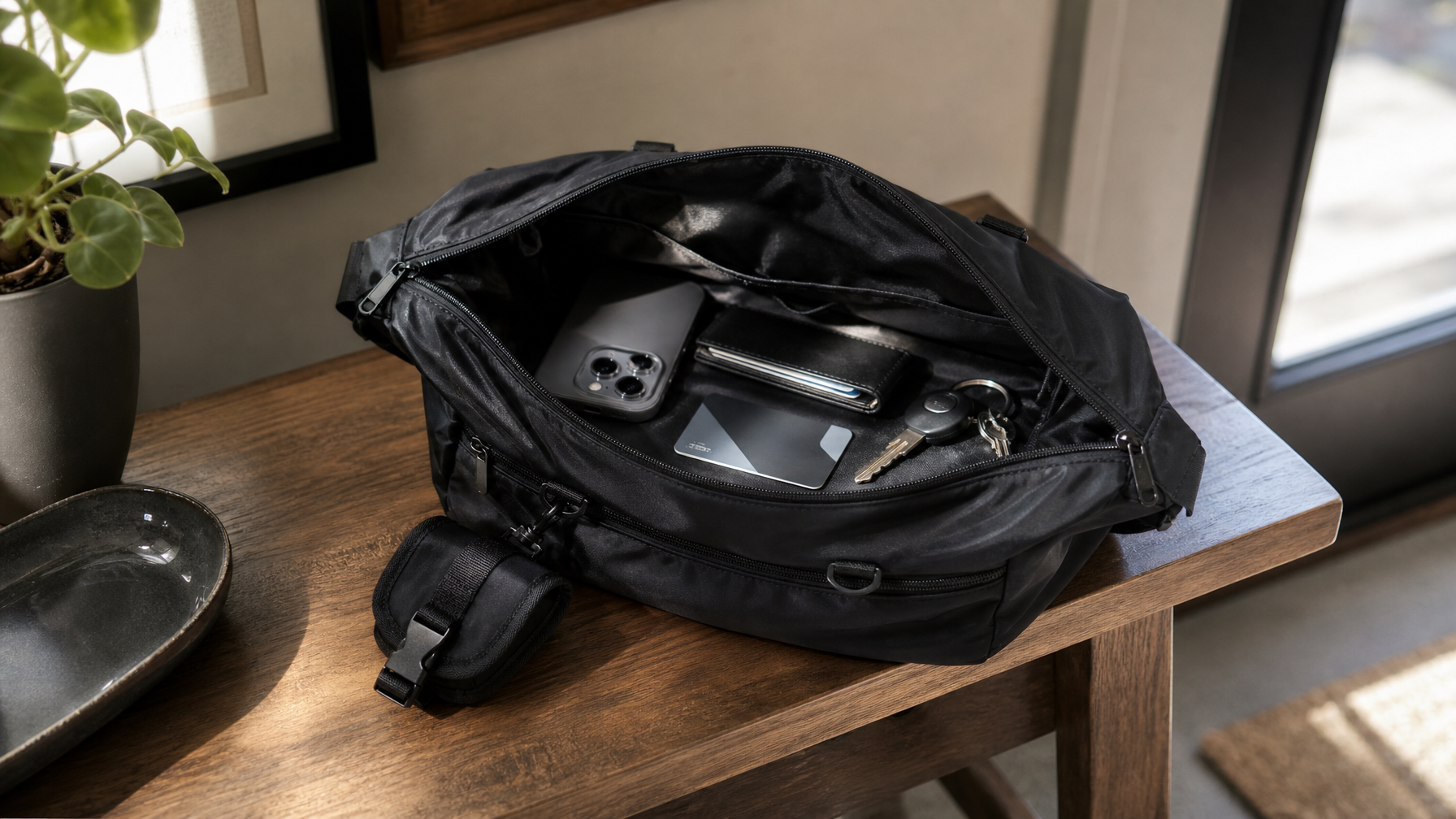
Crossbody messenger hybrid
Best when you carry a laptop some or most days and want one-sided access without removing a pack in a crowd. You can swing the bag forward on a seat or keep it closed at your hip while standing.
Watch for: shoulder fatigue on long walks with a heavy load. Adjust strap length so the bag sits stable, not bouncing at mid-thigh with every step. If shoulder stress is already an issue, fix load and strap fit before you abandon the format.
Sling / compact crossbody
Best on light days: phone-first days, short hops, or when you already store a laptop at the office. Lowest bulk through turnstiles and standing room.
Watch for: overpacking. A sling fails when it becomes a compressed backpack. If you need a full work kit daily, size up.
Compact backpack
Best when weight distribution matters more than front access, or when your route includes longer walks plus transit. Keep it high on the back and fully zipped in crowds. In dense cars, wear it on your front if the car is packed and you will stand for more than a few stops.
Watch for: blind rear zippers and a bag that forces you to turn sideways in every aisle.
For format tradeoffs beyond transit, see messenger bag vs backpack and sling bag vs crossbody when those pieces are in the Journal archive.
Field & Ash options for urban transit
Recommendations below match real catalog construction. Inventory and exact materials live on each product page.
Haven Messenger ($89), daily transit with laptop days
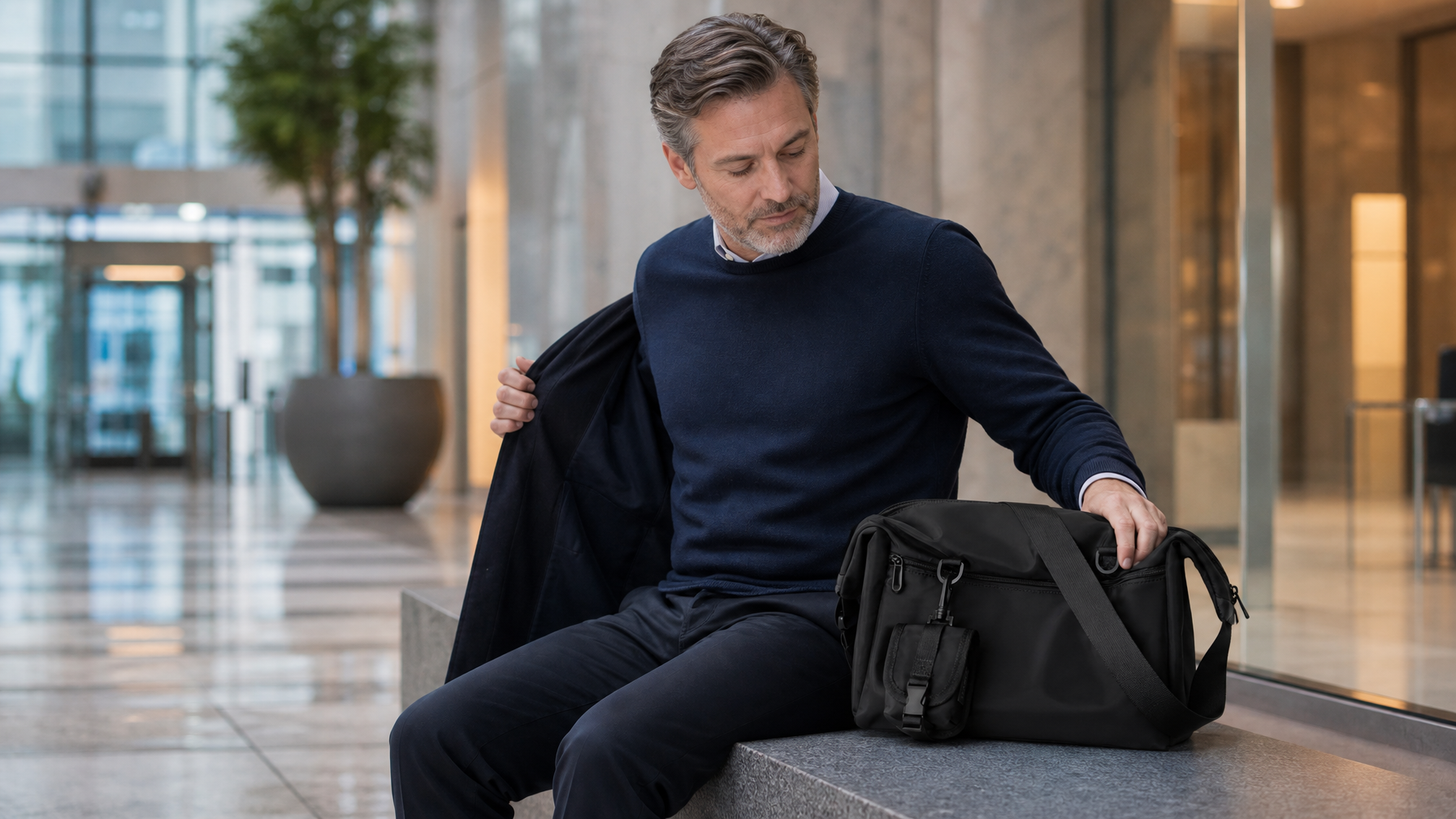
The Haven is a modern messenger hybrid with a top-zip closure and water-resistant 600D Oxford shell. The main compartment accommodates a laptop up to 14 inches directly (no padded dedicated sleeve). The front pocket fits your phone, wallet, and card together. A separate back pocket sits against the body when worn crossbody. The detachable pouch holds one small essential, such as AirPods.
For subway work, keep the top zip closed between stops, wear the bag where you can feel the back panel, and treat outer pockets as your tap-and-go layer. That habit matters as much as fabric.
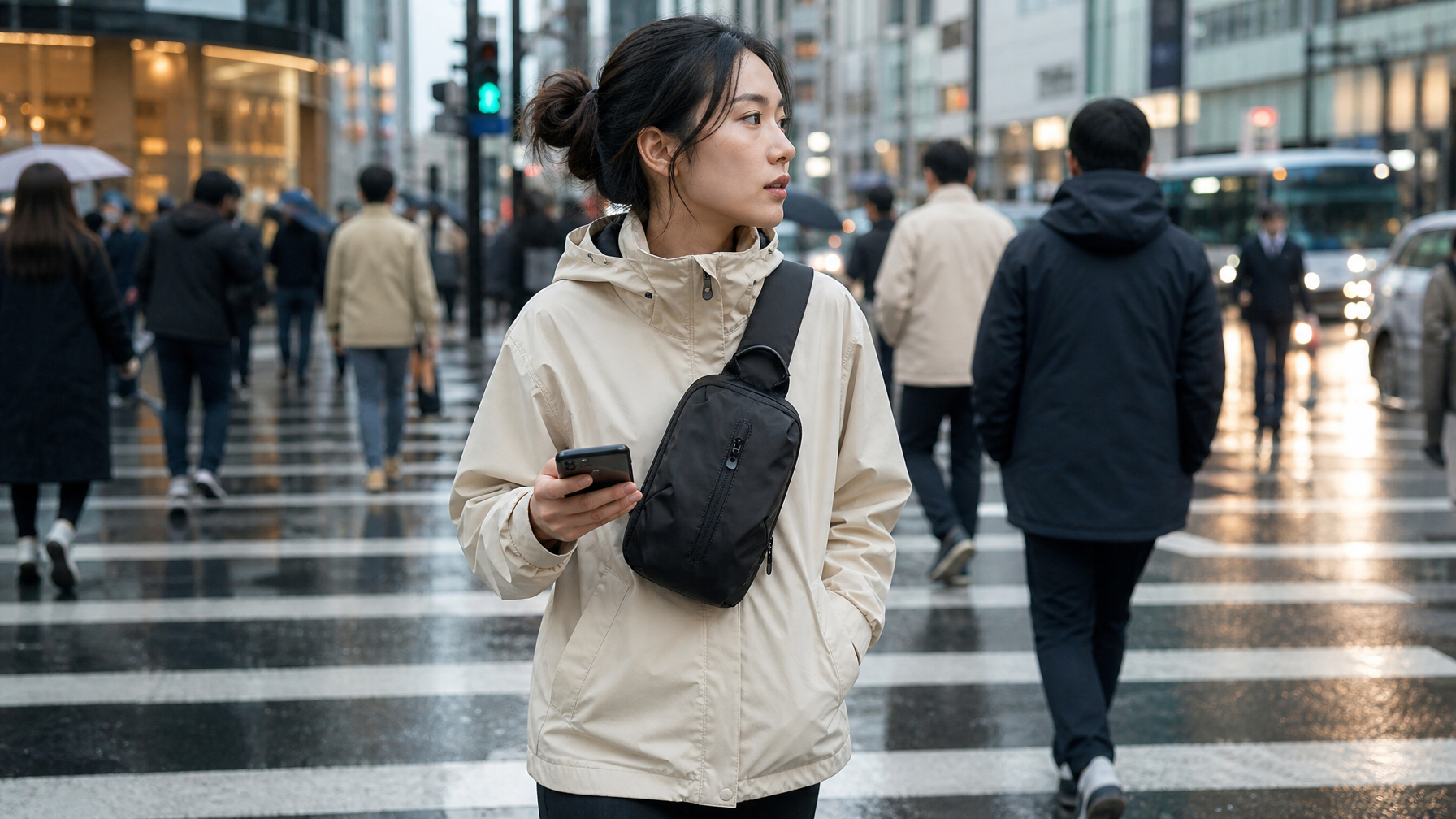
Commuter Sling ($89), lightest hands-free option
At roughly 0.66 lb, the Commuter Sling is built for days when the load is phone, wallet, keys, and a few small tools. It stays out of seat battles and moves cleanly through turnstiles. Use it when the laptop stays home or at the office.
Transit Crossbody ($69), slim entry crossbody
A lower-price crossbody option when you want a simple body-worn bag without messenger volume. Strong fit for errands-plus-transit days and short urban hops. Confirm current color and capacity notes on the product page before you treat it as a laptop bag; many riders use it as a personal-item layer rather than a full work kit.
Lite Backpack ($89), compact two-strap days
When you prefer backpack weight distribution but still want a lighter city pack, the Lite Backpack is the catalog's light everyday backpack option. Keep it zipped in crowds and avoid overfilling until it becomes a wide block behind you.
When you need more structure
The Summit Messenger suits a more structured professional profile on client-heavy weeks. The Apex Backpack fits heavier device loads when two straps and more organization matter more than the smallest possible footprint. Neither is required for a standard phone-plus-laptop subway commute if Haven already covers your load.
A simple decision framework
- Map your outdoor-plus-platform minutes. Short wet walks favor a closed water-resistant shell and good habits over expedition waterproofing.
- Count laptop days per week. Four or more: prioritize a messenger or compact backpack with a real device path. One or two: consider a two-bag system (work bag + light sling) as in hybrid work patterns.
- Audit peak crowding. If you stand in crush loads often, body-worn bags and front-wear backpacks beat anything that needs floor space.
- Fix organization before upsizing. Most "I need a bigger bag" complaints are unsorted pockets, not true volume failure.
- Test the close-and-walk rule. If you cannot leave the house with the bag fully closed and still reach phone and transit fare in under five seconds, redesign pocket layout.
Habits that matter more than the brand name
- Close the main compartment before you leave cover.
- Keep fare and phone in the same outer pocket every day.
- On dense cars, wear backpacks in front or keep messengers where you can feel the zipper line.
- Empty trash and receipts at the end of the day so the bag stays light.
- Run a short night-before prep so the platform is never your staging area. See night-before bag prep when it is in the Journal.
FAQ
What size bag is best for subway commuting?
Smaller than you think. Start from what you carry on a normal Tuesday, not a theoretical maximum week. If a bag only works when half empty, it is already too big for crush-load cars. For capacity framing, see what size bag you actually need for commuting.
Is a backpack bad on the subway?
No. A compact, fully zipped backpack is fine. Problems start when the pack is wide, half open, or worn in a way that blocks aisles. In peak crush, move it to your front.
Do I need a dedicated anti-theft bag?
You need closed zippers, awareness, and a design that keeps valuables off the open rear face. Specialized locks help some riders; position and habit help everyone.
Can one bag cover gym and subway office days?
Yes if you deliberately build a transition load and accept more volume. That is a different system than a pure transit essentials bag. See the gym-to-office approach in the Journal when you need both halves in one carry.
Bottom line
The best bag for subway commuting is the one that stays closed, stays close, and still gives you phone and fare without a full unpack. Choose format from your real load and crowding pattern. Then practice the same pocket map every day until the ride is boring in the best way.
Carry deliberately. Move lightly. Let the bag disappear into the commute.