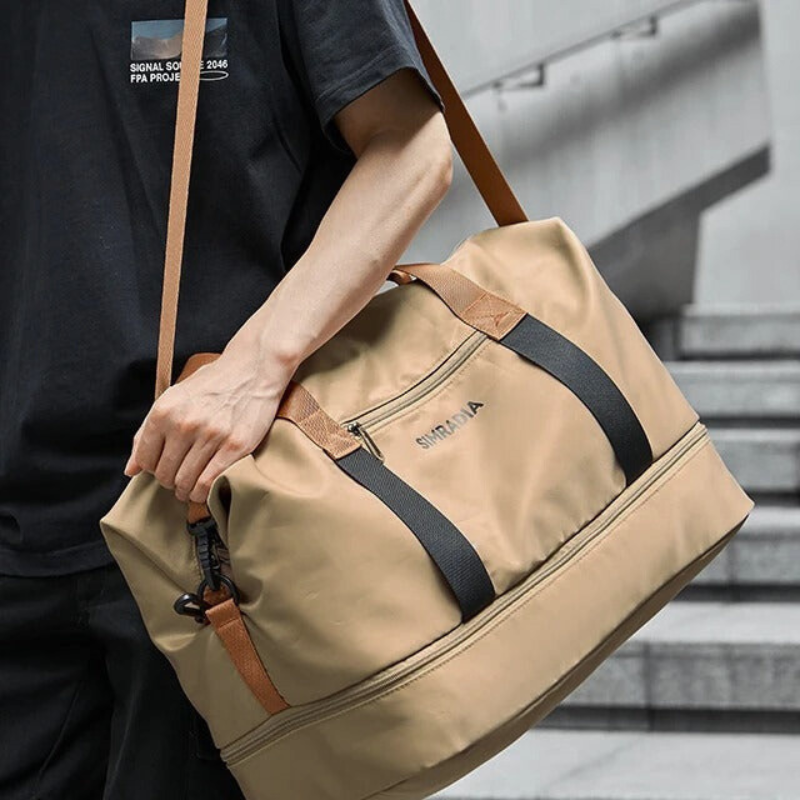



Waterproof vs Water-Resistant Bags: What Actually Matters for Your Commute

Most commuter bags are sold with a weather promise that sounds absolute. In practice, the words on the tag mean different things, and the difference shows up the first time rain sits on a zipper line for twenty minutes.
Water-resistant and waterproof are not interchangeable. One describes fabric that slows water. The other describes a system that keeps water out under a defined set of conditions. For daily city movement, most people need the first, with a few habits that close the gaps. A smaller group needs the second because their route, climate, or cargo makes partial protection a real risk.
This guide explains the language, the failure points that matter more than marketing copy, and how to choose a waterproof laptop bag or water-resistant commuter bag without overbuying.
The short definitions that actually help
Water-resistant means the shell sheds light rain and splash for a limited time. Coatings, denser weaves, and water-repellent finishes help droplets bead and roll off. Seams, zippers, and open tops remain the weak points. A closed water-resistant bag handles a wet sidewalk walk. It is not a sealed vessel.
Waterproof means the construction is designed to keep water out under more demanding exposure: heavier rain, longer dwell time, or immersion claims when a brand publishes a real rating. True waterproof bags usually combine waterproof fabric with sealed or taped seams, covered or waterproof zippers, and a closure system that does not leave an open channel into the main compartment.
Industry explainers from pack and outdoor brands make the same distinction: fabric can be waterproof while the finished bag still leaks at openings if the design is incomplete. Treat the whole bag as a system, not a single fabric claim.
Why commuters get misled
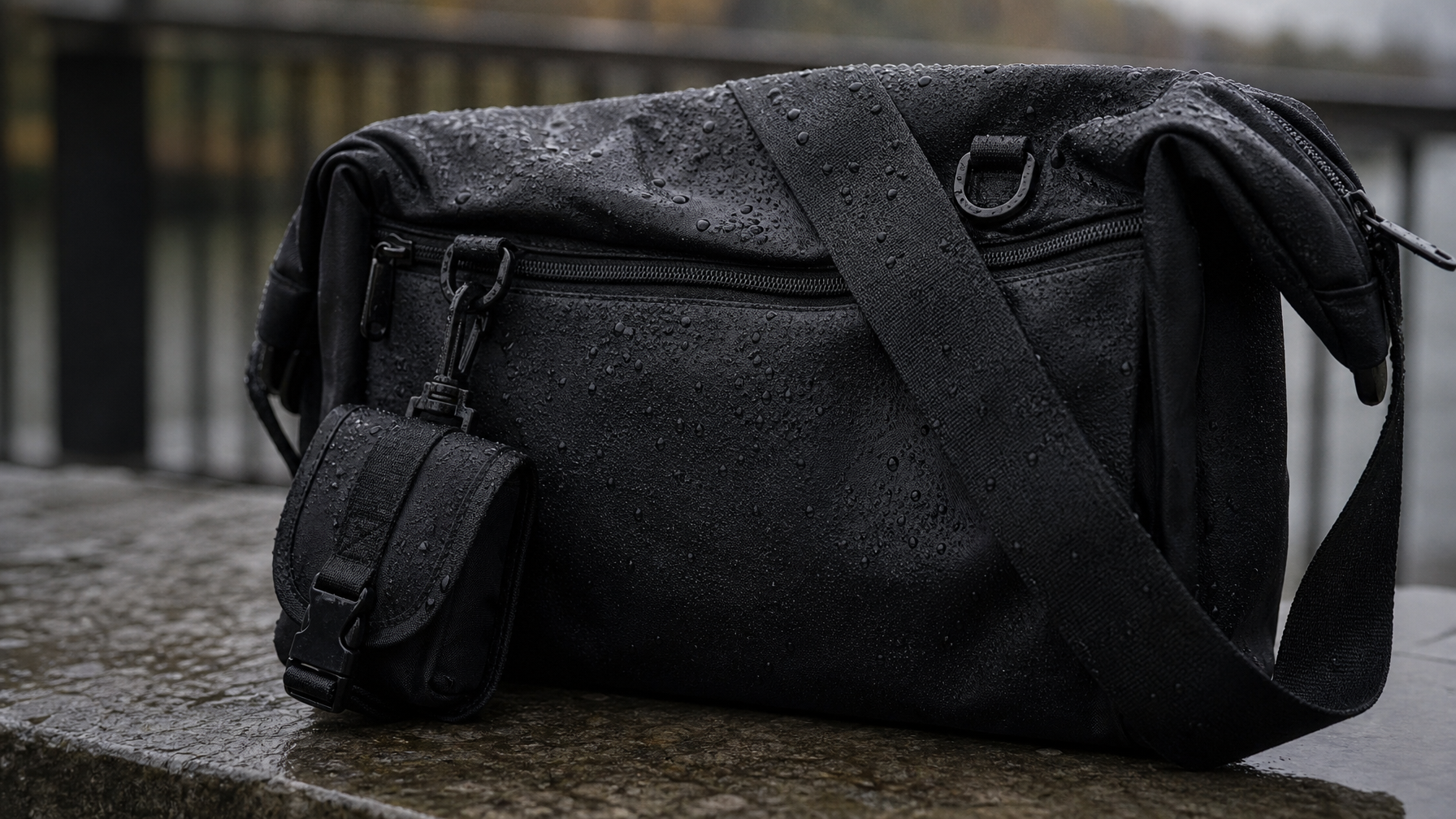
Product pages compress nuance. "Weatherproof," "rain ready," and "waterproof Oxford" often describe the face fabric only. That is still valuable. It is not the same as a dry bag for a ferry deck.
Three gaps create most wet-day failures:
- Open or lightly covered zippers. Water follows the zipper teeth when the bag sits in rain at a bus stop.
- Untaped seams. Stitch holes are tiny channels. On a long walk in steady rain they add up.
- User behavior. An open top, a bottle that leaks inside, or a bag left flat in a puddle defeats almost any shell.
If your commute is mostly covered transit with short outdoor segments, water-resistant construction plus a closed top usually matches the job. If you walk twenty minutes in open rain several times a week, or you ride a bike without a rain cover, move toward waterproof construction or add a pack cover.
What matters more than the headline word
1. Closure first
A top-zip that you actually close beats a flap left half open. Before you compare fabrics, ask whether the bag has a default closed state you will use every day. Habit beats millimeter ratings.
2. Laptop path
Laptops fail from side soak and zipper drip more often than from fabric "breathing." Keep devices away from exterior zip lines when possible. In a messenger, the main compartment should stay zipped in rain. In a backpack, a dedicated device compartment with a covered entry helps when the brand actually builds one.
3. Fabric type in plain language
- Coated Oxford and similar dense synthetics: strong everyday water resistance for splash and short rain. Common on urban messengers.
- Waterproof nylon with taped construction: better for heavier exposure and longer wet walks.
- Canvas without a serious coating: looks good dry; absorbs more when wet unless treated.
4. Weight and stiffness tradeoffs
Full waterproof systems can feel stiffer and warmer on the back. Water-resistant urban bags stay lighter and quieter for office days. Choose for the weather you actually face most weeks, not the worst storm of the year, unless that storm is frequent where you live.
A practical decision framework
Use this sequence:
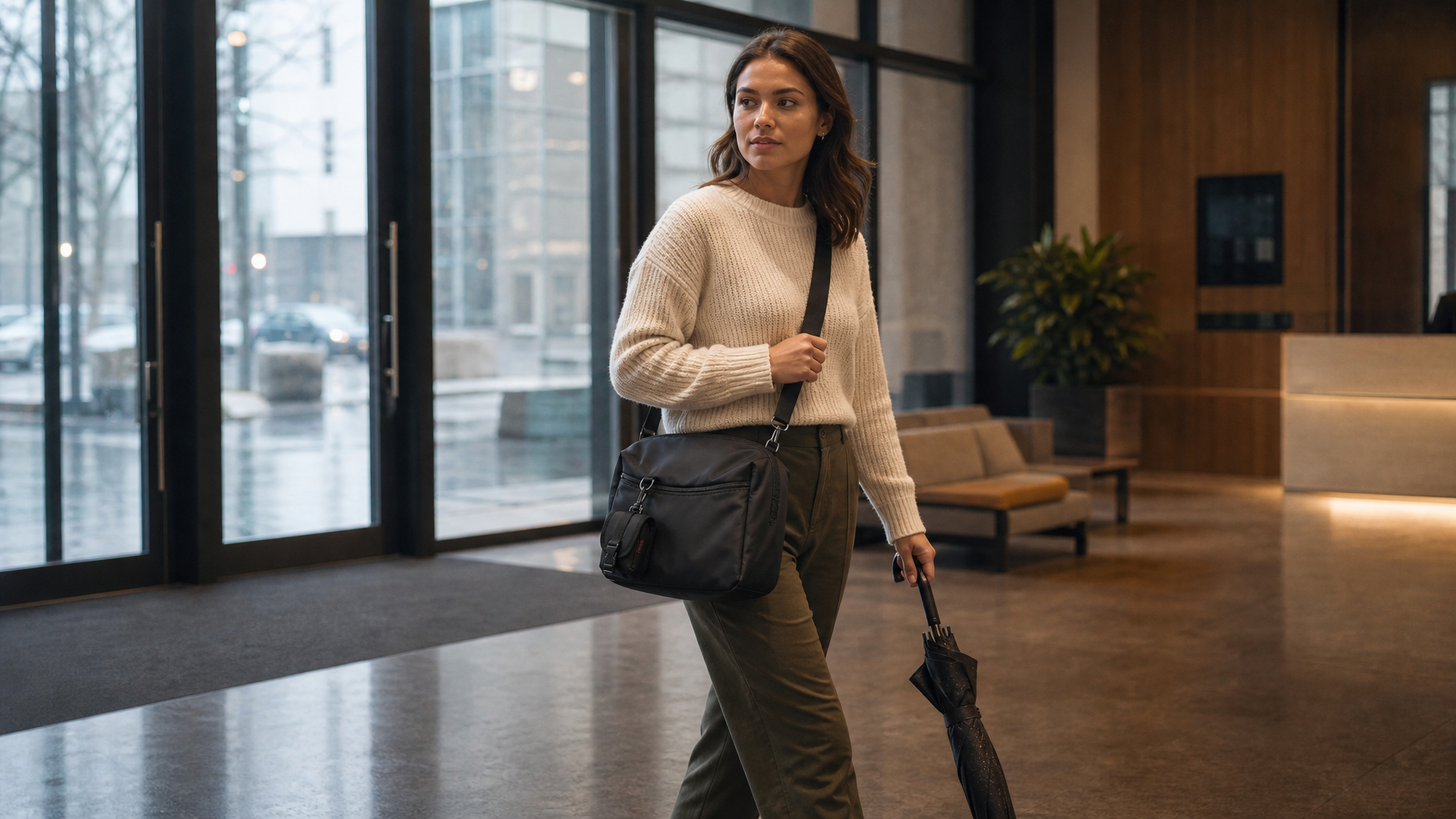
Step A, Map exposure. Count outdoor minutes in rain on a typical bad day. Under ten minutes of light rain: water-resistant is usually enough. Over fifteen minutes of steady rain, or frequent bike rides: prioritize waterproof systems or a cover.
Step B, Rank cargo risk. A phone in a front pocket is easy to wipe. A laptop with no sleeve buffer is expensive. Higher cargo risk pushes you toward better closures and, when needed, waterproof shells.
Step C, Prefer honest labels. Prefer brands that say water-resistant when that is accurate. Overclaiming waterproof without sealed construction is a red flag for other quality claims too.
Step D, Add one behavior. Close the bag before you leave cover. Stage a slim packable cover in winter if your city soaks walkers. Wipe the bag when you arrive so water does not sit on zippers all morning.
For broader commute setup context, see the complete commuter bag guide and how to commute with a laptop. For organization that keeps wet and dry items from mixing, use how to organize your bag.
Field & Ash options by weather job
These recommendations match construction to use. They are not a claim that every bag is a dry bag.
Water-resistant everyday commute
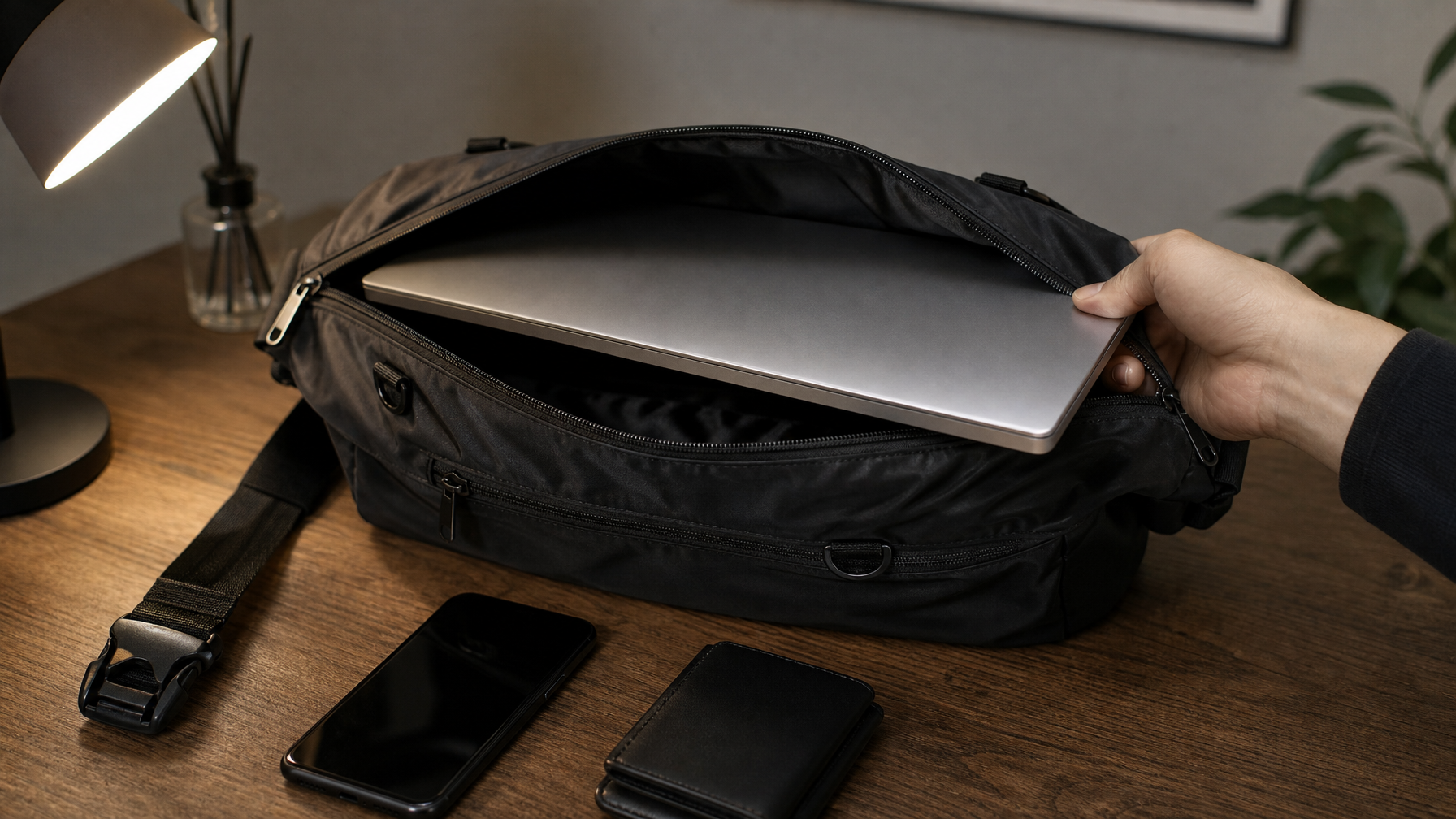
The Haven Messenger uses a water-resistant 600D Oxford shell. Closed, it handles ordinary wet sidewalks and short rain segments on a city commute. The main compartment accommodates a laptop up to 14 inches directly (no padded dedicated sleeve). The front pocket fits your phone, wallet, and card together so small items stay out of the main cavity. Keep the top zip closed in rain. That habit matters as much as the fabric.
The Summit Messenger is another Oxford-shell messenger option when you want a more structured professional profile with the same everyday water-resistant logic: close it, keep the outdoor segment short, wipe on arrival.
The Metro Laptop Brief suits lighter document-and-device days. A slim brief is easy to tuck under a coat or hold close to the body in a short dash between door and car. It is still water-resistant thinking, not immersion-proof.
Higher exposure / heavier load
The Apex Backpack uses a nylon exterior specified for weather-facing daily loads, with product care language that is water-resistant for light rain and not fully waterproof or submersible. Choose it when your route keeps you outside longer, you carry more gear, or you want a backpack form with more protective architecture than a light urban daypack.
The Transit Pack is the expandable travel-forward option when the day mixes commute and trip packing. Oxford exterior still rewards a closed top and common-sense rain behavior; treat it as organized capacity first, weather second, and add a cover if your itinerary includes open-air walks in heavy rain.
Habits that beat an upgrade you do not need
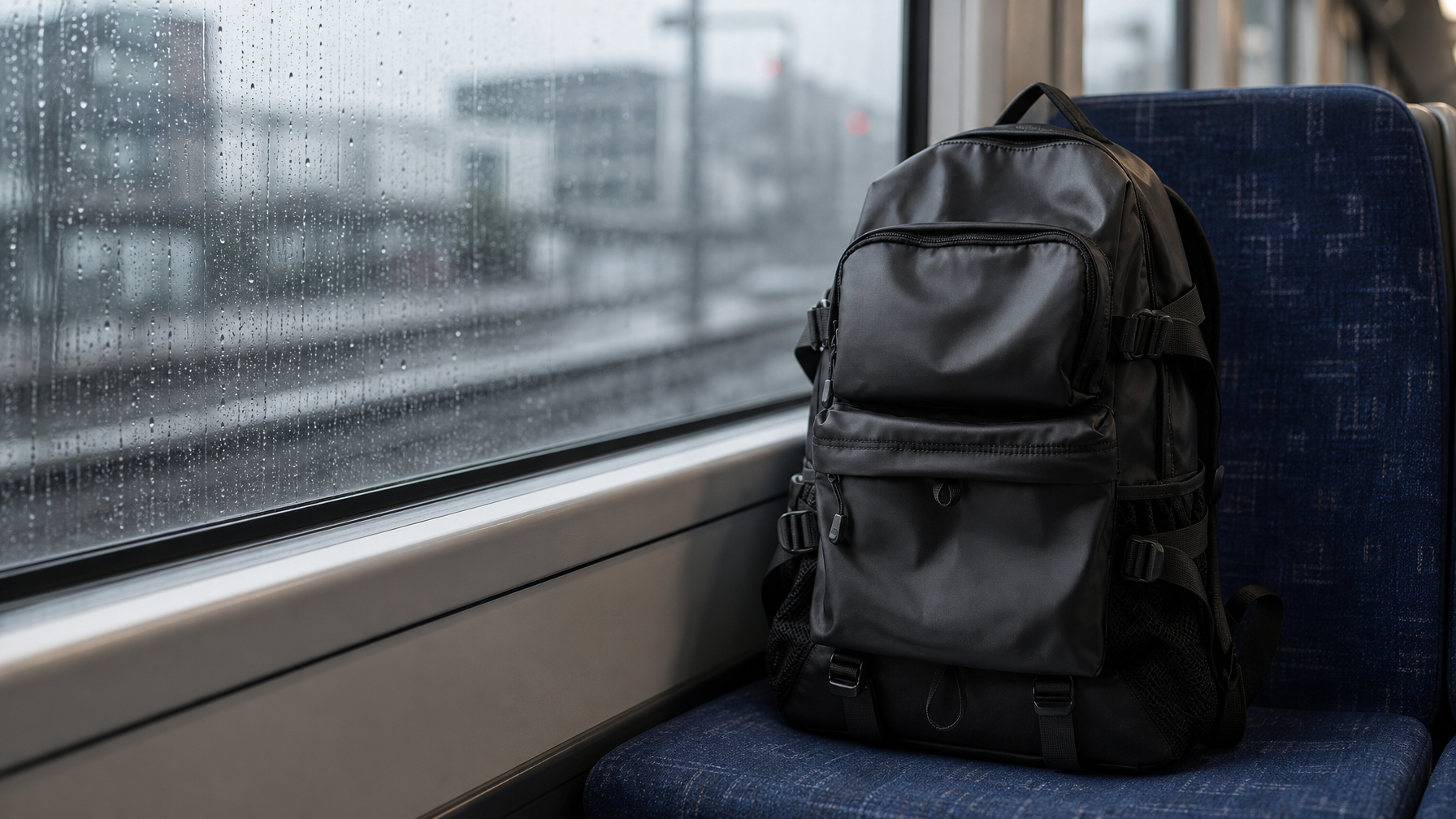
- Close zippers before you step outside.
- Keep electronics in the most protected compartment, not pressed against an exterior zipper line.
- Use a thin dry pouch or sleeve for paper if your city rains sideways.
- Empty wet bottles before they share space with a laptop.
- Dry the exterior when you arrive so water does not migrate overnight.
If mornings are chaotic, pair weather prep with a short evening ritual and a weekly restage using the Sunday bag reset to keep your default kit honest.
FAQ
Is a water-resistant bag enough for a laptop commute?
Often yes, if outdoor rain segments are short, the bag stays closed, and you are not sitting the pack in standing water. For long exposed walks or cycling in storms, step up construction or add a cover.
Does waterproof fabric alone make a waterproof bag?
No. Seams, zippers, and closures complete the system. Fabric is one layer of the answer.
Should I buy a dry bag style pack for city work?
Only if your life includes serious water exposure. Most office commuters gain more from a water-resistant bag they close every day than from a stiff waterproof pack they leave half open.
What about "weatherproof" on a product page?
Treat it as marketing shorthand. Ask what is coated, what is taped, and how the main compartment closes.
Bottom line
Buy for the rain you meet on purpose, not the word that sounds strongest in a title. Water-resistant urban bags with honest closures cover most city days. Waterproof systems earn their keep when exposure is long, frequent, or paired with expensive gear you cannot dry at a desk.
Choose the shell that matches your route. Close it. Keep the laptop out of the zipper line. That combination protects more commuters than a single marketing adjective ever will.