


How to Stay Focused When Your Office Changes Every Day

You figured out how to work from anywhere. The problem is that "anywhere" keeps performing differently. The coffee shop that worked perfectly on Tuesday is too loud on Thursday. The hotel desk is fine, but something feels slightly off. The coworking space is good until the open-plan seating puts you next to someone on a three-hour video call. The location keeps shifting, and your focus keeps resetting with it.
This isn't a discipline problem. The difficulty of staying productive across shifting environments is a real cognitive challenge — one that fixed offices quietly solve without anyone realizing it. When the environment changes every day, the work of getting into focus mode shifts from passive to active. Understanding why that happens is the first step to working around it.
Your Environment Is Doing More Work Than You Think
Researchers describe it as context-dependent performance: your brain stores behavioral patterns alongside the physical context where those behaviors were practiced. A familiar workspace doesn't just hold your laptop — it holds accumulated signals that trigger a mental state. The ambient noise level, the direction of the light, the height of the desk, even the particular quality of the air in a room. Over time, those cues bundle together and eventually just sitting in the same chair becomes enough to signal that it's time to concentrate.
This is one of the underappreciated advantages of a fixed office. The building isn't just a place to park yourself — it's a machine for producing the cognitive state that leads to focus. Every time you walk through the same door, your brain picks up roughly where it left off. The pattern fires automatically, without effort on your part.
When you work across multiple locations, that automatic trigger disappears. In its place, you face what you might call a context tax: the mental overhead required to rebuild a focused state from scratch, in a space your brain has no prior association with. Most location-flexible workers experience this as an unproductive first thirty minutes that they blame on weak coffee or slow WiFi. The real issue is that the startup cost is cognitive, not technical. Your brain hasn't recognized the environment yet.
You Can Build the Trigger Without the Building
The encouraging part is that you can manufacture the environmental cues your fixed-office colleagues get for free. Your brain doesn't actually require a specific location to enter work mode — it requires a consistent sequence of actions that it has learned to associate with work mode. The office building works because it always contains the same chain: you commute, you arrive, you sit down, you open your laptop. That chain is the trigger. The building is just the place where that chain has been repeated a few hundred times.
You can transplant the trigger. The key is to make your first five minutes at any location identical, regardless of where you are.
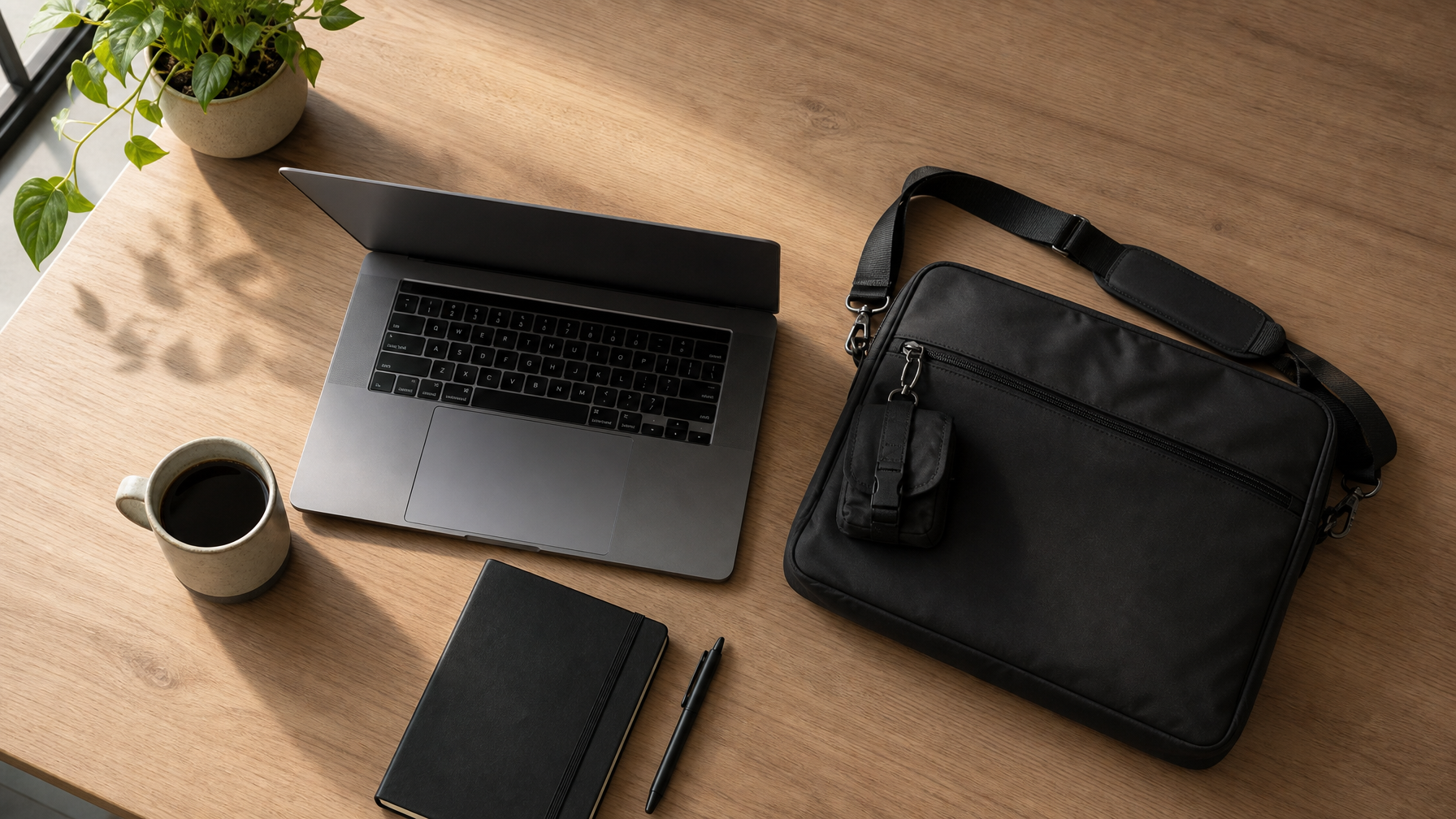
A reliable arrival ritual might look like this: sit down, place your bag in its spot, set your phone to Do Not Disturb, put your headphones in even if you're not playing anything, write the three specific things you're doing this session, and only then open your laptop. The exact steps matter less than their consistency. Repeat this across enough locations over enough weeks, and your brain starts to recognize the pattern as the work signal. The café, the coworking space, the hotel room — they stop mattering as individual places, because the ritual runs the same in all of them.
Sound follows the same logic. A single repeated playlist or consistent ambient track used across all your work sessions becomes a reliable cognitive anchor over time. The music trains the association. Eventually, pressing play becomes part of the startup sequence — the brain hears the first few bars and begins to orient toward focus the same way it once oriented toward the lobby of your old office building.
If you're working primarily from cafés, there's a practical system for this in the coffee shop productivity guide — the principles transfer to any shifting environment, with the arrival ritual as the through-line.
How to Choose a Location That Actually Works
Work-from-anywhere flexibility rewards the people who are genuinely selective about where they go. "Anywhere" doesn't mean every location is equivalent — it means you have the freedom to choose well, and that freedom is worth using.
A few factors make a measurable difference once you know to look for them.
Seating angle, not just seating area. Sitting with your back to a wall reduces movement in your peripheral vision, which your brain cannot fully tune out even when you're concentrating. Faces and bodies passing at eye level behind your screen are harder to filter than a stationary surface. A café with the right orientation can outperform a purpose-built coworking space where you've ended up facing foot traffic. Before you settle in, take thirty seconds to look at the seating options rather than just taking the first available spot.
Noise floor, not silence. Research on this is more nuanced than the instinct toward quiet. Moderate ambient noise — roughly the level of a typical café — supports creative thinking, writing, and planning tasks. Silence is better for deep analytical focus, line-by-line code review, or anything requiring intense logical precision. Libraries and hotel rooms are best for that kind of work. Knowing what type of work is on the agenda before you choose the location is a small habit with real compounding returns.
Power access before you commit. Before sitting down, confirm you can reach an outlet without moving. This sounds trivial, but a slowly draining battery creates a background anxiety — the low-level awareness that you'll need to relocate eventually — that quietly costs focus well before the battery becomes an actual problem. Solving it at the door is faster than solving it once you're set up.
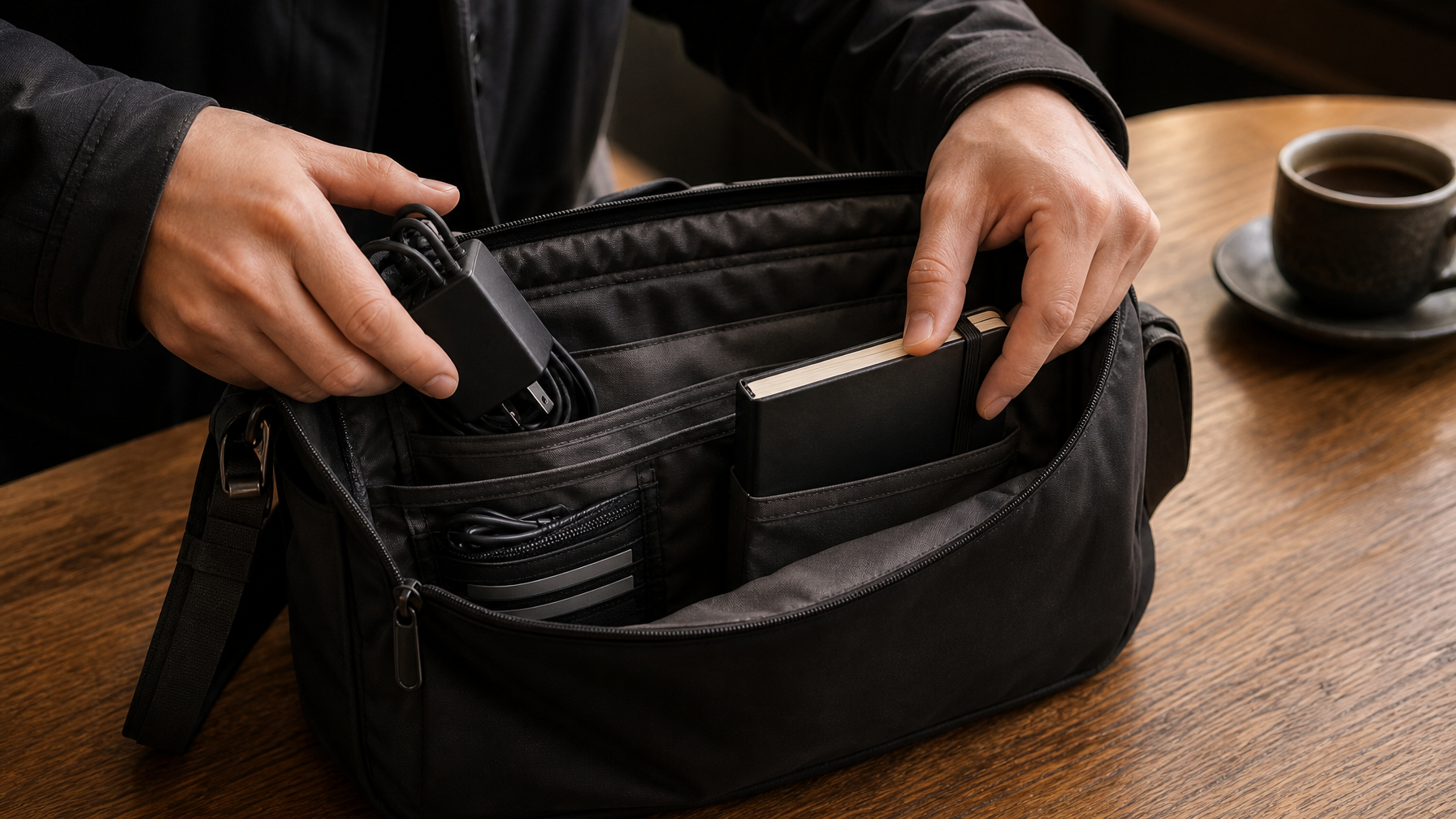
Natural light in front of you, not behind your screen. Light coming from behind your screen creates a contrast that strains your eyes within an hour. A position where natural light comes from the side or from in front of you is meaningfully better for a sustained three-hour session. The hotel desk beside a window, the café seat near the front — these aren't just aesthetically pleasant, they're structurally better for extended work.
Your Carry Setup Is Part of the Focus System
There's one variable in a shifting work environment that you can fully control from the start: what you bring with you and how it's organized.
Most location-flexible workers underestimate how much time they lose to physical setup at each new location. Three minutes looking for the charger. Two minutes untangling earbuds. One minute realizing the notebook is at the bottom of the bag under everything else. That's not just time — it's a mental reset that breaks the arrival ritual before it can take hold. You arrive at the café, fumble through your bag for five minutes, and by the time you're set up, the context tax has been charged twice: once for the new environment, and again for the disorganized entry.
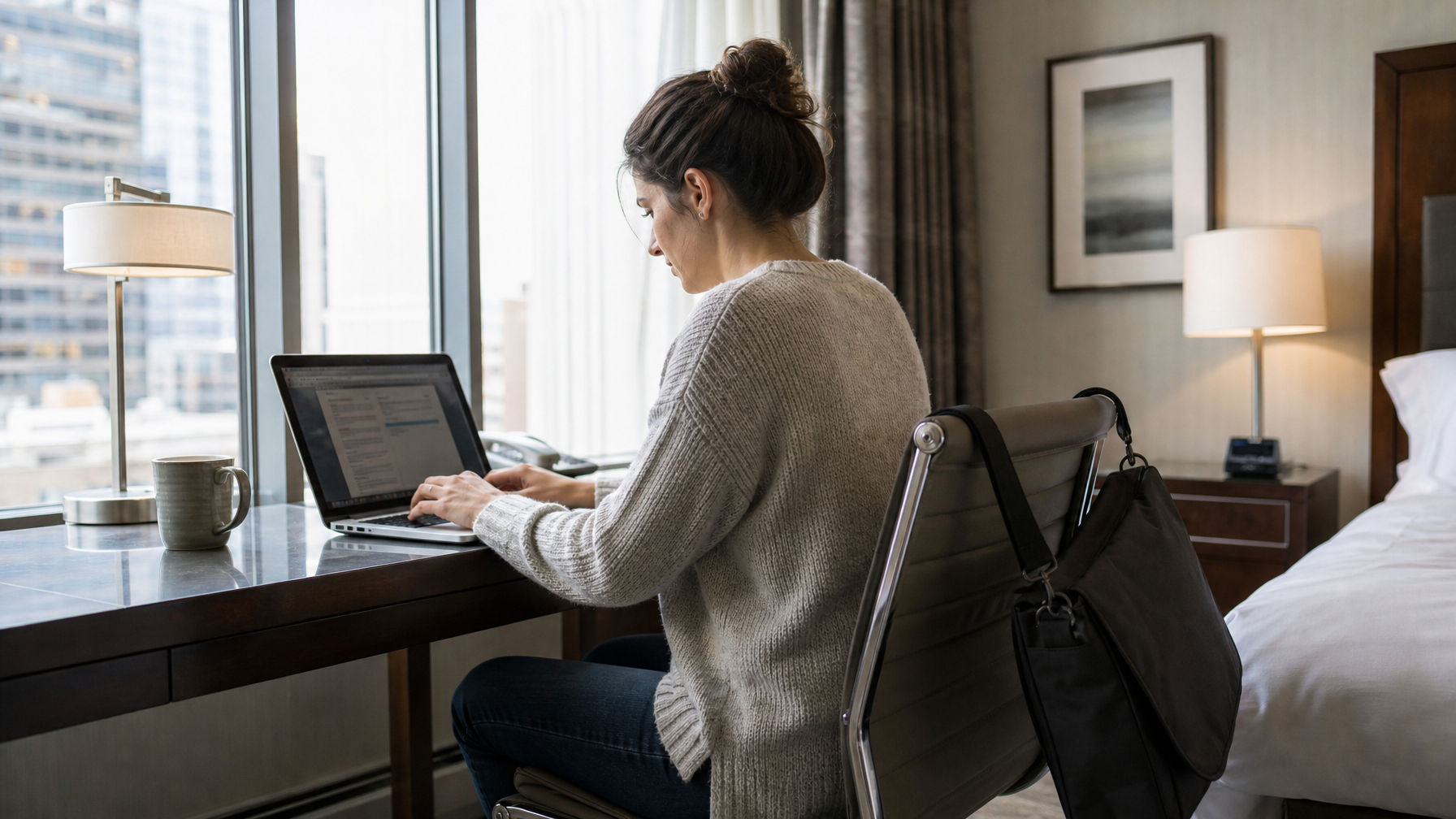
The carry setup that prevents this is simpler than it sounds. Every item has a permanent home in the bag, and the bag is repacked the same way every time. The charger always goes in the same pocket. The headphones always go in the same compartment. The notebook is always in the same slot. When the setup is consistent, arriving anywhere starts to feel like setting up from the same home base — because it is.
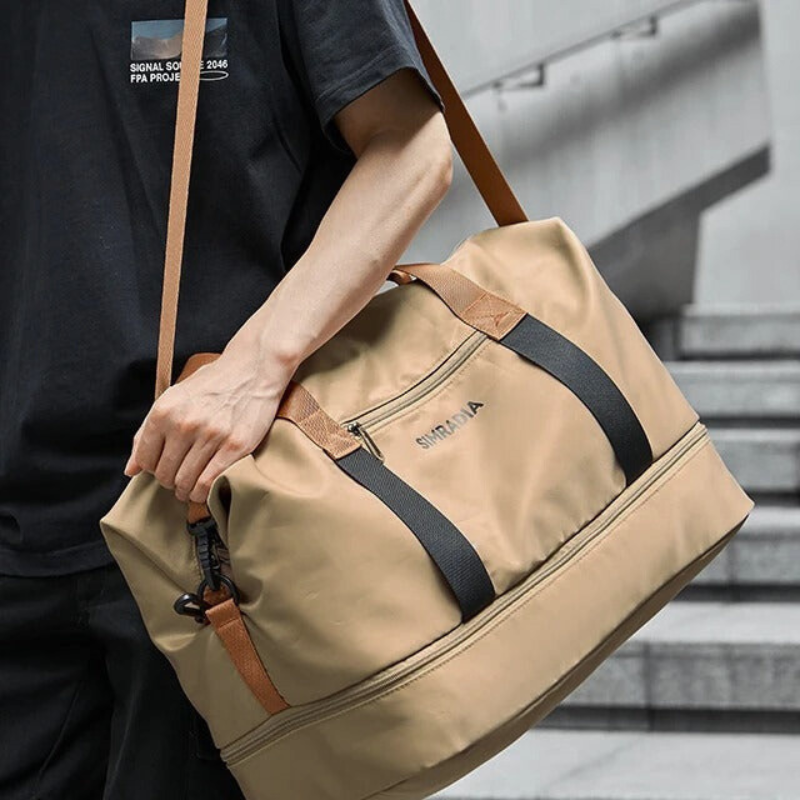
For most location-flexible workers, a structured bag with a clear interior layout is worth more than any single productivity app. The Metro Laptop Brief is built around this principle: a front zip pocket for the items you access constantly — phone, transit card, cable — a padded main compartment for the laptop, and a hasp-lock closure that stays shut without thinking about it. Slim enough that it doesn't signal "road warrior" in a client meeting or a coworking space where you're just settling in.
For days with more ground to cover — a client office in the morning, a coworking space in the afternoon, a commute back in the evening — a bag with more organized capacity earns its place. The Haven Messenger adds an anti-theft back pocket for documents and transit cards, an interior organizer panel for the smaller items that tend to drift, and a detachable front pouch for the things you reach for without opening the main bag. Crossbody carry keeps everything close in a crowded lobby or on the commute between locations. The organized interior means you can run the arrival ritual without slowing down. For a system-based approach to what goes inside, the work-from-anywhere bag guide covers the full carry setup in detail.
Carry Less to Set Up Faster
One pattern that separates people who work well from anywhere from those who find it consistently difficult is how much they carry. The instinct when you have no fixed office is to bring everything: every adapter, every cable, every notebook, the laptop stand, the backup battery, the spare earbuds. The bag becomes a mobile desk drawer, and the setup ritual at each location turns into an unpacking and repacking exercise.
The better approach is to define the minimum kit that handles every situation you actually encounter — and only carry that. For most people who work primarily on a laptop, the floor is: the laptop, its charger, one set of earbuds, one notebook, and a pen. That handles the vast majority of real-world scenarios. Everything else — adapters, backup batteries, extra cables — only travels when the specific itinerary calls for it.
A deliberately minimal carry doesn't just reduce weight. It reduces the mental overhead of keeping track of everything, and it makes the arrival ritual faster because there are fewer items to position. A bag you can verify at a glance — laptop, charger, headphones, notebook — closes the setup loop in under sixty seconds.
The principle behind this is the same one that makes capsule carry work: define the set once, trust it, and stop managing it. The carry becomes invisible — not because it's absent, but because it never fails you. That's the version of "work from anywhere" that actually delivers on its promise.
Frequently Asked Questions
Why does it take me so long to focus whenever I move to a new location?
It's a cognitive startup cost sometimes called the context tax: your brain needs to form a basic orientation to the new environment before it can fully allocate attention to work. This isn't fully avoidable, but a consistent arrival ritual — the same five actions in the same order, every time — minimizes it by giving your brain a familiar pattern to follow even in an unfamiliar space.
Is it better to always work from the same type of location, or is variety fine?
Consistency within a type helps early on, before your arrival ritual is established. Once the ritual is solid, it acts as the trigger, and the specific location matters less. The practical exception is task type: quiet spaces support deep analytical focus, while moderate ambient noise supports writing and creative work. Matching location type to what you're actually doing that day is a small habit with real returns.
What's the minimum carry setup for a productive mobile workday?
Laptop, its charger, one set of earbuds, one notebook, and a pen. That covers the vast majority of scenarios. Everything else — adapters, backup batteries, extra cables — should only travel when the specific itinerary calls for it. A simpler carry means a faster setup and less to track at every new location.
Do coworking spaces actually help with focus, or is that just perception?
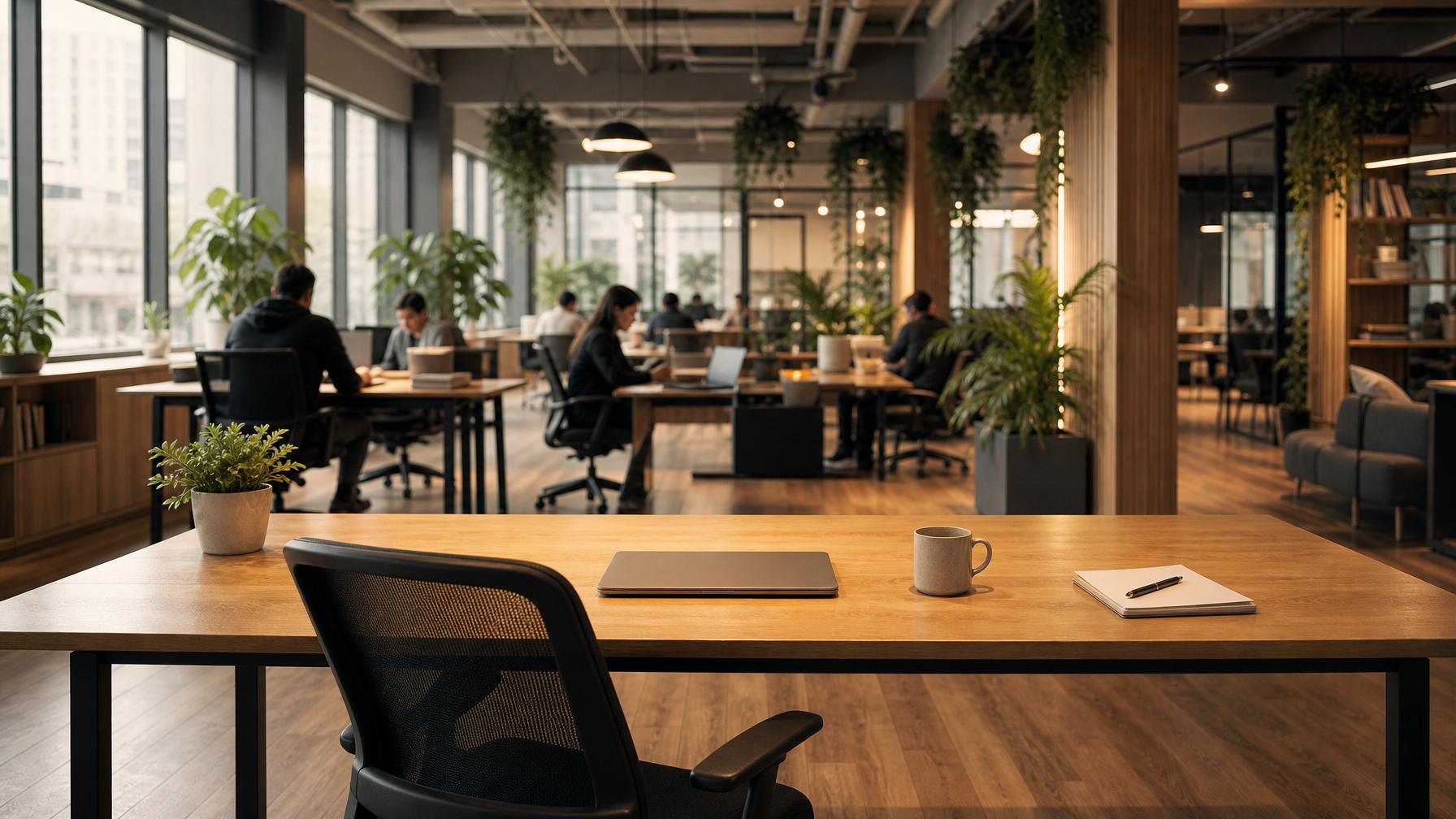
For most people, genuinely yes. The primary mechanism isn't the coworking space itself but the physical separation it creates between work and living space. When you work from home, the environment contains cues associated with rest and domestic tasks that compete with work signals. A coworking space contains almost exclusively work-mode cues — other people working, a purpose-built environment. That signal distinction is real and measurable for most people.