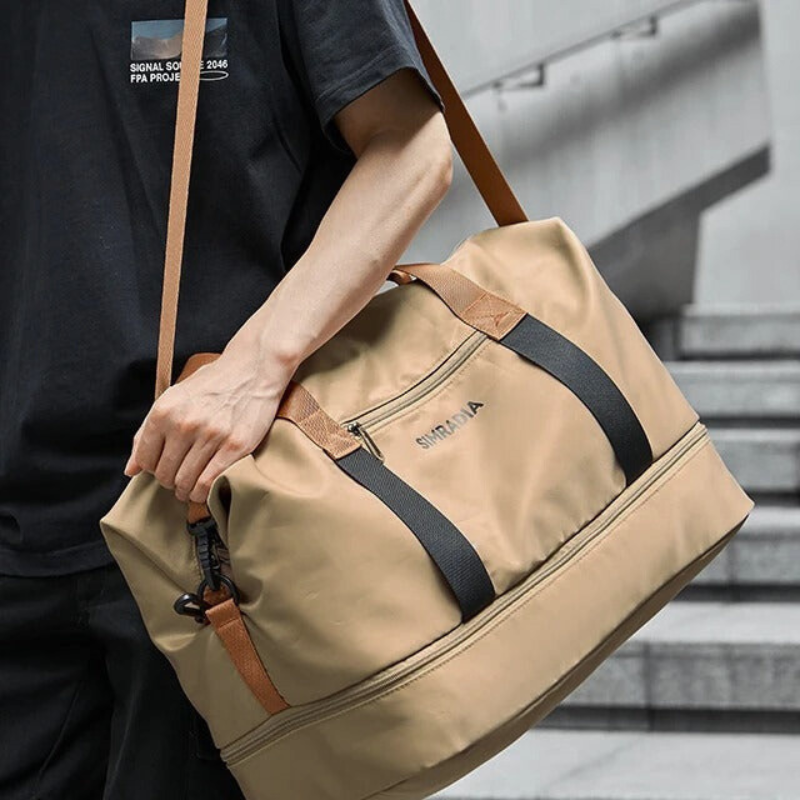



The Best One-Bag Travel Backpacks of 2026: How to Choose and What to Look For

There's a specific kind of frustration that comes from arriving at a destination and realizing your bag is already working against you. It's too big for the overhead bin. It's too heavy to carry comfortably across a city. The pockets are in the wrong places. The laptop is buried under everything else. You've been traveling for four hours and the bag hasn't done one thing correctly.
One-bag travel is supposed to solve this. The premise is simple: everything you need for a trip fits in a single bag you carry on your back. No checked luggage. No waiting at baggage claim. No transferring between a rolling suitcase and a day bag when you arrive. One bag, one decision, done.
The premise works. The bag choice is what most people get wrong.
What Makes a Backpack Actually Good for One-Bag Travel
The one-bag travel backpack sits at an intersection of competing requirements. It has to be carry-on compliant (most airlines cap overhead bins at around 45L; practical sweet spots are 20–35L for serious one-baggers). It has to carry a laptop securely. It has to be light enough to carry comfortably all day as a city bag, not just through an airport terminal. And it has to pack well — the organization should make efficient packing natural, not something you have to engineer around.
Most backpacks optimize for one or two of these. The good ones get all four right without sacrificing any of them.

The Capacity Question: How Much Do You Actually Need?
One-bag travel doesn't require the biggest backpack you can fit in an overhead bin. It requires a bag matched to your actual packing discipline.
20L is tight — workable for 2–3 days if you pack light and already have a system. 26–30L is the practical range for most people doing 5–7 days with a laptop. 35L (expanded) handles 2 weeks if you're willing to do laundry. The question isn't "how much can I fit?" — it's "how much do I actually need to bring?"
The best one-bag backpacks have some form of expandable capacity — a roll-top, compression straps, or an expandable zip panel — so the same bag works for a long weekend and a two-week trip without feeling half-empty or dangerously full either way.
The carry-on only packing guide covers the packing system that makes the most of any bag in this range — the capacity question becomes less important once the packing system is dialed in.
What to Look for in a One-Bag Travel Backpack
Carry-on compliance
Check dimensions before you buy. Most full-size international overhead bins accept bags up to 22 × 14 × 9 inches (56 × 36 × 23 cm). Budget and regional airlines run smaller. A bag in the 20–35L range with a compressed depth of under 10 inches will pass most checks — but know the specific dimensions of your bag and the airlines you fly regularly.
A laptop sleeve that works
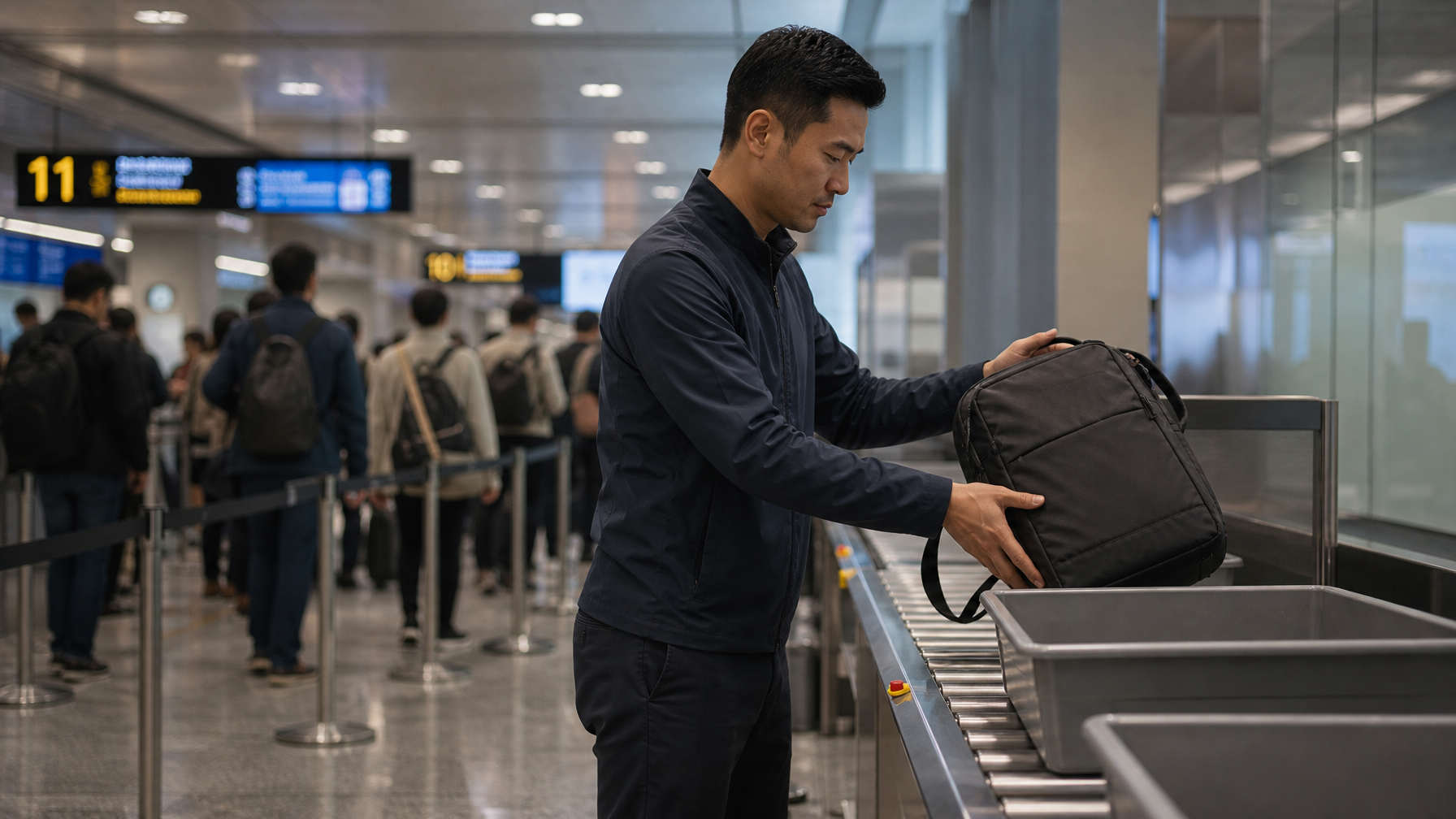
For a travel backpack used in cities, the laptop sleeve needs to be both secure and accessible — you'll be going through security repeatedly, and you'll be working from it during the trip. A dedicated padded sleeve (separate from the main compartment, accessible from the back panel or a separate zip) is the right configuration. Quick security removal is the practical test: can you get your laptop out and back in in under 15 seconds? If not, the sleeve placement is wrong.
Weight relative to what you're putting in it
A 3-pound empty backpack loaded with a week's worth of gear and a laptop can easily reach 15–20 pounds by the time you close it. That's significant carry weight for a full day of city navigation. A bag in the 1.5–2.0 lb range empty keeps the loaded carry weight manageable. Waterproof nylon saves weight compared to Oxford shell at equivalent durability for most travel contexts.
Organization that matches how you actually travel
The right pockets for travel are different from the right pockets for daily commuting. For travel, priority goes to: laptop sleeve accessible at security, front quick-access pocket for documents and phone, interior organization for tech gear, side pockets for a water bottle. The bag doesn't need 15 pockets — it needs five that are in the right places.
The Bags Worth Considering in 2026
Once you apply these criteria, the field narrows significantly. Here are the bags that hold up to scrutiny.
Transit Pack ($199) — Best for one-bag travel as a system
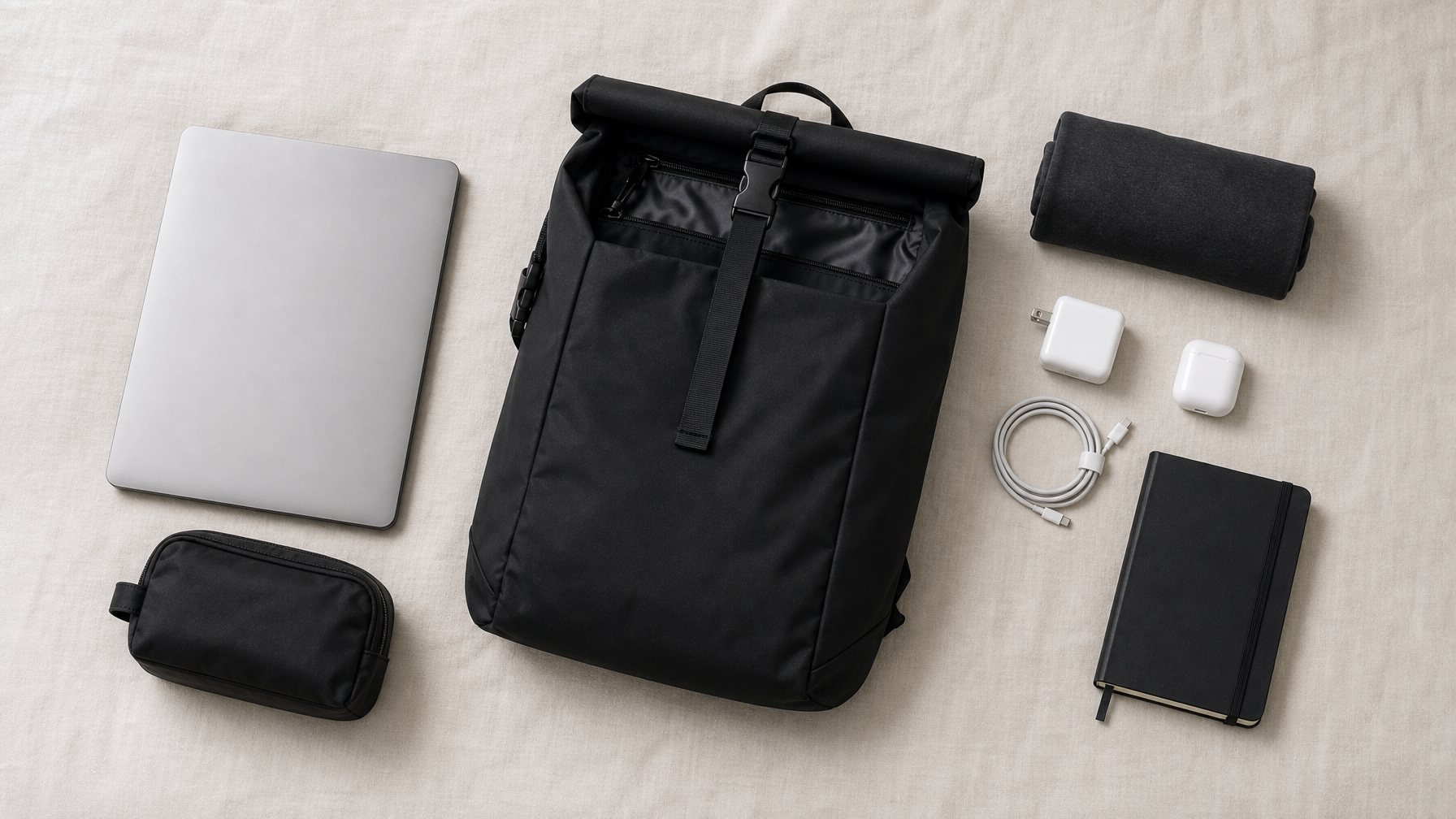
The Transit Pack is built around the expandable roll-top format: 20–35L capacity that adjusts to your trip length by rolling down tight for a long weekend or opening fully for a 10-day trip. The Oxford exterior weighs approximately 1.6 lb empty — light enough that a fully loaded travel configuration stays manageable. It fits a 15.6" laptop, has a padded sleeve, and carries the kind of organized interior that makes packing efficient rather than iterative.
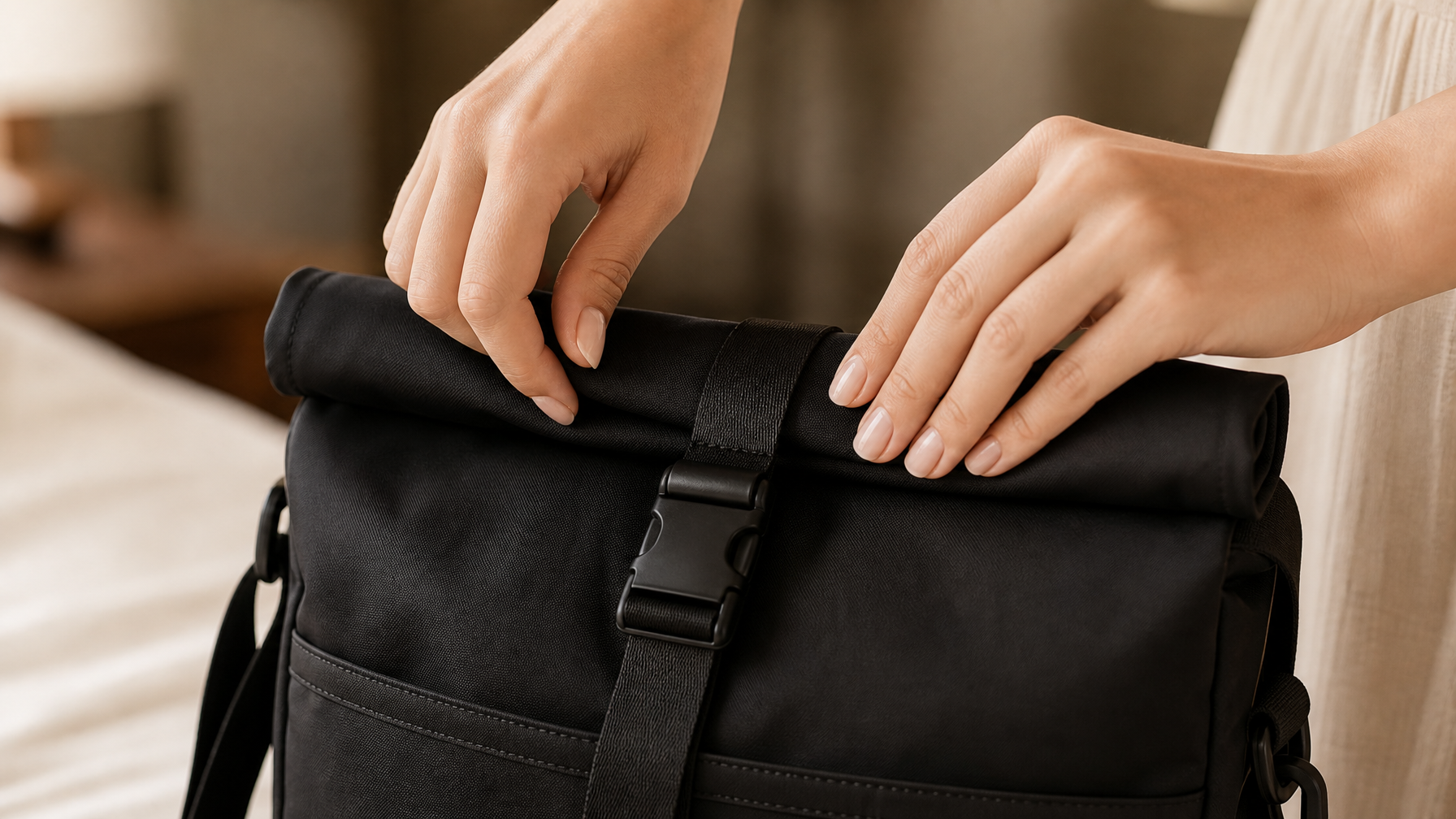
The roll-top closure is practical for travel in a way that fixed-zip closures aren't: it compresses the bag to match the load, which means no dead space rattling around in the main compartment and no overstuffed zip fighting you at 6am. At $199, it's the premium pick in this category — and it carries the premium use case best.
Apex Backpack ($139–$159) — Best for heavy loads and long tech carry
The Apex Backpack is the right choice when you're carrying more than most — a 15.6" or 17.3" laptop, a tablet, hard drives, cables, and several days of gear. Two separate device compartments (one for laptop, one for tablet) keep everything separated. S-curve padded shoulder straps and an air-cushion belt distribute weight better than a flat strap system at higher load weights. Anti-theft zippers make it relevant for city exploration in areas where bag security matters.
At 20–35L capacity and a waterproof nylon exterior, it's the most feature-dense option in the catalog. The trade is aesthetics — the Apex carries more visual weight than the Transit Pack, and its utilitarian design is more functional than minimal. For travelers who prioritize carrying capacity and ergonomics over a clean silhouette, it's the right call.
Venture Backpack ($139) — Best if the trip overlaps with daily commuting
If you're buying one bag for both your daily commute and occasional travel, the Venture Backpack is the better fit than the Transit Pack. At 26L, it's right-sized for a full workday plus a 3–4 day trip. The Oxford Khaki colorway is one of the only warm-toned options in the catalog, which gives it visual variety beyond all-black. A luggage pass-through strap makes it compatible with rolling luggage when the trip calls for a two-bag setup. At $139, it sits at the intersection of everyday use and travel-ready performance.
For people who want one bag across all contexts rather than a dedicated travel pack, the Venture earns its place. For people who travel frequently and want a bag optimized specifically for travel, the Transit Pack is a better fit.
The One-Bag Travel Backpack Checklist
Before buying, verify each of these:
- Dimensions: Under 22 × 14 × 9 in (56 × 36 × 23 cm) for standard carry-on compliance
- Empty weight: Under 2.0 lb for comfortable full-day city carry
- Laptop sleeve: Dedicated, padded, and accessible without opening the main compartment
- Capacity: Expandable, or right-sized (20–30L) for your typical trip length
- Quick-access front pocket: For documents, phone, and transit needs
- Material: Oxford or waterproof nylon for weather resistance
The weekend trip bag setup guide walks through the exact packing framework that works across all three bags above — the bag matters, but the system matters more. And for longer trips, the digital nomad carry setup covers how to structure a carry for weeks rather than days without adding more bags.
How to Choose Between Them
If you travel mostly solo and want maximum flexibility across trip lengths: the Transit Pack. The roll-top adjusts to whatever you're bringing. It's the purpose-built one-bag travel answer in the catalog.
If you carry a lot of tech gear and need two device compartments: the Apex Backpack. The heavier-duty build and ergonomic strap system handle heavy loads better than anything else in the catalog.
If you travel a few times a year and commute daily: the Venture Backpack. It's the most versatile bag across the full range of contexts, and its 26L capacity handles a long weekend without reservations.
None of these decisions is wrong. They're just different answers to the same question, matched to different versions of the person asking it.
Frequently Asked Questions
What size backpack is best for one-bag travel?
Most one-bag travelers settle on 20–30L for trips up to a week, and 30–40L for longer trips. The right size depends more on your packing discipline than the trip length — an experienced one-bagger can manage 10 days in a 20L bag; an overpacker struggles with a 40L bag on a long weekend. Start in the 25–30L range and adjust based on what you actually use.
Can a one-bag travel backpack also work as a daily commuter bag?
Yes, with the right bag. The Venture Backpack is designed for exactly this — 26L handles a full workday and a multi-day trip without compromise. Travel-specific backpacks (like a large 45L hiking-style pack) are harder to convert to daily carry. Choose a bag in the 20–30L range with a dedicated laptop sleeve and it works as both.
Is a roll-top backpack practical for travel?
Yes, and it's practical in a way that fixed-zip backpacks aren't: it compresses to match the load. A fixed-zip 30L bag always looks and feels like a 30L bag, full or half-full. A roll-top compresses down when you're carrying less and expands when you need more space. The opening is also wide and easy to access — no wrestling with a zip at odd angles to reach things at the bottom.
What should I look for in a one-bag travel backpack for carry-on travel?
Dimensions under 22 × 14 × 9 inches for standard overhead bin compliance, empty weight under 2.0 lb, a dedicated laptop sleeve accessible at security, and a front quick-access pocket for documents and phone. A carry-on backpack that meets these four criteria will handle most international and domestic travel without issues. Always verify dimensions against your most frequent airline's carry-on policy before buying.