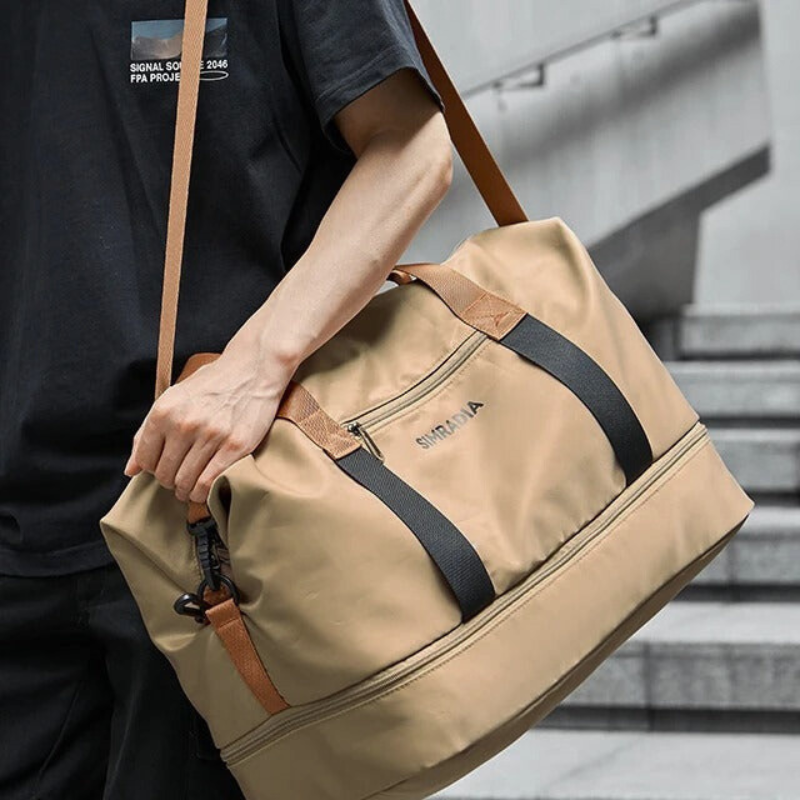



Sling Bag vs Crossbody Bag: What's the Difference and Which Should You Buy?

Retail sites often treat "sling" and "crossbody" as the same bag with two names. Shoppers feel the difference the first week they wear one on a real commute.
Both styles use a single strap across the body. Both keep your hands free. The useful distinction is how the bag sits, how much it holds, and how you reach into it while you move.
This guide separates the two formats with practical criteria, then matches each one to the day it actually serves. Field & Ash options appear only where they fit a real lane.

What people mean when they say sling
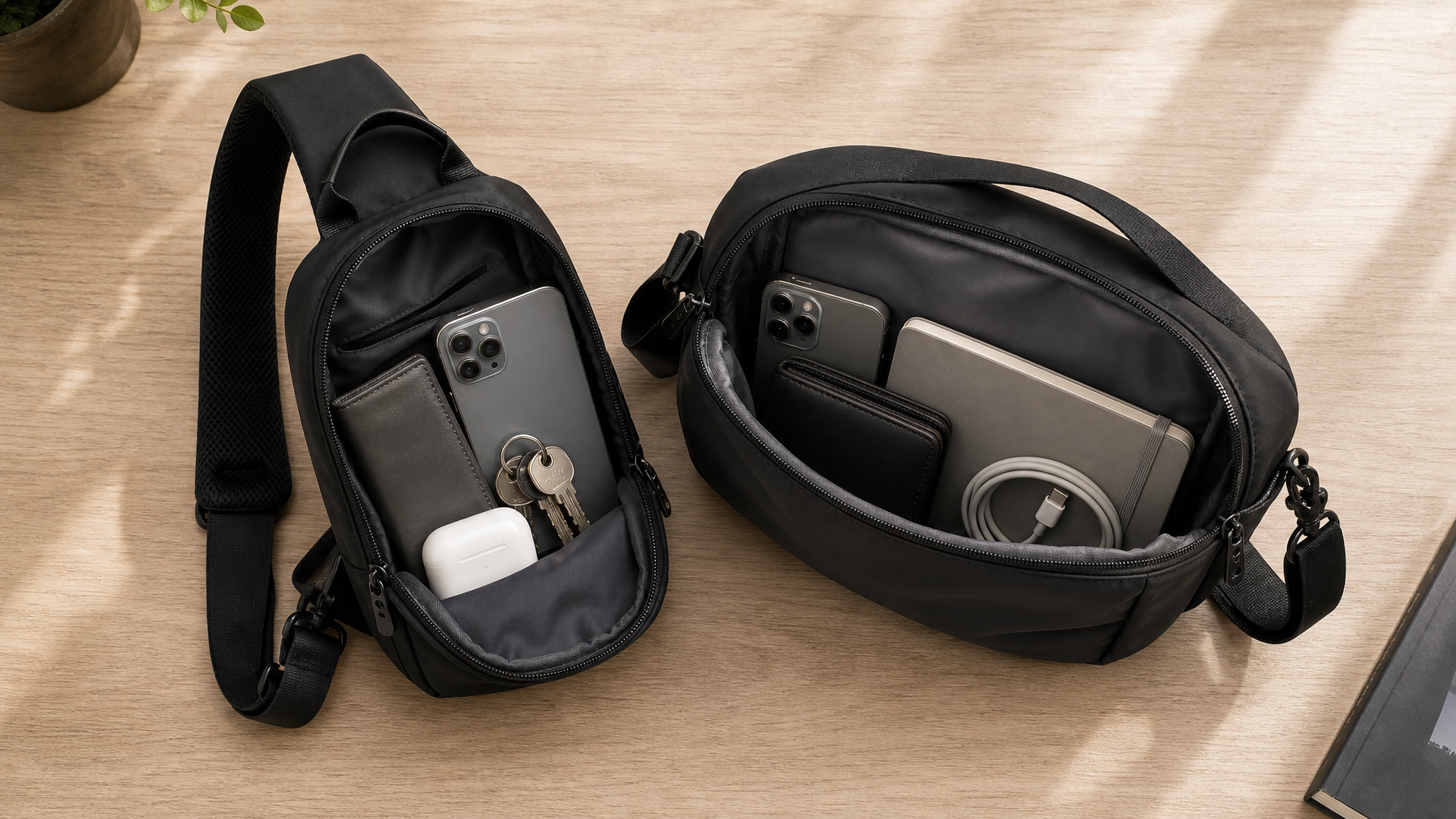
A sling is a compact single-strap bag designed to sit higher on the torso, often across the chest or upper hip. Many slings use a shorter body and a strap path that lets you rotate the bag to the front without removing it.
Typical sling jobs:
- Phone, wallet, keys, earbuds, and a slim card holder
- Transit days where you need both hands free and fast front access
- Secondary carry when a laptop stays at home or in a larger bag
Empty weight matters here. The Commuter Sling ($89) is about 0.66 lb empty, which keeps a light day from turning into a second pack. The Vector Sling ($99–$129) sits higher in the sling category when you want a more substantial everyday sling without jumping to a full messenger.

What people mean when they say crossbody
A crossbody uses the same diagonal strap idea, but the bag body is often more horizontal or rectangular and sits lower at the hip. Capacity is usually larger than a pure sling, and organization is built for a full small-kit day rather than a pocket replacement.
Typical crossbody jobs:
- Phone, wallet, keys, plus a thin notebook, cable, or compact pouch
- City days where you want one bag and no backpack bulk
- Entry-level everyday carry when a messenger feels like too much structure
The Transit Crossbody ($69) is the slim entry option for wallet-phone-keys days that still want a dedicated bag. The Waypoint Crossbody ($69) covers a similar lane with a different silhouette preference. When the day needs messenger-level organization and a laptop up to 14 inches in the main compartment, step up to a modern messenger hybrid such as the Haven Messenger ($89) rather than forcing a small crossbody past its job.
The real differences that matter
1. Wear height and motion
Slings tend to ride higher and rotate forward cleanly for access. Crossbodies tend to rest at the hip and stay out of the way while you walk. If you constantly need the bag in front of you at turnstiles and counters, a sling usually feels more natural. If you want the bag to disappear at your side between stops, a crossbody often feels calmer.
2. Capacity ceiling
A sling fails when you keep adding "just one more" item. A crossbody fails when you treat it like a mini backpack. Match the bag to four out of five days, not the heaviest day of the month.
3. Access pattern
Slings favor swing-to-front access. Crossbodies favor side-zip or top access while the bag stays at the hip. Neither is universally faster. The right one matches how you already reach for phone and transit credentials.
4. Professional read
Both can look intentional. The mismatch is scale. A tiny sling under a full laptop day looks like the wrong tool. An overstuffed crossbody under a phone-only day looks like unused volume. For work days that include a laptop, read the crossbody bags for work guide and the broader sling bags for everyday carry guide rather than stretching a light format.

Which should you buy?
| If your normal day is… | Start here |
|---|---|
| Phone, wallet, keys, earbuds only | Commuter Sling or a slim sling |
| Same kit plus a thin notebook or cable | Transit Crossbody |
| Laptop most weekdays | Messenger or backpack lane, not a pure sling |
| You already own a large bag and need a second light piece | Sling as the day bag |
If you are still deciding between single-strap and two-strap formats for the full commute, messenger vs backpack covers that split. For size by daily load rather than strap style, see what size bag you actually need for commuting.
FAQ
Is a sling bag the same as a crossbody?
No. Both use a diagonal strap, but slings are usually smaller, sit higher, and swing forward for access. Crossbodies are often larger and sit lower at the hip.
Can a sling replace a work bag?
Only on light days without a laptop. Once a computer is part of the normal load, choose a messenger or backpack built for that job.
Which is better for travel days in a city?
Use a sling when the main pack stays in the room and you only need essentials. Use a crossbody when the city day includes a slightly fuller kit.
What if retailers label everything "crossbody sling"?
Ignore the combined label. Check wear height, interior volume, and whether the bag is meant to replace pockets or carry a small daily stack.
Pick the format that matches how you move, then stop upgrading for imaginary loads. Carry deliberately.