


The Best Sling Bags for Everyday Carry in 2026

What Makes a Sling Bag Different
A sling bag is a single-strap carry system worn diagonally across the body, with the bag resting at hip or lower-back level. The strap runs from one shoulder to the opposite hip. Swinging the bag to your front is the defining gesture: one hand on the strap, a smooth rotation, and the bag is in front of you. Accessible without removing it.
This is meaningfully different from a backpack, where both straps must come off, and from a shoulder bag or tote, which sits under your arm and requires you to fish around one-handed. The sling's access motion is fast, deliberate, and repeatable.
For EDC. The daily kit you rely on without thinking. That access pattern matters more than it sounds. If reaching into your bag is slightly awkward, you'll start leaving things in your pockets instead. The bag becomes less useful over time. A sling bag that you can open in front of you in a single motion tends to get used properly, every single time.
If you're new to thinking about your daily carry as a system, the everyday carry guide is a useful starting point before working through bag formats.
What to Look for in a Sling Bag for Everyday Carry
Not every sling bag is designed with daily use in mind. Some are adventure carry. Spacious, padded, built for day hikes. Others are fashion-adjacent. Small, structured, decorative. What works for EDC sits between those two: compact enough to stay out of your way, organized enough to keep your essentials accessible, and built to take daily wear without showing it.
Size and capacity. A sling bag for everyday carry should hold your daily load without bulging. For most people, that's a phone, a slim wallet, keys, earbuds, and possibly a small water bottle or light jacket. Some EDC slings also fit a 10-11" tablet, though a crossbody bag with dedicated padding handles that better. If your daily load regularly includes a 13-14" laptop, a sling is the wrong format. A crossbody messenger will serve you better.
The useful volume range for EDC slings is roughly 5-10 liters. Below 5L and you're managing pockets, not a bag. Above 10L and you're carrying more than a sling is designed to handle comfortably at hip level.
Access design. This is the most consequential choice in a sling bag and the one most buyers overlook. There are two main approaches:
Top-zip access means the main compartment opens from the top when the bag is in front of you. This is fast and intuitive. You swing the bag forward, unzip the top, and the contents are visible and reachable in one motion. It's the simplest access design and handles most daily scenarios well.
Front-panel or clam-shell access opens the entire main face of the bag. This gives you a full view of the interior. Useful if you carry a range of items and want to retrieve things cleanly. It's slightly slower than top-zip but works well if visual organization matters to you.
Regardless of access design, look for a sling that has at least one exterior pocket sized for your phone. Reaching into the main compartment every time you want your phone defeats the purpose of the format.
Strap system. The single strap does all the work a backpack distributes across two. Look for a strap that's wide enough to avoid cutting into your shoulder. Typically 25mm (1") or wider. And padded at the shoulder contact point.
Adjustability matters. The strap should allow you to position the bag where it rides comfortably on your body, whether you're wearing it on your back during transit and swinging it forward when you need access, or keeping it on your front throughout the day. A strap that doesn't adjust smoothly will end up in the wrong position and stay there.
Weather resistance. Daily carry means rain, puddles, and whatever else the commute brings. A sling bag with a water-resistant or waterproof exterior shell protects what's inside without requiring you to think about the weather before leaving the house.

The sling bag's defining advantage: in front of you and open without putting it down or stopping what you're doing.
What Actually Fits in a Sling Bag
The most common question about slings is a capacity question: what can you actually fit in one?
Here's the honest list for a mid-size EDC sling (6-8L):
- Phone
- Slim card wallet or billfold
- Keys
- Earbuds in their case
- Small portable battery or GaN charger
- A single cable
- A light personal item (lip balm, small notebook, medication)
Some slings accommodate a 500ml water bottle in a side pocket. Some don't. If a water bottle is a daily non-negotiable, check side-pocket dimensions before buying.
What most slings won't accommodate comfortably: a 13-14" laptop, a thick book, or anything requiring significant volume. The sling bag earns its place by being the lightest and most accessible carry option for a defined daily load. Not by stretching to hold what a backpack would hold.
If you're unsure whether a sling bag will cover your daily load, spend five minutes on an honest kit inventory. What do you actually carry daily versus occasionally? Occasional items usually belong in a desk drawer or a small add-on pouch for specific days. Not in a bag you wear every day. The Capsule Carry System guide walks through exactly this exercise.
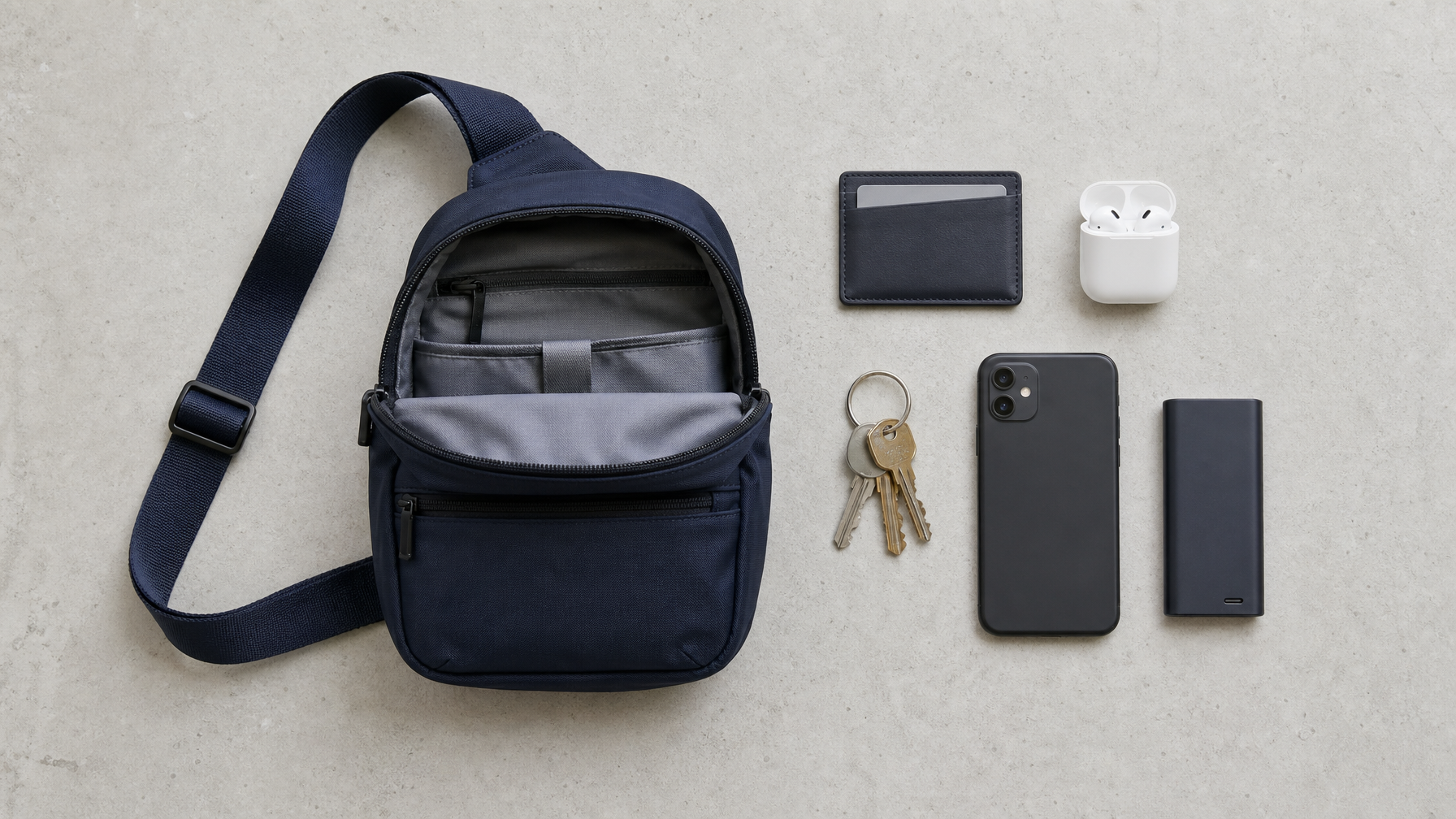
A realistic EDC sling load: everything you reach for daily, and nothing you don't.
Who Should Use a Sling Bag
The sling bag format works best for a specific type of daily carry. It fits if your day looks like one or more of the following:
You move frequently and don't want a bag on your back. The backpack is the default commuter bag, but on a crowded train or bus, a backpack takes up space that isn't yours. A sling bag sits against your hip and stays there. You're not taking it off, not apologizing for it, not managing it.
Your daily load is light and consistent. If you carry the same 6-8 items every day, a sling bag is built for exactly that. You're not rummaging. You know what's there and where it is.
You move through high-traffic or unfamiliar environments. The sling's security case is real: the bag is always in your peripheral vision, and swinging it to your front puts the zipper facing you. In a city environment where awareness is part of the routine, a sling keeps your carry secure without requiring active vigilance.
You want the lightest possible carry. Pound for pound, a sling bag carries a daily load at lower weight than almost any other bag format. If shoulder or back fatigue is something you notice by midday, a sling bag that distributes weight across one padded diagonal strap often resolves it.
Where a sling bag isn't the right choice: if you carry a laptop or large tablet every day; if your load varies significantly from day to day; if you frequently carry items for more than one person. The sling is personal carry, built for a defined load.
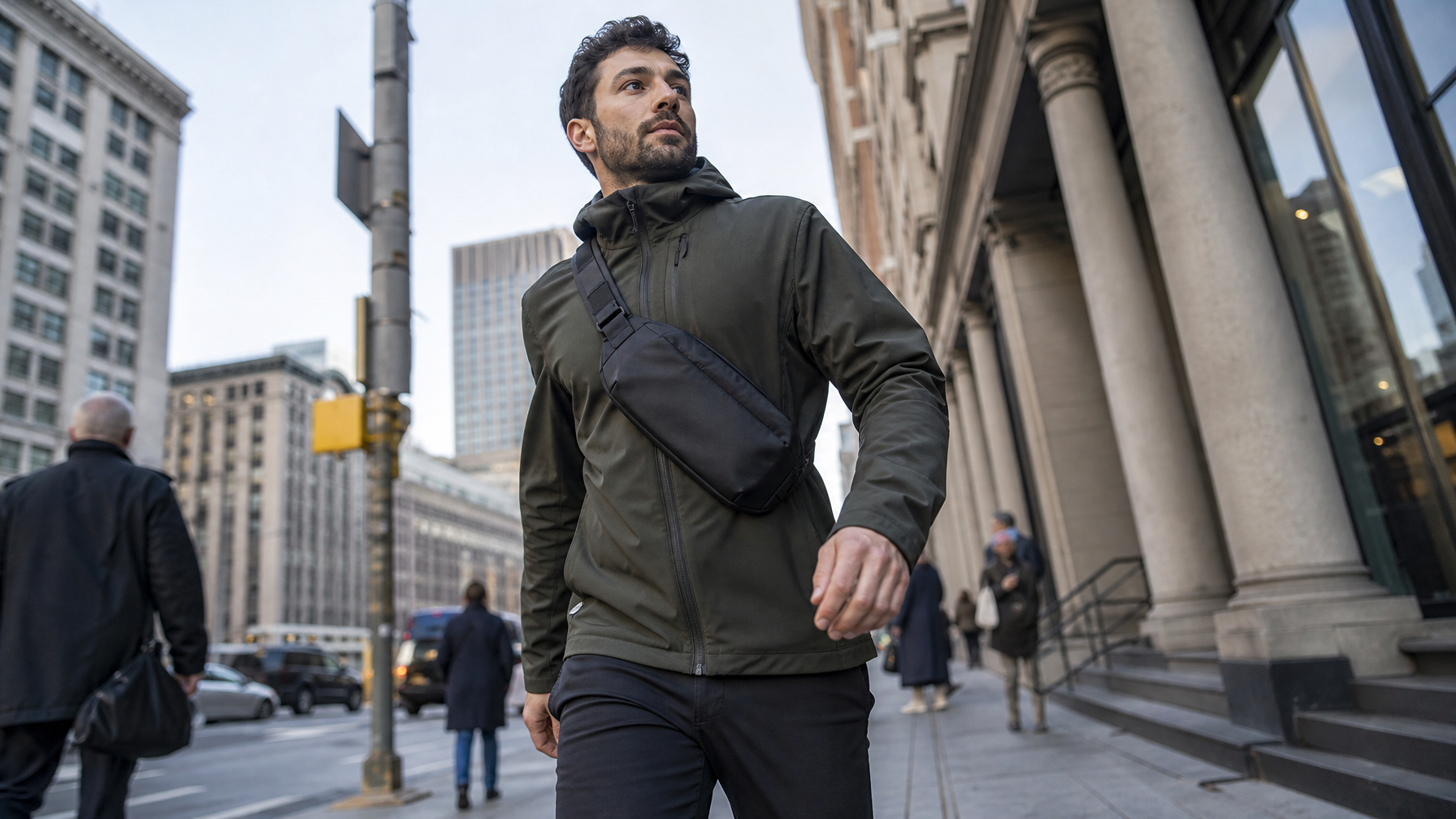
The sling bag at its most natural: flat against the body during transit, swung forward when you need access.
Field & Ash Sling Bag Options
We make two sling bags designed for everyday carry. They take different approaches to the same problem.
The Commuter Sling ($89) is the lightest bag in the Field & Ash catalog. 0.66 lb empty. It's built for EDC: an organized main compartment, a dedicated exterior phone pocket, and a padded shoulder strap that holds its position across a full commute day. It covers the core daily load without adding anything extra. If the goal is the lightest possible carry that doesn't compromise on access or organization, the Commuter Sling is built for that.
The Transit Crossbody ($69) is a slim crossbody with a lower profile. Slightly less structure, same diagonal wear, more accessible price. It works well as a day bag within a larger travel setup or as a straightforward entry into the sling-crossbody format. If you're trying the format for the first time and want to start without a high commitment, this is the right place to start.
Both bags have waterproof Oxford exteriors and all-matte hardware. Neither adds weight for features that aren't part of daily use.
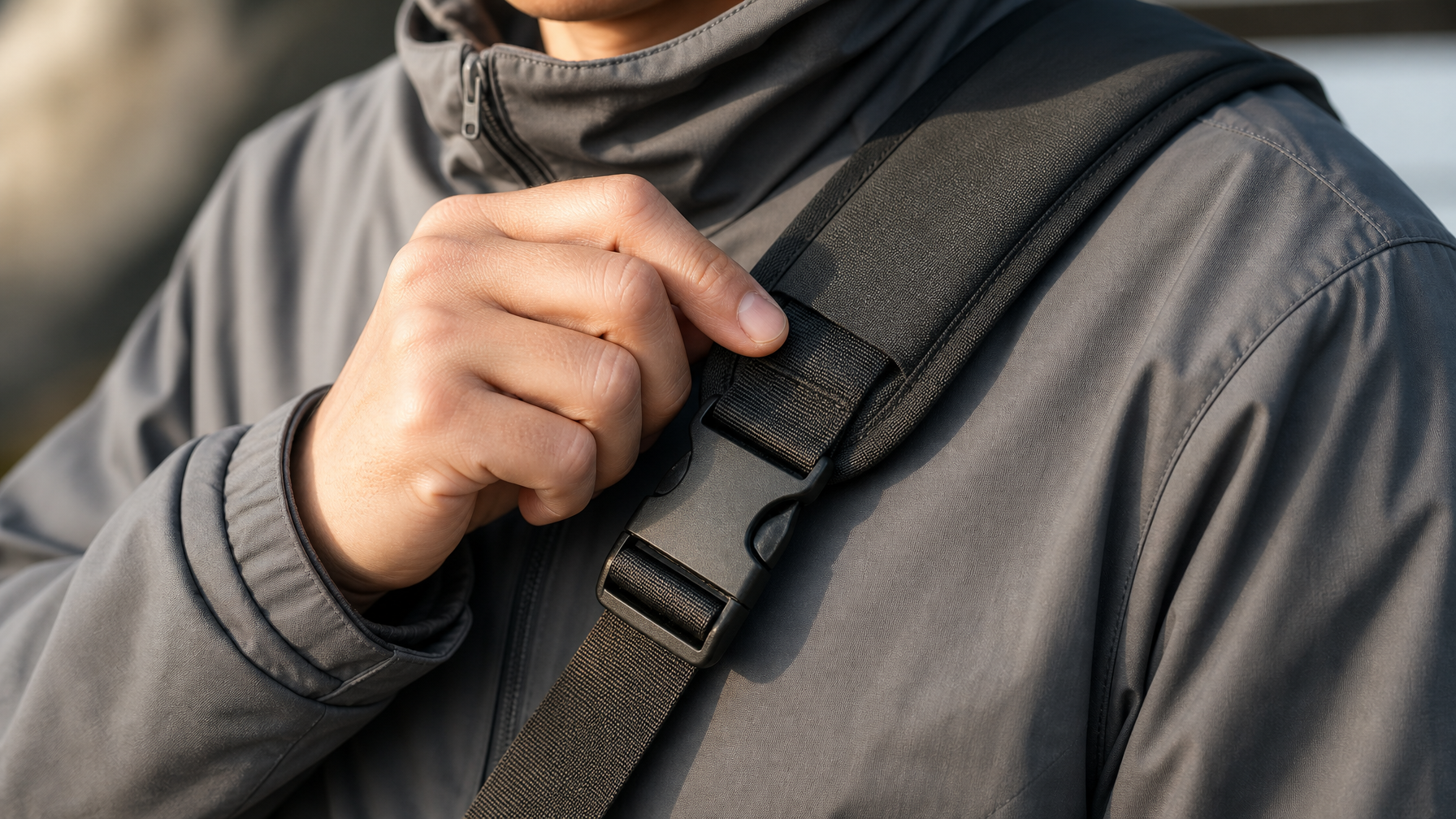
Strap fit determines how a sling bag wears across a full day. Padded and adjustable is the standard worth looking for.
The Honest Trade-Off
A sling bag is the most efficient carry format for a defined daily load in a city environment. It's not the most versatile bag you'll ever own. That's a backpack. It's not the bag you'll take on a three-day trip. That's a duffel or a carry-on pack. It's the bag that disappears for eight hours of urban movement and opens in front of you in four seconds every time you need it.
If that's the load you're carrying and the environment you're moving through, the sling bag solves the problem better than any other format.
For a broader look at lightweight carry options in a similar category, the minimalist shoulder bag guide covers a wider range of compact carry formats with the same emphasis on carrying less.