


Women's Everyday Carry: The Practical Guide That Starts With How You Move, Not What Looks Good

Most carry advice written for women starts in the wrong place: the bag. It leads with which bags are stylish, which are professional, which are currently recommended by fashion editors. The carry system. What you actually put in the bag, how you access it, whether it works for your real day. Comes second, if at all.
This guide starts differently. It begins with how you move, what you carry, and what that carry needs to do across a full day. The bag appears at the end of that exercise as the best tool for the job. Not the other way around.
The EDC Framework: What You Actually Need vs. What You Think You Need
Everyday carry is a simple idea: the items you reach for daily, organized so you can find them without thinking. Applied to a real day, it usually shakes out into a few categories.
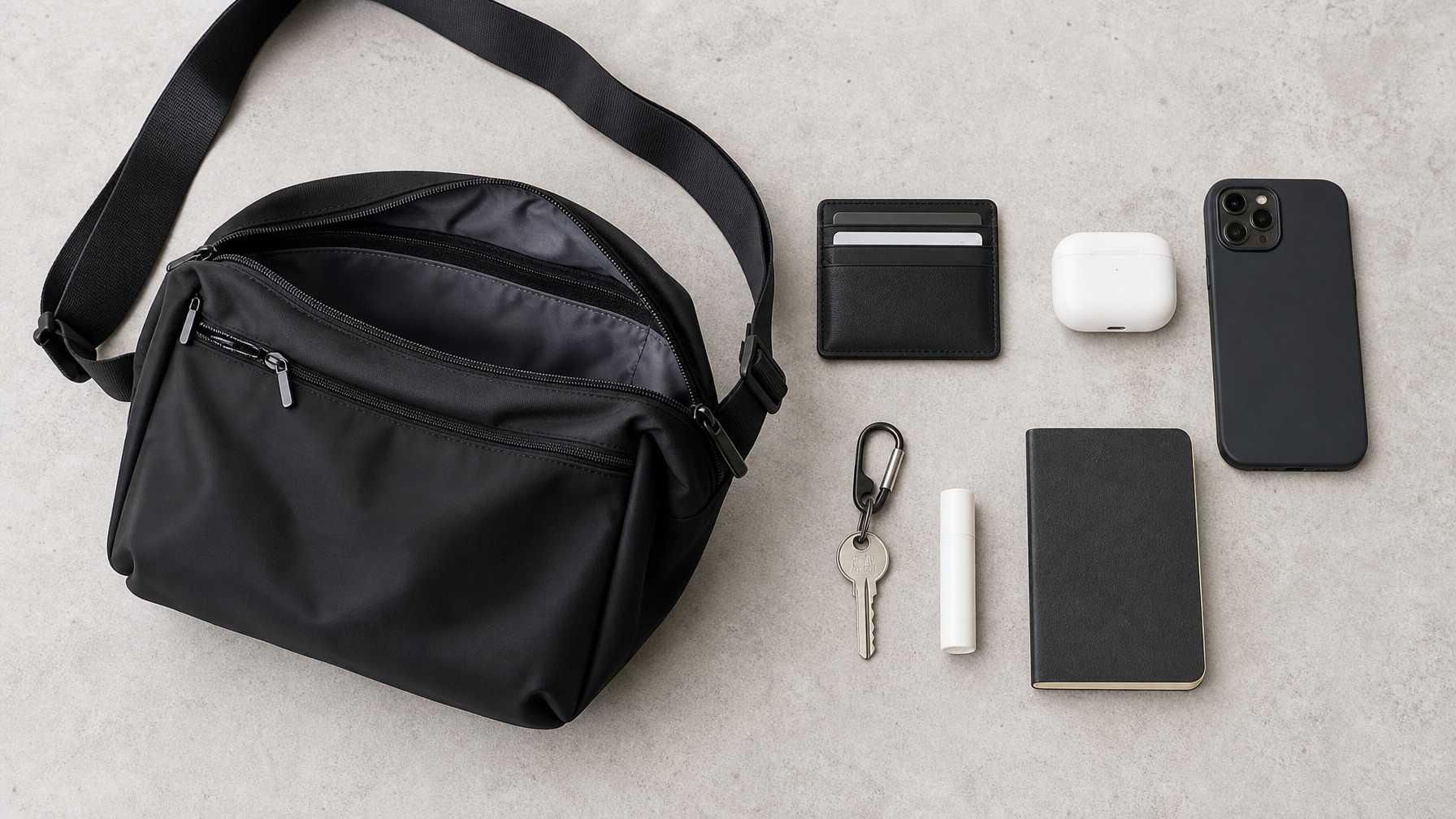
Daily non-negotiables. These are the items that leave the house with you every single day without exception: phone, keys, card wallet, earbuds. If you wear reading glasses or take daily medication, those belong here too. This set is smaller than most people think.
Context-specific items. These change by day: a water bottle for a long walk, a notebook for a meeting, a book for a long commute. These items should live in your bag only when you actually need them. Not as permanent residents that add weight.
The accidental load. This is the weight most bags accumulate over time: receipts, old lip balms, hair ties, chargers for devices no longer owned. The accidental load is the most common reason a bag starts to feel heavy and disorganized.
Honest kit inventory. Twenty minutes with everything emptied on a table. Usually reveals that the daily non-negotiables fit in a 6. 8 liter bag. The accidental load is the only thing that makes a bag feel like it needs to be twice that size.
If you haven't done this exercise yet, the Capsule Carry System guide walks through it in detail.
Why Bags Designed "For Women" Often Get It Wrong
The women's bag market has a persistent structural problem: it conflates style with utility. Bags sold as women's work bags are often engineered for aesthetics first, with interior organization retrofitted as a secondary feature. You end up with a beautiful bag that has three unstructured compartments and nowhere sensible to put your phone.
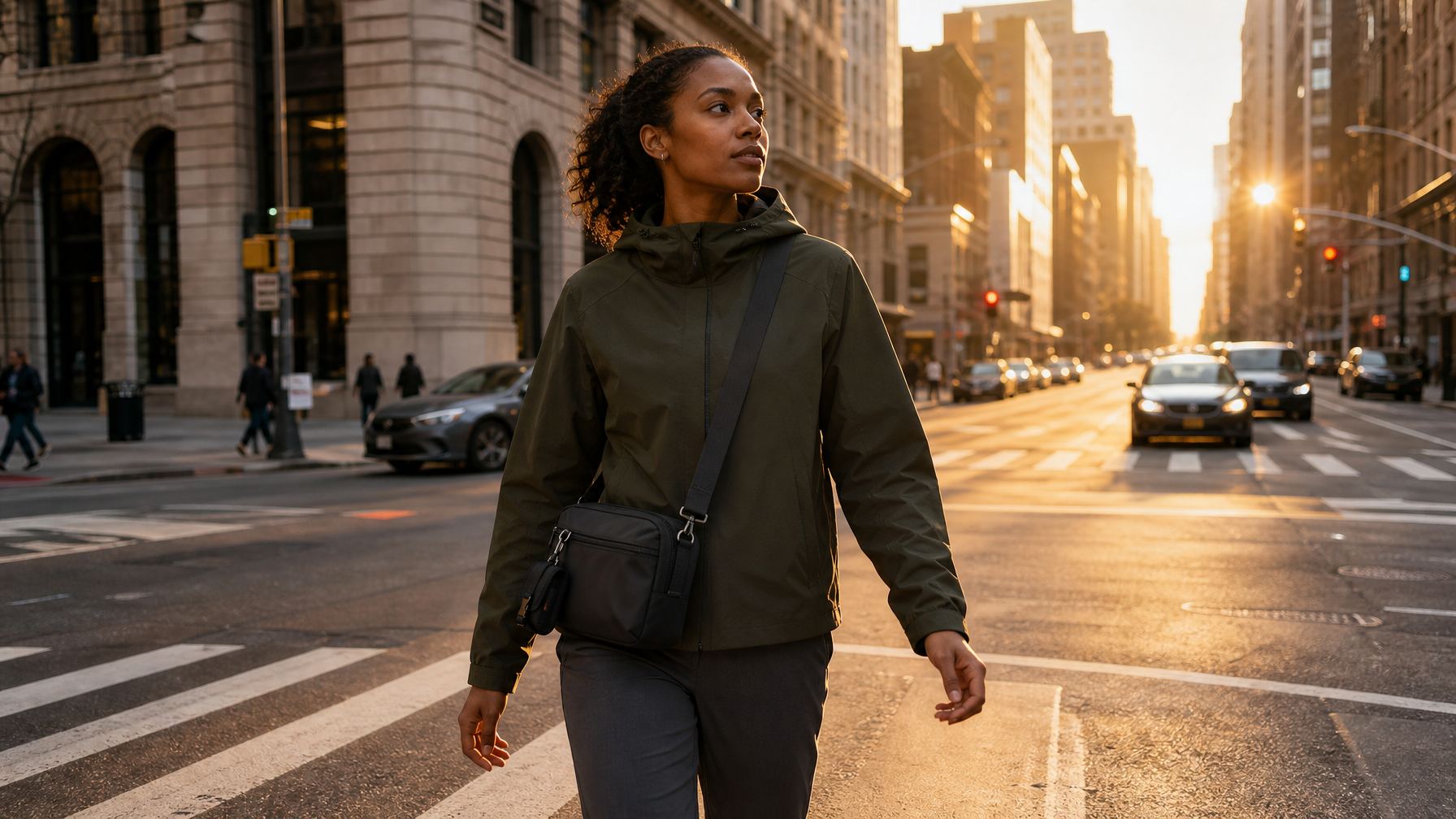
The counter-approach. Heavily padded, maximum-organization commuter packs. Is engineered for function, but often ignores proportions, weight distribution, and the carry scenarios women actually navigate: anti-theft access in crowded transit, one-handed bag entry at turnstiles, a bag that doesn't look enormous on a smaller frame.
What works sits in the middle: a bag engineered for organized, accessible daily carry that also happens to look right in professional and casual contexts without performing either of those identities too hard.
The Three Formats Worth Considering
The Compact Crossbody
The crossbody format earns its place as the default EDC option for one simple reason: it keeps both hands free while the bag stays accessible and close to the body. In crowded transit, on city streets, and in contexts where anti-theft access matters, a crossbody sits flat against your side rather than dangling open beside you.
The relevant question isn't whether to go crossbody. It's how much volume you need. A compact crossbody (under 5L) handles a phone, a slim wallet, keys, and earbuds. A mid-size crossbody (5. 10L) accommodates a tablet, a water bottle, and a light jacket.
The Transit Crossbody ($69) sits in the compact-to-mid-size range. Slim enough for transit and city movement, with an exterior pocket for fast-access essentials. For commutes where a laptop isn't required, it's one of the most low-friction carry options in the catalog.
The Sling Bag
The sling bag is the carry format most guides skip over. And it's worth taking seriously if your daily carry is genuinely light.
A sling sits diagonally across your body and hangs at hip or lower-back level. When you need to access it, you swing it around to your front. No putting it down, no stopping what you're doing. For a load of phone, slim wallet, keys, and earbuds, that access motion is fast enough that you stop thinking about it entirely.
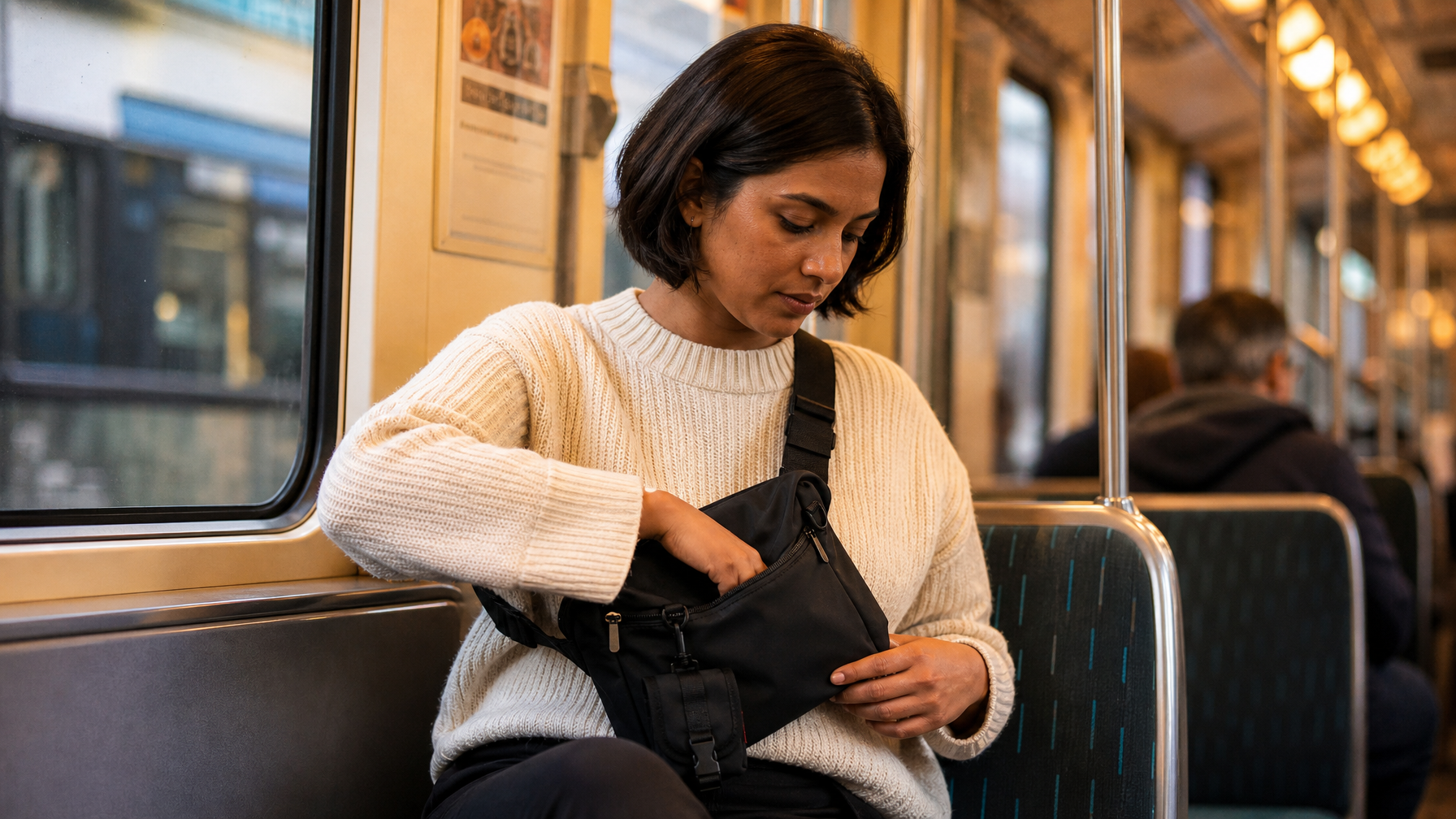
The tradeoff is capacity: most slings max out around 8. 10L, and laptop carry is generally beyond their design intent. For commutes where you're not taking a laptop, or for weekend city movement where a phone and a card are genuinely all you need, a sling bag is the carry system that disappears fastest into your day.
The Commuter Sling ($89) weighs 0.66 lb. The lightest bag in the catalog. And is built for exactly this role. Water-resistant exterior, exterior phone pocket, smooth swing-forward access.
The Crossbody Messenger
When the daily load includes a laptop, the calculus changes. You need a padded sleeve, real interior organization, and a carry format that stays stable while you move. The structured crossbody messenger handles this while keeping both hands free and the bag close to your body.
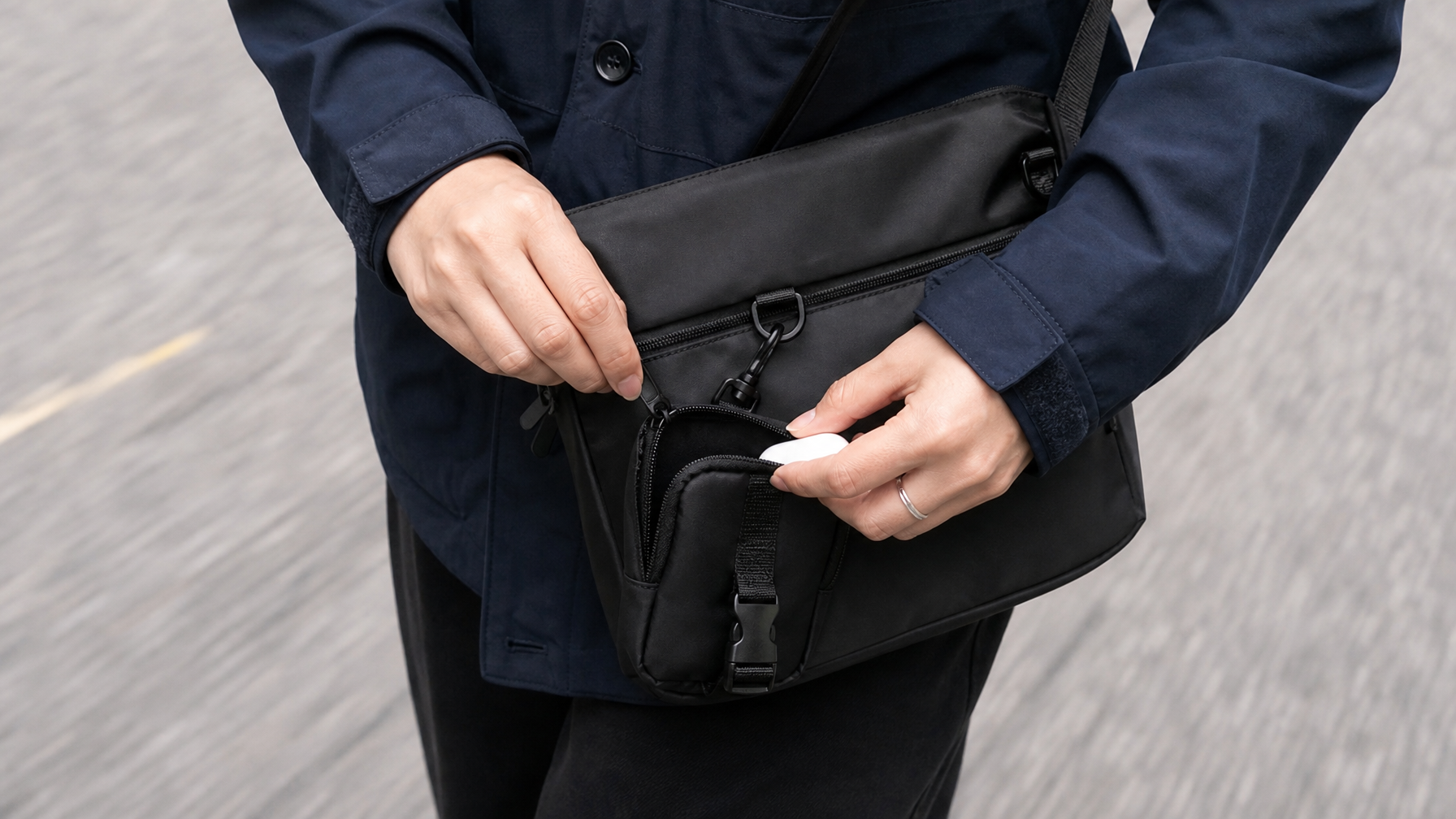
The Haven Messenger ($89) is the compact option in this category: 33×18×30 cm, 1.21 lb empty, padded sleeve for up to 14" laptops, organized interior with a mesh compartment and internal zip pockets, and a dedicated anti-theft back pocket that stays inaccessible while the bag is worn crossbody. The detachable front accessory pouch. A small zippered pouch that clips to a D-ring on the front face. Adds fast-access storage for items you reach for constantly without opening the main compartment.
What to Look for When You're Actually Buying
Anti-theft access. If you commute through crowded transit or navigate unfamiliar cities, where the main compartment sits matters. A bag where the main zipper faces your back while worn means a stranger can't open it while it's on your body. This is worth more than any dedicated "anti-theft" marketing claim.
One-handed operation. At a turnstile, paying for coffee, carrying something else. Your bag needs to be openable with one hand, and the items you need most often need to be in a pocket you can reach without unbuckling or unzipping the main compartment.
Weight before contents. A bag that weighs 2 lb empty and holds a modest daily load will regularly weigh 5. 6 lb on your shoulder. For daily carry, the lighter empty bag is always the better starting point. The relevant catalog range here is 0.66 lb (Commuter Sling) to 1.21 lb (Haven Messenger).
Interior organization that matches your actual kit. Interior structure should correspond to how you actually pack, not how a designer imagined you'd pack. If you carry a slim card wallet, you need a card pocket. Not a full-length document sleeve that leaves the wallet swimming. Check specific compartments against specific items before buying.

How to Match the Format to Your Day
The right format depends on what a normal Tuesday actually looks like.
Laptop not required, light transit commute: Commuter Sling or Transit Crossbody. Keep it light. Both hands free, fast access, no unnecessary structure.
Laptop required, professional context: Haven Messenger. The padded sleeve handles a 14" laptop; the anti-theft back pocket keeps your phone and transit card accessible without opening the main compartment; the profile stays flat against your body in crowded spaces.
Both. Some days with a laptop, some without: Two options. Either carry the Haven Messenger with a lighter interior load on laptop-free days (it's designed to work that way. Empty space doesn't make a structured bag flop), or use a dedicated light-carry option for days when the laptop stays home.
A Note on Professional Contexts
The question that comes up frequently: which bags read as professional?
The direct answer: organized, intentional, and proportionate reads as professional in most contexts. An expensive leather bag that's overloaded and clearly hard to get into doesn't.
The bags above work in professional contexts not because they look like traditional work bags, but because they look like the carry of someone who has figured out their system. That register. Deliberate, considered, not trying too hard. Is what most professional environments respond to, even if they couldn't name it.
The Short Version
Start with an honest inventory of what you carry daily. Most people's genuine daily load fits in a 6. 8L bag. From there:
- Lightest option, no laptop: Commuter Sling ($89, 0.66 lb)
- Compact crossbody, no laptop: Transit Crossbody ($69)
- Full-day carry with laptop: Haven Messenger ($89, padded 14" sleeve, anti-theft access)
The bag that works best is the one that makes you stop thinking about the bag.