


The Best Minimalist Laptop Backpacks of 2026

The problem with most laptop backpacks is that they're built around what you might need, not what you actually need. More pockets, more padding, more expansion. The engineering assumption is that more capacity means more utility. The result is a bag that weighs 3 lbs before you've put anything in it, occupies half a locker, and makes you feel like you're heading to base camp every time you walk out the door.
A minimalist laptop backpack works from the opposite assumption: the right amount of carry, no more. Light enough that you forget you're wearing it after the first five minutes. Organized well enough that you don't need six pockets to find your phone. Clean enough to look right in a professional context without making any kind of statement about it.
This guide covers what to look for in a minimal laptop pack, what separates genuinely minimal bags from merely slim-looking ones, and which options in 2026 actually deliver on the premise.
What "Minimalist" Actually Means in a Laptop Backpack
Minimalism in a backpack is an engineering decision, not just an aesthetic one. Though it often produces one. The bag does its job, weighs as little as possible doing it, and adds no bulk that doesn't earn its place.
In practice, this means:
- Pack weight under 1.5 lbs. The bag's structure shouldn't tax your carry capacity before you've put anything in it. The lightest minimal laptop packs come in at 1.0 lb or below.
- One properly padded laptop sleeve. The right size for a 13" or 15" laptop, accessible quickly, and positioned away from the bag's base where drops land first.
- A main compartment that works. Room for a daily load. Laptop, notebook, water bottle, cables, a light layer. Without over-engineering the compartmentalization.
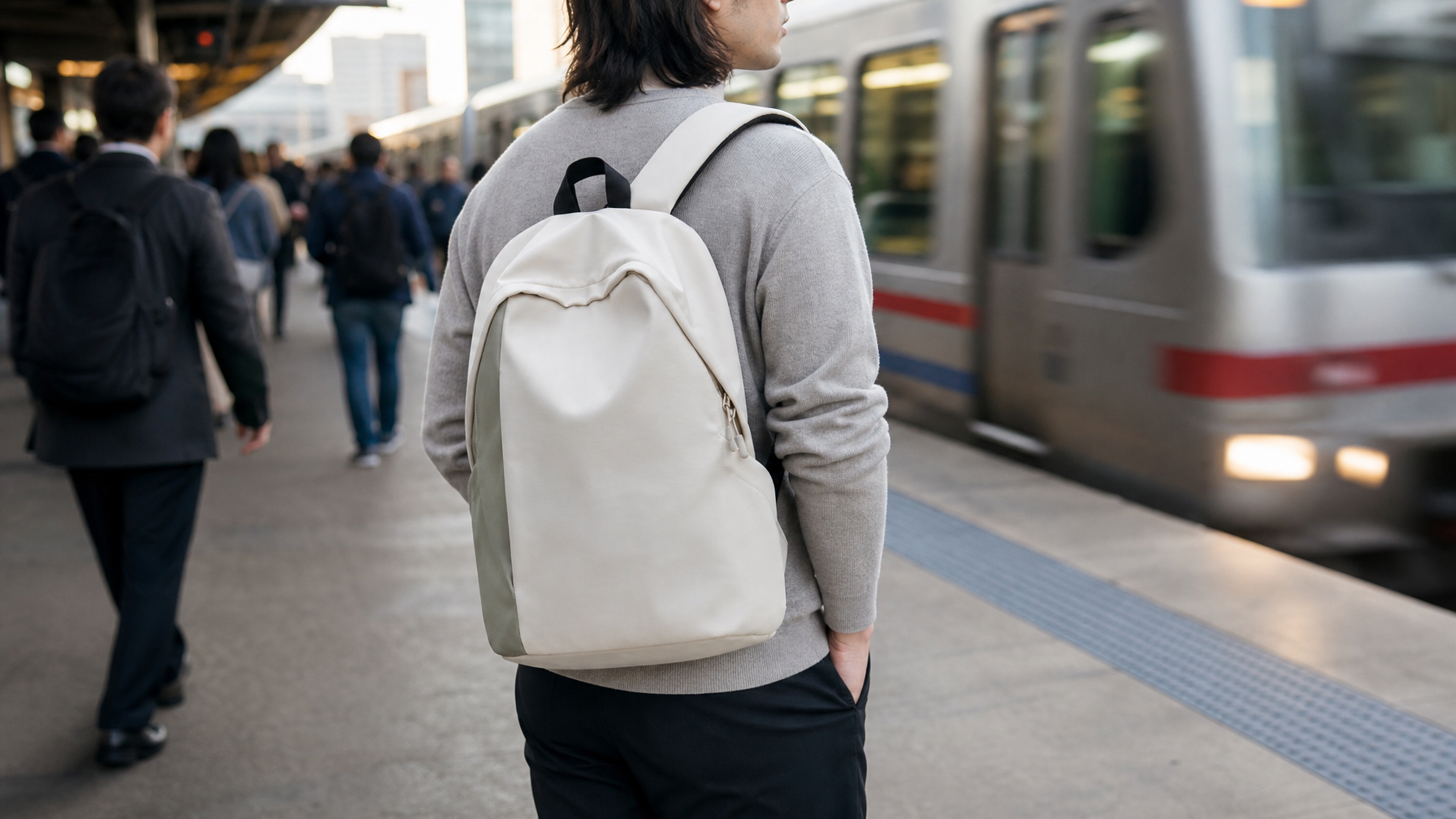
- A slim profile when loaded. The bag shouldn't balloon out behind you at capacity. A low-profile silhouette on the body is a sign the interior is efficiently designed.
- A clean exterior. Minimal external zippers, no dangling adjustment points, nothing that adds bulk or visual noise in a conference room or transit setting.
The tension in this category is that slim silhouette and genuine laptop capacity usually work against each other. A bag that's light often sacrifices structure, protection, or organization to get there. The bags worth owning are the ones that resolve that tension without obvious compromise.
The Weight Question: Why It's the First Filter
Weight compounds. A bag that weighs 2.4 lbs starts your carry at a real deficit before you've put a single item in it. Add a 13" laptop (2.8 lbs), a filled water bottle (1.3 lbs), and your daily essentials, and a heavy pack has already put you past 7 lbs. Before cables, a jacket, or a book.
A 1.0 lb bag loaded with the same essentials arrives at 5.1 lbs. Over a five-day week on foot, that difference is felt, especially for commuters who walk significant portions of their route.
This is why pack weight. Not just silhouette. Is the first filter when evaluating this category. A bag that looks minimal but weighs 2.2 lbs is a style choice, not a minimalism choice.
What to Look For: The Four Criteria That Matter
1. Pack Weight
Under 1.5 lbs is the meaningful threshold. Under 1.0 lb puts a bag in the genuinely light category. Weight is determined by material and construction: lighter nylon constructions (ripstop, 420D, or equivalent) weigh less than heavier Oxford nylon or padded designs. For a daily commuter bag that isn't going anywhere rugged, the lighter construction is almost always worth the tradeoff.
2. Laptop Protection Without Added Bulk
A padded laptop sleeve that holds a 14" or 15" laptop securely, positions it away from the bag's base, and is accessible without opening the main compartment entirely. That last point matters more than buyers usually expect. Quick laptop access at airport security and café transitions is a daily quality-of-life feature, not a luxury.
3. Interior Organization That Earns Its Space
A minimal pack's interior should have defined zones: a laptop sleeve, a main compartment for the daily load, and one or two small pockets for the items you reach for instinctively (phone, keys, earbuds). Beyond that, more compartments add weight and rigidity without adding utility. If you're using fewer than half your bag's pockets, those pockets are weight you're carrying for nothing.
4. A Clean Exterior
External attachment points, multiple front pockets, and side water bottle pockets that protrude when empty are functional noise. A clean exterior also means a practical one: no dangling straps, nothing that adds to the bag's perceived bulk in a conference room or at a café table. The exterior should do one thing well: hold the bag's structure and provide a single quick-access pocket where the design warrants it.
The Best Minimalist Laptop Backpacks of 2026
Lite Backpack ($89). The Lightest Everyday Carry
The Lite Backpack is the starting point for anyone whose first filter is weight. At 1.0 lb, it's the lightest backpack in the Field & Ash catalog. And genuinely competitive against the broader market, where most laptop packs at this price and organization level come in at 1.5. 2.0 lbs.
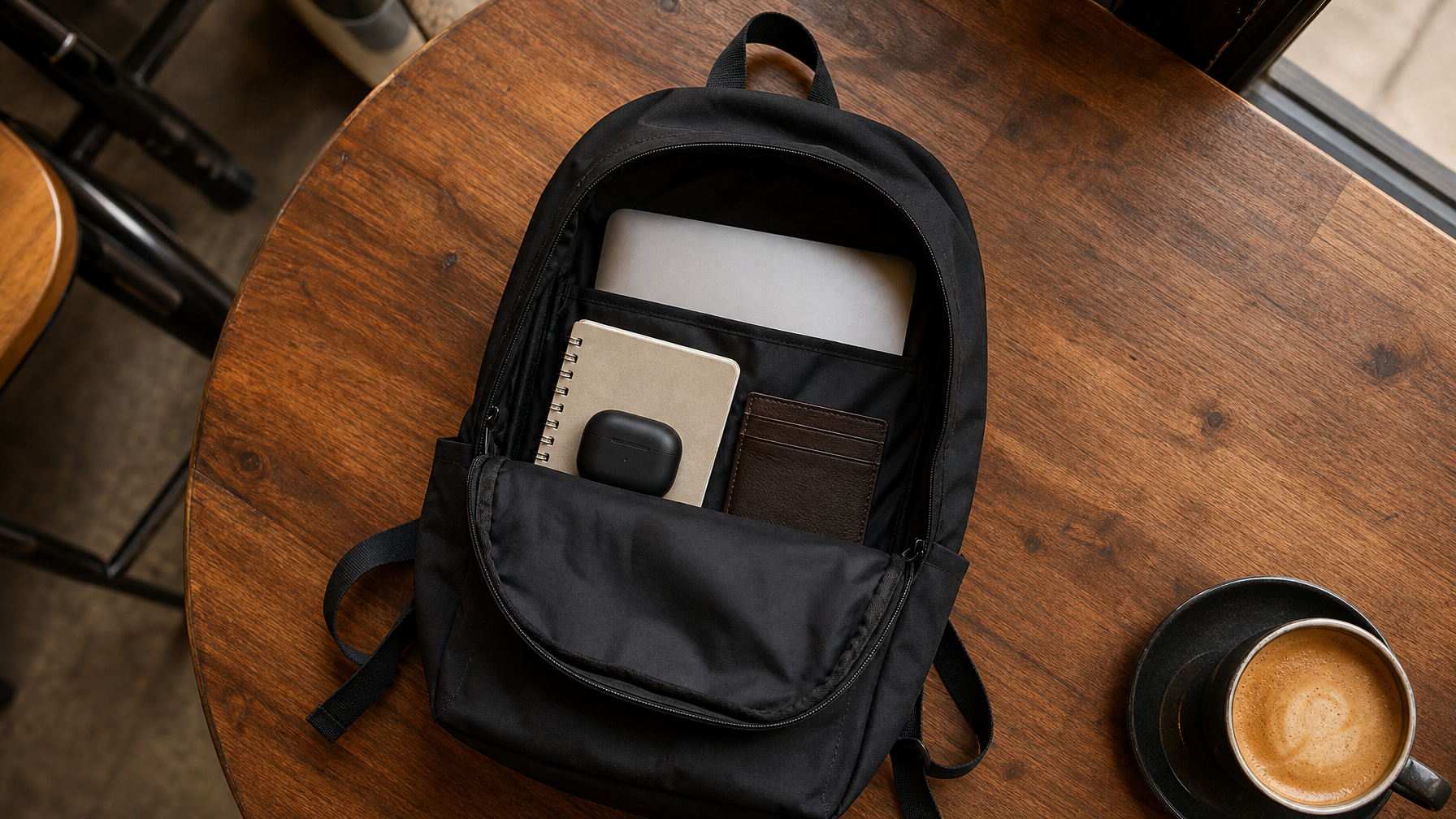
It fits a 14" laptop. The interior is organized without being over-complicated: a dedicated padded laptop sleeve, a main compartment with a fabric divider, and a front zip pocket for daily essentials. The organization serves a standard daily load without the feature-engineering that adds weight without solving problems.
The tradeoff is fixed capacity. The Lite Backpack is built for a set carry load. It doesn't expand for heavier days. If your daily carry regularly includes more than a laptop, a notebook, essentials, and a water bottle, you'll feel the limit. For commuters whose load is genuinely light, the Lite's combination of pack weight and organized carry is difficult to match at its price point.
Nomad Backpack ($89). Minimal With a Broader Register
The Nomad Backpack occupies a different position in this category. Its minimalism is aesthetic as well as functional. Where the Lite Backpack is engineered minimalism. Pare down until nothing non-essential remains. The Nomad reads as a considered, clean everyday pack that doesn't announce itself as a technical bag.
The design leans toward a slightly more casual, heritage-adjacent aesthetic. It fits a 14" laptop, handles a reasonable daily load, and works well across a wider range of contexts: co-working spaces, weekend markets, and coffee shops as easily as a morning commute. For people whose daily movement takes them across different kinds of environments, the Nomad's broader contextual range is an advantage.
The practical difference between the Lite and Nomad is less about specs and more about how the bag reads in daily life. If you're optimizing for the lightest possible commute pack, the Lite wins on numbers. If you want a bag that fits seamlessly across a wider range of situations without reading as explicitly "technical," the Nomad is the right choice.
When to Consider a Slightly Larger Bag
Not every minimal laptop backpack owner needs the absolute minimum. If your daily load regularly includes a full-size water bottle, a jacket, and cables, you'll want a bag that can expand without losing its shape or silhouette.
The Venture Backpack ($139) and Apex Backpack ($139. $159) step up in capacity without adding bulk for its own sake. Both are designed for organized daily carry, just with more room for the load that grows beyond the minimal baseline. Worth considering if you find yourself regularly stuffing a minimal pack to its limit.

How to Choose: A Simple Decision Framework
If weight is the primary filter: The Lite Backpack ($89, 1.0 lb). The lightest option with real laptop protection and organized carry for a standard daily load.
If aesthetic and contextual range matter: The Nomad Backpack ($89). A clean, versatile design that works across work, weekend, and casual contexts without performing any of them too deliberately.
If you regularly carry more than a minimal load: The Venture Backpack ($139) or Apex Backpack ($139. $159). More capacity, still organized, built for the days your load outgrows your minimalist intentions.
The decision usually comes down to honesty about your actual daily carry. Empty your current bag on a table and look at what comes out. Most people find that their daily essentials fit comfortably in a bag they've been overstuffing. And that the bag they actually need is meaningfully lighter than the one they've been carrying.
What About Crossbody Alternatives?
Some people searching for a minimal laptop pack are better served by a different format. If you carry a laptop on some days but not others, a crossbody messenger with a padded sleeve might fit your daily pattern better than a backpack.
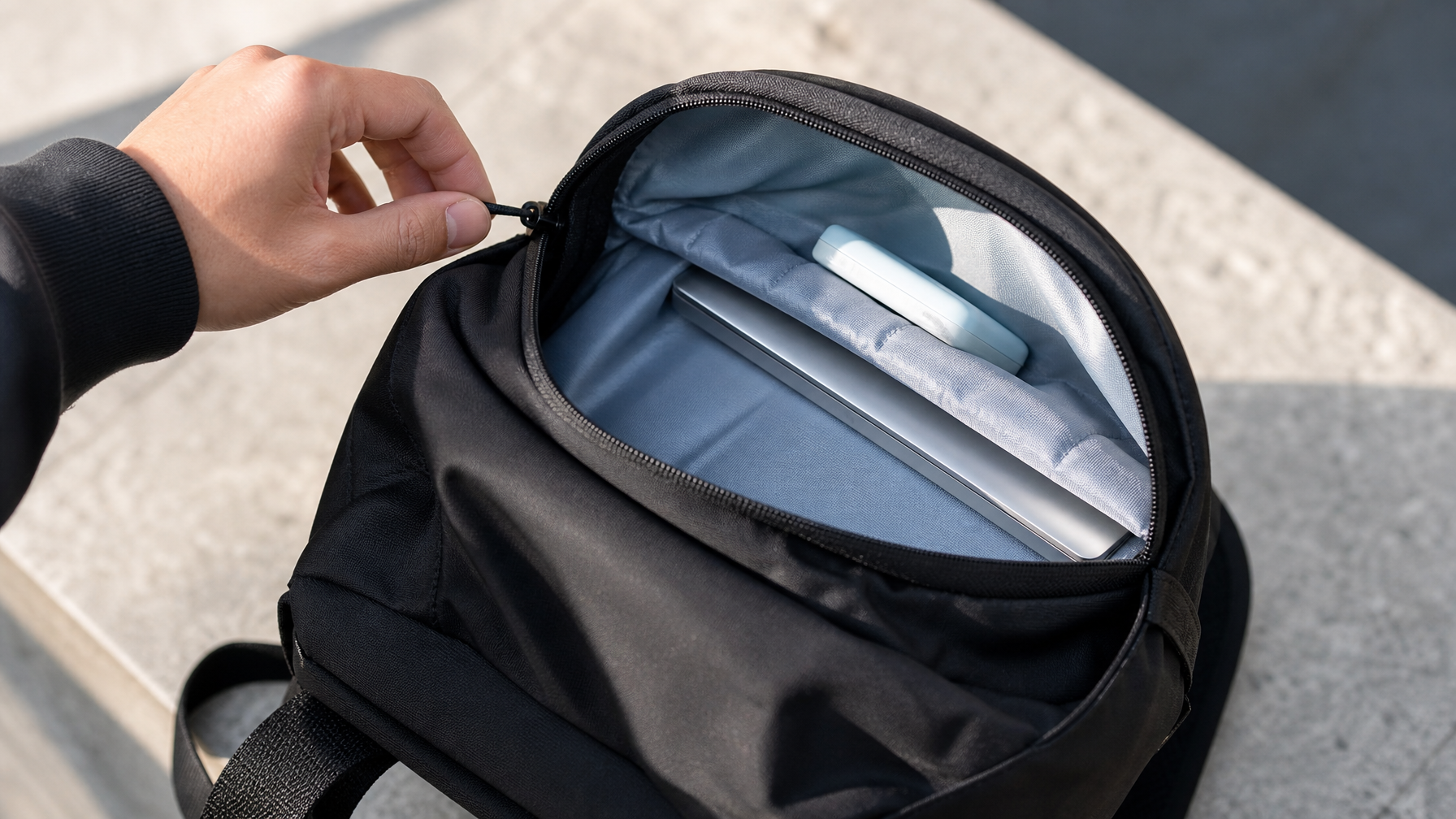
The Haven Messenger ($89) carries a 14" laptop, weighs 1.21 lbs, and offers fast top-zip access in a compact crossbody form. For commuters who shift regularly between laptop-carry days and lighter days, the messenger format is faster to adjust. And the crossbody position keeps both hands free throughout the commute.
The broader comparison between messenger and backpack formats is worth reading if you're still deciding: Messenger Bag vs. Backpack: Which Is Actually Better for Your Commute?
FAQ
What is the lightest laptop backpack?
For a backpack with real laptop protection and organized daily carry, the Lite Backpack at 1.0 lb is one of the lightest options at its price point.
What's the difference between a minimalist backpack and a regular laptop backpack?
Primarily: weight, compartment count, and loaded profile. A minimalist backpack prioritizes low pack weight (under 1.5 lbs), fewer compartments than you technically could use, and a slim silhouette when loaded. A standard laptop backpack adds expansion panels, extra external pockets, and structural elements that increase weight without improving daily utility for a light commuter load.
Do minimalist backpacks work for travel?
For day trips and city travel, yes. For multi-day trips where you need to pack clothing, a minimal laptop pack reaches its capacity limit quickly. For that scenario, the Transit Pack ($199, expandable 20. 35L) is designed specifically for carry-on and multi-day travel.
Is a minimalist backpack appropriate for the office?
The clean exterior and slim profile of a minimal pack works well in professional contexts. It doesn't read as expedition gear in a conference room. Both the Lite Backpack and Nomad Backpack present cleanly in office environments.
What if I carry a laptop some days but not others?
A two-bag approach works well here: the Lite Backpack for laptop days and a Commuter Sling ($89, 0.66 lb) for lighter days. The two bags together cover the full range of your carry without either one compromising for the other's use case.
The right minimal laptop backpack is the one that stops being something you think about once you put it on. The load is where you placed it, the laptop is where you need it, and the bag's weight isn't the first thing you notice when you walk out the door.
That's the whole premise. Most bags make it harder to keep than it should be.