


The Ferry Commute Bag Setup: What to Carry When You Take the Boat In

A ferry commute is not a train commute with a view. You walk to the terminal. You wait on a wet pier. You climb a ramp with one hand on a rail. You sit for twenty or forty minutes while spray hits the windows. Then you walk again.
This is a packing and wear setup, not a buying roundup. For subway cars, use bags for subway commuters. For commuter rail, use the commuter rail bag setup. For buses, use the bus commute bag setup. For walking the last mile, use the walking commute bag setup. For wet-day packing, use the rainy day commute bag setup. For fabric language, stay with waterproof versus water-resistant bags. Do not treat any Field & Ash bag as waterproof.
What a ferry commute actually does to a bag
The route has five jobs.
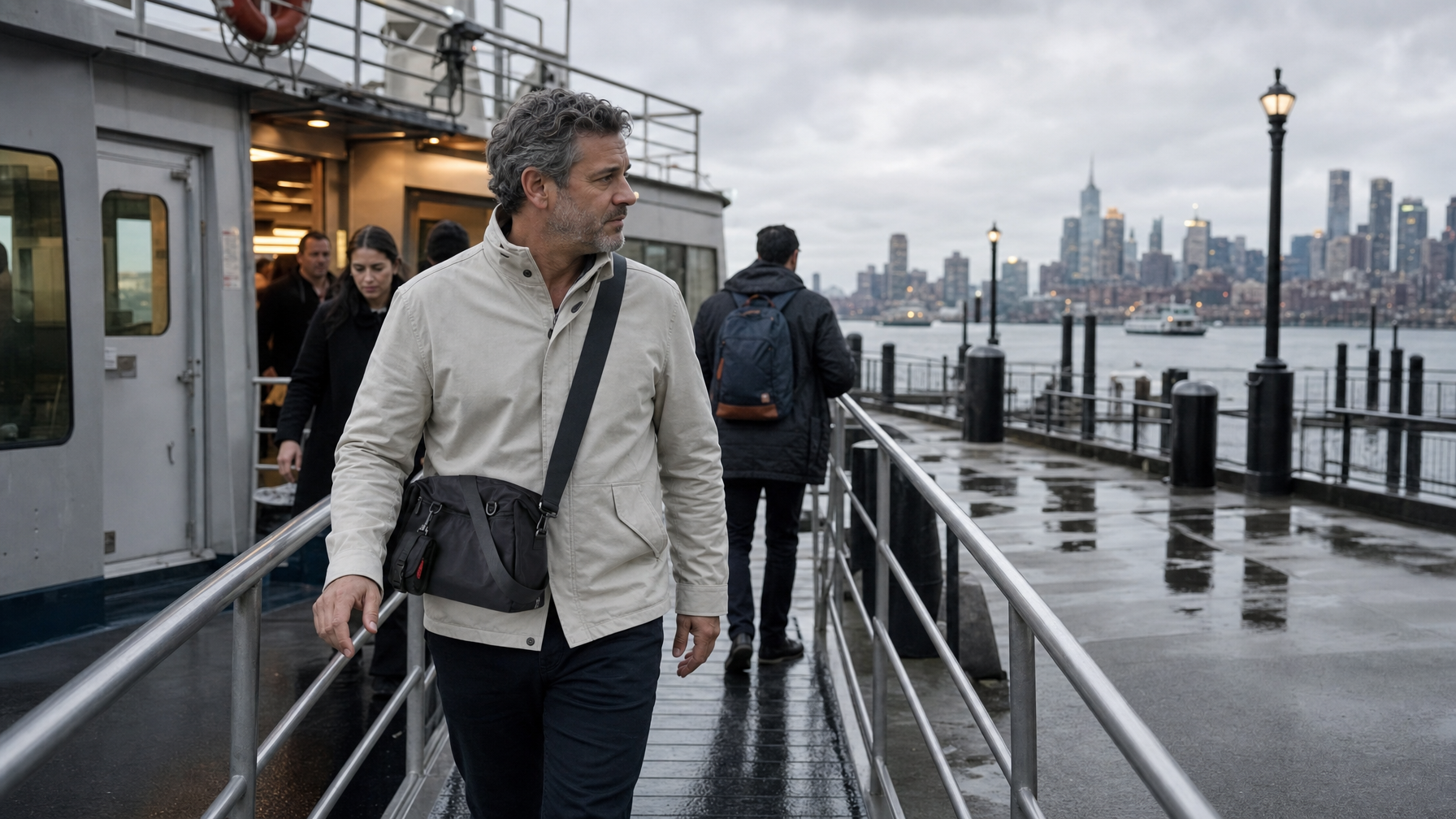
1. Terminal and ramp. Hands need to be free for a ticket, a fob, or a rail. A tote on one forearm fails here. A backpack stays on both shoulders. A crossbody stays on you while you climb.
2. Weather on the water. Decks are wet even when the sky is only grey. Spray, puddles, and damp benches are normal. A compact umbrella belongs in a dry sleeve, not loose against a laptop.
3. Seat or rail. Under the seat is the default if the bag is closed and off the floor splash zone. On your body is better in a crowded cabin. Do not use the aisle as storage. Do not set an open bag on a wet bench.
4. Access without a rebuild. Phone, wallet, and ticket should come out without unzipping the laptop. If you open the main cavity at the gangway, the list is too long.
5. Second walk. The city side is another last mile. The bag that survived the boat still has to sit at a desk without dumping spray onto the machine.
Weight still matters. If the empty bag already feels like a decision, the packed bag will. A simple check lives in how heavy your everyday bag should be.
The short ferry list
Build the list once. Edit it when the week changes, not at the dock.
Core list
- Laptop if the day needs it, closed, packed last
- One slim charger or cable, not the full brick kit
- Phone, wallet, keys
- Ticket, transit card, or building fob
- Compact umbrella in its own sleeve
- Headphones or one small audio case
- A thin layer you will actually wear on deck
Usually leave behind
- A second pair of shoes unless they live at the desk
- A leakable lunch in the same cavity as the machine
- Yesterday's receipts, cables, and half-empty bottles
- A gym load (that is a different article: gym to office without switching bags)
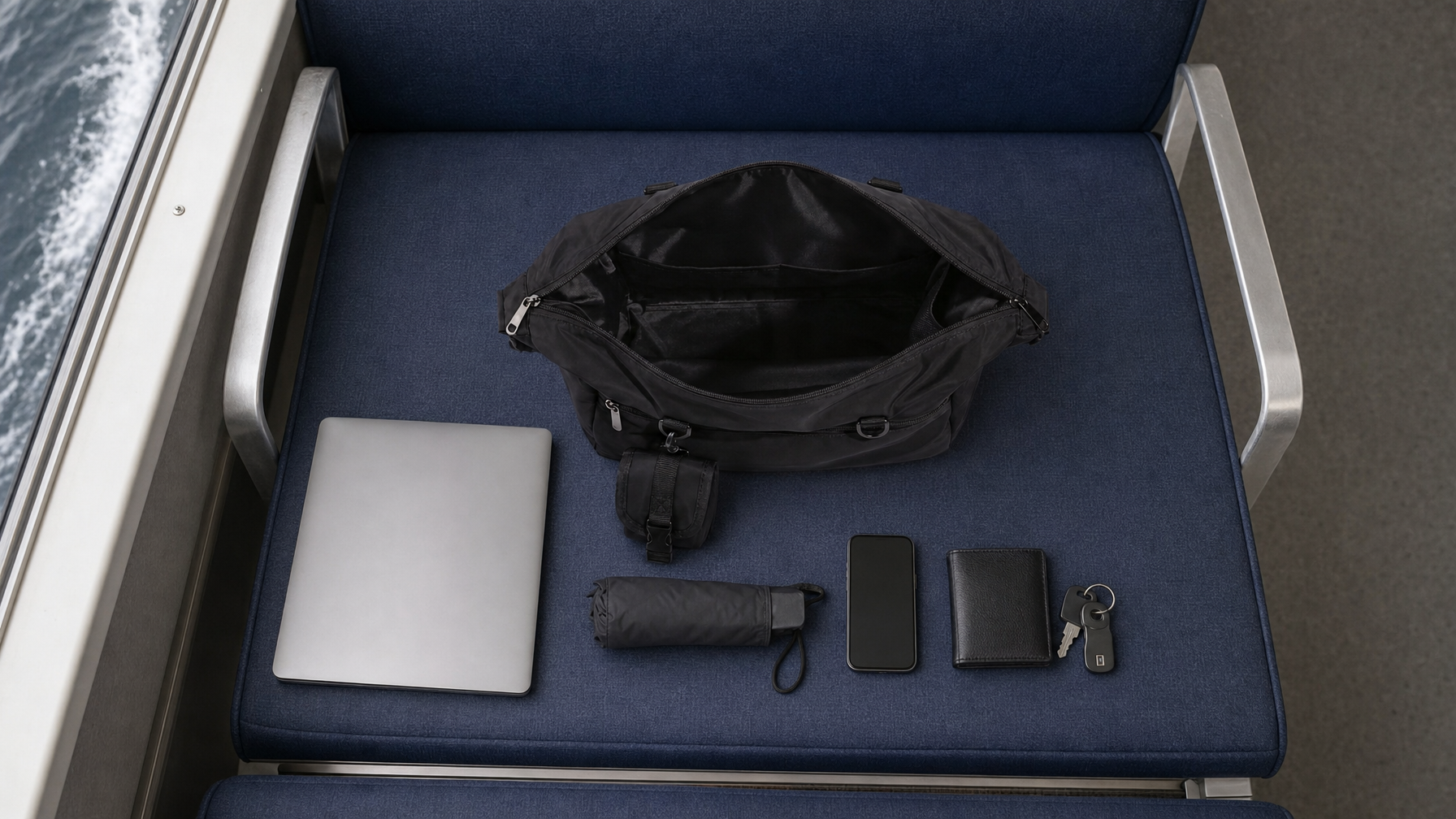
On the Haven Messenger, the front pocket fits your phone, wallet, and card together. Access the front pocket while Haven stays at your side. The detachable pouch holds one small essential, such as AirPods. A separate back pocket fits a phone and wallet together. A laptop up to 14 inches sits in the open main compartment. There is no padded dedicated laptop sleeve.
How to pack so the ramp is not a rummage
1. Hard items first, laptop last. Soft layers go around the edges. The machine goes in closed, then the zip closes. If you still need something from the main cavity after that, cut the list.
2. Daily grab items stay outside the main zip. Phone, wallet, and ticket belong in a front or side pocket you can open without exposing the laptop. That is the whole point of a ferry commute bag setup.
3. Wet objects stay isolated. A compact umbrella is a wet object after the first crossing. It does not share a cavity with a laptop. For a full wet-day ritual, use the rainy day commute bag setup.
4. Keep the bag on you when the cabin is crowded. A bag on a neighboring seat takes on other people's coats and the next splash from the door.
Wear it so the ramp stays two-handed
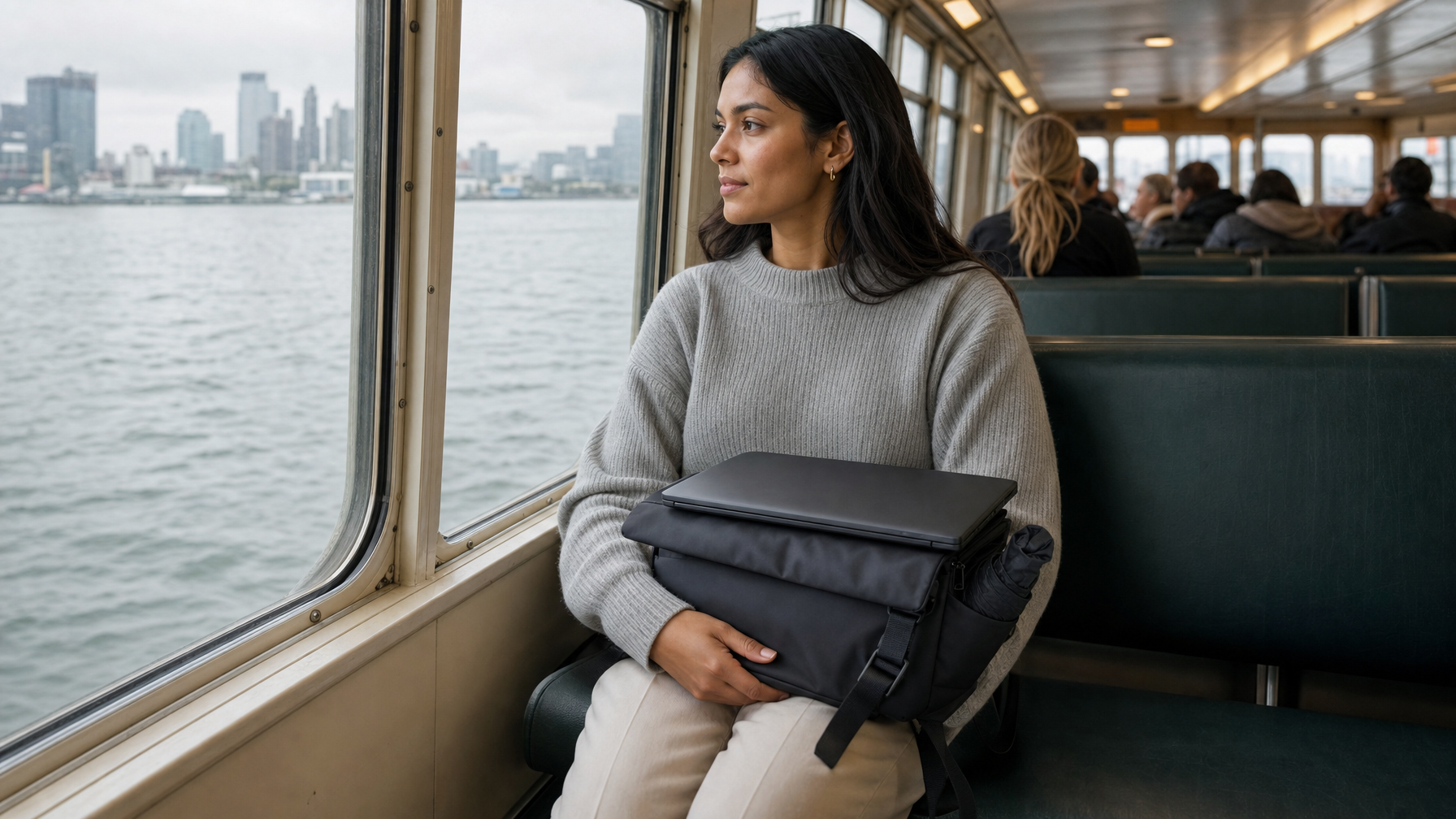
A ferry ramp is a short climb with a moving boat. One hand on the rail is the default.
Crossbody. Keep the bag high enough that it does not swing into the rail. The strap stays taut. Grab items stay in the front pocket so the main zip stays closed.
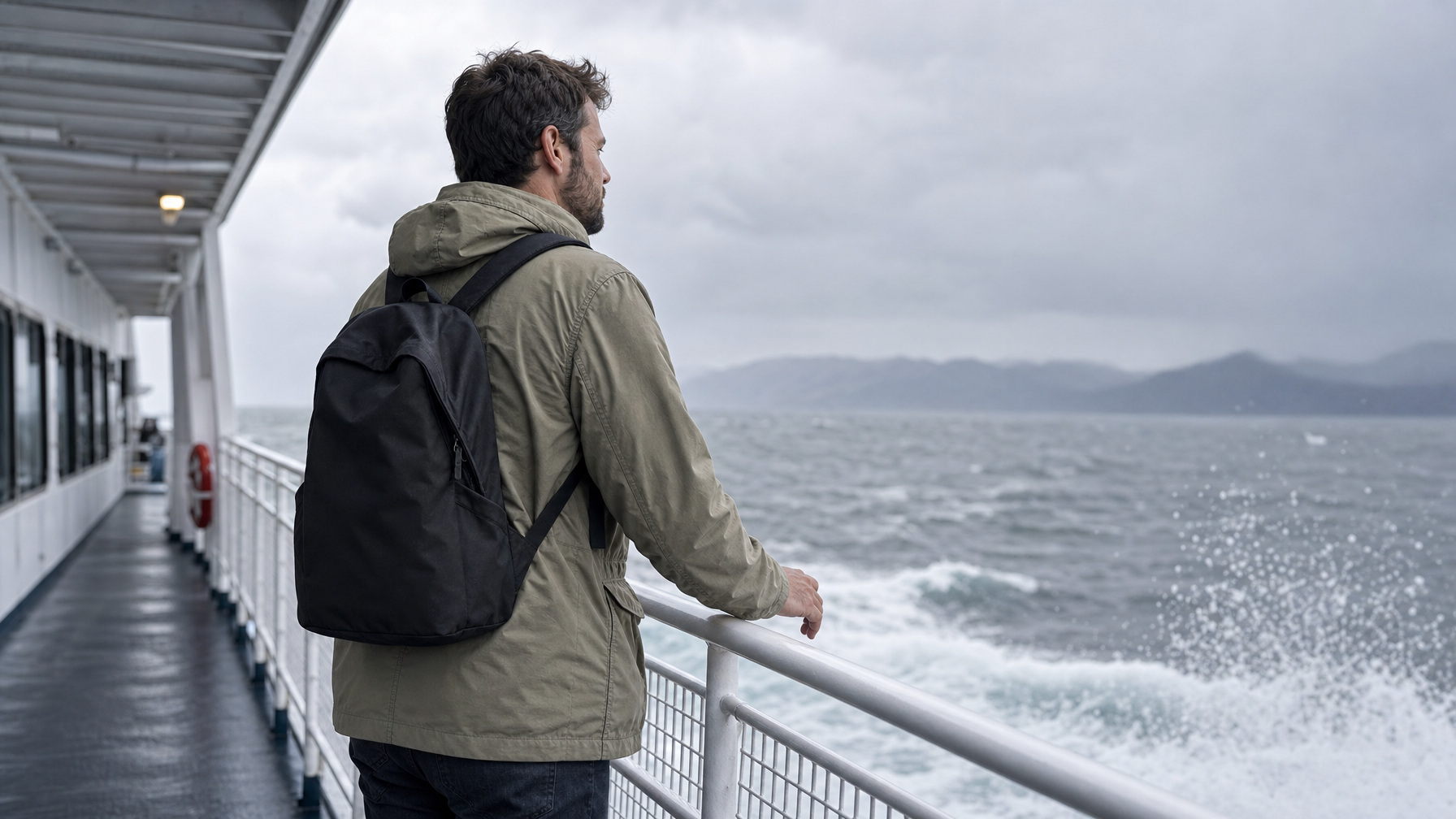
Two straps. Both straps on. Do not drop one strap to one shoulder on the gangway. A backpack that stays on both shoulders leaves both hands free.
Never. A tote hanging from one forearm on a wet ramp. An open top on deck. A bag set on the floor in the splash zone by the door.
Deck time is optional. If you stand at the rail, keep the bag zipped and on your body. Wind will find a loose flap.
Which bag holds a ferry day well
Once the list is honest, format follows the machine and the walk on both sides of the water.
Haven Messenger ($89), most city laptop days
Crossbody keeps one hand free on the ramp. The front pocket fits your phone, wallet, and card together so you do not open the main compartment at the ticket check. A laptop up to 14 inches sits in the open main compartment. There is no padded dedicated laptop sleeve. Shop the Haven Messenger.
Lite Backpack ($89), two-strap days
Two straps stay put in wind and on stairs. Use it when the laptop days are regular and you want both hands free for the rail and the city walk. Shop the Lite Backpack.
Metro Laptop Brief ($79 / $99), slim cabin days
The brief sits on a lap without dumping. Choose the 14-inch variant when the machine is a laptop; the 11-inch variant is for a smaller tablet day. Keep grab items in the front zip so the device sleeve stays closed on the ramp. Shop the Metro Laptop Brief.
Commuter Sling ($89), light days without a laptop
When the machine stays at the desk, a sling is enough for phone, wallet, keys, and a layer. Do not force a stuffed messenger on those days. The split is covered in two bags for hybrid work. Shop the Commuter Sling.
If you only carry a machine two or three days a week, do not force one stuffed bag on the light days. For what stays at the office, use desk stash versus commute bag. For the weekday item list, use the work bag essentials list. For the night-before pass, use night-before bag prep.
A simple check before you leave the house
Zip the main cavity. Confirm the ticket and phone are in an outer pocket. Confirm the umbrella is sleeved. Confirm nothing leakable sits on the machine. Then stop editing the bag at the dock.
The ferry will be wet on some days and merely damp on others. The setup does not change. Carry deliberately.