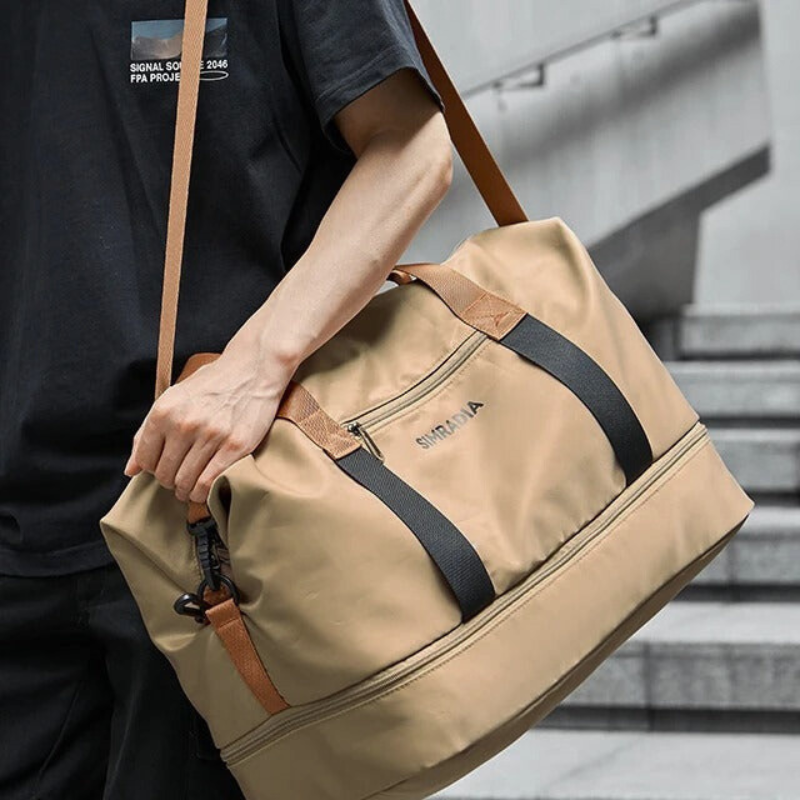



Is a Tote Bag Good Enough for Work? An Honest Answer for Daily Commuters

Is a tote bag good enough for work? For a lot of people the answer starts as yes. A tote is light, open, and easy to grab on the way out the door. It holds a laptop, a notebook, a water bottle, and whatever else got tossed in during the week. Then the commute starts testing that answer.
This guide is for anyone using a tote as a default work bag and wondering whether it is still the right tool. It is not a fashion takedown. Soft totes are excellent for some jobs. Daily professional carry is a different job.
What a tote bag is actually good at
A tote shines when the day is short and the load is light. Errands. A single meeting. Carrying a change of shoes. Bringing lunch into an office that already holds your laptop. Open-top access is fast when you are standing still and both hands are free.
Totes also win on simplicity. There is almost no learning curve. You open the top, drop items in, and leave. For people who refuse complicated packing systems, that simplicity is the whole appeal.
If your workday looks like: walk a few blocks, sit at one desk, leave with the same three items you brought, a well-made tote can be enough.
Where tote bags start failing on a real commute
Problems show up when the day gets longer, wetter, busier, or more laptop-heavy.
No structure around the laptop. Most fabric totes do not hold a laptop in a stable, protected position. The computer slides, leans, and takes the shape of whatever else is in the bag. That is fine for a short car ride. It is a risk on a crowded train, a bike rack, or a sidewalk stumble.
Open tops and weather. Rain turns an open tote into a funnel. Even a brief shower can soak notebooks and damage electronics if there is no flap, zip, or cover.
Shoulder load without balance. A single soft strap concentrates weight on one point. As the bag fills, it rotates and digs. People compensate by hiking the strap, gripping the handle, or switching shoulders every block.
Access when your hands are full. A tote that looked efficient on the kitchen counter becomes awkward when you are holding coffee, a transit card, and a phone. Everything sits at the bottom. Finding a badge at a security desk means fishing.
The "black hole" effect. Without interior zones, small items migrate. Keys under the laptop. Chargers wrapped around a water bottle. The morning rummage is not a personality flaw. It is a design outcome.

When both hands are busy, an open tote stops feeling convenient.
A simple test: is your tote still earning its place?
Ask these five questions about a normal workday, not a best-case day.
- Does your laptop ever sit uncovered against the bag wall or other hard objects?
- Would a ten-minute rain delay actually worry you?
- Do you regularly dig for more than ten seconds to find badge, keys, or wallet?
- Does your shoulder feel the bag before you feel settled into the day?
- Have you ever set the tote down and watched it collapse or spill?
Two or more yes answers usually means the tote is being asked to do structured-work-bag work. That does not make you wrong for trying. It means the tool and the job no longer match.
What "good enough for work" actually requires
Work carry is less about looking serious and more about reliable movement.
- Laptop stability: the computer should not bounce freely against bottles and chargers.
- Weather realism: some closure or cover so a wet sidewalk does not become a crisis.
- Hands-free options when you need them: crossbody or dual-strap carry for stairs, transit, and security lines.
- Predictable access: a front or quick zone for phone, wallet, and badge.
- Shape that stands or sits: a bag that holds form on a meeting-room floor or under a chair.
None of that requires a stiff leather briefcase. It does require more structure than a soft open tote usually provides.
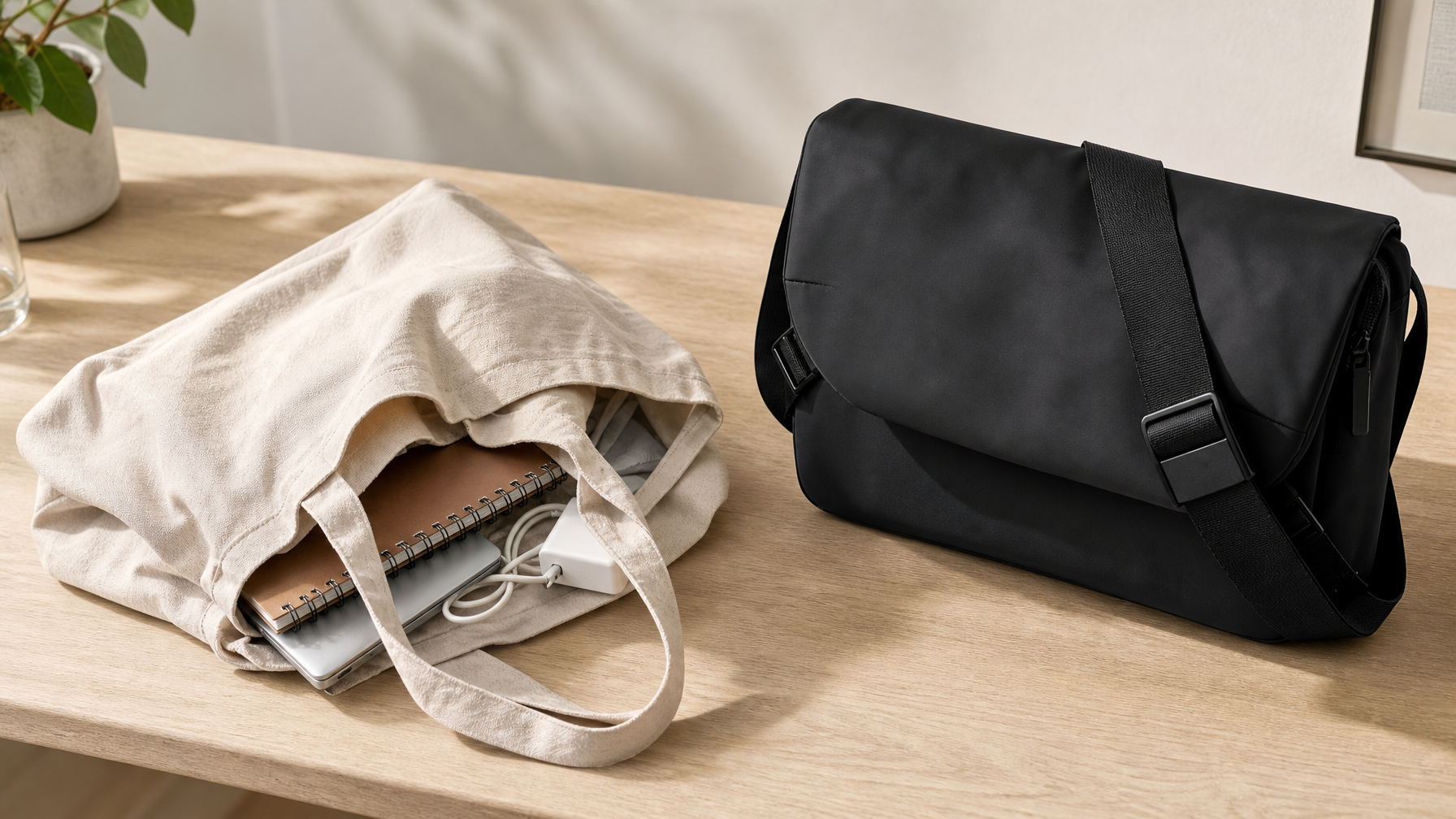
Soft tote versus structured work bag: same desk, different jobs.
When keeping the tote still makes sense
Keep the tote if:
- You drive door to door and rarely walk long distances with full load.
- Your laptop stays at the office most days.
- You use the tote as a secondary bag for gym clothes, samples, or client gifts.
- You prefer rotating a few light days with almost nothing to carry.
In those cases, upgrading the primary bag while keeping a tote as a satellite is often the calmest setup.
Practical upgrades if you are ready to move on
You do not need the most expensive bag in the category. You need a format that matches how you move.
Slim structured brief
If you want the clean professional silhouette of a tote without the collapse, a slim laptop brief is the closest upgrade. The Metro Laptop Brief is built as a compact professional carry: a defined shape for a laptop and daily documents, with a cleaner profile than an open canvas tote. It reads intentional in a lobby without asking you to manage a large backpack.
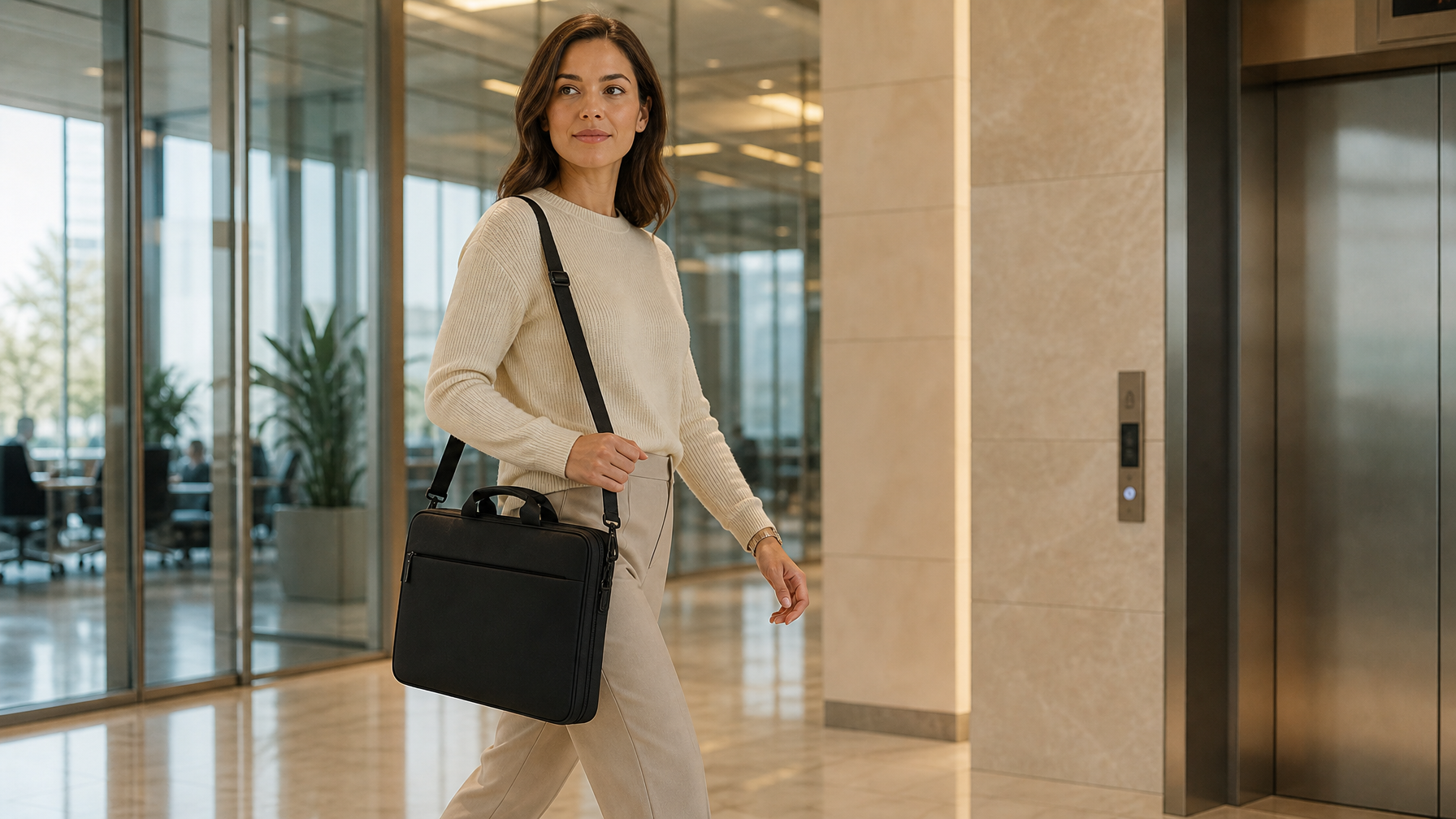
A structured brief keeps the laptop stable when the day includes lobbies, elevators, and back-to-back rooms.
Crossbody messenger for mixed days
If your day mixes desk work, errands, and transit, a crossbody messenger keeps weight distributed and the bag on your body when hands are full. The Haven Messenger is a modern messenger hybrid with a top-zip closure and an open main compartment that accommodates a laptop up to 14 inches. The front pocket fits your phone, wallet, and card together, which is the opposite of the tote black-hole pattern. The shell is water-resistant 600D Oxford, not a promise of full submersion waterproofing, but a realistic step up from open canvas in light rain.

Closed top, defined zones, and a shape that stays put when you set it down.
Lighter crossbody if price or scale is the hesitation
If the barrier is simply "I do not want another large bag," start smaller. The Transit Crossbody is an entry-priced slim crossbody for lighter professional days when a full messenger feels like overkill. Use it when the laptop stays home or docks at the office and you still want secure everyday essentials.
How to transition without overcomplicating it
- List your true daily load for one week. Laptop yes/no. Charger type. Notebook. Water. Headphones. Badge.
- Separate tote jobs from work-bag jobs. Keep the tote for groceries, library holds, or overflow. Stop asking it to protect the machine every day.
- Pick one primary format (brief or messenger) and run it for ten workdays before buying a second bag.
- Move three items into fixed homes: laptop, keys, and wallet. Everything else can stay flexible.
- Retire the guilt. Using a tote for years was reasonable. Updating the tool is maintenance, not failure.
Related reading from the Journal
If you are building a fuller system around work carry, these pieces go deeper on adjacent decisions:
- The Best Men's Work Bags of 2026: Which Style Actually Fits How You Work?
- Women's Everyday Carry: The Practical Guide That Starts With How You Move, Not What Looks Good
- Crossbody Bags for Work: What to Look For Before You Buy
- How to Organize Your Bag: The System That Stops the Morning Rummage
Bottom line
A tote bag can be good enough for work on light, dry, low-friction days. It becomes a poor primary work bag when a laptop needs stable protection, weather is real, hands are full, or the shoulder pays for every extra item.
If your tote still passes the five-question test, keep it. If it fails, upgrade the structure, not the number of bags you own. One bag that matches the day beats three bags you rotate out of habit.
Carry deliberately.