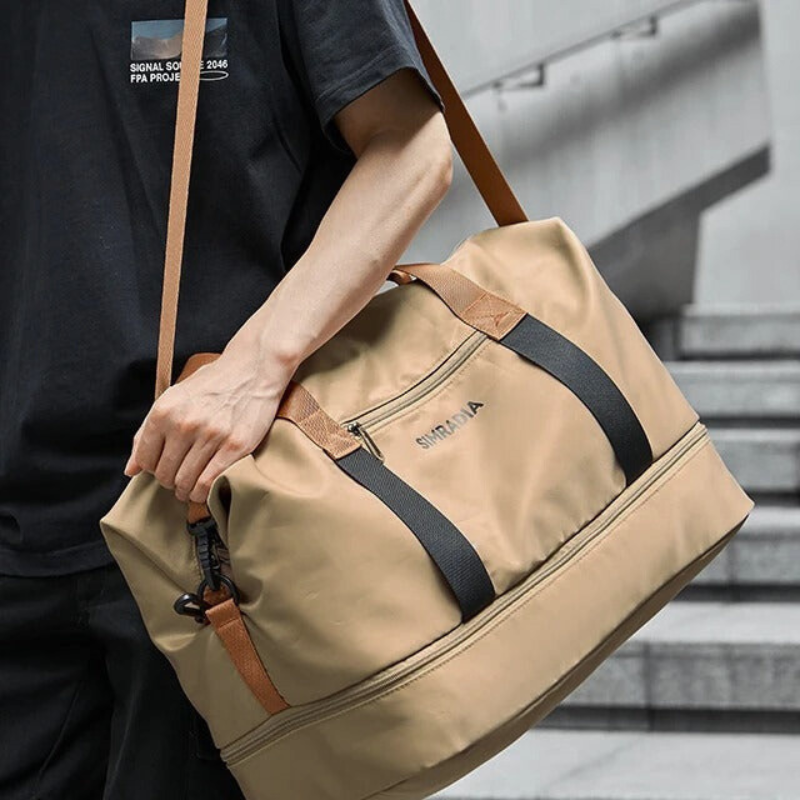



The Best Work Backpacks of 2026: From Budget to Premium

At some point the backpack you've been using stops working. Maybe it's the worn shoulder straps. Maybe it's the lack of organization. Everything in one compartment, laptop sliding around at the bottom. Maybe it's just that the bag has become something you manage, not something that helps you.
Finding a replacement work backpack shouldn't be difficult, but the category is crowded with bags that make the same promises without delivering on the details that matter. Too many pockets without enough logic. Laptop compartments that double as everything-else compartments. Shoulder straps that look padded in photos and feel like rope on a long commute.
This guide cuts through the noise. The criteria are simple: it has to carry your laptop securely, organize your gear without requiring you to reorganize it every morning, survive a daily commute without destroying your shoulder, and look right in a professional environment without trying too hard.
What Makes a Work Backpack Actually Worth Buying
A dedicated laptop compartment. Not a sleeve you have to fight
The laptop compartment should be dedicated, padded, and accessible independently of the main compartment. This means two things in practice: your laptop doesn't share space with everything else (no books sliding into the padded sleeve, no charger sitting on top of the laptop), and you can get it in and out quickly. At a standing desk, at security, at a coffee shop. Without reorganizing the entire bag.
Bags that put the laptop sleeve inside the main compartment fail this test. The laptop still technically has protection, but it's surrounded by everything else you carry, and accessing it means moving everything else first.
Shoulder strap engineering for actual weight
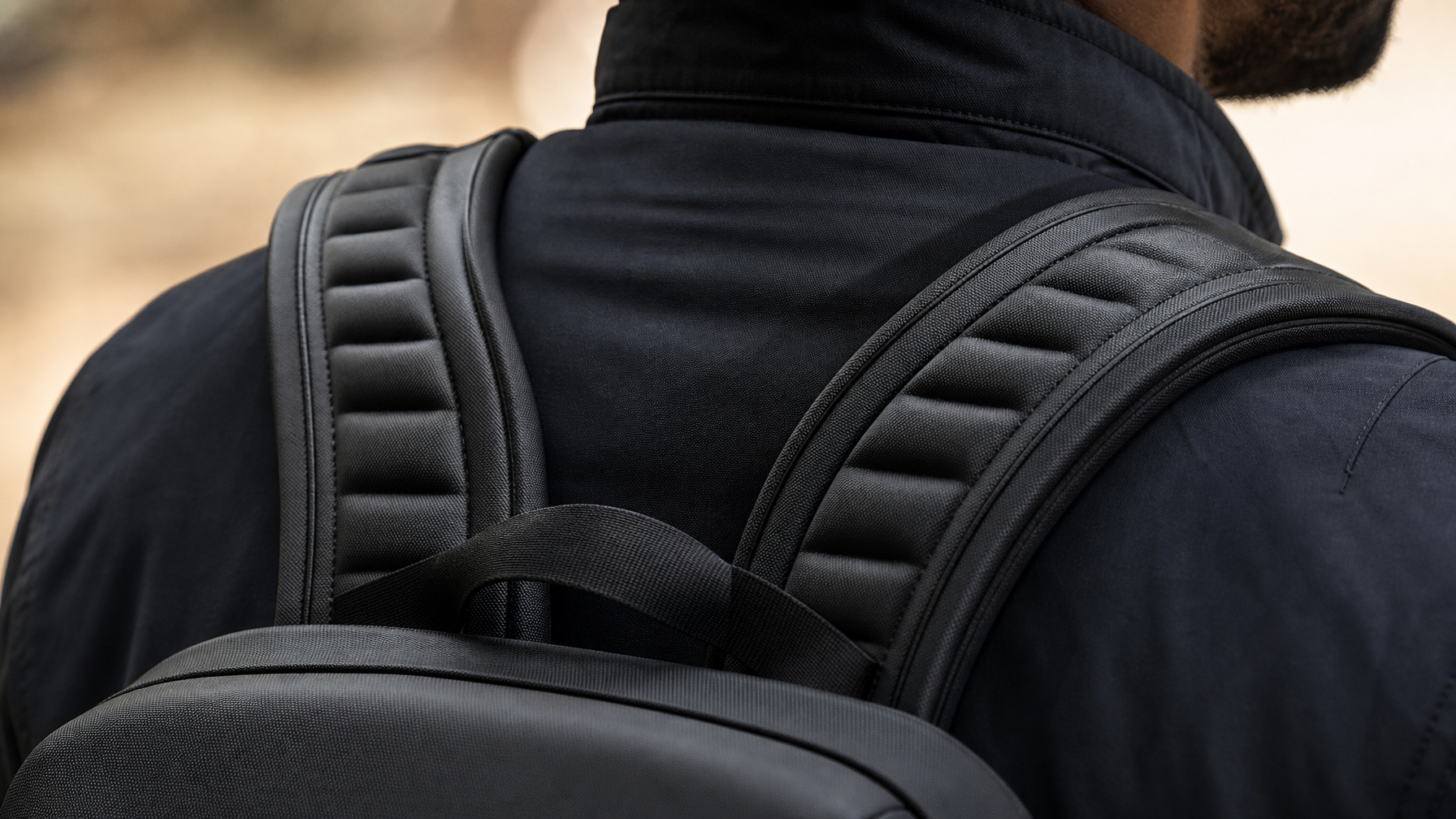
A fully loaded work backpack. Laptop, charger, lunch, notebook, water bottle. Can reach 12. 15 pounds. The shoulder straps need to be wide (at least 1.5 inches), padded with enough density to resist compression under load, and shaped to follow the natural curve of your shoulder and upper back. S-curve straps distribute weight across a wider surface area and reduce the pinch point where a straight strap concentrates load.
A chest buckle also matters more than most reviews acknowledge: it keeps the straps from sliding off your shoulders on a long walk and slightly offsets the weight from your spine. Optional when you're carrying 8 pounds; necessary when you're carrying 15.
Organization that stays organized
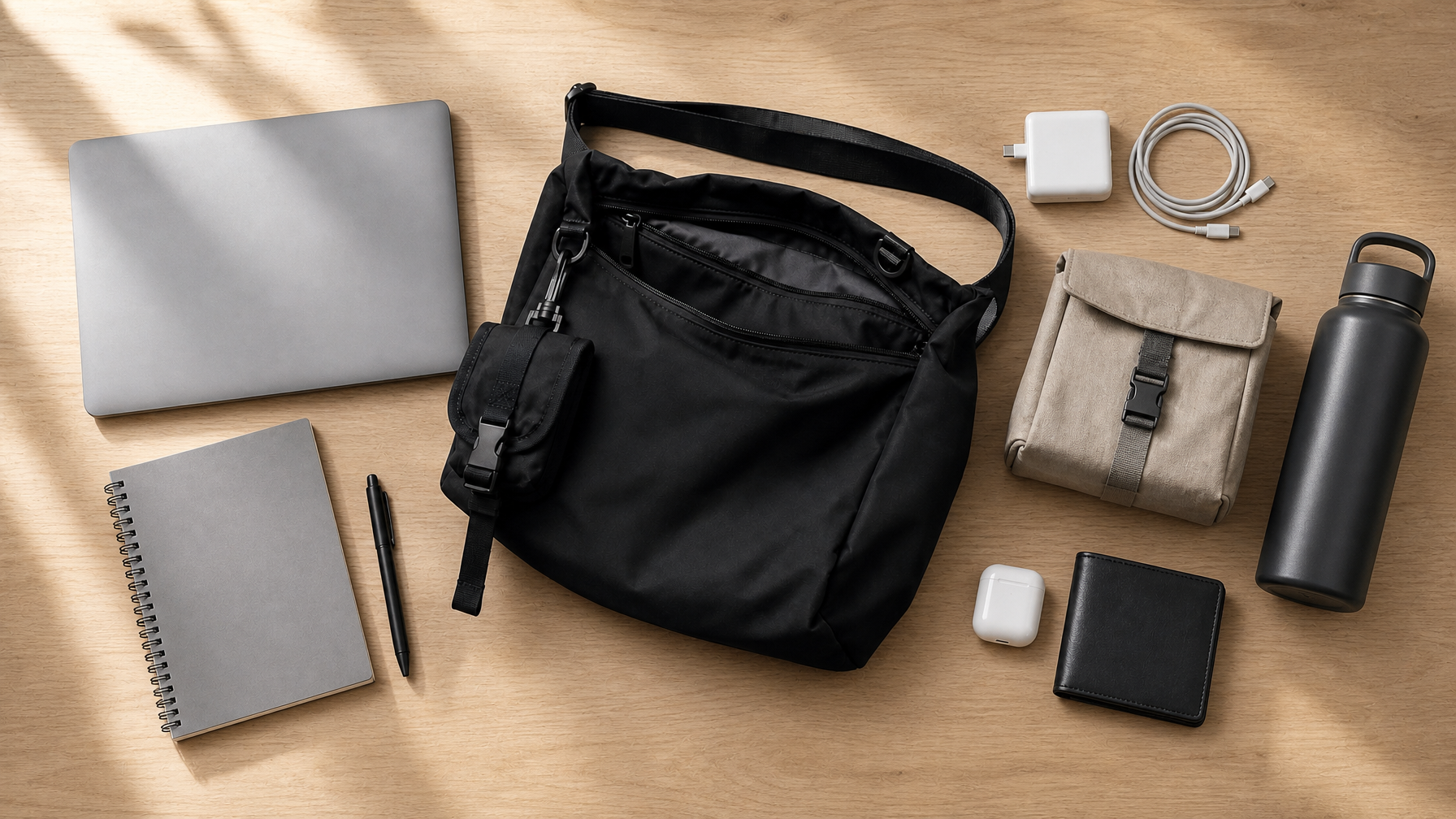
A work backpack's interior organization needs to survive real use. Not just the first day. That means pockets that are sized for the items that actually go into them: a front pocket deep enough for your phone without crowding your keys, an interior zip pocket for cables and accessories, side pockets that hold a water bottle upright without the bottle falling every time you lean over. The logic of the interior should be obvious before you put anything in it. If you have to figure out where things go, the organization will fail under pressure.
Weight-to-capacity ratio
The empty weight of the bag matters. A 2.5 lb backpack that holds 30L starts every day with a penalty. A 1.5 lb backpack at the same capacity gives you a pound of carry weight back before you put anything in it. For a daily commute bag. Something you carry 5 days a week, 50 weeks a year. That difference compounds into real strain over time.
The commuting with a laptop guide covers the full equipment setup that keeps carry weight manageable on a daily commute. The bag is part of the equation, but it's not all of it.
The Best Work Backpacks of 2026
Lite Backpack ($89). Best budget work backpack
At $89 and 1.0 lb empty, the Lite Backpack is the lightest entry point in the work backpack category that doesn't compromise on laptop protection. It carries up to a 15.6" laptop in a padded sleeve, has 29L of capacity, and is available in both Black and Beige. The Beige colorway being one of the few non-black options in the catalog. Expandable side pockets hold a water bottle. The ergonomic back panel makes the carry comfortable at this price point.
Where the Lite makes trade-offs: interior organization is sufficient but not deep. This is the right bag for someone who knows what they carry and doesn't need a pocket for every item. For buyers with simpler carry who want to spend as little as possible without getting a bad bag, it's the honest recommendation.
Venture Backpack ($139). Best everyday work backpack
The Venture Backpack is the step-up from the Lite and the most well-rounded work backpack in the catalog. At 26L, it's right-sized for a full professional workday. Large enough for everything, not so large that it becomes a weekend bag masquerading as a commuter pack. The interior has a dedicated laptop compartment (up to 15.6"), an interior zipper pocket, a flap zipper pocket, and two side pockets. A luggage pass-through strap makes it travel-compatible. The Oxford Khaki colorway gives it character the all-black catalog doesn't always offer.
At 2.1 lb empty, it's heavier than the Lite. The trade is the more organized and structured interior. For commuters who want a bag that feels considered rather than minimal, the Venture earns its place as the default recommendation in this category.
Apex Backpack ($139. $159). Best for heavy loads and large laptops
The Apex Backpack is the choice when you carry a lot, or carry big. Two separate device compartments. One for a laptop (up to 17.3"), one for a tablet. Keep everything separated. S-curve padded shoulder straps and an air-cushion waist belt make a 15-pound load significantly more comfortable over a long commute than a straight-strap alternative. Anti-theft zippers add security for transit-heavy commutes.
The Apex is more utilitarian in appearance than the Venture. It carries visual weight as well as physical weight. For commuters who prioritize capacity and ergonomics, it's the right call. For commuters who want the bag to recede into the background, the Venture or Lite is a better fit.
Transit Pack ($199). Best for commuters who also travel
The Transit Pack is the premium option for people whose work bag needs to do double duty. As an everyday backpack, it carries a 15.6" laptop in a padded sleeve, has interior organization for daily gear, and weighs approximately 1.6 lb empty. As a travel bag, it expands to 35L via a roll-top closure. Adding capacity for a multi-day trip without requiring a second bag.
At $199, it's the most expensive option in this guide. The premium is justified specifically for buyers who travel regularly for work and want one bag rather than two. For commuters who don't travel frequently, the Venture at $139 serves the daily use case better and costs less.
For a detailed breakdown of the Transit Pack in a one-bag travel context, the one-bag travel backpack guide covers how it performs across trip lengths.
How to Choose Between Them
The right answer depends on two things: how much you carry and how often you travel.
- You carry a laptop and the basics, and want to spend as little as possible: Lite Backpack ($89).
- You want an organized, well-considered daily commuter backpack: Venture Backpack ($139).
- You carry a large laptop or a heavy load five days a week: Apex Backpack ($139. $159).
- You travel regularly for work and want one bag for both: Transit Pack ($199).
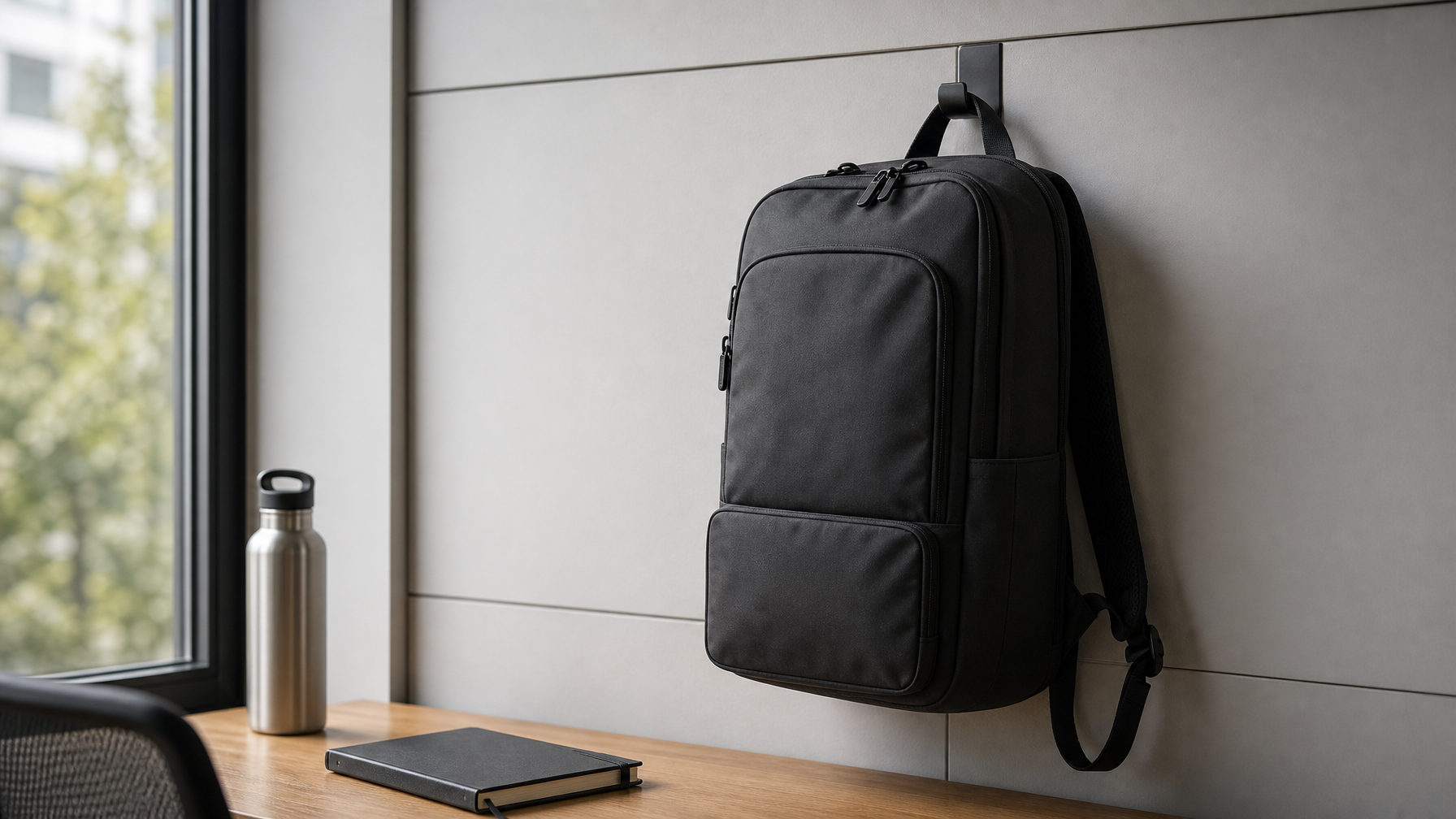
For more context on bag selection by commute type, the complete commuter bag guide covers the full decision framework. Messenger bags, backpacks, and crossbody options matched to how you actually get to work.
Frequently Asked Questions
What's the best work backpack for commuting by train or subway?
The Venture Backpack is the most balanced option for transit commuters. Right-sized at 26L, organized interior, and a clean aesthetic that works in professional environments. For heavier loads or large laptops, the Apex Backpack with anti-theft zippers adds transit-specific security features. Both work as daily commuters without adding unnecessary weight or visual bulk.
How much should I spend on a work backpack?
A work backpack that will last several years of daily commuting typically costs $89. $200. The Lite Backpack at $89 is the honest entry point. It does the job without compromise. Above that, you're paying for more organization depth (Venture at $139), heavier-load engineering (Apex at $139. $159), or dual commute-and-travel capability (Transit Pack at $199). The right budget is determined by what you carry and how far you commute.
Is a 26L backpack big enough for work?
For most professional commuters, yes. A 26L backpack comfortably holds a 15.6" laptop, a notebook, charger, lunch, and a water bottle with room to spare. You'd exceed it if you regularly carry multiple devices, large volumes of paper, or items for multiple activities in the same commute (gym gear + work gear). In that case, 30. 35L is a better fit. The Transit Pack at 20. 35L expandable is the right option for that carry profile.
What features should a work backpack have?
The five features that separate a functional work backpack from one that merely looks the part: a dedicated padded laptop compartment (separate from the main body), padded shoulder straps that are at least 1.5" wide, a front quick-access pocket, side pockets that hold a water bottle upright, and a weight under 2.0 lb empty. Any backpack that meets all five of these is worth evaluating on price and capacity. Any backpack that misses two or more of them is likely to fail under daily use. The Lite and Venture both meet all five.