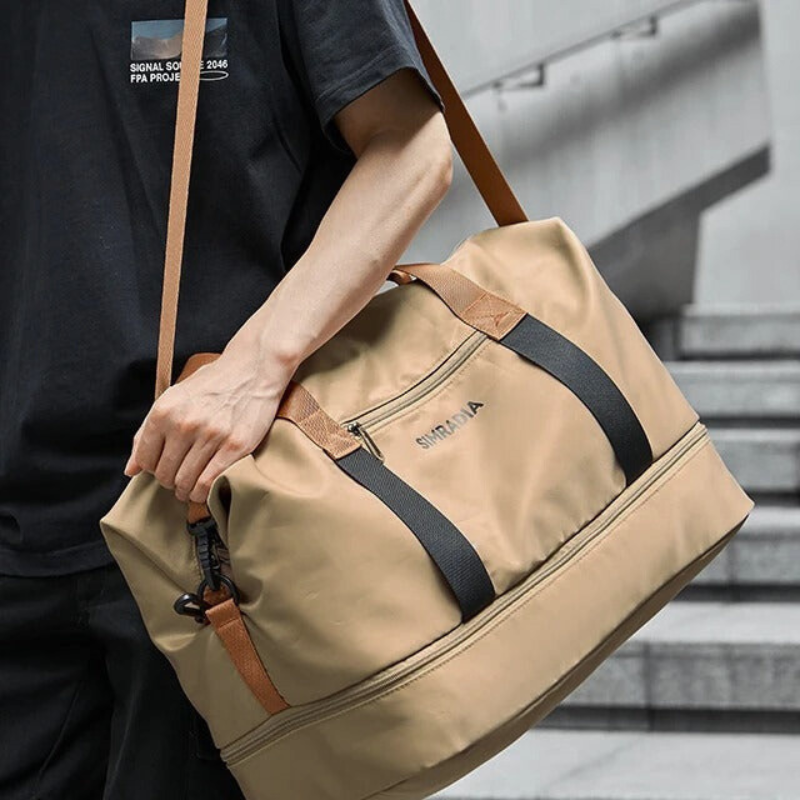



The Bike Commute Bag Setup: What to Carry When You Ride to Work

A bike commute is not a subway commute with pedals. The bag moves with your torso. It can swing into the wheel. Rain hits the zipper line, not just the floor of a train. Lunch and a laptop share a cavity unless you split them on purpose.
This is the buying and packing decision: what a bike commute bag has to do, how to wear it so it stays put, and which Field & Ash bags can carry a work day without turning the ride into a second job. For crowded platforms and standing-room cars, use The Best Bags for Subway Commuters. For daily weight, see how heavy your everyday bag should be. For rain language, stay with waterproof vs water-resistant.
The job is stability, then weather, then access
Write the ride as three jobs before you shop.
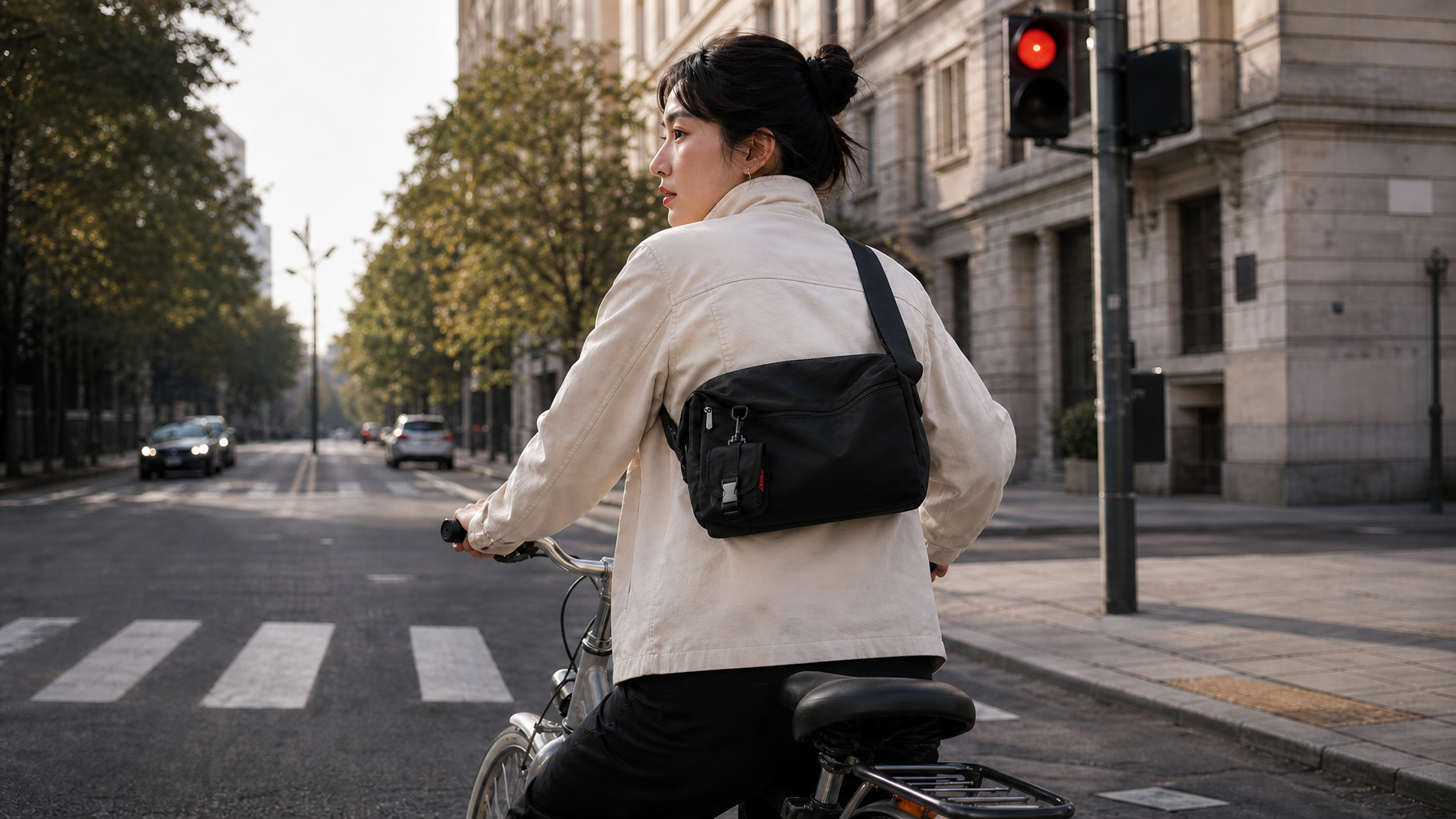
Job 1 is stability. The bag should sit high and close. A low swing hits the hip, the rack, or the rear tire. Two straps win once the load includes a laptop and a bottle. A messenger can work if the strap is short, the bag is worn high, and you are not adding a pair of shoes.
Job 2 is weather. Light rain is the normal case. Field & Ash shells are water-resistant Oxford or nylon for daily weather. None of these are fully waterproof. A compact rain shell in its own pouch beats hoping the zipper is a tent.
Job 3 is a dry laptop at the lock-up. You need a closed bag at the rack, then a clean pull at the desk. You do not need every pocket open while you are clipped in.
If those jobs stay mixed, a bigger bag only makes a heavier pendulum.
What actually goes in the bag
Keep the list short enough that you can still look over your shoulder.
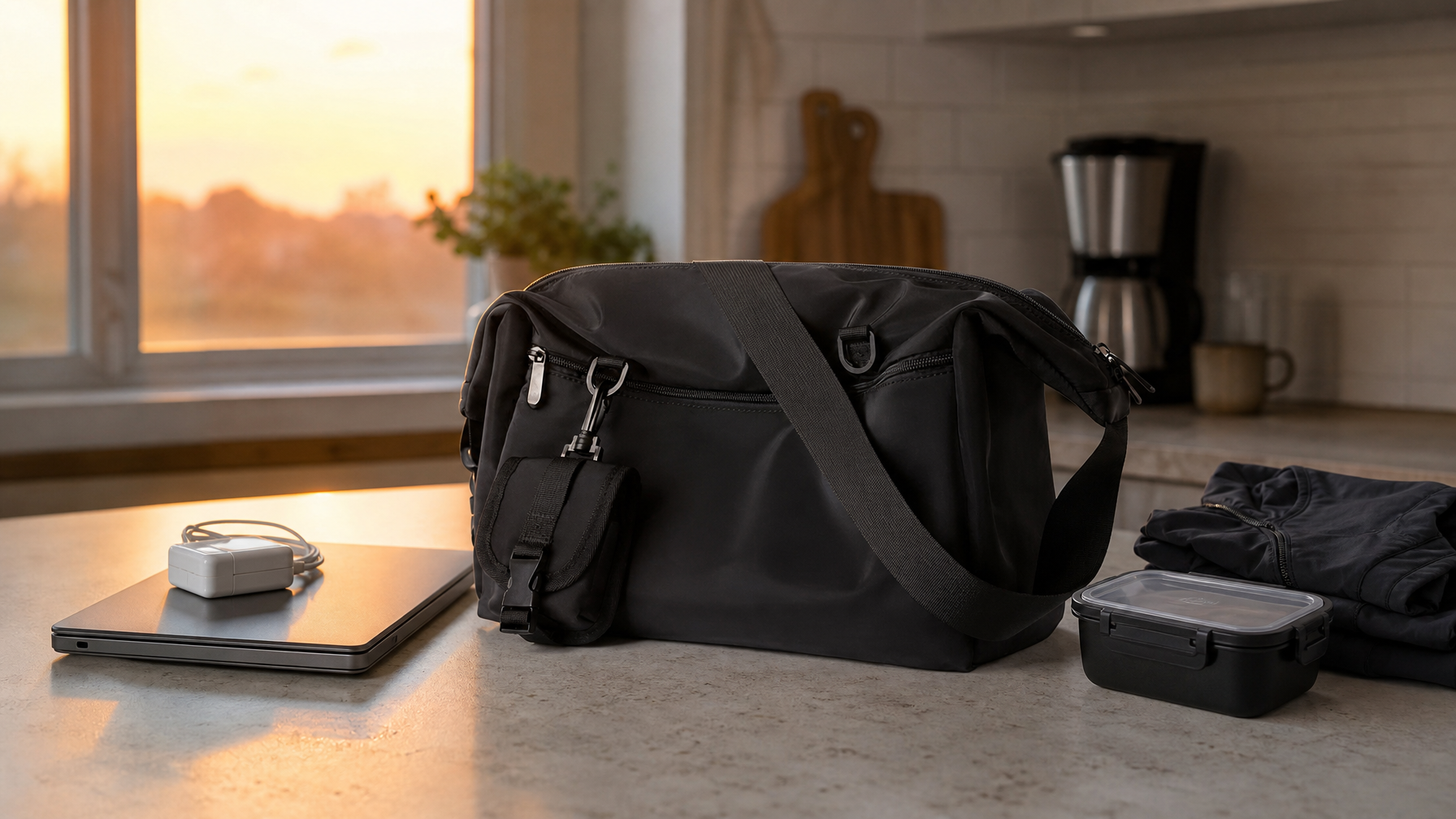
Standing kit:
- Laptop. On the Haven Messenger, a laptop up to 14 inches sits in the open main compartment, not in a padded sleeve. On Apex and Transit Pack, use the dedicated sleeve.
- Charger and one cable. Not the drawer.
- Badge, keys, wallet. Front pocket on Haven fits phone, wallet, and card together. Access that pocket with the bag at your side at the lock-up, not mid-intersection.
- A compact rain shell in a closed pouch.
- Lunch in a sealed box. Never loose next to the machine.
- Lights and a lock only if they do not live on the bike.
Leave at home: extra shoes, a week of snacks, a second bottle, a gym clothing change. Gym-plus-office is a different problem, already covered in Gym to Office Without Switching Bags.
Wear it high, or switch to two straps
A messenger that works on a sidewalk can fail on a bike. Shorten the strap until the bag sits on the upper back or high on the hip, not on the thigh. The wide webbing on Haven is meant to spread load. It still needs length discipline.
If the bag still swings when you stand on the pedals, that is the signal to move to a backpack. Do not add a chest strap as a personality. Add two straps because the load asked for them.
Rain is a pouch problem, not a fabric slogan
Water-resistant Oxford handles light rain and road spray. It does not make the bag a dry bag. Put the rain shell on before the zipper line soaks. Keep the laptop in a sleeve when the bag has one. On Haven, keep clothing and lunch already bagged so the main compartment is not a sponge against the screen.
Wipe the shell at the rack. Do not park the bag in a puddle on the floor of the lobby.

Which bag for which ride
Haven Messenger ($89), short city rides with a 14-inch machine
Haven is the light messenger answer. Main compartment holds a laptop up to 14 inches with no padded dedicated sleeve. Front pocket fits phone, wallet, and card together. A separate back pocket fits a phone and wallet together. The detachable pouch holds one small essential, such as AirPods.
Use Haven when the ride is short, the load is laptop plus rain shell plus lunch box, and you will wear the strap high. Skip it when you add shoes or a clothing change.
Apex Backpack ($139 / $159), full laptop days on two wheels
Apex is the heavy-load answer. Capacity runs 20 to 35 liters. There is a separate padded laptop compartment plus a tablet compartment. Two size variants cover 15.6-inch and 17.3-inch laptops. S-shaped straps matter once a bottle and lunch join the machine.
Materials & Care language on the product is water-resistant nylon for light rain, not a submersible shell.
Transit Pack ($199), days the volume changes
Transit Pack is the expandable roll-top. Volume runs 20 to 35 liters. Dedicated sleeve for laptops up to 15.6 inches. Weight is about 1.6 lb. Materials & Care describes water-resistant Oxford for daily use and light rain.
Use the lower volume on office-only rides. Unroll height when a layer and lunch need the extra column. Keep the laptop in the sleeve.
Lite Backpack ($89), light two-strap days
Lite is the lightest backpack in the catalog at about 1.0 lb. Use it when the ride is the commute and the load is a smaller laptop day without shoes. It is the wrong pick if you want expansion for a clothing change.
The lock-up, then the lobby
At the rack: bag stays closed. Helmet comes off. Lights stay on the bike if they live there. The rain pouch comes out only if it is wet, not because you like rearranging.
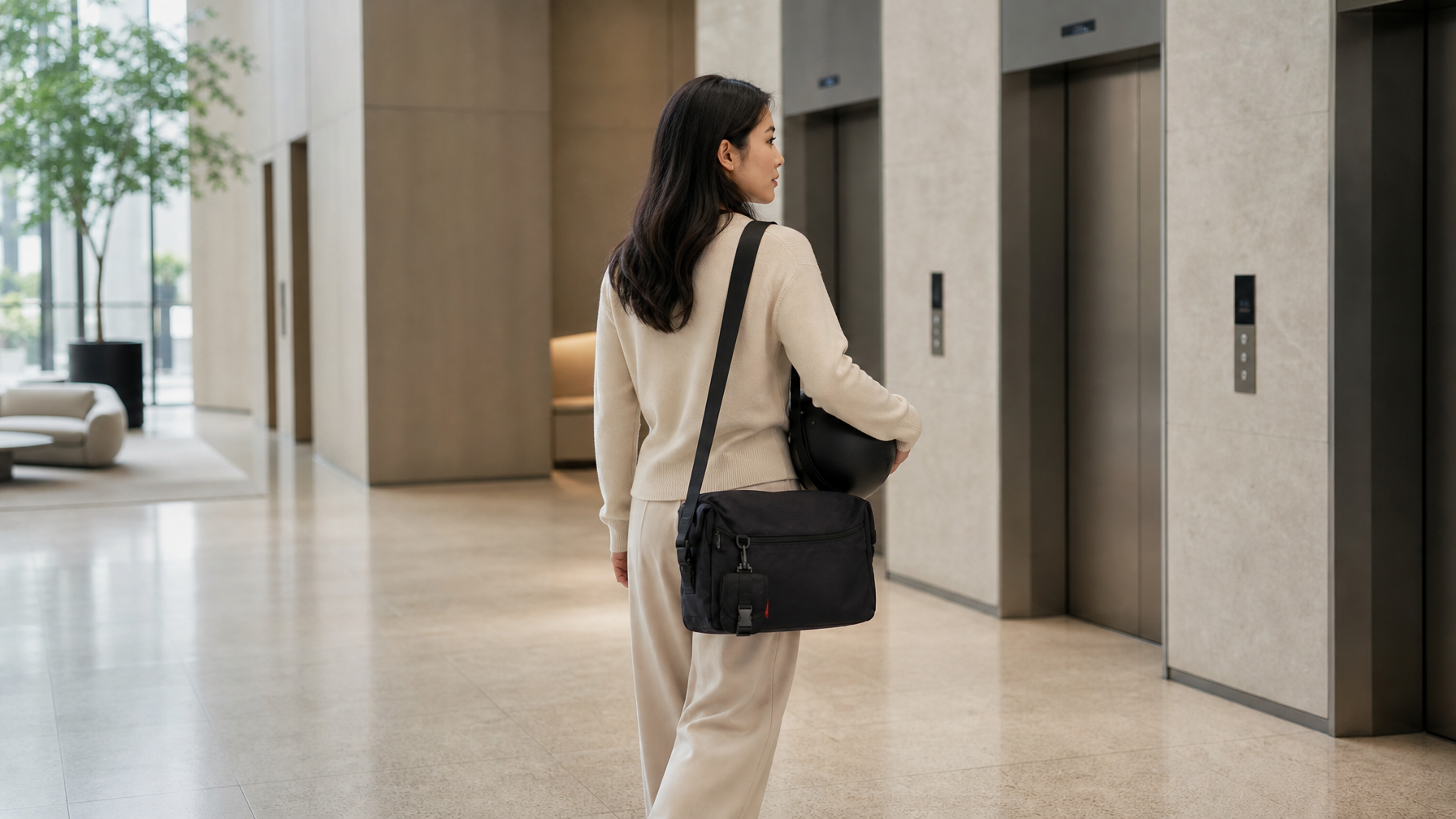
In the lobby: one wipe of the shell if the ride was wet. Then the laptop comes out at the desk, not in the elevator.
When the bike bag is the wrong tool
Walk or take transit when the load includes a 17-inch machine plus lunch plus a clothing change, or when the forecast is standing water. A bike commute bag is a closed, high, short list. It is not a gym duffel and it is not a touring pannier.
If you only carry phone, wallet, and keys some days, do not drag the backpack. That is a different problem. See laptop days versus light days.
The test is simple. If you can lock the bike, walk a flight of stairs, and sit down without unpacking in the stairwell, the setup is honest.