


Packing Cubes: Do They Actually Help? What Works and What Doesn't

Packing cubes get sold as extra space. They are not extra space. A cube is a zipper around fabric you already own. If you already fold poorly and bring too much, cubes will hold the same excess in neater rectangles.
They help when they change how you open a bag. On a two-night trip you want one cube for worn clothes, one for clean clothes, and a small third only if shoes or cables would otherwise migrate. That is the whole argument. Pair this with the weekend trip bag setup and carry-on only packing for the bag and the trip length. This piece is about whether cubes earn a place inside that bag.
What cubes actually do
A cube does three useful jobs:
- It groups a category so you can lift it out as one object.
- It keeps dirty fabric from mixing with clean fabric.
- It stops socks and chargers from sinking to the bottom of an open main compartment.
A cube does not compress air out of a roll-top the way a vacuum bag does. Compression cubes squeeze volume a little. They also make unpacking slower if you overfill them until the zipper fights you.
If your weekend bag already has a laptop sleeve and one interior zip pocket, cubes should not replace those pockets. Cubes handle clothing. Pockets handle devices and small hard goods.
When they help
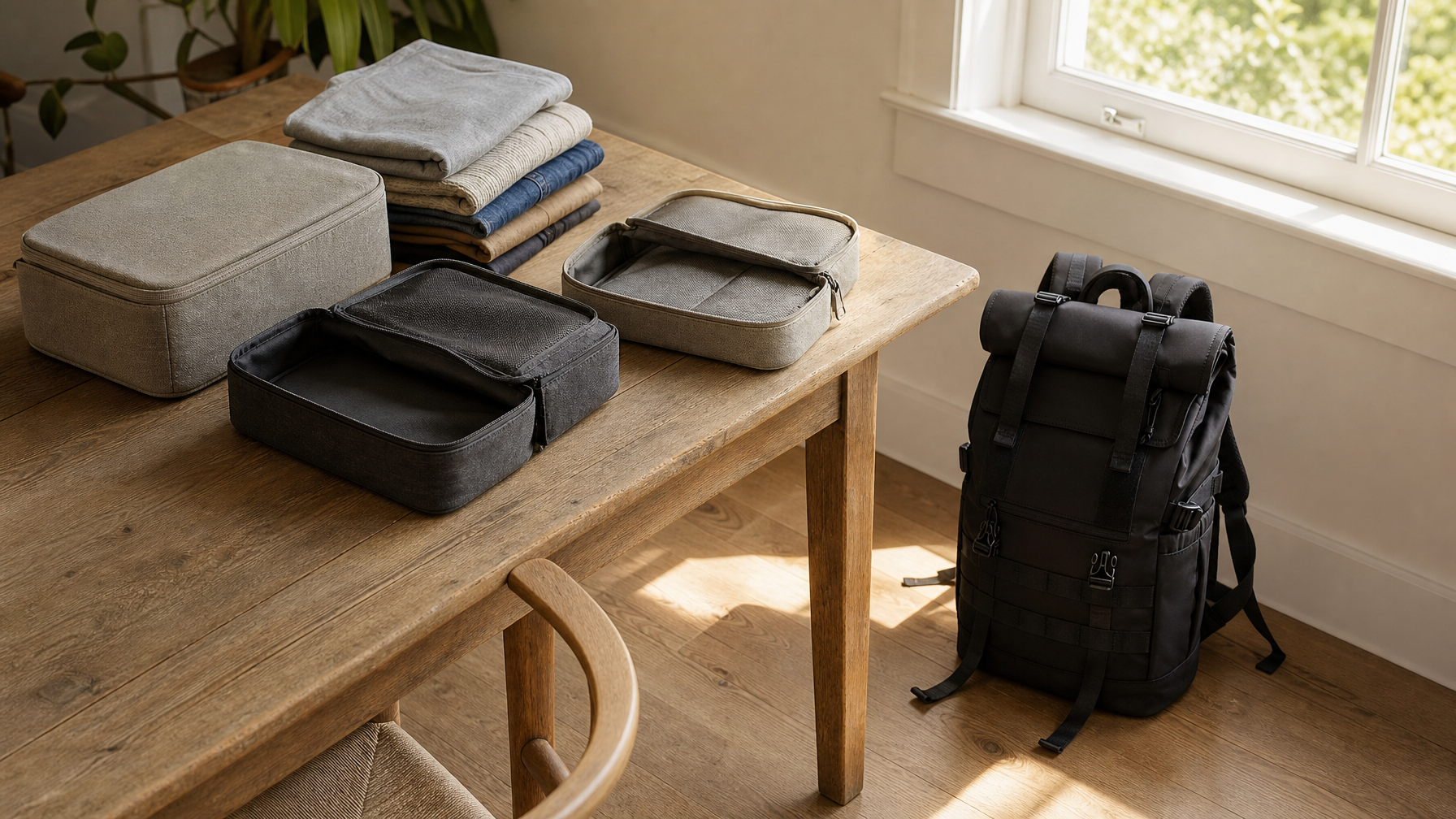
Cubes help on short trips where you live out of the bag instead of emptying it into drawers.
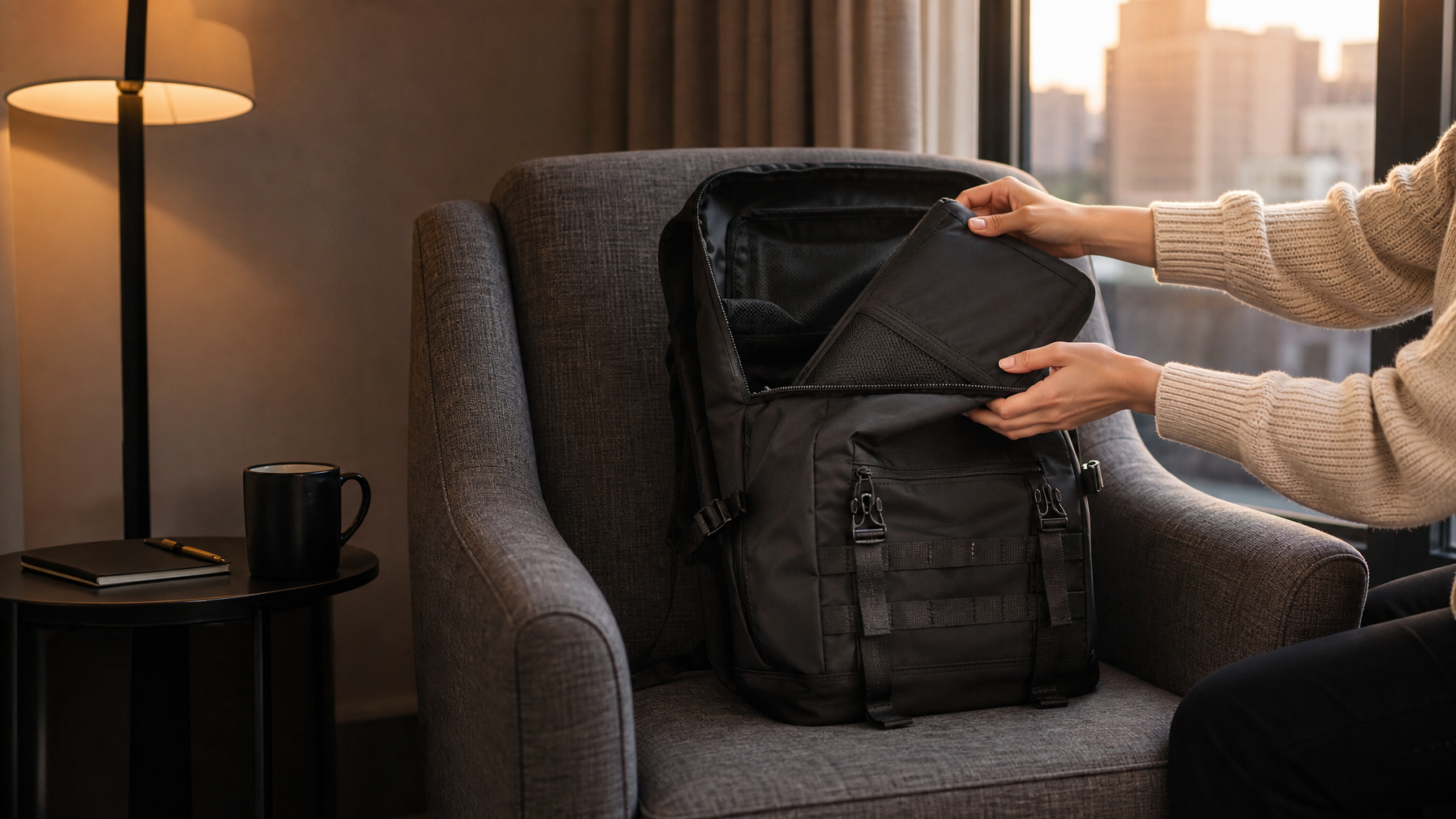
Hotel nights, trains, and shared rooms are the useful cases. You open the bag, lift the clean-clothes cube onto the bed, and leave the dirty cube zipped. You do not rebuild the bag every morning.
They also help if you share a bag with someone or if one compartment has to hold both work clothes and a gym kit. Separate cubes keep those loads from becoming one pile.
They do not help if you only carry a change of shirt and underwear in a day bag. A cube in a sling or a slim messenger is extra fabric. Fold the spare layer and put it in the main compartment.
A two-cube weekend rule
For Friday to Sunday, start with two cubes, not a set of five.
Cube A: clean clothes you have not worn. Shirts, underwear, one extra layer.
Cube B: worn clothes. This cube stays closed until you get home.
Shoes stay out of cubes unless they are soft. Hard-soled shoes go in a shoe bag or at the base of the pack, soles away from the laptop sleeve.
Cables stay out of clothing cubes. One small pouch or the bag's interior zip pocket is enough for a charger and a short cable. Mixing tech with cotton is how cubes stop being useful.
If you need a third cube, make it tiny and give it one job: swimwear, or a compressed layer you only need if the weather turns.
The bag still has to do the real work
Cubes cannot fix a bag that collapses when half empty or that has no place for a laptop on a work-plus-weekend trip.
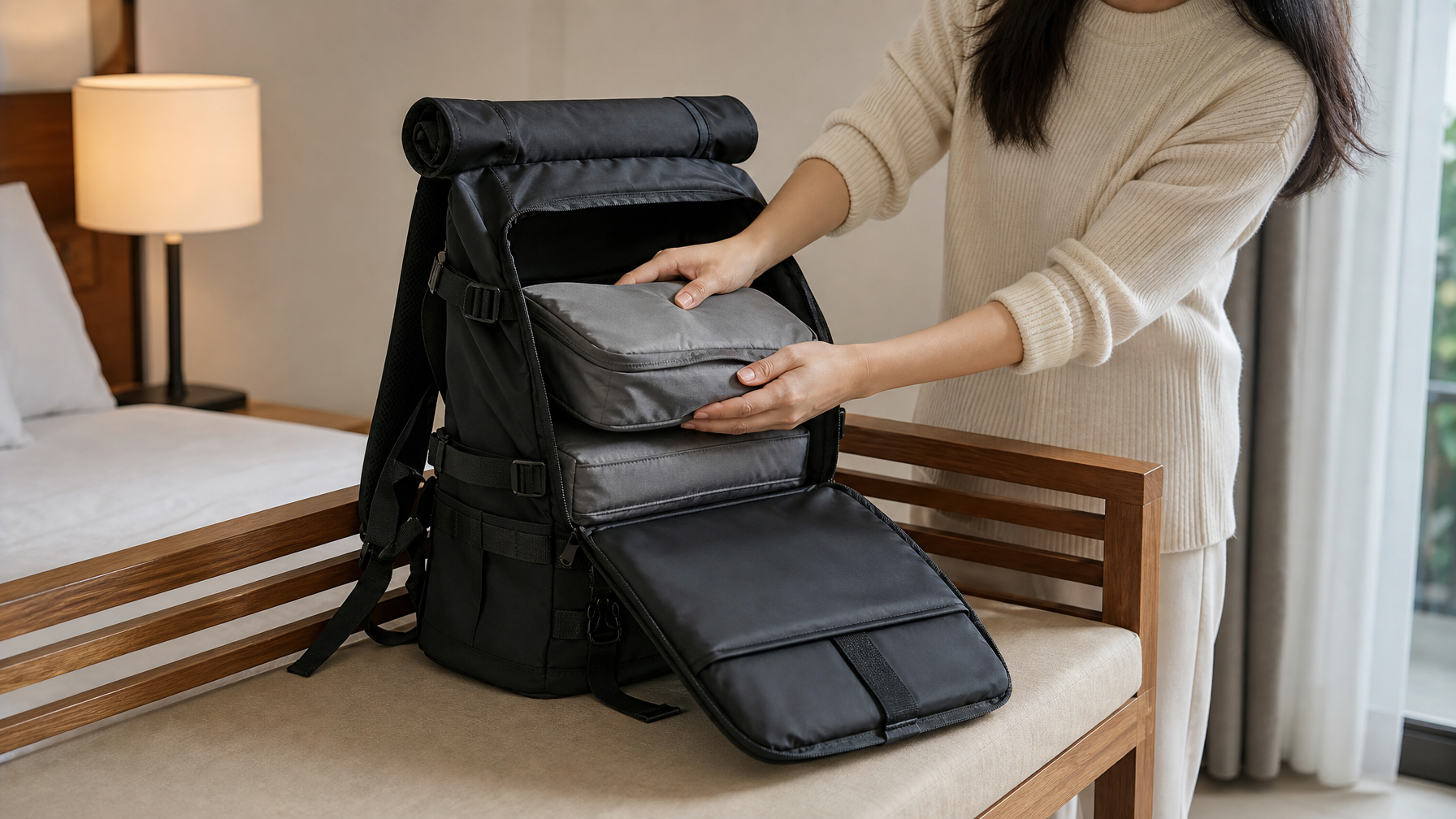
Field & Ash's Transit Pack is the catalog bag built for that range. Capacity is 20 to 35 liters with a roll-top. There is a dedicated laptop sleeve for machines up to 15.6 inches. Materials & Care on the product page: water-resistant Oxford for daily use and light rain, not fully waterproof or submersible. Weight is about 1.6 lb.
Use the pack at 20 liters for a light weekend. Expand toward 35 liters only when clothes and a layer actually need the extra height. Cubes sit in the main cavity. The laptop stays in the sleeve so a cube never sits on the screen.
If the trip is city walking with almost no clothing change, a smaller bag plus one spare shirt is enough. See the capsule carry system for what stays in the bag every day.
What does not work
Buying a six-cube set for a two-night trip. You will fill the cubes because they exist.
Stuffing cubes until the zipper bows. That is how seams fail and how the pack becomes a brick.
Using cubes as drawers you never close. An open cube in an open bag is just a fabric tray.
Putting a laptop, a bottle, and shoes inside clothing cubes. Hard objects belong in sleeves and side pockets.
Calling any Field & Ash bag waterproof because a cube is inside it. Cubes are not weather protection. Zip the pack, keep it out of standing water, and treat rain as a reason to get indoors.
A five-minute home test
Pack the real weekend load once at home.
Wear the bag up a flight of stairs. If a cube corner digs into your back, restack so clothing cubes sit away from the back panel and the laptop stays in its sleeve.
Open the bag as if you just arrived. If you cannot lift clean clothes without dumping cables, the cube jobs are wrong.
Do this once. Then stop shopping for organizers.
Keep the system small
Two cubes, one small tech pocket, one bag that still looks finished when you are not at capacity. That is enough for most weekends.
If you already own cubes and they make the bag harder to close, leave two at home. Organization that you fight every morning is not organization.
Carry deliberately.