


The Best Bags for Back to School in 2026: Backpack, Messenger, or Sling?

Most back-to-school bag roundups start with a cartoon logo on a neon polyester pack. This one starts somewhere different: the moment you realize the bag you've been carrying no longer reflects who you're becoming.
That shift usually happens somewhere between senior year of high school and freshman year of college. Your carry changes. A laptop replaces a binder. Your commute gets real — transit, campus walks, coffee shops, early morning classes and late evening sessions. And somewhere in all of that, the bag stops being a backpack and starts being a system.
This guide is for that moment. Four bags matched to four different ways of moving through school — chosen based on what you actually carry, not what everyone else is using.
TLDR
- Heavy loader (laptop + books + everything): Apex Backpack — 20–35L, fits 17.3" laptops, S-curve ergonomic straps
- Light, clean, daily use: Lite Backpack — 29L, 1.0 lb, fits 15.6" laptops, $89
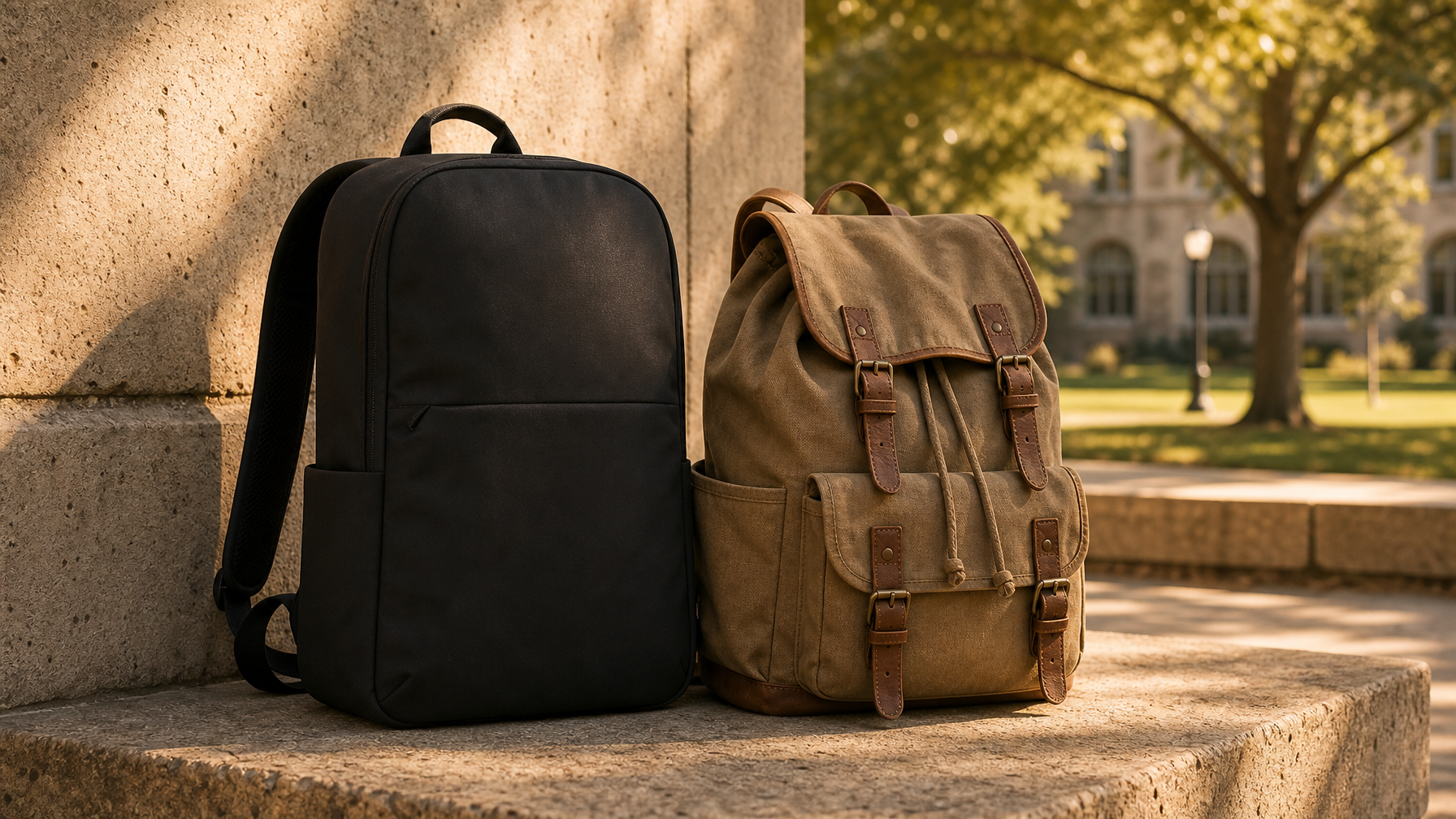
- Campus character, relaxed aesthetic: Nomad Backpack — vintage canvas, 20–35L, $89
- No laptop, minimal carry: Commuter Sling — 0.66 lb, fits tablets, the lightest option
What Size Bag Do You Actually Need for School?
The most common mistake in choosing a school bag is going too big.
The instinct makes sense — more space seems safer. But a 40L backpack full of things you don't need daily just becomes something to haul. Your shoulders know within a week.
For most students, the sweet spot is 25–30 liters. That's enough for a 15" laptop, a notebook, a charger, a water bottle, and the daily essentials — without encouraging you to fill the extra space with things you'll carry but never touch.
Only move to 30–35L if you're regularly packing textbooks, gym clothes, and a large laptop simultaneously. Even then, most students discover they overpack rather than actually needing the volume.
The Lite Backpack at 29L and the Nomad at 20–35L both sit in the right range for most campus carry situations.
Backpack vs. Messenger vs. Sling: Which Works for Campus?
Campus carry covers more ground than a standard commute. You're not just getting from A to B — you're spending hours at a desk, moving between buildings, heading to off-campus coffee shops and late-night study sessions. The bag goes everywhere.
Backpack: The most versatile option for heavy or varied loads. Two-shoulder carry distributes weight evenly — important when you're moving around all day. The right call for anyone carrying a laptop, books, and daily gear regularly.
Messenger bag: Better for lighter daily loads where quick access matters. If you're cycling to campus, a messenger stays accessible without removing it. The Haven Messenger handles campus life well and reads as an adult bag off-campus — it doesn't look like a school bag when the semester ends.
Sling: The choice for genuinely minimal carry. No laptop — just a tablet, phone, wallet, and the essentials in a compact footprint. Good for class days when you're not hauling your full setup, or when you want to leave most of your gear in one place and move lightly between sessions.
Most students end up using a backpack as their primary carrier. But the right answer depends on what you carry, not what looks right.
What to Actually Look For in a School Bag
Not every bag is built to survive four years of daily use. Here's what separates the ones that do from the ones that don't.
Laptop protection that actually works
A padded laptop sleeve inside the main compartment is the minimum. Better designs use a completely separate padded compartment — isolated from books and hard objects — so your laptop isn't taking compression damage at the bottom of a fully loaded bag. The Apex has two separate device compartments. The Lite has a dedicated padded sleeve within the main compartment.
Weight before you add anything
A bag that weighs 2.5 lbs empty will feel like 5 lbs by 3pm with your gear in it. The difference between a 1.0 lb bag and a 2.0 lb bag is something you feel across an 8-hour campus day. Start as light as the rest of your requirements allow.
Real weatherproofing
Campus carry means unexpected rain. Oxford fabric and waterproof nylon both handle it — untreated canvas without a water-resistant treatment doesn't. Check the exterior material description, not just the marketing language.
One-motion access
You'll open and close your bag 8–10 times a day. Bags that require two hands, a specific unzipping sequence, or cramped compartment openings add friction to every transition. The best bags let you reach your laptop, water bottle, and daily items without unpacking everything else first.
A look that ages well
The bag you buy in August will follow you past graduation. Avoid bold logos, branded hardware, and trend-driven colorways that tie the bag to a specific moment. A minimal, unbranded aesthetic stays relevant across semesters, internships, and the first years of a career.
The Best Bags for Back to School
Matched to actual use cases, not size categories.
If You Carry a Laptop Every Day
Apex Backpack — $139 (15.6") / $159 (17.3")
The Apex is the bag for heavy-load campus carry. It's the only option here that fits a 17.3" laptop — relevant for engineering students, designers, or anyone on a full-size machine. Two separate device compartments keep your laptop and tablet completely isolated from the rest of your gear. The S-curve padded shoulder straps and air-cushion belt make a loaded 30L carry manageable across a full day of movement.
It's more utilitarian in appearance than the other options in this guide. That's a fair trade if you're carrying a lot and need the bag to work without compromise.
Best for: Engineering, architecture, and design students; anyone carrying a large laptop alongside textbooks and daily gear.
If You Want Something Lightweight and Clean
Lite Backpack — $89
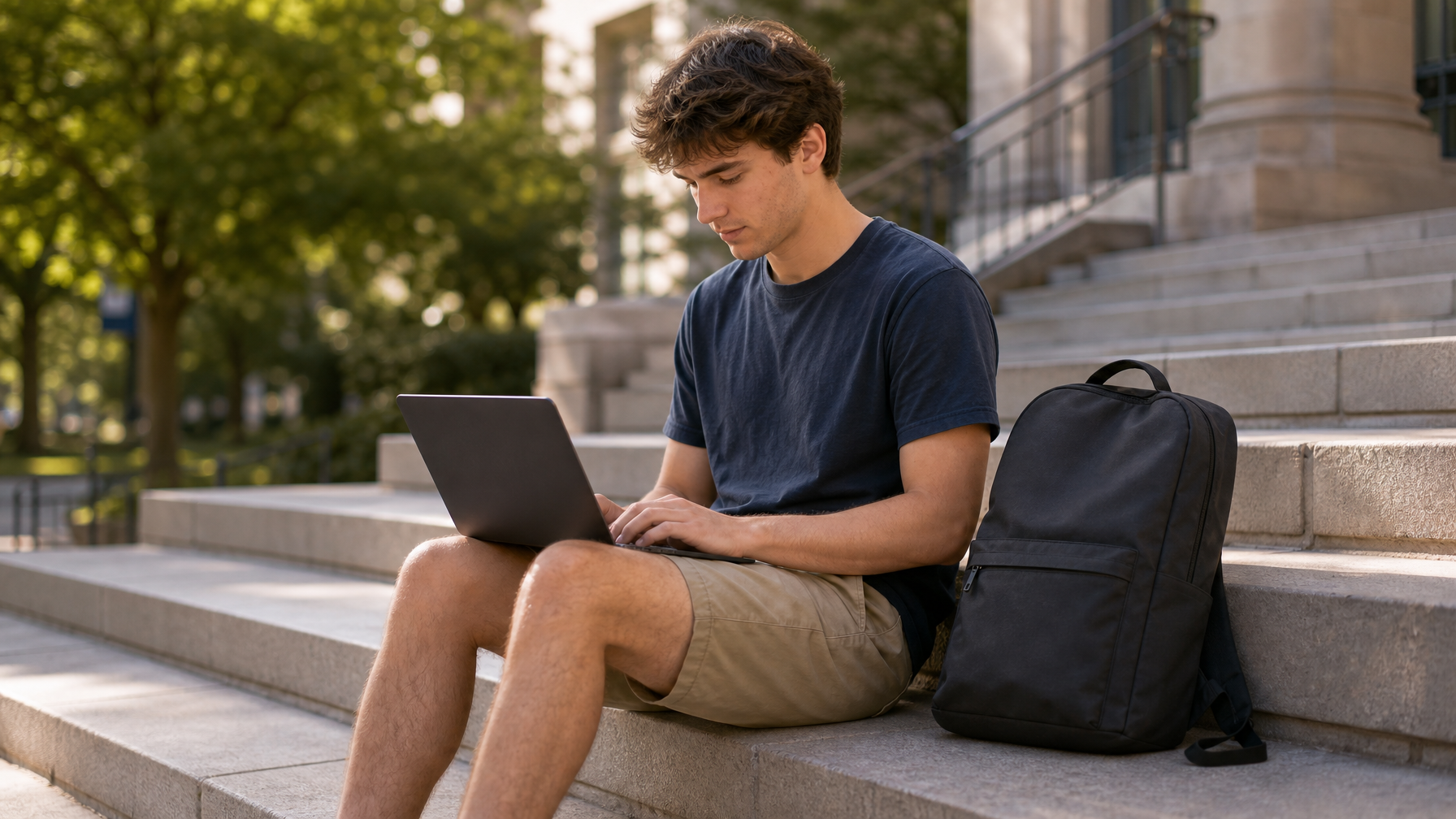
The Lite is the simplest option in the lineup: 29L, 1.0 lb empty, padded laptop sleeve for up to 15.6", expandable side pockets for a water bottle or umbrella. It covers everything a standard school day requires without adding unnecessary bulk or weight.
The Beige colorway is worth considering if you want something that reads differently from the sea of identical black backpacks on campus. It's one of the few lighter-toned options in the Field & Ash catalog — clean, minimal, and less heavy in appearance.
At $89, it's the most accessible entry into a bag that's genuinely adult without trying too hard.
Best for: Most students — laptop users who want a no-fuss, lightweight option that carries well into post-graduation life without looking out of place.
If You Want a Bag With Some Character
Nomad Backpack — $89
The Nomad is the outlier in the Field & Ash lineup. Vintage canvas in khaki or blue-gray, leather trim accents, a drawstring-plus-flap closure — it doesn't look like anything else in the catalog, which is part of the point.
If you want a bag that looks like it has a history before you've built one with it, the Nomad fits that intent. It carries a 15.6" laptop, holds 20–35L, and has the same practical interior organization as the more modern options in this list.
It's the choice when you want a bag that starts conversations rather than disappearing into the background.
Best for: Students who want a distinct visual identity — campus carry that feels more creative than corporate, and works as well off campus as on it.
If You Rarely Carry a Laptop
Commuter Sling — $89
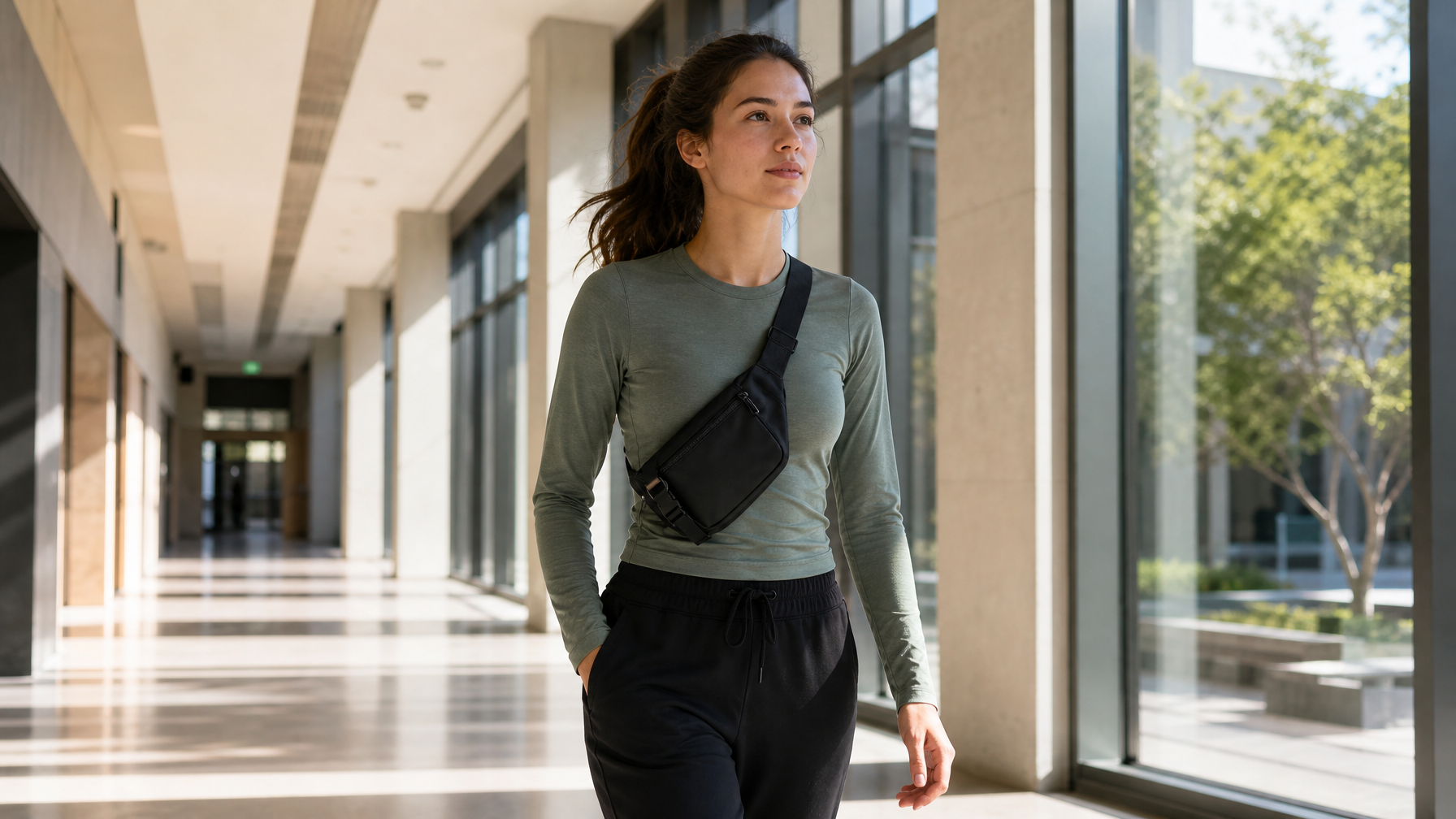
If most of your class days involve a tablet and the basics — wallet, keys, earbuds, a pen — rather than a full laptop setup, the Commuter Sling is worth serious consideration. At 0.66 lb, it's the lightest option in the catalog. The breathable back panel makes it genuinely comfortable across a long day of movement.
It won't fit a laptop. That's the deliberate tradeoff. But for students who've moved to a tablet-first workflow, or who leave the heavy machine in the room most days, the Sling removes a meaningful amount of unnecessary weight from the equation.
It also transitions naturally from campus to everything else — the kind of bag you bring to a day trip, a concert, or a Saturday errand run without a second thought.
Best for: Students who overestimate how often they actually need their full laptop setup on campus, or anyone who's genuinely moved to tablet-first.
How to Pack Your School Bag Without Overpacking It
Most school bags get heavy because students pack for every possible scenario rather than the most likely one.
Laptop and charger only when you need them. If you're heading to a lecture that doesn't involve a computer session, leave both behind. A 1.0 lb bag with just a notebook and essentials is a different experience than the same bag with 3 lbs of tech added to it.
One notebook, not three. Digital note-takers skip this entirely. But even analog note-takers rarely need more than one notebook per day. Leave extras at home or in a locker.
Use external side pockets for the water bottle. Both the Lite and Apex have expandable side pockets designed for this. Keeping the water bottle outside the main compartment means you don't have to unpack half the bag every time you reach for it.
Pack in reverse order of use. Whatever you'll reach for last goes in first. Laptop at the back in the padded sleeve, notebook in the middle, daily items near the top. This prevents the five-minute unpack-and-repack when you need something quickly between classes.
The goal isn't to minimize what you carry. It's to carry exactly what you need without feeling it by the end of the day.
FAQ
What size backpack is best for college?
Most students do well with 25–30 liters. It's large enough for a laptop, notebook, charger, and daily essentials without encouraging overpacking. Only go larger if you're regularly carrying textbooks, gym clothes, and a large laptop in the same bag on the same day.
Is a backpack or messenger bag better for campus?
Backpacks distribute weight more evenly and handle heavier loads better — the right call for most students. Messenger bags work well for lighter daily loads or cycling commutes. Some students use both: a backpack for heavy class days and a messenger or sling for lighter ones.
How much should I spend on a school bag?
Between $89–$159 gets you a bag built to last well past graduation. Bags under $50 typically don't survive daily use past two years. The cost-per-day of a quality bag used for four years is far lower than a cheap bag replaced annually.
Should I bring the same bag to class and off-campus?
Ideally, yes. The best school bags are versatile enough to go from class to campus to a coffee shop or a weekend without looking out of place. That's why minimal, unbranded aesthetics tend to serve students better than trend-driven designs over a full four years.
Building your first intentional carry setup? Start with The Working Minimalist: How to Build an Everyday Carry That Goes Everywhere. Already settled on a bag and want to know what makes a great laptop carrier? See The Best Laptop Bags for Commuting.