


Interview Day Bag: What to Carry When the Meeting Is the Job

TLDR: An interview day bag should carry a laptop, a thin portfolio, and a few clean essentials without looking like overnight travel. The Metro Laptop Brief is a slim Field & Ash brief built for that defined load: padded device sleeve options for about 11 inch tablets or about 14 inch laptops, a flip-top profile, and a quiet professional silhouette.
Most interview days fail the same way. You pack like a full workday, then walk into a lobby with a backpack that reads "I might sleep here." Or you strip too far and leave the charger in the car. The job of this article is narrower: what belongs in the bag when the only outcomes that matter are a clean handshake, a working laptop if they ask for a screen share, and a calm walk from curb to conference room.
This is not a hybrid-work bag survey (Best Bags for Hybrid Work). It is not a client-meeting kit for people who already have the job (Client Day Carry). It is the one-day interview loadout.
What an interview bag actually has to do
An interview bag has three jobs:
- Look intentional. Soft structure, thin profile, no hanging water bottles or gym shoes.
- Protect the machine. If they ask you to open a deck, the laptop should be ready without a dump of cables on the table.
- Stay light enough to hold in one hand in a lobby chair without sprawling across two seats.
Anything that serves overnight packing, multi-device travel, or gym conversion belongs in a different article. Keep the brief honest: this is a day bag, not a trip bag.
The hard load list (and the hard no list)
Carry:
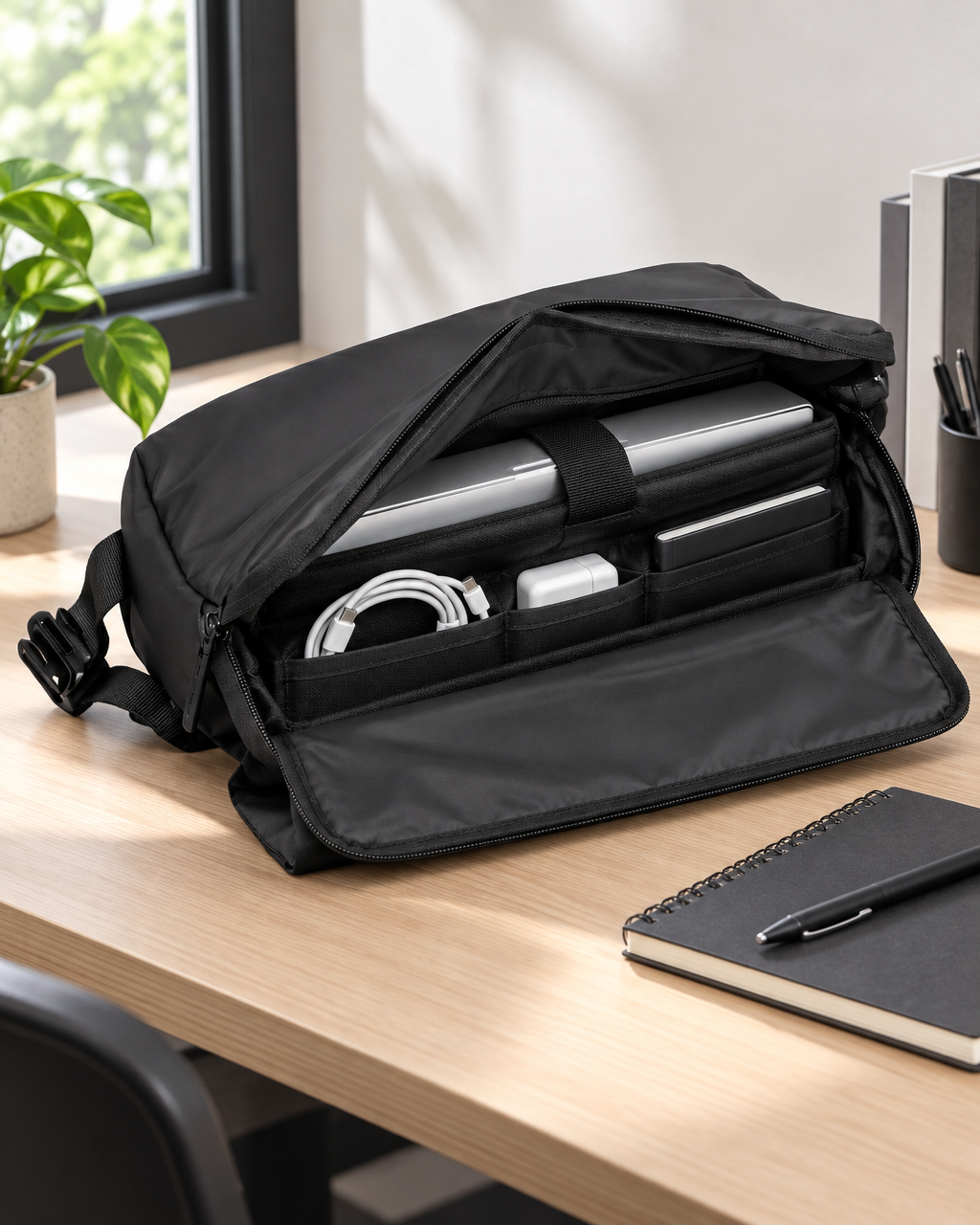
- Laptop or tablet in the padded sleeve (match the variant to the device)
- Slim charger and cable only
- One notebook and pen
- Printed resume or thin portfolio folder if you still use paper
- Phone, wallet, keys
- Optional: breath mint tin, compact lint roller, spare pen
Leave out:
- Full cable kit and external drive stack
- Gym clothes or shoes
- Large water bottle that warps the silhouette
- "Just in case" hoodie or second pair of shoes
- Multiple notebooks
If an item does not help the interview hour, it stays home. The goal is a bag you can open on a small table without apologizing for the contents.
Metro Laptop Brief: the catalog fit for this day
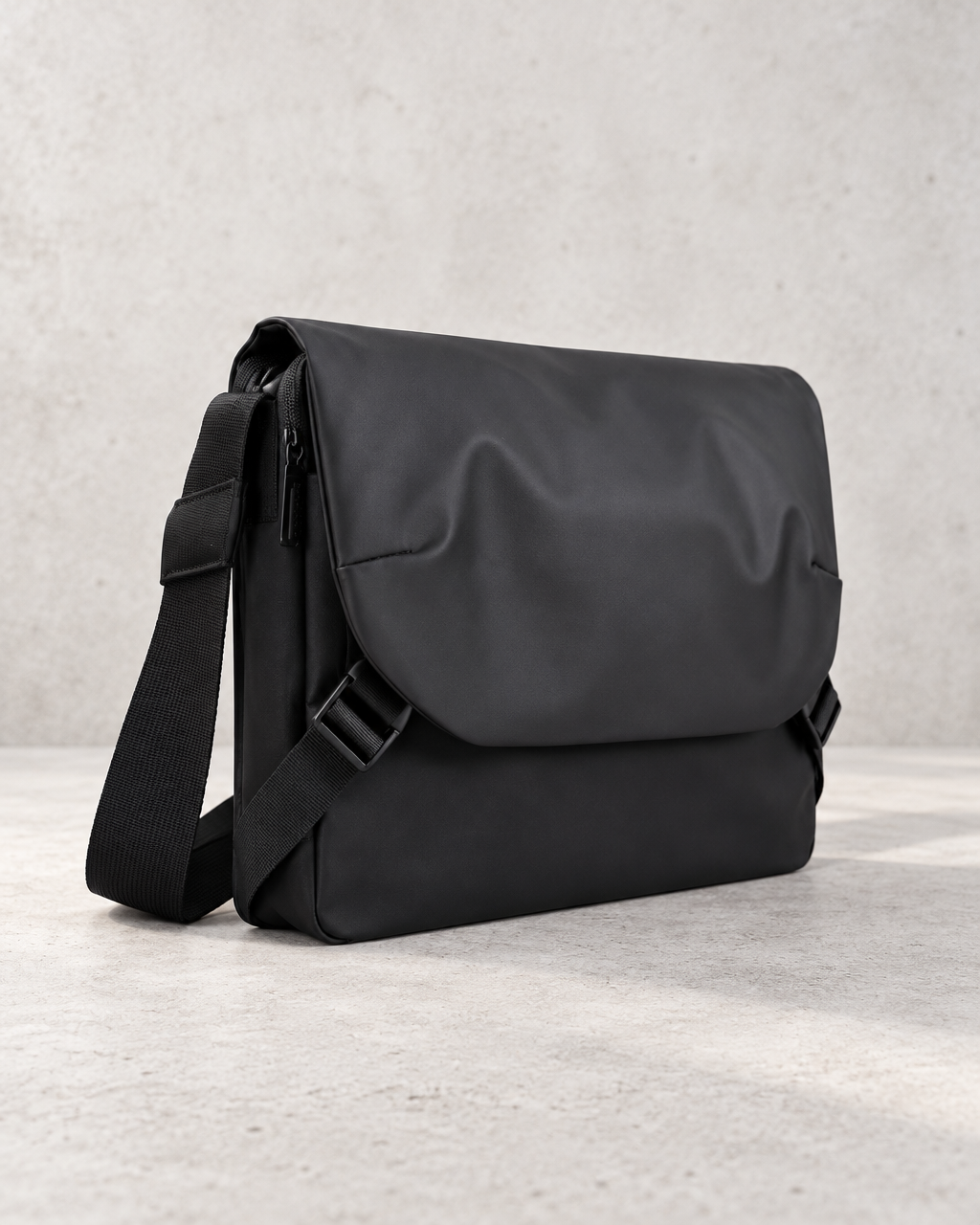
Live facts for the Metro Laptop Brief: Oxford exterior with polyester lining; two size variants (about 11 inch tablet path and about 14 inch laptop path); approximate dimensions 12.6 × 3.1 × 8.2 in for the smaller variant and 13.7 × 3.5 × 10.2 in for the larger; weight about 0.99-1.21 lb; flip-top closure with hasp-style lock; front zip pocket; padded device sleeve; interior organization for small daily items. Live prices: $79 and $99 by device variant.
Weather language stays exact: treat the shell as suitable for daily commute spray and light rain only when you wipe moisture off after exposure. Do not call it waterproof. Do not invent sealed storm ratings or anti-theft vault claims.
Metro is the right load class when:
- You need a brief silhouette for interview or client-facing days
- Your device fits the listed tablet or laptop variant
- You want a bag that can sit on a conference table without dominating it
Metro is the wrong default when:
- You need a full day backpack load (see Apex vs Lite)
- You only need phone-wallet-keys (see Commuter Sling capacity)
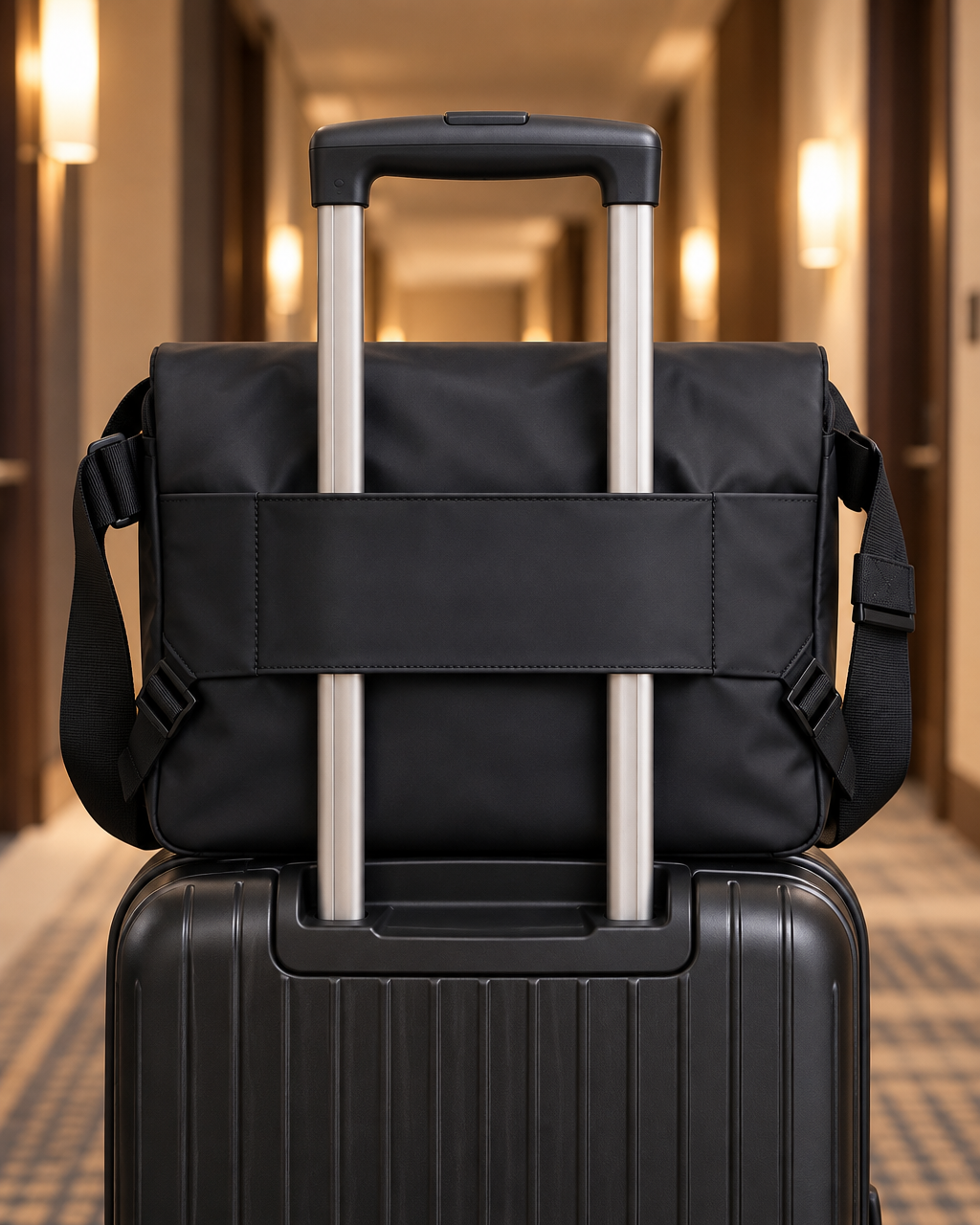
- You already roll a suitcase and need a dedicated luggage-strap messenger (see Luggage Strap Work Bag)
How to stage the bag the night before
- Charge the laptop fully and confirm the deck or portfolio opens offline.
- Place the device in the padded sleeve screen toward the back panel when worn.
- Coil one charger only. Leave the rest of the cable drawer at home.
- Put paper resume or portfolio flat against the laptop, not rolled.
- Keys and transit card in a front pocket so you are not digging at security or parking.
- Do a 10-second open test at the door: if anything falls out or looks chaotic, remove it.
Morning of: do not rebuild the bag. If you need coffee, hold it in the free hand. Do not wedge a hot cup into the brief.
Interview-day movement rules
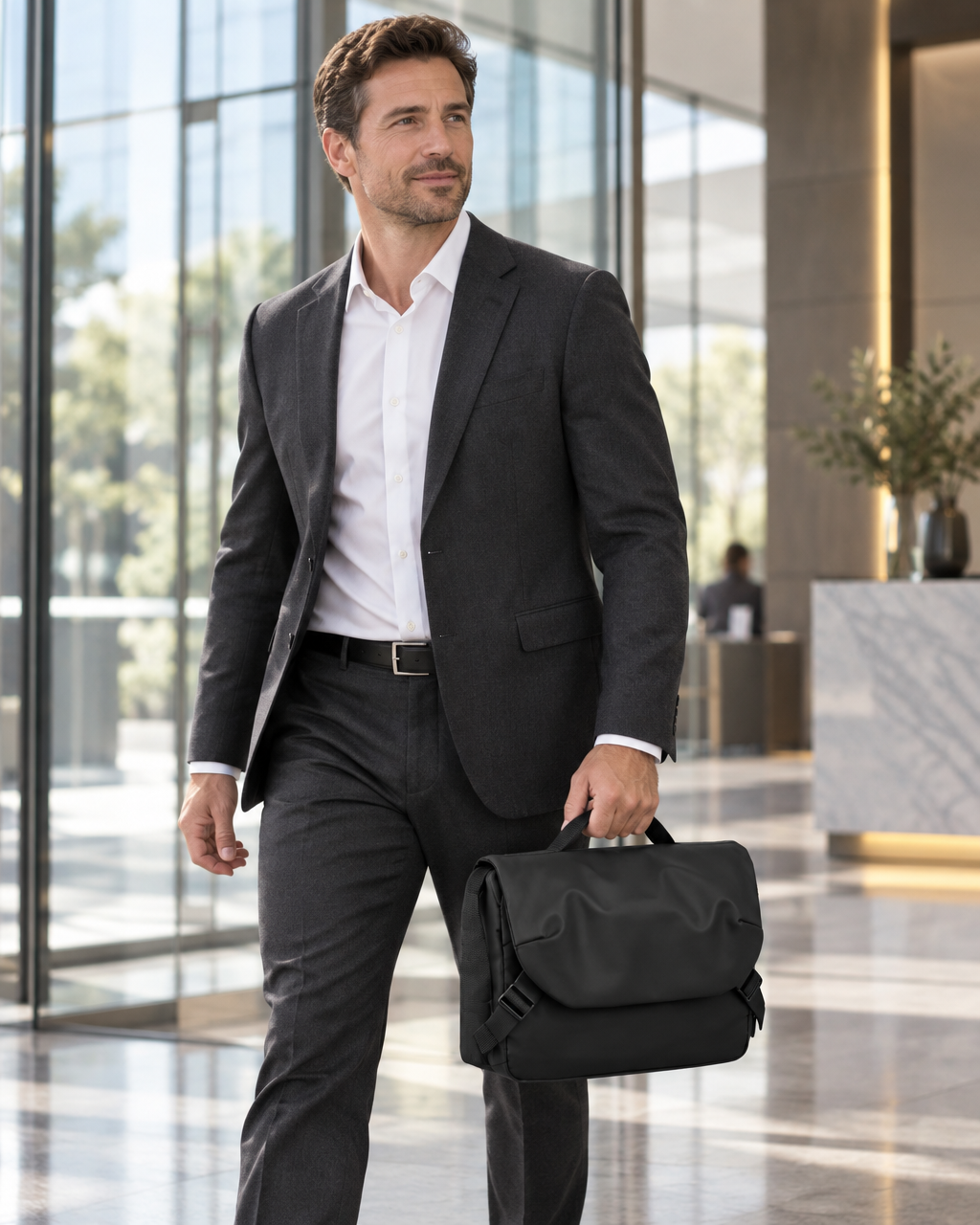
Curb to lobby. Carry by the handle or short shoulder run. Keep the bag closed until you sit.
Lobby wait. Bag on the floor beside your foot or on your lap closed. Do not open the full kit in public seating.
Room entry. Place the brief on the floor or an empty chair, not on their conference table, until they invite a laptop.
If they ask for a screen. Open once, device out, bag closed again. The table should show a laptop, not a hardware store.
Exit. Repack in the same order you staged. Do not "sort later" in the elevator.
Common mistakes
- Packing a backpack "because it holds more" when the interview does not need more
- Bringing every cable you own
- Skipping the offline file check
- Using a beat-up gym bag for a formal loop
- Overstuffing so the brief looks swollen in photos and in person
Quick decision guide
| Situation | Prefer |
|---|---|
| Formal interview, one laptop, thin paper | Slim brief (Metro class) |
| Multi-building campus day with gym | Different article / different bag |
| Tablet-only portfolio day | Sling or small crossbody capacity article |
| Rolling suitcase already in play | Luggage-strap messenger article |
Bottom line
Interview carry is a defined day, not a life system. Keep the load honest, keep the silhouette quiet, and put the device where it is protected. The Metro Laptop Brief exists for that narrow job: a padded path for a real laptop or tablet, a brief profile, and enough organization to leave the rest of your gear at home.