


Small Everyday Backpacks Under 22L (2026 Beginner Guide)

The most common mistake people make when buying an everyday carry backpack is sizing for their heaviest day instead of their average day.
They buy a 30L pack because twice a year they carry a change of clothes, a lunch container, a heavy jacket, and a camera. For the other 363 days, they carry a 14-inch laptop, a charger, a water bottle, a notebook, and a phone. That 30L bag spends almost its entire life two-thirds empty, sagging under its own frame, and taking up unnecessary space on subways and under coffee shop tables.
A compact EDC backpack under 22L flips that trade-off. It is sized around what you actually carry 90% of the time. When packed, it holds its shape, sits close to your back, and moves through crowded city spaces without bumping into people.
This guide covers what makes a small backpack work, what to look for before buying, and which compact bags deliver full-day organization without unnecessary bulk.
If This Is Your First Everyday Backpack
Most people overbuy their first everyday backpack. They size it for a rare heavy day instead of a normal one. Start from a typical Tuesday: laptop if you carry one, charger, water if you finish it, one layer, and the small kit you already empty onto a desk. If that load fits in an 18L–22L pack with room to close cleanly, you do not need a larger “just in case” bag for daily use.
When the day includes a laptop, look for a padded laptop sleeve so the machine is not loose in the main pile. Interior pockets that keep cables and a notebook from sliding together matter more than extra unused volume. The rest of this guide is the small-EDC shortlist and packing approach for that average day.
Why 18L–22L Is the Sweet Spot for City Carry
In the carry world, capacity ranges widely. A 12L sling is for light essentials. A 30L pack is for travel. The 18L to 22L range sits precisely in the middle. It is the ideal volume for urban commuters, remote workers, and daily EDC for three practical reasons:
- Weight distribution: A smaller volume physically prevents you from overpacking. Every pound you leave behind is a pound you do not have to carry across eight miles of city walking.
- Body silhouette: A pack under 22L stays within your shoulder width. It does not stick out four inches past your torso, which means you can wear it in crowded trains, narrow coffee shop aisles, and busy elevators without taking off the bag.
- Under-seat compliance: Many bags under 22L may work as airline personal items, but size limits vary by carrier, route, aircraft, and fare type. Check your airline's current dimensions before relying on any bag for under-seat travel.

Everyday items laid out before packing: a small bag rewards a short, deliberate setup.
If you are trying to decide between different bag styles entirely, such as a sling, messenger, or backpack, see our guide on messenger bag vs backpack for commuting.
What to Look for in a Small EDC Backpack
Not all small backpacks are designed well. When you reduce internal volume, every cubic inch matters more, not less. Poor interior layout in a 20L bag creates dead space that makes it carry like a 14L.
Look for these four structural features before choosing a small EDC pack:
1. Dedicated, Raised Laptop Compartment
In a smaller bag, a laptop that sits all the way against the bottom panel will strike the floor every time you set the bag down. Look for a suspended or padded sleeve that stops one inch above the base.
2. Vertical Interior Pockets
Horizontal pockets in a small bag stack items on top of each other at the bottom, creating a wide bulge. Vertical slip pockets keep items standing upright along the interior walls, preserving central packing space for flat items like notebooks or an extra layer.
3. Weather-Resistant Shell Material
Because a daily driver pack encounters every weather condition, a water-resistant shell like 600D Oxford fabric protects tech gear during unexpected rain without needing an awkward rain cover.
4. Low-Profile Exterior Pocketing
In a compact pack, bulging front pockets ruin the clean silhouette. Look for flush or anti-theft zipper pockets that lie flat when empty.
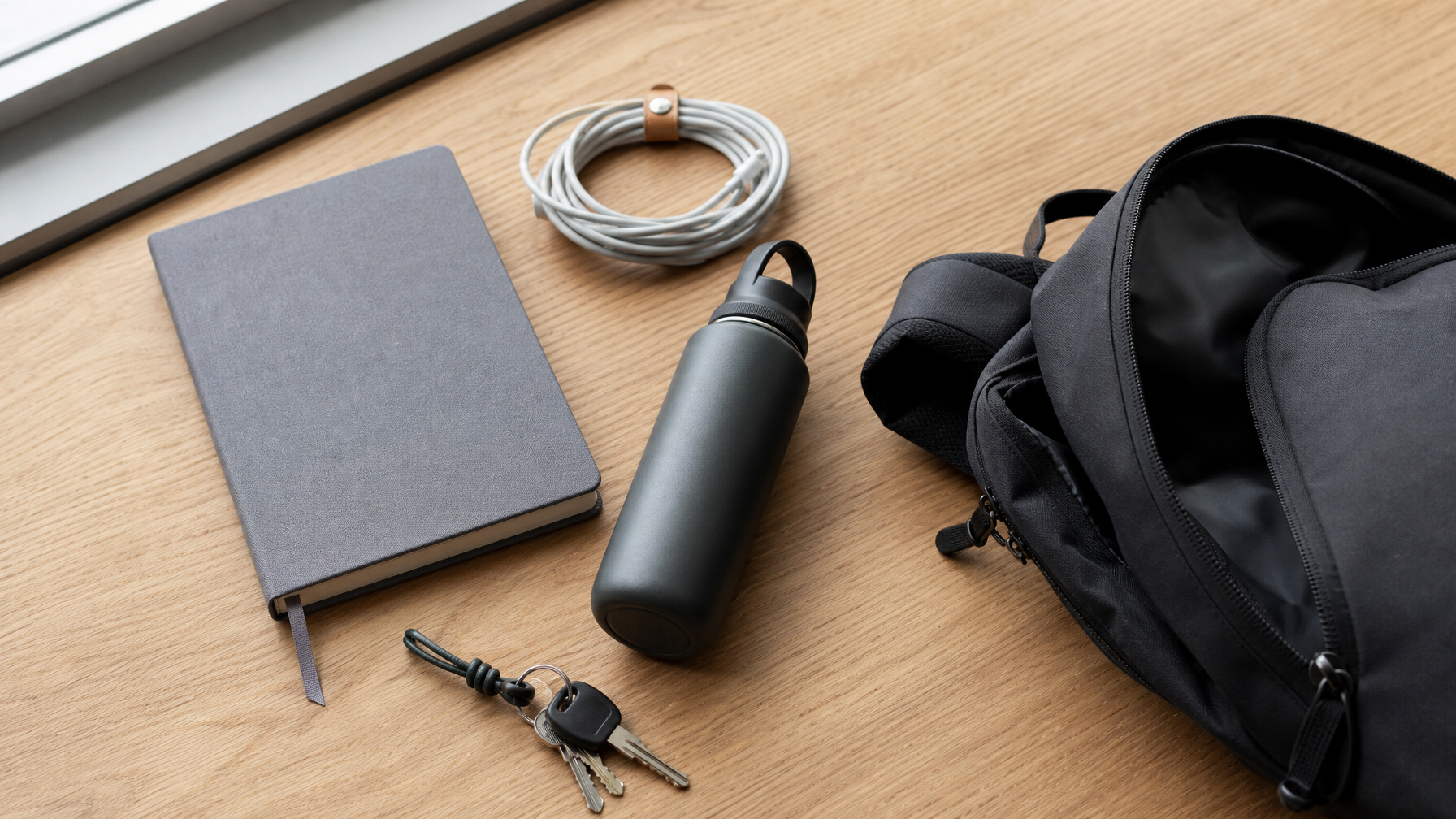
A desk layout of everyday carry items beside a compact daypack before packing.
For a deeper look at how water protection works across different materials, read our breakdown of waterproof vs water-resistant bags.
Top Small EDC Backpacks for 2026
Apex Backpack ($139–$159), Clean Urban Architecture
The Apex Backpack is built for daily commuters who want a clean, architectural profile without sacrificing internal organization. At 20L, it sits right in the optimal EDC capacity range.
- Capacity: 20L
- Laptop fit: Up to 15.6-inch laptop in a dedicated suspended sleeve
- Material: Durable 600D Oxford exterior
- Key feature: Stand-up structured base that prevents the bag from tipping over when placed on an office desk or floor
It features a dedicated top quick-access pocket for sunglasses and keys, two interior side bottle pockets, and an anti-theft back panel pocket for travel documents and wallet.
Venture Backpack ($129), Lightweight Minimalist Daily Carry
For those who prioritize lightweight movement above all else, the Venture Backpack offers a streamlined 18L footprint.
- Capacity: 18L
- Laptop fit: Fits up to 14-inch laptop in main compartment
- Material: Water-resistant matte Oxford shell
- Key feature: Ultra-lightweight frame with breathable mesh back panel
The Venture is designed for fast-paced daily transit, coffee shop work sessions, and light travel. It eliminates heavy hardware in favor of clean lines and essential organization.

Leaving a glass-and-stone office lobby with a compact backpack on one shoulder.
How to Pack a Small Backpack for Maximum Efficiency
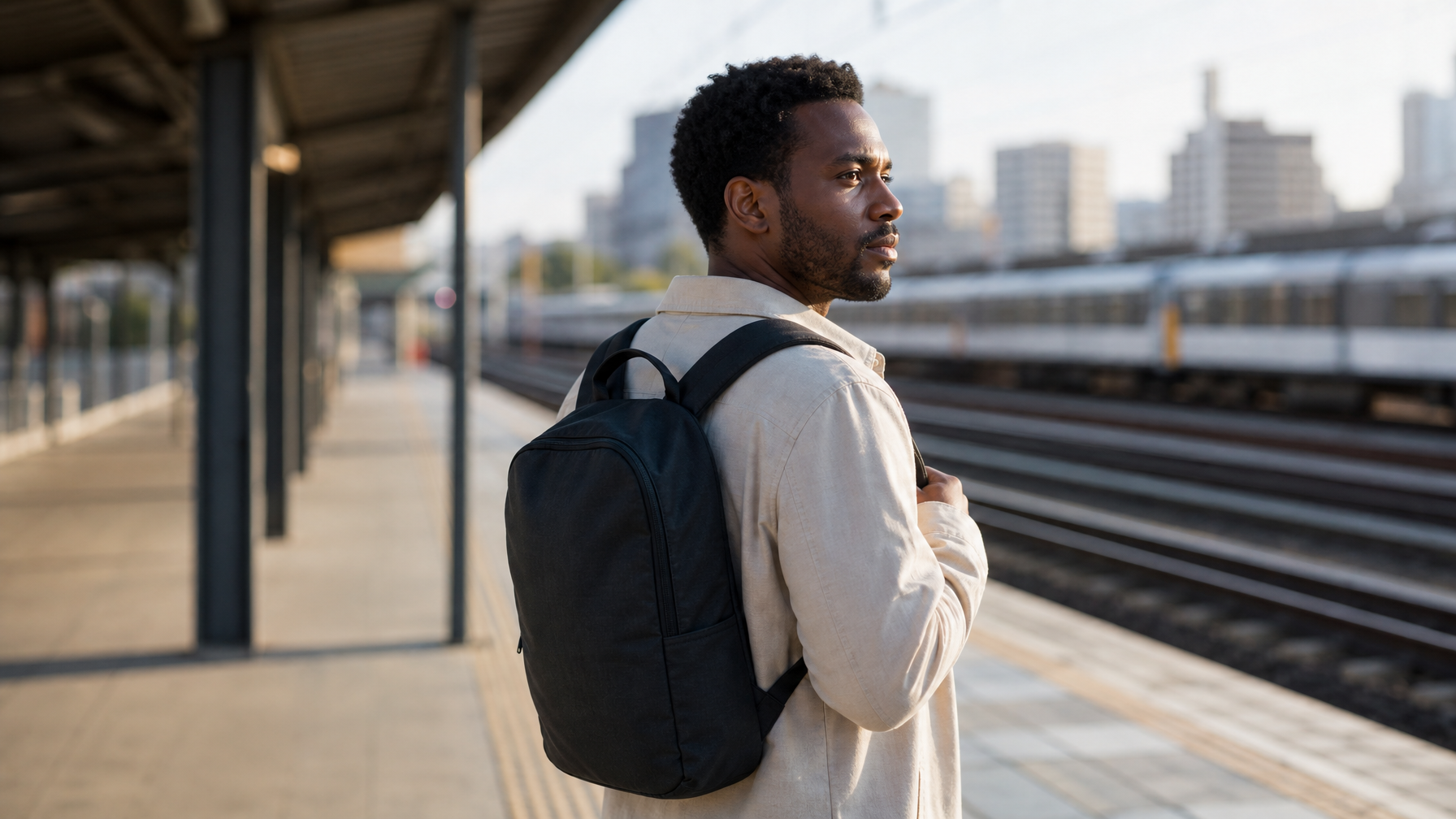
A man waiting on a transit platform with a compact backpack on both shoulders.
Packing a 20L bag requires a simple top-to-bottom strategy:
- Base layer: Place flexible, non-fragile items at the bottom (light jacket, pouch).
- Core layer: Slide flat items upright against the laptop sleeve (notebook, iPad, tablet).
- Wall storage: Store small tech cables, chargers, and pens in internal vertical slip pockets.
- Quick access: Reserve top zip pockets for items retrieved multiple times a day (phone, keys, transit card).
For a complete step-by-step packing framework, check out our guide on how to organize your bag.
Summary: Small Carry, Better Movement
Carrying a smaller bag changes your daily experience. It lightens your physical load, simplifies your morning preparation, and forces you to carry only what actually serves your day.
If you carry a laptop, a charger, and daily essentials, an 18L–22L backpack is not a compromise, it is the exact right tool for the job.