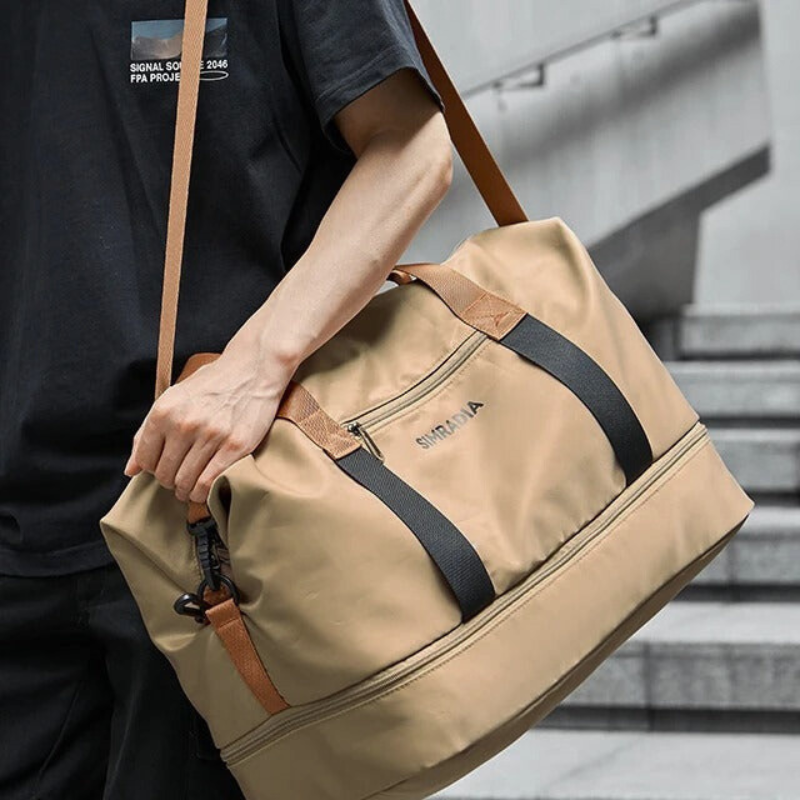



The Best Bags for International Travel in 2026: Carry-On, Day Bag, and the Two-Bag System

A domestic weekend trip and an international trip have different failure modes.
The domestic trip is forgiving. You can check a bag, sort things out at baggage claim, and recover from a bad packing decision by the following morning. International travel has less room for error. You may need to move through two airports, a regional train, and a city center on the same day. You need something that clears overhead bin standards, keeps your laptop accessible at security, and then works as a functional city carry once you land.
Most people solve this with a check bag and whatever personal item was already in the closet. The better approach is a two-bag system built around two specific jobs: a carry-on that handles the transit portion, and a day bag that takes over once you are on the ground.
This guide covers both. It also covers the one-bag alternative. When a single pack can do both jobs, and when that trade-off does not hold up.
The core carry decision: one bag or two?
International travel is the one context where a two-bag system is almost always more practical than a single carry.
Here is why: the requirements for a carry-on and a city day bag pull in opposite directions. A carry-on needs to be large enough to hold several days of clothes, padded for a laptop, and compliant with overhead bin standards. A city day bag needs to be slim, quick to access, and comfortable enough for a full day of walking without noticing it. A bag optimized for the airport risks being too bulky for the piazza. A bag optimized for the city does not hold a week of clothes.
The two-bag system solves this by separating the jobs. One bag handles the transit. The other handles the destination. They travel together on the outbound flight and both come home.
If you are traveling for three days or fewer on a carry-on-only trip and a laptop is not required at the destination, a single pack can work. See the full guide on one-bag travel backpacks for that approach. The rest of this guide focuses on the two-bag system and when each bag earns its place.
The carry-on backpack: what to look for
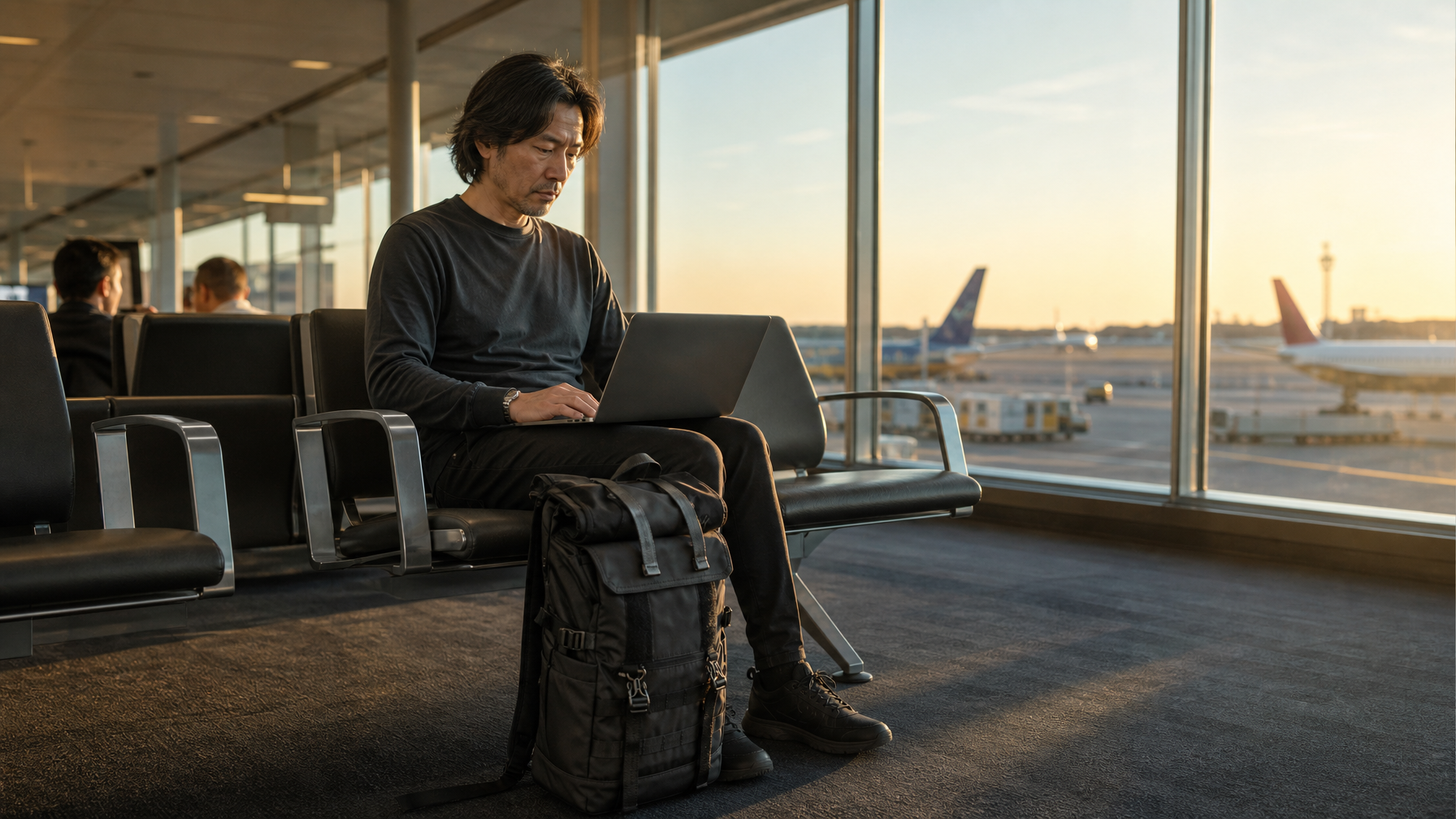
Not every backpack is carry-on compliant. Before packing one as an overhead carry, confirm two things: it meets the airline's size limit (most international carriers enforce a maximum of approximately 22 × 14 × 9 inches, though budget carriers often run smaller) and it can realistically hold several days of clothing alongside a laptop.
Beyond size, four things determine whether a carry-on backpack holds up for international travel:
Expansion. A fixed-volume pack works for a weekend. For four to seven days, you need something that can expand when packed out and compress when used as a day pack on shorter excursions within the destination.
Laptop access at security. Checkpoints require the laptop out of the bag. A sleeve that opens flat speeds this up. A backpack where the laptop is buried under clothing turns a security line into a scramble.
Structure. A carry-on that stands upright on a hotel luggage rack, stays stable overhead, and holds its shape through three days of transit is a different product from one designed for light daily use.
Carry quality. Padded straps and a sternum clip matter more on a full international transit day than on a ten-minute subway ride. You will be moving through airports, trains, and streets with this bag on for extended stretches.
Transit Pack ($199). The international carry-on
The Transit Pack is built for the carry-on slot. It starts at 20L. Compact enough for a short trip and structured enough for an overhead bin. And expands to 35L when the trip is longer and the load is heavier. The 600D Oxford exterior is weather-resistant, which matters on the walk between terminals or in a city that did not cooperate with the forecast.
The laptop sleeve opens flat for security. The interior organization holds device cables, chargers, and travel documents in fixed positions so the airport security check does not undo the entire pack. At $199, it is the only bag in the Field & Ash catalog designed specifically for extended transit use.
The city day bag: what to look for
Once you land and drop the carry-on at the hotel, the day bag takes over. It needs to be lightweight. The carry-on already handled the heavy work. Quick to access while moving, and secure enough for unfamiliar city environments where your normal instincts about your surroundings have not yet calibrated.
Two things matter most for a city day bag in an international context:
Anti-theft access. A rear zip pocket keeps your phone and wallet against your body rather than exposed in a front zip in a crowded street or transit station. A city you know and a city you do not know require different security instincts.
Pack weight. A full day exploring an unfamiliar city can cover eight to twelve miles. A 2+ lb bag with a large frame is designed for a different kind of trip.
Haven Messenger ($89). The city day bag
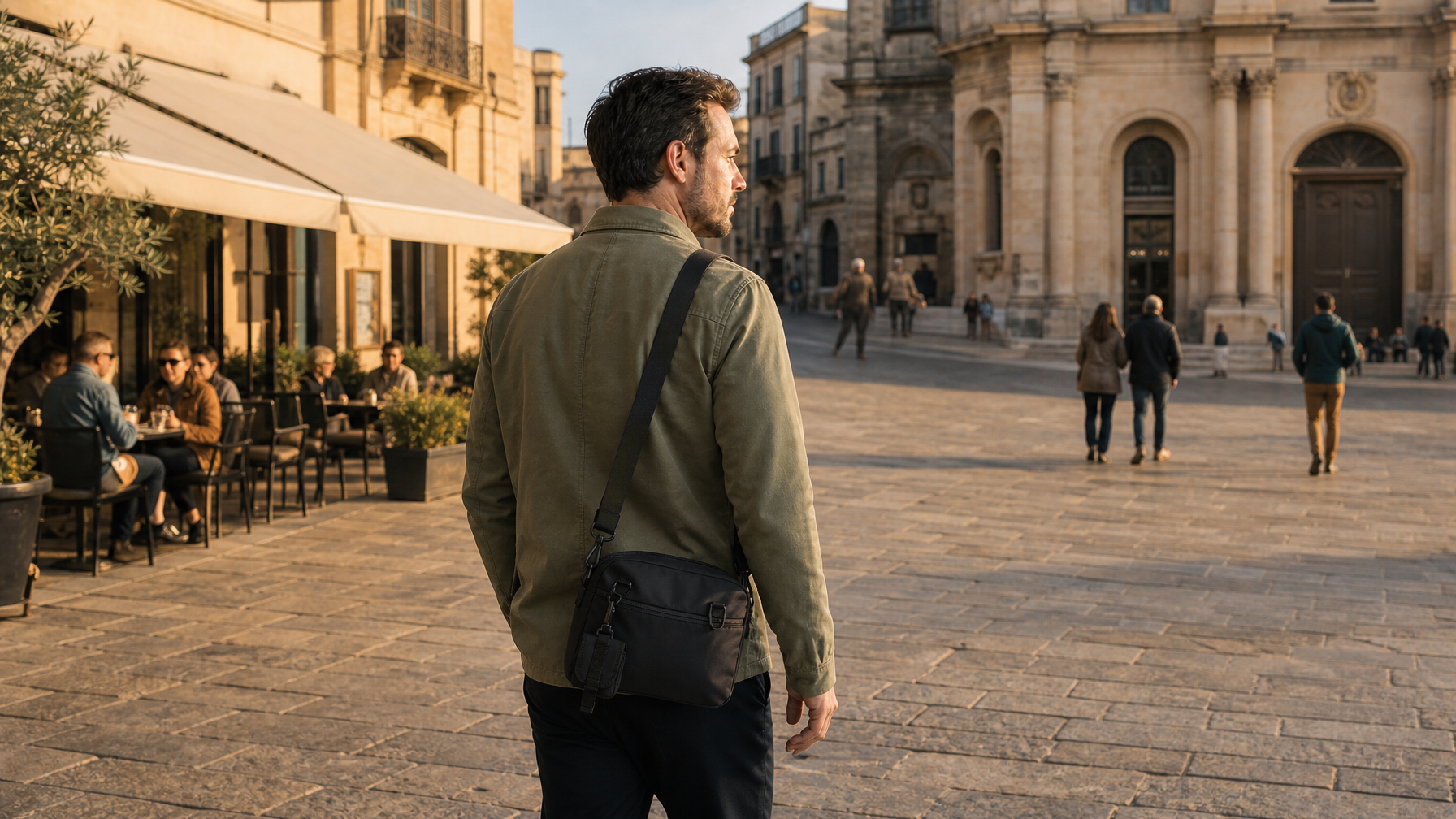
The Haven Messenger fits the day bag role because it was built for exactly the kind of carry international travel demands once the airport portion is done. It weighs 1.21 lb empty. The front pocket fits your phone, wallet, and card together so the morning rush through a train station does not require stopping. A separate back pocket keeps a second set of essentials against your back. Useful in busy markets or transit hubs where your attention is on navigation, not your bag.
The main compartment holds a 14-inch laptop directly when you need it, alongside a light layer, a water bottle, and what you collect during the day. The water-resistant 600D Oxford shell handles light rain without bulk. The crossbody wear position keeps the bag accessible while you are moving and stable when you are covering ground fast.
Leave the Transit Pack at the hotel. The Haven Messenger is what you carry from there.
When one bag is enough
The two-bag system is the right call for trips of four or more days, or any trip where a full laptop setup and a real change of clothes each day are both required.
For shorter trips. Two or three days, carry-on only, no laptop needed at the destination. A single pack can cover both jobs. It needs to be large enough to carry a change of clothes but functional enough to work as a day carry once you land.
Apex Backpack ($139. $159). When one pack is enough
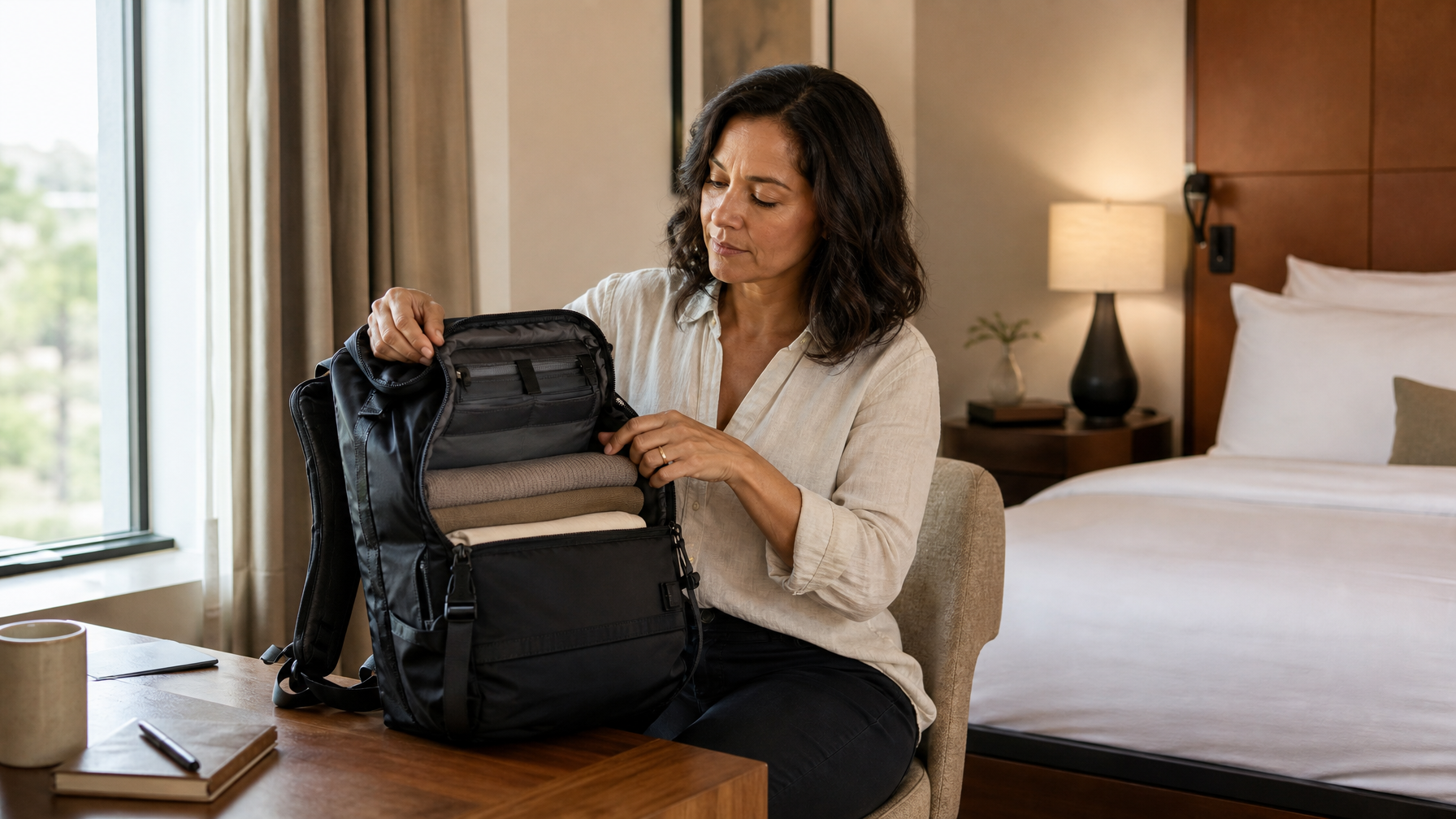
The Apex Backpack earns the one-bag slot on shorter international trips. Two shoulder straps distribute weight more evenly than a messenger when the load includes clothing, a laptop, and a layer. The internal organization handles a laptop and device cables separately from clothing. The waterproof nylon exterior holds up when a city does not cooperate with the weather forecast.
Use the Apex when the trip is three days or fewer, the city days do not require a presentation carry, and a single bag is a genuine simplification rather than a forced compromise.
The two-bag system in practice
Traveling with two bags does not mean checking both. The carry-on goes in the overhead bin. The day bag goes under the seat in front of you as your personal item. Most international flights allow one of each, and keeping the day bag within reach during the flight is practical. Laptop, earbuds, and a water bottle accessible without standing.
On landing, the system shifts immediately. The carry-on goes to the hotel on arrival. The day bag leaves with you. If your hotel holds bags before check-in, you can hand the carry-on over and start the day with only the light carry from hour one.
The day bag packs flat inside the Transit Pack for the outbound flight and unpacks in under a minute at the destination. The system adds no visible overhead at the airport and removes real friction on the ground.
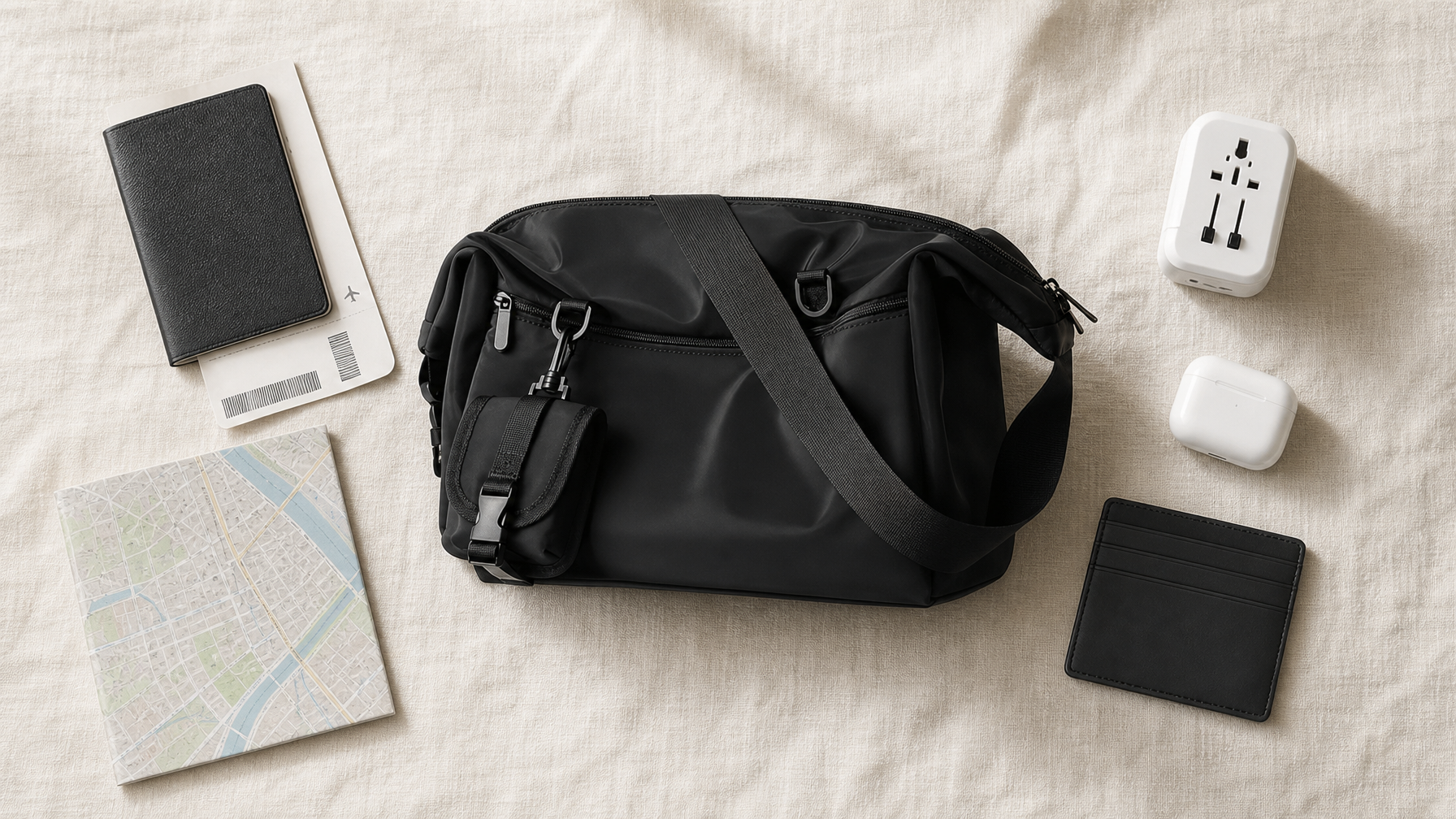
Quick reference: which system fits your trip
| Trip length | Laptop needed | Right system | Bags |
|---|---|---|---|
| 4+ days | Yes or no | Two-bag system | Transit Pack + Haven Messenger |
| 1. 3 days | No | One bag | Apex Backpack |
| Any length | Required at destination | Two-bag system | Transit Pack + Haven Messenger |
| Walking-heavy destination | Any | Lightweight day bag critical | Haven Messenger as primary carry |
Frequently asked questions
What is the best bag for international travel as a carry-on?
The Transit Pack is the carry-on in the Field & Ash catalog. It expands from 20L to 35L, clears most airline overhead standards, and has a flat-opening laptop sleeve for security checkpoints. For a shorter trip where one bag needs to handle everything, the Apex Backpack is the alternative.
Can I use a messenger bag as my only bag for international travel?
Only for the lightest one-night loads. For any trip where you need a full change of clothes, a messenger is not the right carry-on. Use the Haven Messenger as the day bag component of a two-bag system. That is what it is built for.
What makes the Transit Pack different from a regular backpack for travel?
The expansion system. A standard backpack is fixed volume. The Transit Pack adjusts from a structured 20L city pack to a 35L travel carry depending on the load. Which is why it functions as both a carry-on for the transit portion and a usable day pack at the destination when the Haven Messenger is not needed.
Is the Haven Messenger good for international travel?
As a city day bag, yes. The Haven Messenger is not a carry-on replacement. It handles the destination portion of the trip after the carry-on is at the hotel. The front pocket fits phone, wallet, and card together. The back pocket keeps essentials against your body in unfamiliar environments. The 1.21 lb empty weight disappears on a long walking day.