


The Tech Carry Problem: How to Pack Your Devices Without Making Your Bag Unbearable

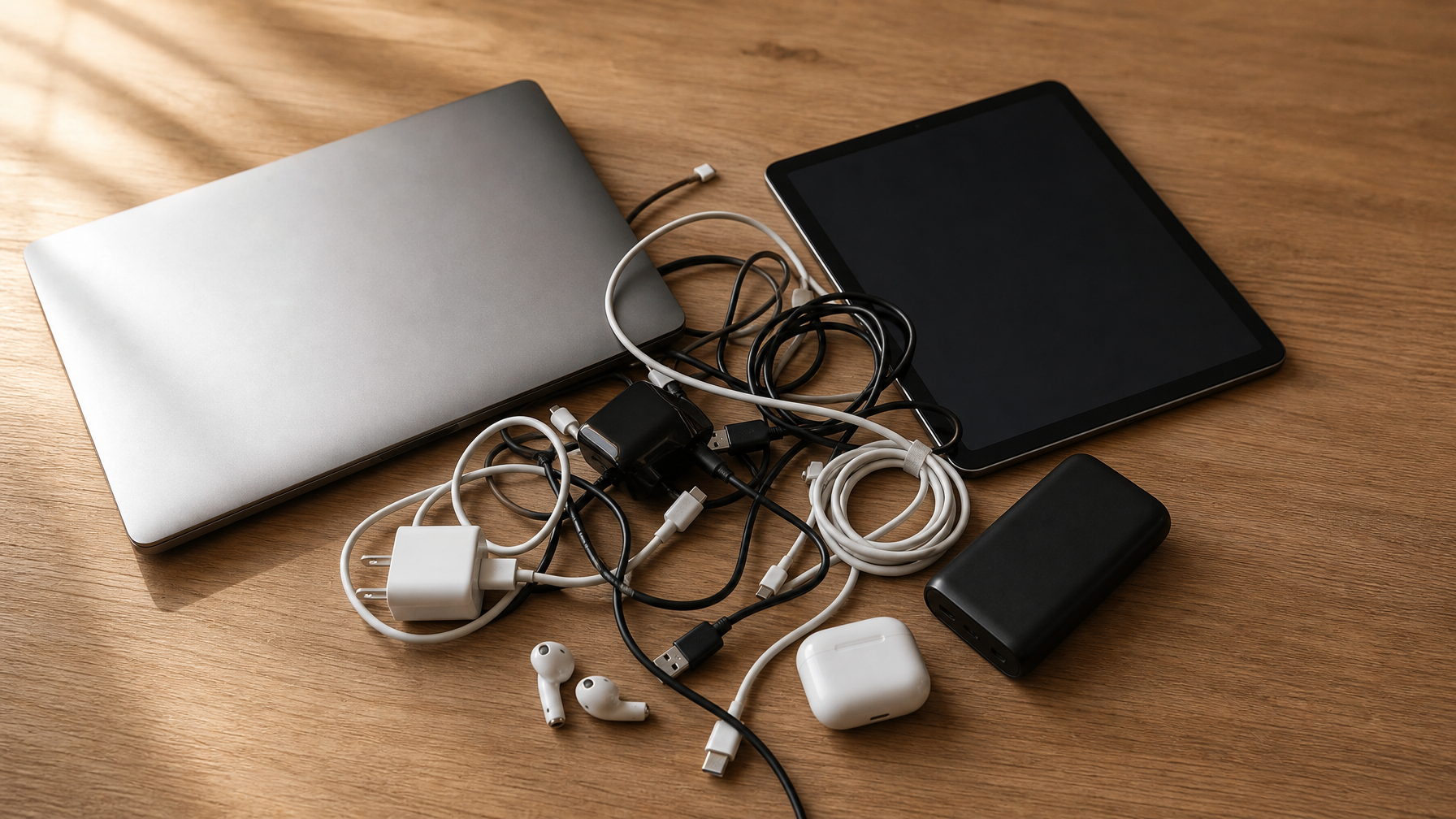
The tech carry problem rarely starts with the bag. It starts with a quiet accumulation: laptop, tablet, two chargers, three cables, earbuds case, battery pack, dongles that only matter twice a year. Each item solves a real problem. Together they turn a daily bag into a shoulder tax.
People look for a lighter bag first. That helps only after the load itself is honest. A better sequence is edit the kit, consolidate power, decide which devices earn a daily seat, then match a bag to the reduced load. The bag is the last step, not the first.
Map the real daily tech load
Write down everything electronic that left the house with you in the last seven days. Include the cables that live "just in case." Then mark each item as Required, Situational, or Dead weight.
Required means you used it on most workdays. For many people that is a laptop and a phone. Sometimes it is a tablet instead of a laptop. Be honest about which one actually opens first.
Situational means you needed it once or twice: a second charger for a client site, a HDMI dongle for one conference room, a battery pack for a long travel day. These items belong in a drawer or a travel pouch you grab only when the day requires them, not in the default bag.
Dead weight is anything you carried all week and never touched. Old cables, duplicate bricks, a second set of earbuds "for backup." Remove these first. They add mass without adding options.
This audit is the core of a workable tech carry setup. Until the list is clean, every bag feels heavy for the wrong reason.
Cut weight before you change bags
Three edits usually remove more grams than swapping brands.
1. One multi-port charger instead of several bricks. A single GaN charger that can feed laptop and phone (and tablet when needed) replaces a nest of single-purpose bricks. Carry one short cable for the laptop and one for the phone if the ports differ. Leave the rest at home.
2. Decide laptop versus tablet for each day type. Full writing, design, or multi-window work usually needs the laptop. Reading, notes, light email, and transit work often run fine on a tablet. If half your week is light, do not default the laptop into the bag every morning out of habit.
3. Coil and contain cables once. Loose cables snag, rattle, and force you to open the whole bag in public. A small zip pouch or the bag's interior zip pocket keeps power gear in one place so retrieval takes seconds.
Match the bag to the reduced load
Once the kit is honest, choose format by day type, not by marketing category.
Haven Messenger ($89). Daily laptop days with organized access
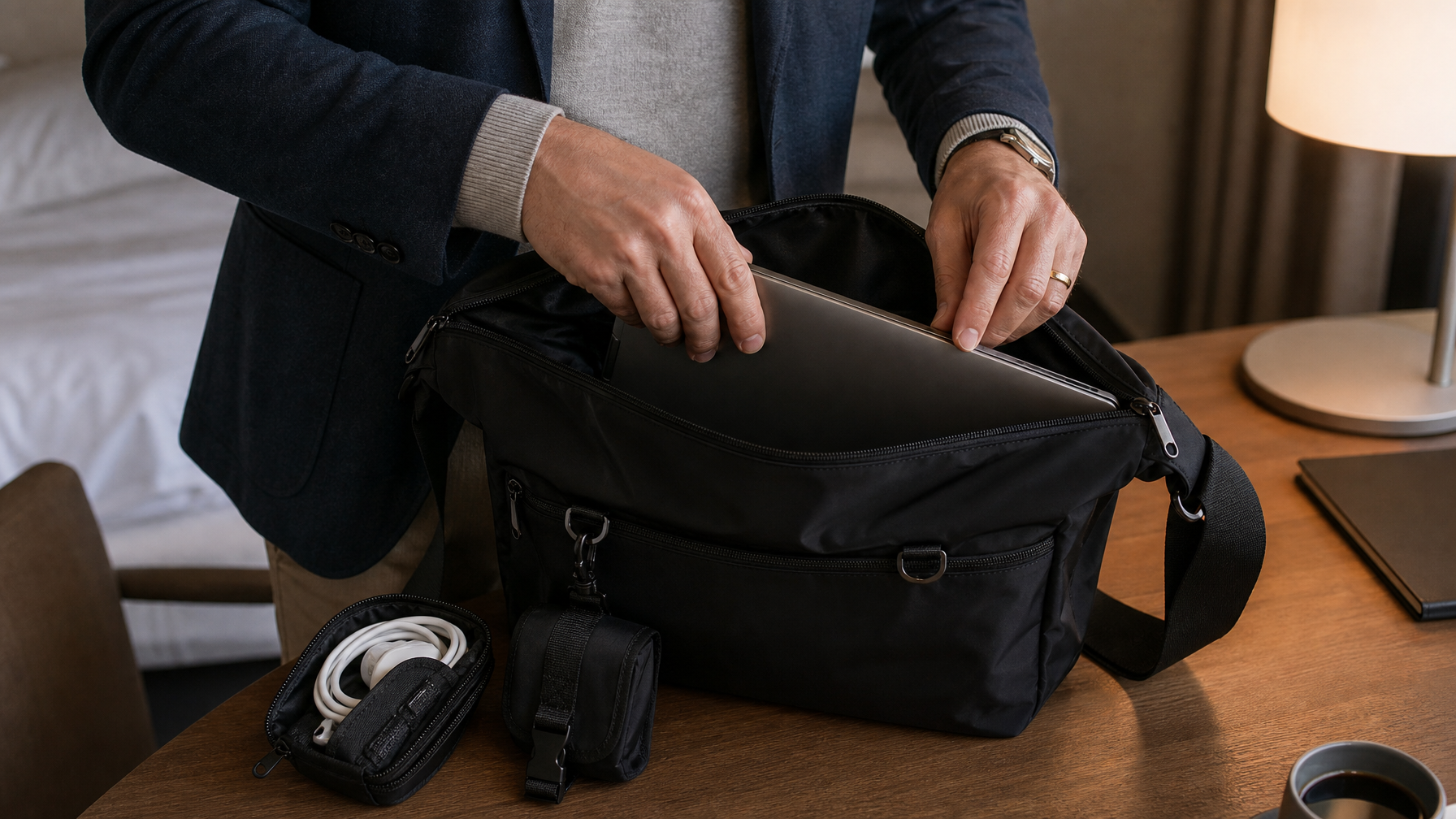
When the laptop is required most days, the Haven Messenger keeps the load close to the body in a crossbody carry that stays out of your hands on transit. The main compartment accommodates a laptop up to 14 inches. Two interior slip pockets and a separate interior zip pocket hold the reduced power kit and small devices so cables do not migrate into the bottom of the bag. The front pocket fits phone, wallet, and card together. The anti-theft back pocket sits against the body when worn crossbody. Empty weight is 1.21 lb, so the bag itself does not erase the work you did editing the kit.

Lite Backpack ($89). When you still want two-strap comfort on laptop days
Some days you want the balance of a backpack more than the access of a crossbody. The Lite Backpack is built for that: a light shell for a defined laptop load without the bulk of a travel pack. Use it when the audit left you with laptop, one charger, and a short cable set, and you prefer the weight on both shoulders for longer walks between buildings.

Commuter Sling ($89). Minimal tech days without the laptop
When the laptop stays home, the Commuter Sling is the form factor that matches the remaining load: phone, wallet, earbuds, one slim charger if needed. At 0.66 lb empty it is the lightest way in the Field & Ash catalog to stay hands-free without pretending every day is a full workstation day. Use it after the audit, not as a place to hide half a desk's worth of cables.
A simple weekly tech carry system
Treat tech the way you treat clothing: a default kit plus a small expansion set.
- Default kit (every workday): the device you actually open first, phone, one multi-port charger, two cables max, earbuds.
- Expansion pouch (travel / client / long day): battery pack, display adapter, second cable type. Lives by the door, not inside the bag until the calendar says so.
- Sunday check: empty the bag, return dead weight to a drawer, recharge the battery pack only if next week needs it. Pair this with a fuller weekly reset if you already use one for non-tech essentials.
For broader organization patterns beyond devices, see how to organize your bag. For lighter overall carry philosophy, the capsule carry system pairs well with this device audit.
How to choose without overbuying
Ask three questions before you buy anything new:
- Did I remove dead weight and consolidate chargers first?
- Is tomorrow a laptop day, a tablet day, or a phone day?
- Do I need two-strap comfort, crossbody access, or a minimal sling for a light day?
If the answer to (1) is no, fix the kit. If (2) and (3) point to different formats on different days, two bags that each stay light beat one bag forced to cover every scenario while still carrying last year's cables.
FAQ
How do I carry tech gear without destroying my shoulder?
Reduce count first. One multi-port charger, fewer cables, and an honest laptop-versus-tablet choice usually matter more than a new strap. Then pick a bag whose empty weight and format match the reduced load: crossbody for access, backpack for longer walks, sling for no-laptop days.
What belongs in a lightest laptop bag setup?
Laptop (if required that day), phone, one charger that can serve both, two short cables, earbuds. Everything else is situational until proven otherwise over a full week of use.
Should the bag or the kit come first?
The kit. A bag that fits-for-purpose is the container for a load you already trust. Buying capacity to absorb clutter only delays the same problem.
Carry deliberately: fewer devices that earn their place, power gear that does not multiply, and a bag matched to the day you are actually living.