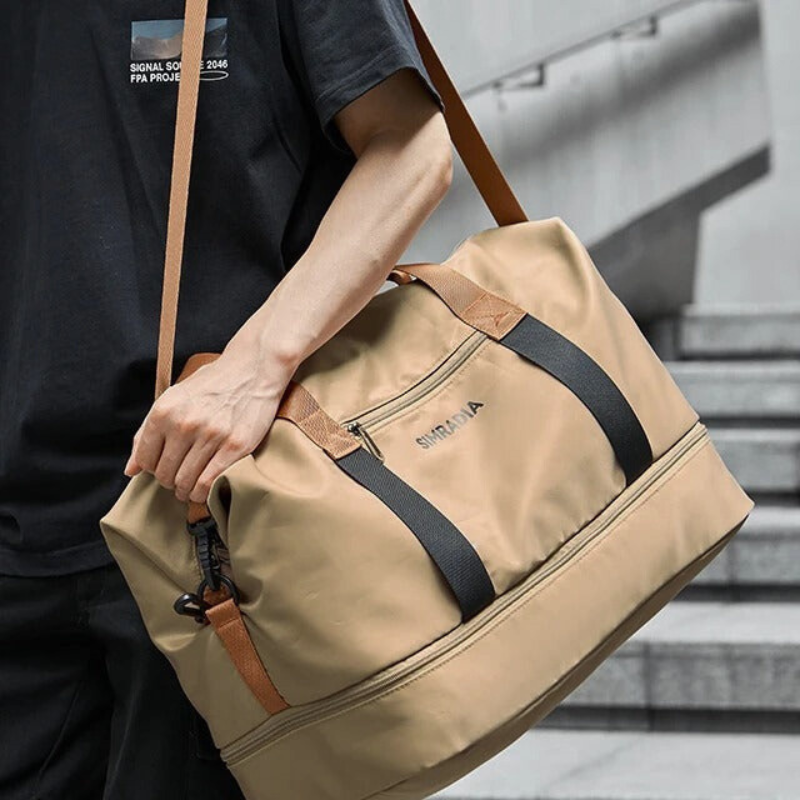



One Expandable Pack, One Day Bag, No Suitcase Sprawl

TLDR: An overnight work trip needs two jobs, not one suitcase. Use an expandable pack for clothes, toiletries, and the laptop overnight, then a separate compact day bag for the office, client, or conference floor. Leave the hard-sided sprawl at home. Expand only when the night requires it. Park the big pack in the room and walk out light.
Most one-night trips fail the same way: you pack like a week away, then drag a full suitcase through a 90-minute client day. Or you force every outfit and charger into a single day bag and arrive with a strained shoulder and nowhere to put a change of clothes.
This piece is the overnight work trip, 1.5-bag system: one expandable travel pack plus one compact day bag. It is not a full weekend packing formula (Weekend Trip Packing Formula). It is not multi-mode conference carry for multi-day agendas (The Conference Bag). It is not a buying roundup of one-bag travel backpacks (Best One-Bag Travel Backpacks). The job is one night away for work, with a clean desk day in the middle.
What this trip actually is
Write the trip in one line: leave after work or early morning, sleep one night, work the next day, return.
Overnight work trip. You need a change of clothes, toiletries, laptop, and a way to leave the hotel without hauling the sleep load into the meeting.
Not this article. A pure day trip with no hotel. A three-night conference. A leisure weekend with hiking shoes and a second city.
Not this article. "I will just wear the same shirt twice and skip the second bag." That can work for some people. It is a different decision than a deliberate expandable pack plus day bag.
The test at packing time: name which items sleep in the room and which items leave with you in the morning. If everything has to leave the building every time you go downstairs, you do not have a system yet.
The 1.5-bag rule
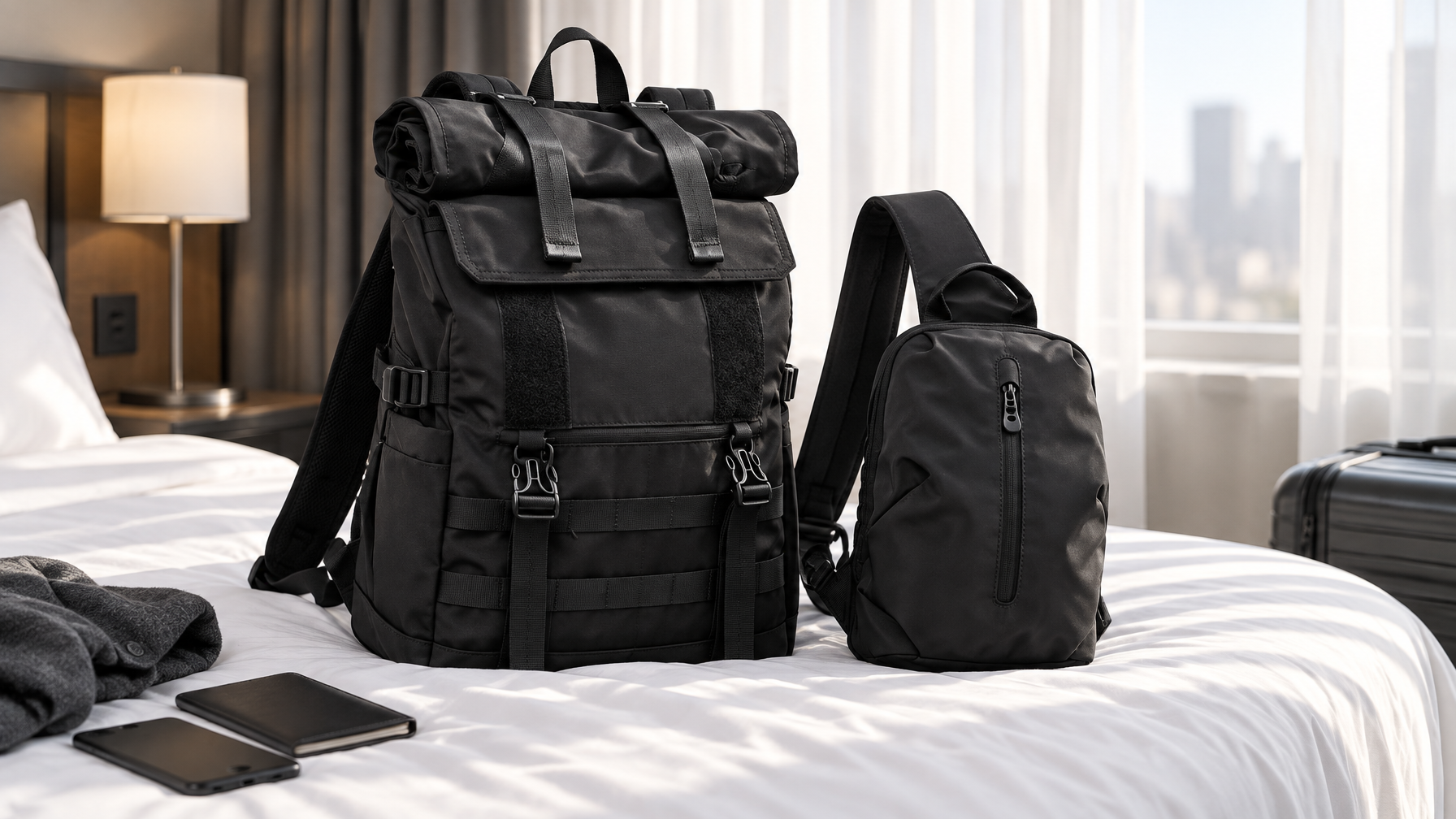
Bag 1, expandable overnight pack. Clothes, shoes if needed, toiletries, power brick, spare cables, and the laptop while you travel. This bag can expand for the overnight load and compress when the trip is light.
Bag 2, compact day bag. Phone, wallet, keys, badge, thin notebook, one short cable, maybe earbuds. This is what you wear to the office, client site, or floor while the overnight pack stays in the room or the car you control.
There is no Bag 3 called "maybe the roller will be fine for one night." A hard-sided case is valid for some travelers. It is usually the wrong default for a single hotel night and a walkable work day.
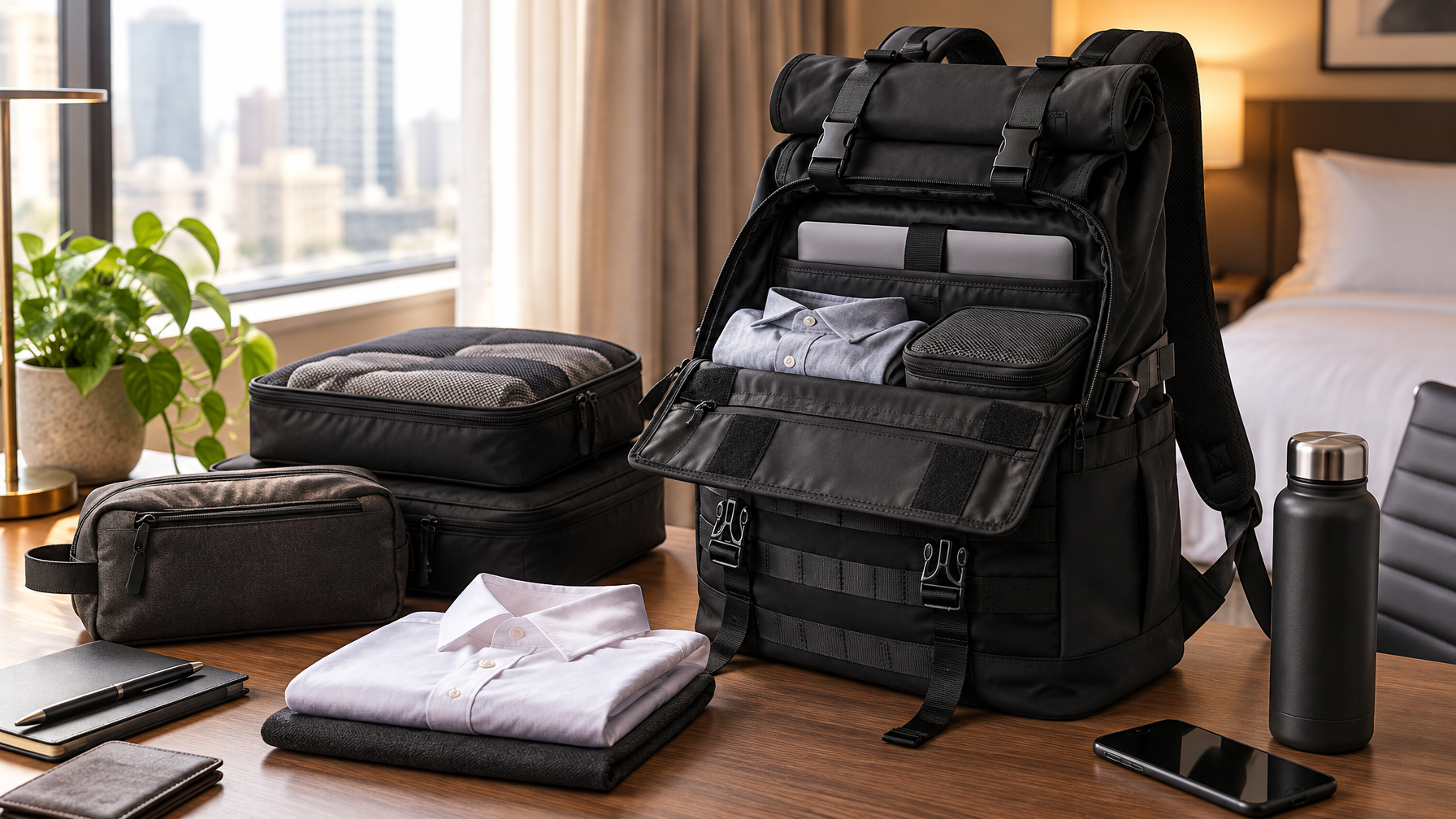
What goes in the expandable pack
Build the overnight kit once. Adjust only for weather and dress code.
Always:
- One full change of clothes for the work day (or sleep clothes plus work clothes, if you leave after a full office day)
- Toiletry kit sized for one night
- Laptop and the power path you actually use
- Phone charger path if it is not already on-body
- Thin folder or sleeve for this trip's paper only
Sometimes:
- Second shirt if the dress code is unforgiving
- Light layer for a cold conference room
- Compact laundry bag for the worn set on the way home
Never for a true one-night work trip:
- "Just in case" third outfits
- Full gym kit unless the hotel workout is the point of the trip
- Desk drawer junk (stapler, spare mouse you will not pair)
- A second hard suitcase "for structure"
Use packing cubes or simple folders if they speed the hotel unpack. They are optional. Volume discipline is not.
Why an expandable pack fits this job
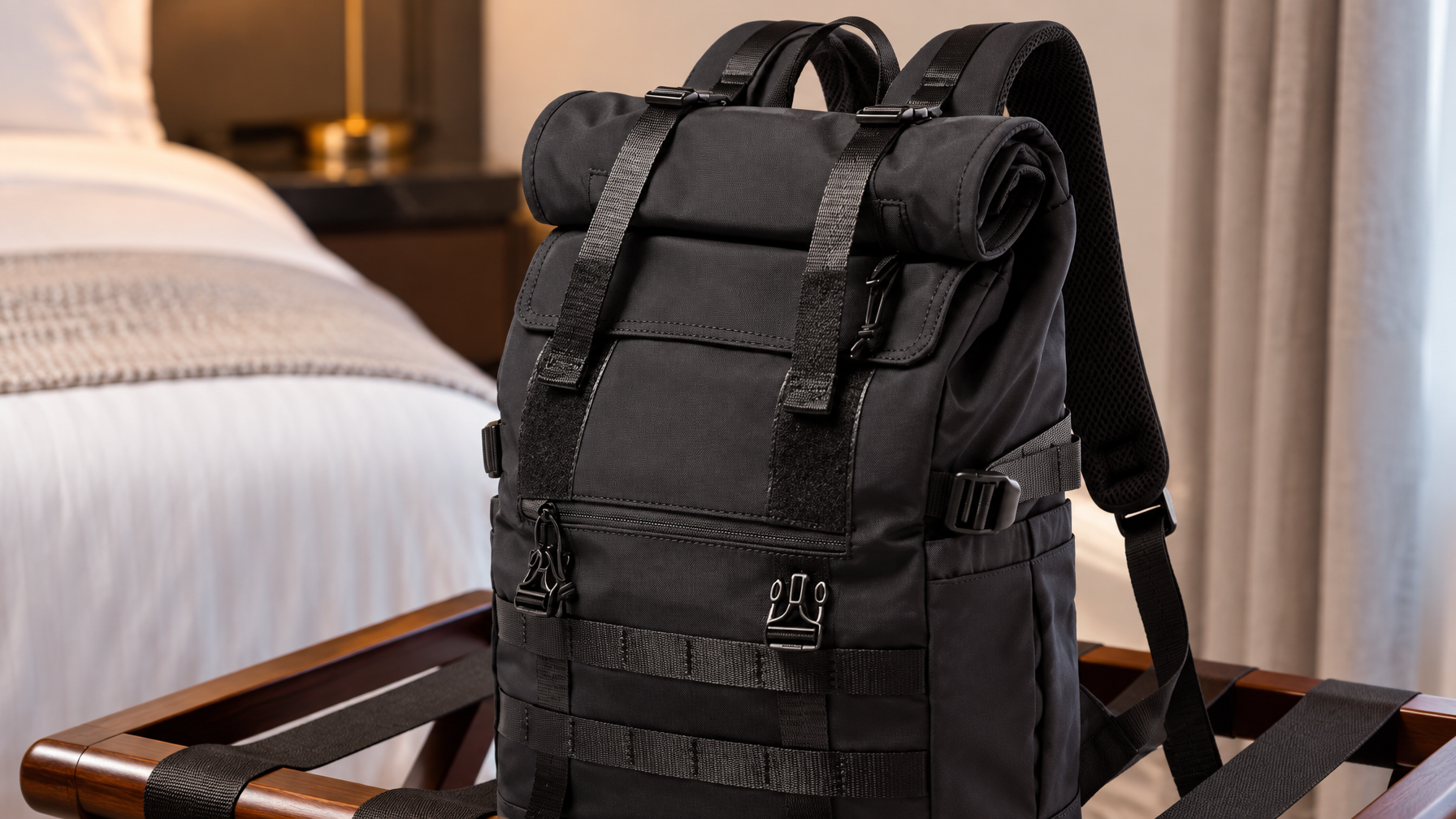
You want one bag that can sit at about daily-carry volume on light nights and open up when clothes and toiletries join the laptop. The Transit Pack is the catalog expandable travel pack: about 11.8 × 6.3 × 18.1 inches, about 1.6 lb, $199, Black, roll-top design that flexes from about 20 L to 35 L, dedicated laptop sleeve for machines up to about 15.6 inches, padded straps and back panel, Oxford exterior with polyester lining, main compartment plus interior zip and side pockets.
Call the shell water-resistant for ordinary commute and travel weather. Do not claim sealed storm protection. Do not invent anti-theft guarantees. Do not claim airline personal-item status or a specific under-seat fit without measuring your airline and seat.
If your work machine is larger than the sleeve rating, use a bag that honestly fits that device. Do not force a 17-inch workstation into a 15.6-inch sleeve story.
What goes in the day bag
The morning after: leave the expandable pack in the room (or locked storage you control). Walk out with the social and work layer only.
Always:
- Phone, wallet, keys
- Badge or building ID if required
- Laptop only if the day truly needs it and you will not leave it unattended in a bad place
Sometimes:
- Thin notebook
- One short cable and a small phone battery
- Compact earbuds for calls between sessions
Never drag downstairs "just because":
- The full toiletry kit
- Sleep clothes
- The second pair of shoes
- Everything you packed "in case dinner runs late"
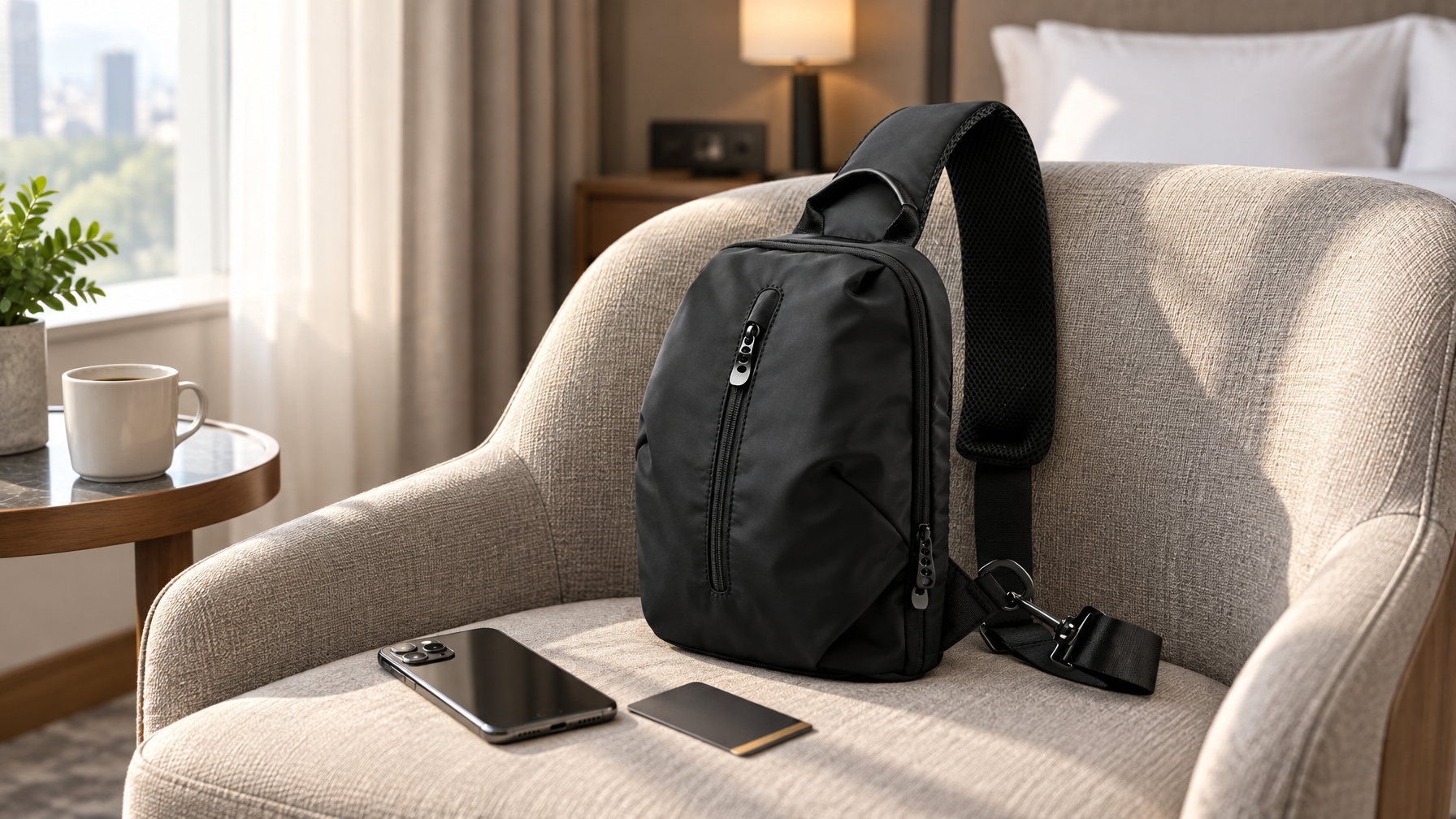
A compact sling or crossbody is enough for many client days when the laptop stays in a secure room safe or locked drawer. When the laptop must leave the room, pair a real laptop-capable day pack or brief with the overnight pack still parked, or accept one heavier bag for that half-day only. Do not pretend a thin sling holds a 15-inch machine.
Examples from the live catalog for the day layer (pick what matches the day, not every bag at once):
- Commuter Sling for a light personal kit
- Transit Crossbody for phone-wallet-keys volume
- Haven Messenger when you still need a modest laptop-capable messenger for the floor
Hotel close-out in five minutes
Before you sleep and again before checkout:
- Two piles. Sleep/travel pile in the expandable pack. Day pile in the day bag.
- Laptop path. Know whether the machine sleeps in the room safe, stays in the pack, or leaves with you.
- Morning walk test. If you would not carry an item into a meeting, it does not go in the day bag.
- Checkout count. Same inventory you left home with. No mystery chargers under the bed.
How this differs from related guides
| Situation | What changes | Read |
|---|---|---|
| Full weekend leisure pack | More clothing volume and destination gear | Weekend trip packing formula |
| Multi-mode conference / multi-day work travel | Heavier role-switching across venues | Conference bag guide |
| Buying a single one-bag travel backpack | Product shortlist, not overnight system | One-bag travel backpacks |
| One night for work, hotel in the middle | Expandable overnight pack + compact day bag | This article |
What this guide will not solve
A multi-city sales week still needs a different volume plan. Medical devices, security screening rules, and employer laptop policies sit outside packing advice. Do not treat expansion liters as a promise that every airline will accept the bag as a personal item. Measure your route.
Do not feature or link retired products. Do not invent sealed storm protection, anti-theft hardware, or capacity beyond the live product record.
FAQ
Do I need two bags if I hate carrying two straps?
Use a day bag that compresses into the overnight pack for the transit legs, then pull it for the work day. Or use a single expandable pack and accept that the full sleep load walks into the office with you.
Is a roller better for one night?
Sometimes, if you have mobility needs or a dress load that does not fit soft luggage. For most short work overnights, soft expandable plus day bag is faster in rideshares and hotel elevators.
Where does the laptop sleep?
In a room safe or locked drawer when available. Otherwise in the overnight pack in a room you control, or on your person for the day if the floor requires it.
Can the day bag be a waist pack?
Yes for phone-wallet-keys days. Not for a full laptop day.
Close
Name the overnight load and the day load separately. Expand the travel pack for sleep and transit. Leave it in the room when the work day starts. The Transit Pack is the expandable half of that system when one night of work should not turn into suitcase sprawl.